Hornbill Festival
Photo: Vikramjit Kakati, CC BY-SA 4.0, via Wikimedia Commons
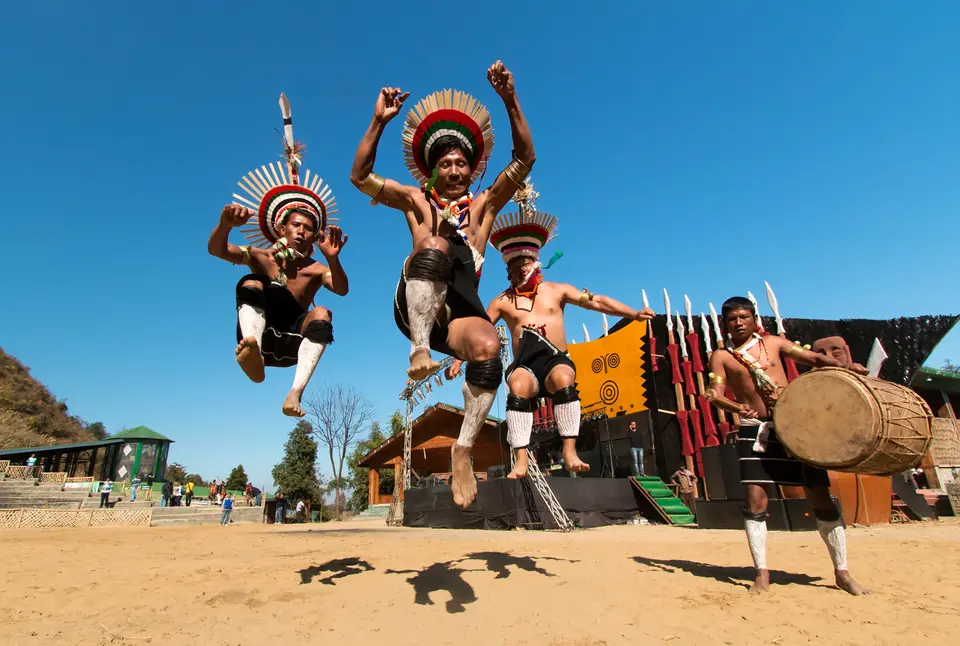
For the first ten days of December, the tribes of Nagaland gather at a heritage village in the hills near Kohima to share their songs, dances, crafts, games and food — the “Festival of Festivals”, named after the forest bird of Naga folklore.
The Festival of Festivals
Nagaland, in the far northeast of India, is home to many ethnic groups, each with its own festivals — most of them tied to farming, which supports more than sixty per cent of the population. To encourage the tribes to meet and to promote the state’s cultural heritage, the Government of Nagaland has organised the Hornbill Festival since December 2000. Because it brings all the groups together, it is called the “Festival of Festivals”.
The festival is named after the hornbill, the large, colourful forest bird that appears in the folklore of most of Nagaland’s peoples.
Kisama
The festival is held at the heritage village of Kisama, about 12 km from Kohima. Its heart is a cluster of seventeen houses built in indigenous style — morungs, the traditional youth dormitories — each representing a different tribe. For visitors, the organisers say, it offers a ringside view of all the Naga tribes, their cultures and their distinctiveness in one place.
Ten days of culture
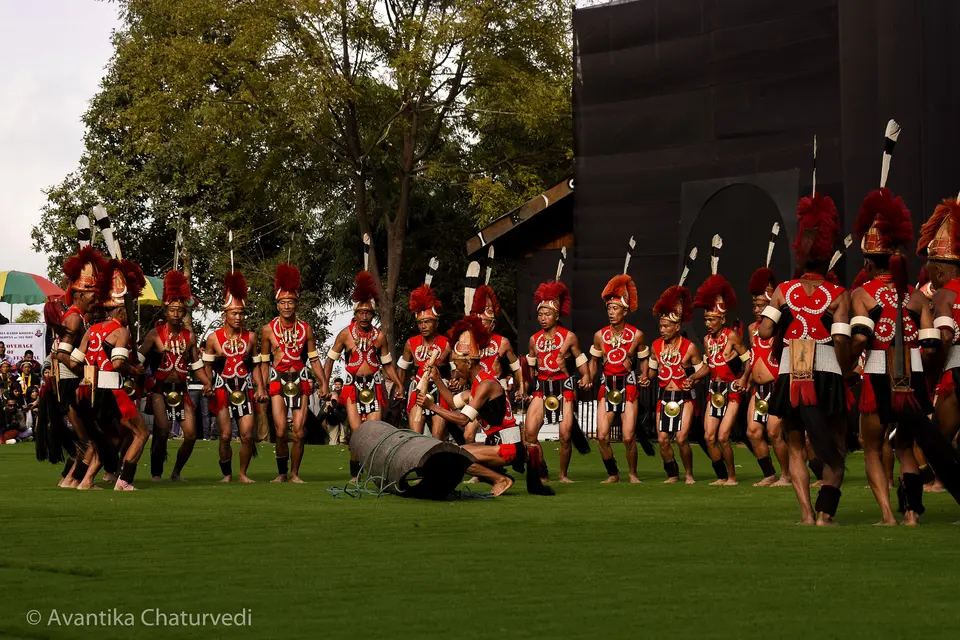
The programme mixes songs and dances of the different tribes with crafts, food stalls, herbal medicine stalls, flower shows, traditional archery, Naga wrestling, indigenous games, parades, ceremonies and evening concerts. Paintings, wood carvings and sculptures by Naga artists are shown and sold. Many older people travel in from their villages to meet people from other parts of Nagaland they have never met before — part of what the festival was created for.
When it happens
The Hornbill Festival is held every year from 1 to 10 December at Kisama Heritage Village, about 12 km from Kohima.
- December 1 – 10, 2026Calculated
- December 1 – 10, 2027Calculated
- December 1 – 10, 2028Calculated
- December 1 – 10, 2029Calculated
Visiting with respect
Good to know
- The Naga peoples consider their festivals sacred. Treat dances and ceremonies as cultural performances with meaning, not only as spectacle.
- Ask before photographing performers and visitors outside the main arena.
Stay safe
- Parts of northeastern India are restricted or protected areas for foreign visitors, and permit rules can change at any time. Check the permit requirements for Nagaland well before you travel.
- December nights in the Naga hills are cold. Bring warm clothing.
Sources
This entry was written from the following sources.
- Hornbill FestivalDepartment of Tourism, Government of Nagaland · read September 16, 2026
- Hornbill FestivalWikipedia (English) · read September 16, 2026
- India travel advice: entry requirements (access permits)UK Foreign, Commonwealth & Development Office · read September 16, 2026
Related festivals
Moussem of Tan-Tan
موسم طانطان
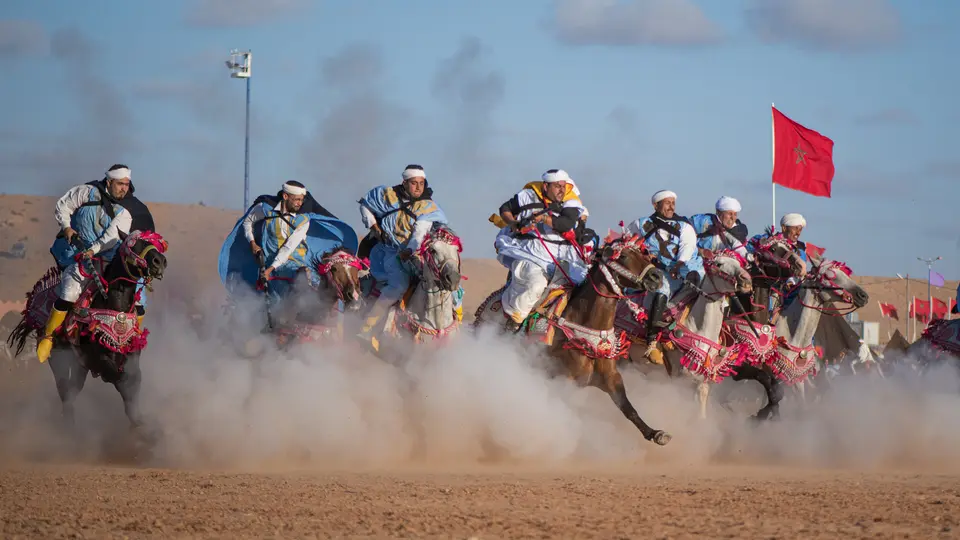
At the edge of the Sahara, nomadic peoples from more than thirty tribes gather for a great annual fair of camels and horses, tents and trade, Hassani poetry and song — revived after a quarter of a century in which it could not be held.
October 3 – 7, 2026Officially announced
Guelaguetza
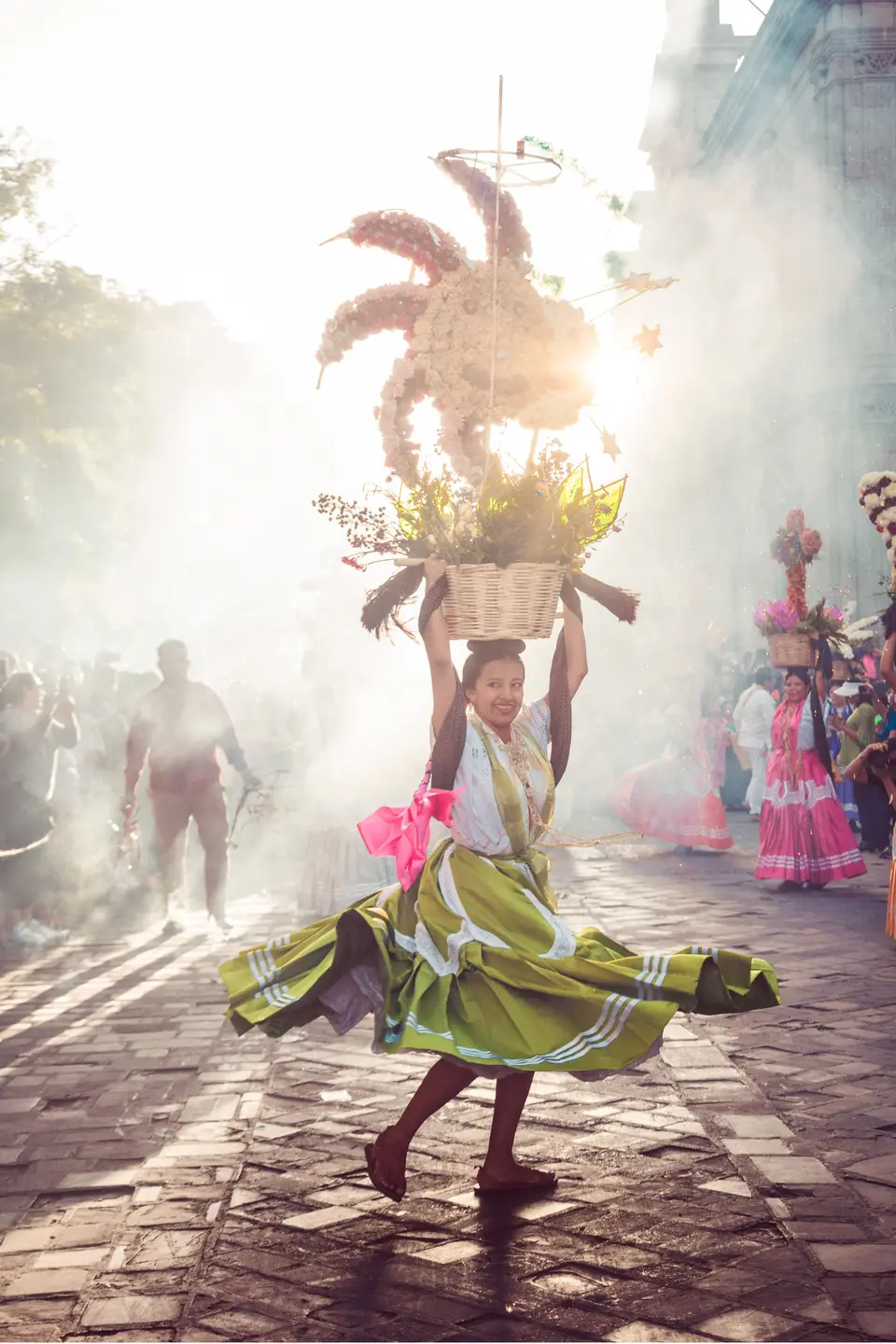
On two Mondays each July, delegations from the eight regions of Oaxaca climb the Cerro del Fortín to present their dances, music and costumes — the best-known indigenous gathering of its kind in Mexico, with a month of food, mezcal and craft fairs around it.
July 19, 2027Estimated