Meskel
መስቀል
On UNESCO’s list of the Intangible Cultural Heritage of Humanity
Photo: Redietmd, CC BY-SA 4.0, via Wikimedia Commons
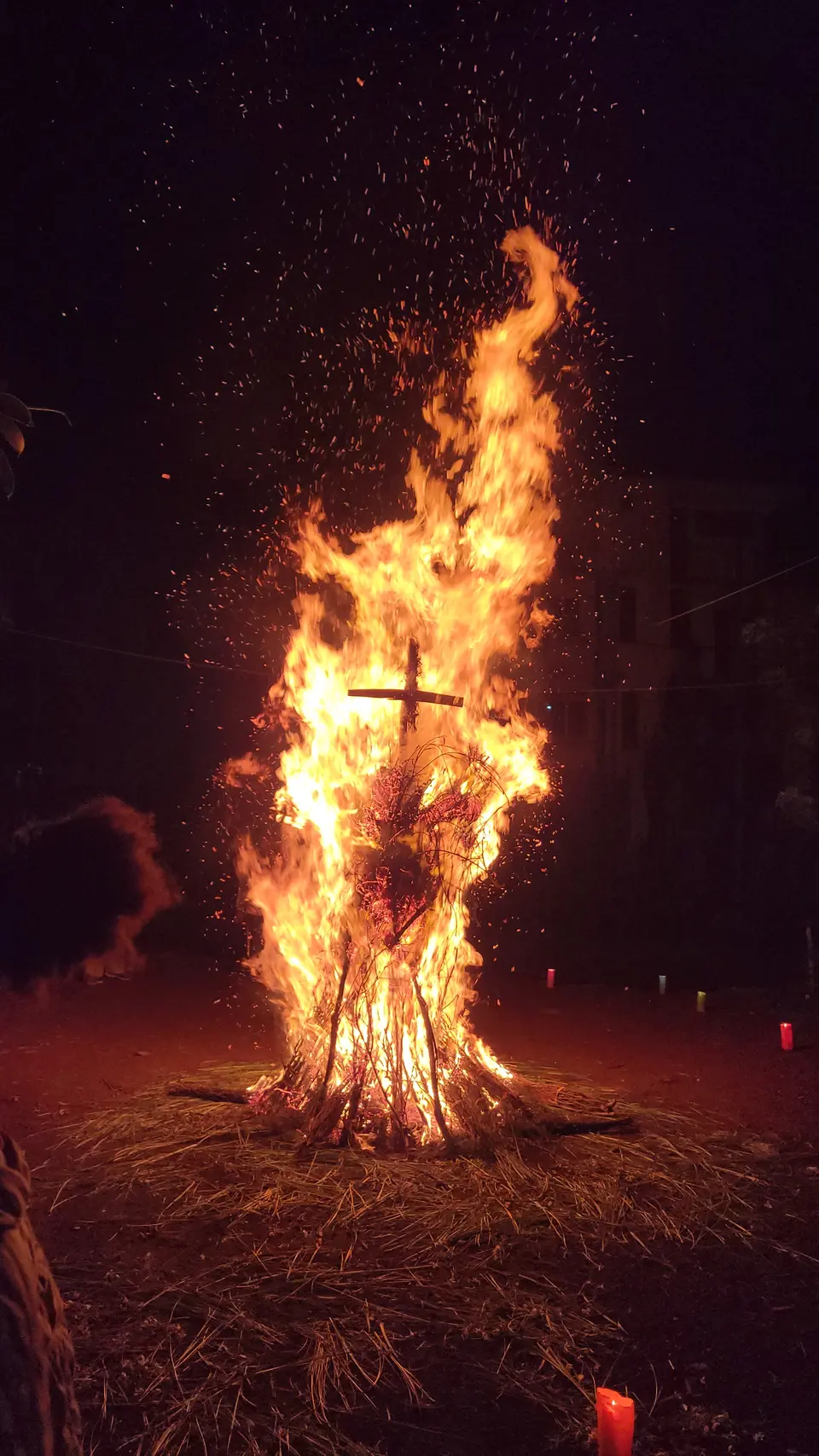
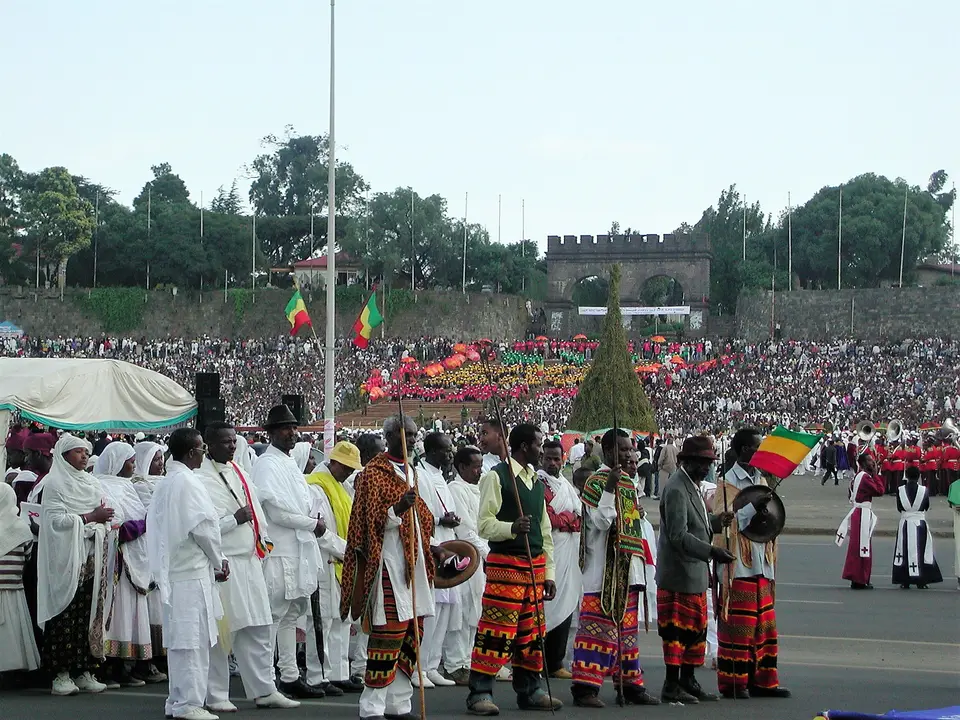
At the end of the rainy season, Ethiopians commemorate the finding of the True Cross by lighting the demera — a great pyre decorated with yellow daisies — in Addis Ababa’s Meskel Square, where priests chant and dance before the patriarch sets it alight.
Smoke that shows the way
Meskel means “cross” in Amharic. The feast commemorates the discovery of the True Cross by the Roman empress Helena — Queen Eleni in Ethiopian tradition — in the fourth century. According to the story, she was told in a dream to light a bonfire and follow the smoke. She had the people of Jerusalem pile up wood, added frankincense, and the smoke rose high into the sky and came down exactly where the Cross was buried.
The Ethiopian Orthodox Church holds that the Cross was found in March, but the feast was moved to September to keep it out of Lent. Part of the True Cross is believed to have been brought to Ethiopia and to be kept at Amba Geshen. The month of Meskerem also marks the end of the rains.
The demera
The celebrations centre on the demera, a conical pyre of poles surrounded by branches and torches, decorated with green grass and the yellow Abyssinian daisies that stand for the New Year. In Addis Ababa it is built in Meskel Square, named after the festival, where hundreds of thousands gather as priests in bright robes chant hymns and prayers and perform their rhythmic dance; at the climax the patriarch of the Ethiopian Orthodox Tewahedo Church lights the fire. Afterwards the faithful collect charcoal from the ashes to mark a cross on their foreheads. Many city dwellers go home to their villages for the feast. UNESCO inscribed Meskel on its Representative List in 2013.
When it happens
Meskel falls on 17 Meskerem in the Ethiopian calendar — 27 September, or 28 September in the year before a Gregorian leap year. The demera is lit on the evening before, or in some places on the day itself.
- September 26 – 27, 2026Meskerem 16, 2019 AMCalculated
- September 27 – 28, 2027Meskerem 16, 2020 AMCalculated
- September 26 – 27, 2028Meskerem 16, 2021 AMCalculated
- September 26 – 27, 2029Meskerem 16, 2022 AMCalculated
Visiting with respect
Stay safe
- Very large crowds gather in Meskel Square. Keep valuables secure and stay aware of your surroundings.
- The UK advises against all travel to the Amhara and Tigray regions and to parts of Oromia and Afar. Check current advice before travelling outside Addis Ababa.
Sources
This entry was written from the following sources.
- Commemoration feast of the finding of the True Holy Cross of ChristUNESCO Intangible Cultural Heritage · read September 17, 2026
- MeskelWikipedia · read September 17, 2026
- Ethiopian calendarWikipedia · read September 17, 2026
- Ethiopia travel advice: safety and securityUK Foreign, Commonwealth & Development Office · read September 17, 2026
- Ethiopia travel advice: warnings and insuranceUK Foreign, Commonwealth & Development Office · read September 17, 2026
Related festivals
Timkat (Ethiopian Epiphany)
ጥምቀት
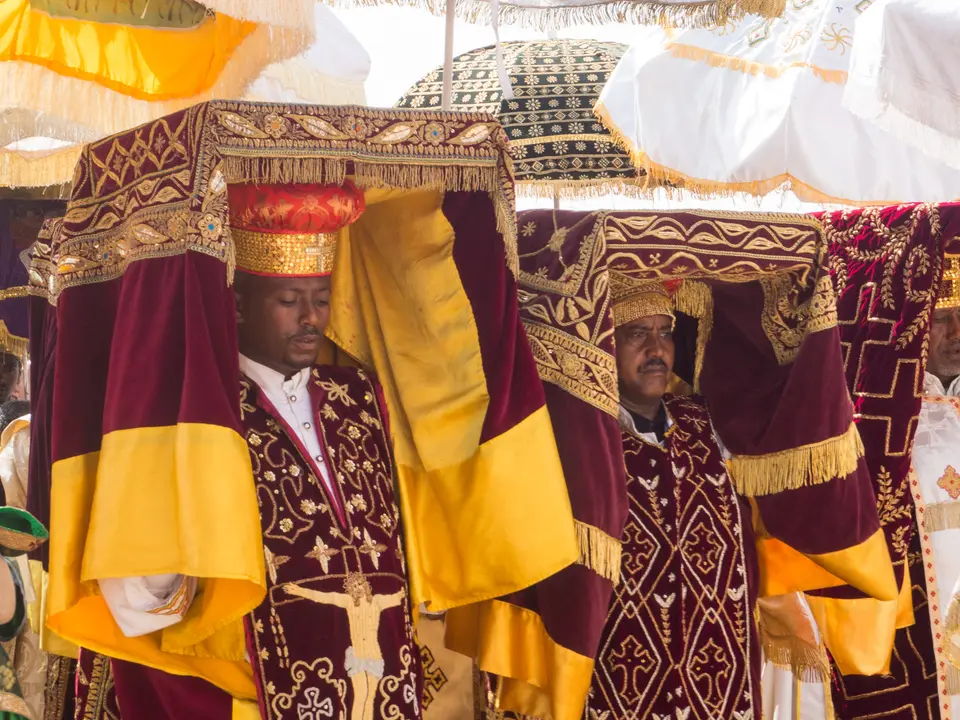
Ethiopia’s Orthodox Epiphany celebrates the baptism of Christ — on the eve, priests carry each church’s tabot, a replica of the Ark of the Covenant, to a river or pool; at dawn the water is blessed and sprinkled over hundreds of thousands, before the arks return home in dancing processions.
January 18 – 19, 2027Calculated
Enkutatash (Ethiopian New Year)
እንቁጣጣሽ
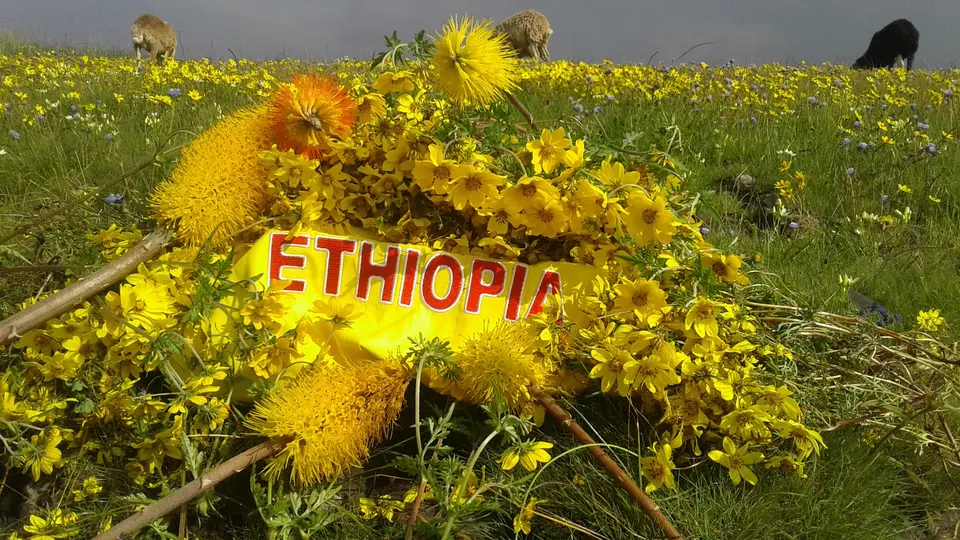
The Ethiopian New Year arrives in September, as the rains end and hillsides turn yellow with adey abeba flowers — a day of church, family meals of injera and wat, and girls in new clothes going door to door with bouquets and the song “Abebaye hoy”.
September 12, 2027Calculated
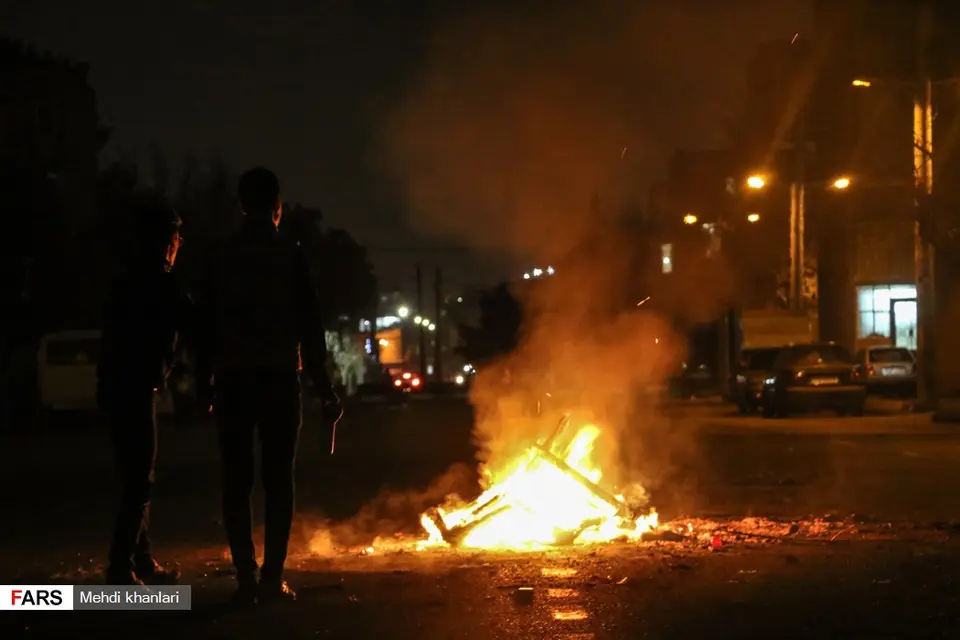
Chaharshanbe Suri
چهارشنبهسوری
On the eve of the last Wednesday of the Iranian year, bonfires are lit in yards, streets and on rooftops, and people leap over the flames, asking the fire to take away their pallor and give them its red glow for the year ahead.
March 16, 2027Calculated