Oktoberfest
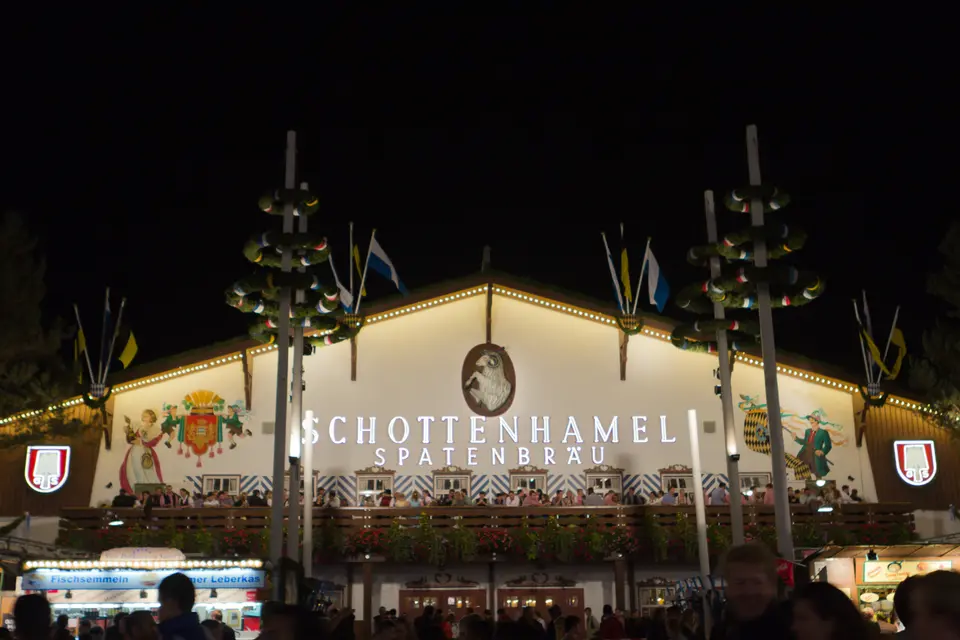
Photo: Poudou99, CC BY 4.0, via Wikimedia Commons
For sixteen days each autumn Munich’s Theresienwiese becomes the world’s largest folk festival — beer tents of the city’s own breweries, a funfair, costume parades and some seven million visitors — a tradition that began with a royal wedding in 1810.
A wedding on the meadow
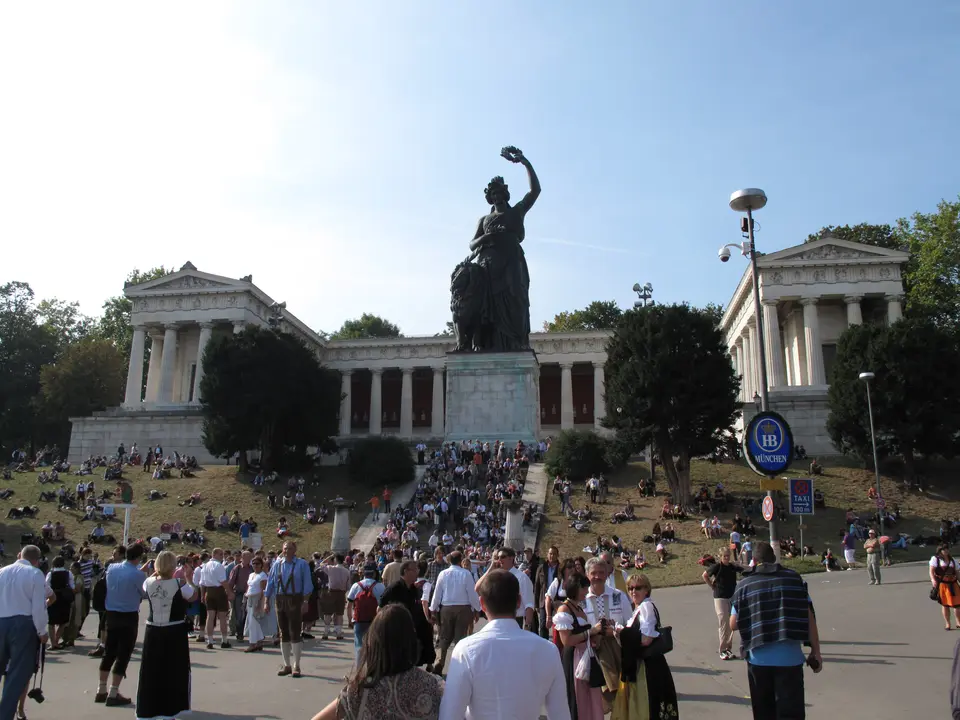
On 12 October 1810 Crown Prince Ludwig of Bavaria married Princess Therese of Saxe-Hildburghausen, and the people of Munich were invited to celebrate on fields outside the city walls. The next year the site was named Theresienwiese, “Therese’s meadow”, and locals still call the festival simply the Wiesn. The first celebration ended with a horse race; it was repeated in 1811, when an agricultural show was added, and in 1819 the city council took charge and decreed that the festival be held every year. Over the nineteenth century the start was moved into September for the warmer evenings, so that only the last days now fall in October. The festival of 2026 is the 191st.
“O’zapft is!”
The opening Saturday begins with the entry of the festival hosts, a parade of decorated brewery wagons and tent bands that has taken its present form since 1935. At exactly noon, in the Schottenhamel tent, the Mayor of Munich taps the first keg and calls out “O’zapft is!” — “It is tapped!” — a ritual kept since 1950. Twelve gunshots then signal the other tents to start serving. On the first Sunday about 8,000 people in traditional costume, with marksmen’s clubs, bands and some forty horse-drawn carriages, walk seven kilometres from the Maximilianeum to the Theresienwiese led by the Münchner Kindl.
Munich beer
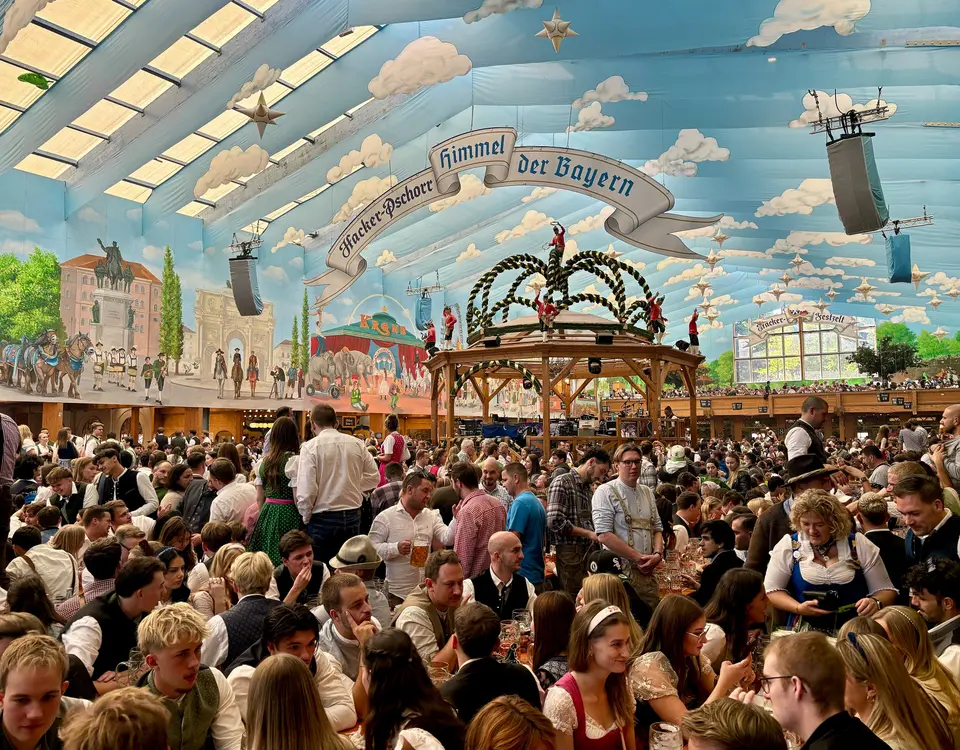
Only beer brewed within Munich’s city limits under the German purity law may be served, and the right to make it belongs to six breweries: Augustiner, Hacker-Pschorr, Löwenbräu, Paulaner, Spaten and Hofbräu. It is poured as the traditional Märzen or the paler Festbier. In 2025 the grounds held 14 large and 20 small tents, temporary wooden halls, each large one linked to a Munich brewery. Since 2005 the tents have played only traditional brass music until six in the evening, and the festival has been smoke-free since 2011.
When it happens
Oktoberfest usually lasts sixteen days and ends on the first Sunday in October. If that Sunday falls before 3 October, German Unity Day, the festival is extended through 3 October. In 2026 it runs from 19 September to 4 October.
- September 19 – October 4, 2026Calculated
- September 18 – October 3, 2027Calculated
- September 16 – October 3, 2028Calculated
- September 22 – October 7, 2029Calculated
Visiting with respect
Stay safe
- Terrorists are very likely to try to carry out attacks in Germany, including at cultural events and crowded gatherings. Stay aware of your surroundings.
- Bags larger than three litres are not allowed onto the grounds, and glass bottles have been banned since 2012.
- Watch out for pickpockets in the crowds and at railway stations, and do not leave bags unattended.
Sources
This entry was written from the following sources.
- Welcome to the OktoberfestCity of Munich · read September 17, 2026
- OktoberfestWikipedia · read September 17, 2026
- Germany travel advice: safety and securityUK Foreign, Commonwealth & Development Office · read September 17, 2026
Related festivals
Cologne Carnival
Kölner Karneval
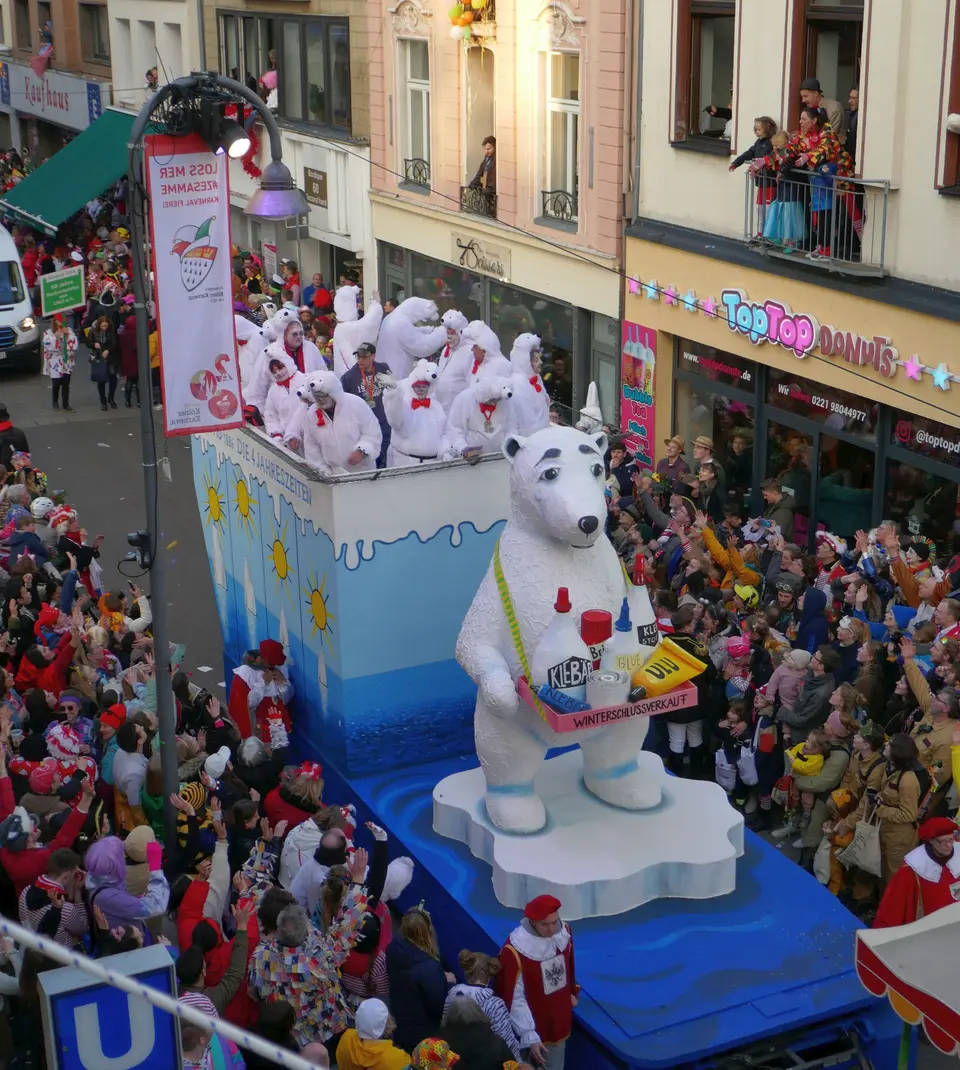
Cologne’s “fifth season” opens at 11:11 on 11 November and explodes onto the streets in the days before Lent, when costumed crowds shout “Kölle Alaaf!” and more than a million people watch the Rose Monday parade throw sweets from its floats.
November 11, 2026Calculated
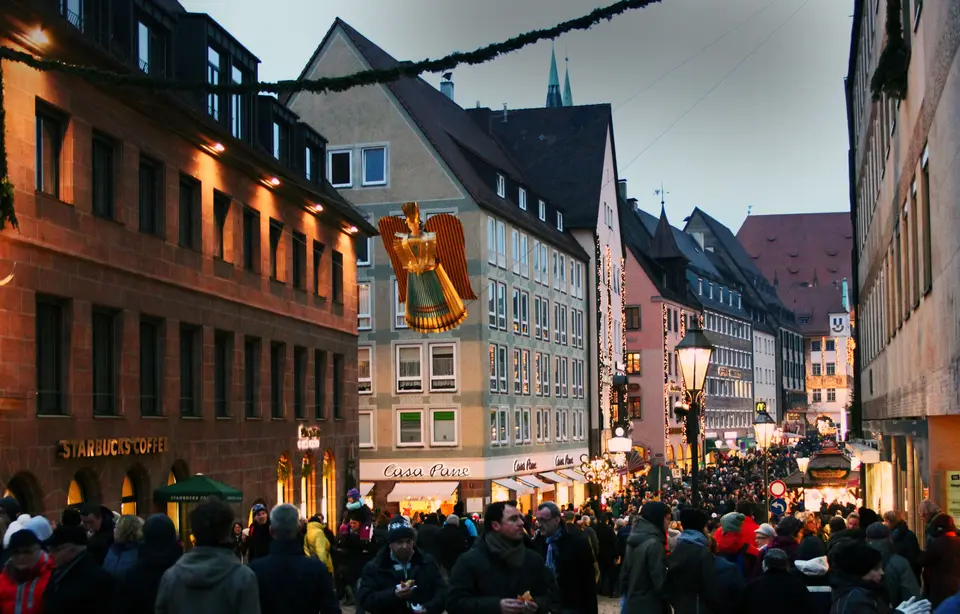
Nuremberg Christkindlesmarkt
Nürnberger Christkindlesmarkt
From the Friday before Advent until Christmas Eve, around 180 traders set up red-and-white wooden stalls on Nuremberg’s main square, selling gingerbread, gold-foil angels and nativity figures to more than two and a half million visitors.
November 27 – December 24, 2026Calculated
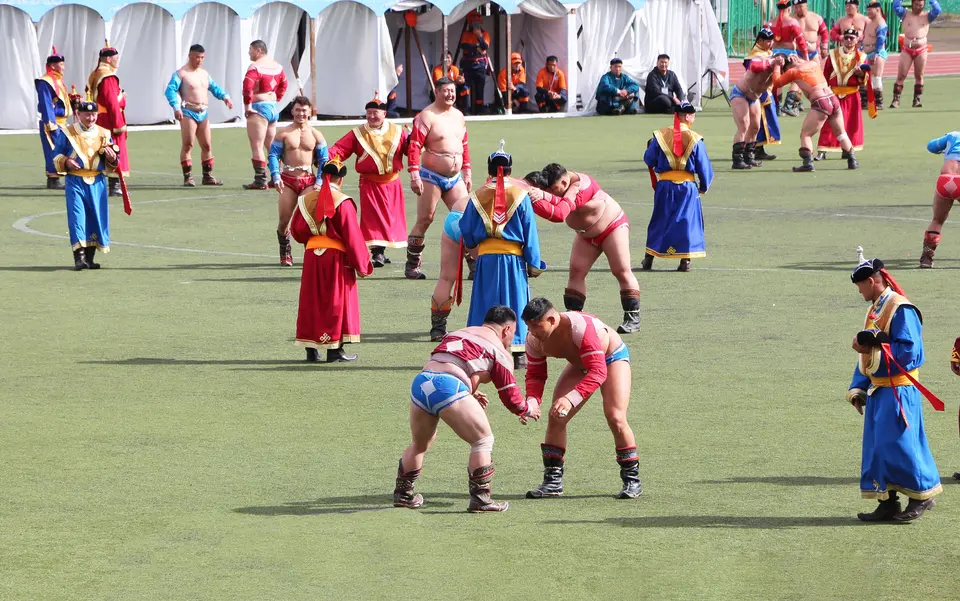
Naadam
Наадам
Every July Mongolia stops for the “three games of men” — wrestling, cross-country horse racing ridden by children, and archery — opened in Ulaanbaatar’s stadium with parades of riders, dancers and the nine horse-tail banners of Genghis Khan.
July 11 – 13, 2027Calculated