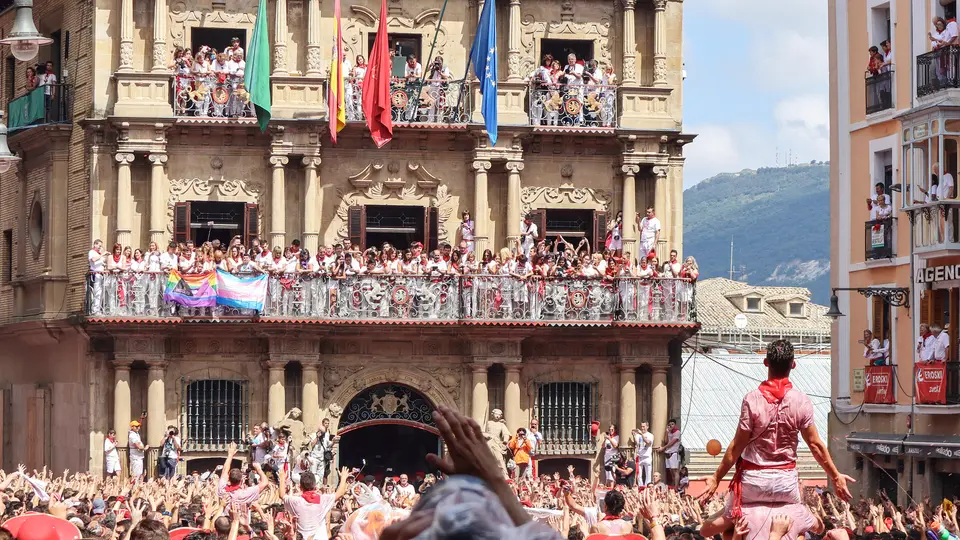
From noon on 6 July to midnight on 14 July, Pamplona dresses in white and red for its patron saint. A rocket opens the fiesta, giants dance through the old town every morning, bulls run through the streets at eight — and on the last night the whole city sings “Pobre de mí”.
A saint and a summer fair
The festival honours Saint Fermín, co-patron of Navarre, held by tradition to have been the first bishop of Pamplona and a martyr of the early church. It grew from two medieval events: summer trade fairs, where cattle merchants brought animals to town and bullfights came to be held, and the religious feast of the saint. In 1591 the feast was moved from October to 7 July to coincide with the fair, and that is counted as the beginning of the Sanfermines. Ernest Hemingway’s novel The Sun Also Rises made the festival famous abroad.
Nine days in white and red
At noon on 6 July a rocket, the Chupinazo, is fired from the balcony of City Hall, and the square below erupts. On 7 July, the key day, the fifteenth-century statue of Saint Fermín is carried through the old town, accompanied by dancers, musicians and the city’s authorities; a traditional jota is danced for the saint and a rose is offered at his well.
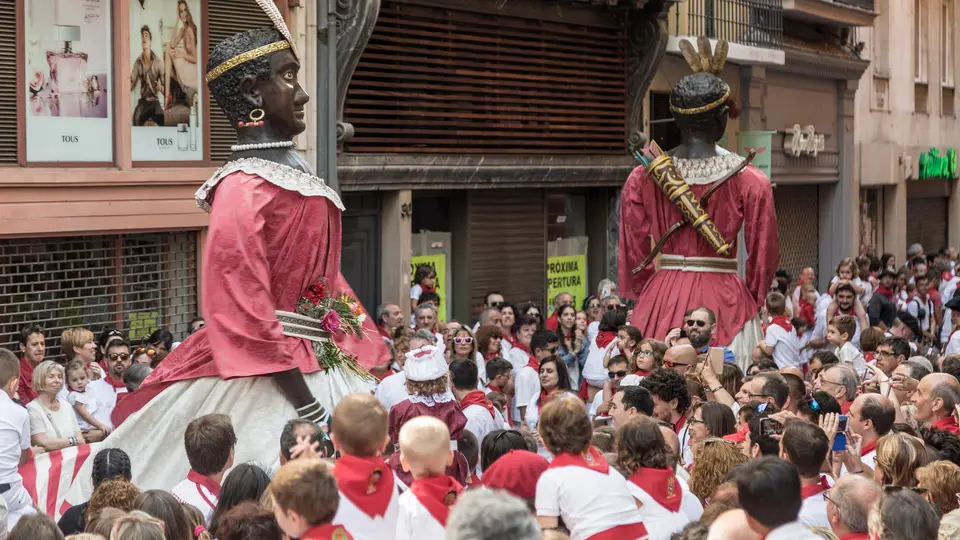
Every morning, the giants and big-heads parade through the streets: eight giant figures about four metres tall, built in 1860 and representing kings and queens of four continents, dance to traditional music, while the smaller kilikis and zaldikos chase children with foam truncheons.
The running of the bulls
The best-known event is the encierro. At 8 a.m. from 7 to 14 July, hundreds of runners race ahead of six fighting bulls and their guiding steers along an 825-metre course of narrow streets to the bullring, a run marked by a sequence of rockets. The same bulls are killed in the bullfight held each afternoon at 18:00.
Poor me
At midnight on 14 July, people gather in front of City Hall, light candles, take off their red neckerchiefs and sing Pobre de mí, “poor me”, as the festival closes with fireworks.
When it happens
The festival starts with the Chupinazo rocket at 12:00 on 6 July and ends at midnight on 14 July. The running of the bulls takes place every morning from 7 to 14 July, and the procession of Saint Fermín on 7 July.
- July 6 – 14, 2027Calculated
- July 6 – 14, 2028Calculated
- July 6 – 14, 2029Calculated
- July 6 – 14, 2030Calculated
Visiting with respect
Good to know
- Dress in white with a red neckerchief, as most people do; the red scarves are taken off together at the closing ceremony.
- The procession of 7 July is a religious event. Keep a respectful distance from the statue and the clergy.
Avoid
- Do not try the running of the bulls on impulse, and never after drinking or without sleep. Watch it from a safe place instead.
Stay safe
- Since 1925, 15 people have been killed in the running of the bulls, and every year 200 to 300 are injured, most of them in falls.
- The old town is extremely crowded, especially at the Chupinazo. Stick with your friends, keep your drink in sight and do not take risks on balconies.
Sources
This entry was written from the following sources.
- Festival of San FermínWikipedia (English) · read September 16, 2026
- Spain travel advice: safety and securityUK Foreign, Commonwealth & Development Office · read September 16, 2026
Related festivals
Las Fallas
Falles
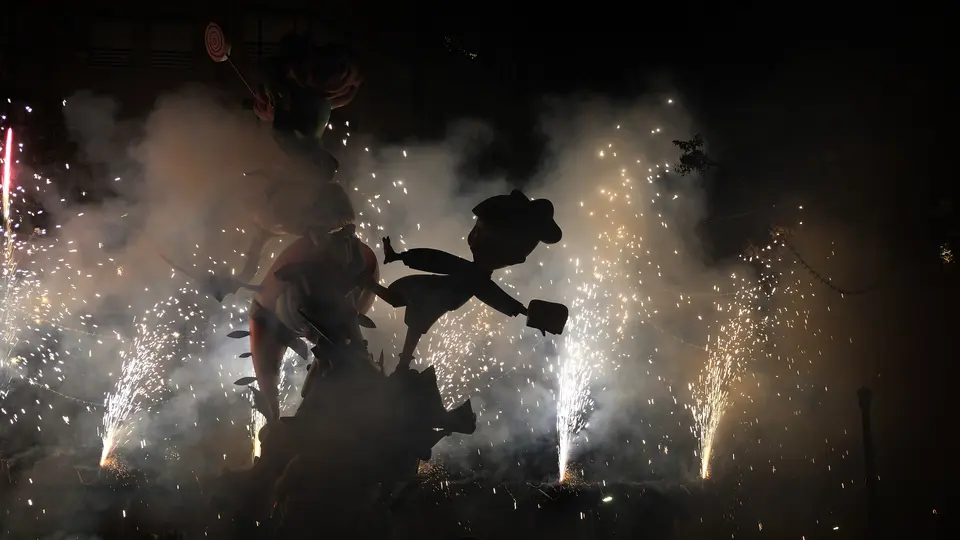
In March, Valencia fills its streets with giant satirical sculptures of cardboard and papier-mâché, shakes to the midday thunder of firecrackers, and then, on the night of 19 March, sets every one of the monuments on fire to welcome the spring.
March 15 – 19, 2027Calculated
La Tomatina
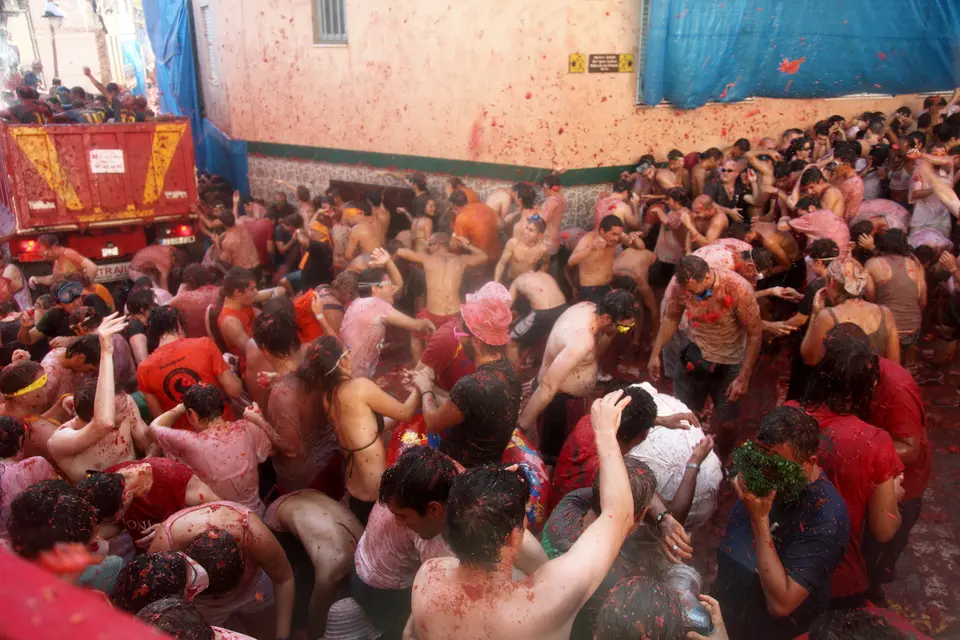
On the last Wednesday of August, the small town of Buñol near Valencia hosts what is said to be the world’s biggest food fight — an hour in which thousands of ticket-holders pelt each other with tomatoes until the streets run red.
August 25, 2027Calculated