
Semana Criolla del Prado
Photo: Agustín Fernández, CC BY-SA 4.0, via Wikimedia Commons
Uruguay takes the whole week before Easter off and calls it Tourism Week, and in Montevideo that week belongs to the jineteada — riders staying on unbroken horses in an arena ringed by pavilions built in 1913, in front of a crowd that is mostly urban and mostly delighted.
A country week with a secular name
Uruguay separated church and state early and thoroughly, and Holy Week in the calendar is Semana de Turismo, Tourism Week. It is the country's real spring break — the week when Montevideo empties towards the coast. What stays in the city, and fills up, is the Prado.
The Semana Criolla has been held there during that week since the 1920s; the Intendencia de Montevideo counted the 2025 edition as the ninety-eighth and the 2026 as the ninety-ninth. It is the city's annual appointment with the countryside, and for most of the people who come it is the only one they keep.
The arena and the pavilions
The ground is the Rural del Prado, whose great pavilions were opened on 25 August 1913 for the agro-industrial shows of the Asociación Rural del Uruguay, the sheds laid out in a fan around the arena. The architects were Buigas, Gómez, Ferrer and Auriot. It still does that job in September for the Expo Prado; in the week before Easter it does this one.
The centre of it is the jineteada: a rider takes an unbroken horse and has to stay on it, in the open, in front of everybody. The Intendencia has tightened what surrounds it — fewer rides, padded barriers in the arena, particular corralling materials for the horses, and spurs without points which the city supplies and checks.
Payadas, and everything else
Around the arena the week spreads out. The 2025 edition ran from ten in the morning to ten at night, with more than a thousand artists, over three hundred performances and workshops, and two hundred groups. There were five stages, one of them named for Carlos Molina and given over to payadas — improvised sung verse, two singers answering each other with a guitar, a contest as much as a song. Another carried the name of Alfredo Zitarrosa, another of Amalia de la Vega. There was an artisan fair of a hundred and sixty stands, an expo of a hundred and two social-economy enterprises, tango milongas, circus games for children, and meat over coals the whole way along.
Entry is free on the Sunday and Monday until nine at night. The rest of the week it costs a few hundred pesos, and children under five go in free.
When it happens
The week before Easter, which Uruguay calls the Semana de Turismo. In 2025 it ran 13–20 April and in 2026 it closed on 5 April; both ended on Easter Sunday.
- March 21 – 28, 2027Calculated
- April 9 – 16, 2028Calculated
- March 25 – April 1, 2029Calculated
- April 14 – 21, 2030Calculated
Food and drink
Asado
Beef over wood coals, sold along the ground beside stands of craft and country produce; the fairground also runs a lighter kitchen alongside the grills.


Sources
This entry was written from the following sources.
- Semana CriollaIntendencia de Montevideo · read September 26, 2026
- Se viene la Criolla 2025Intendencia de Montevideo · read September 26, 2026
Related festivals
Fiesta de la Tradición
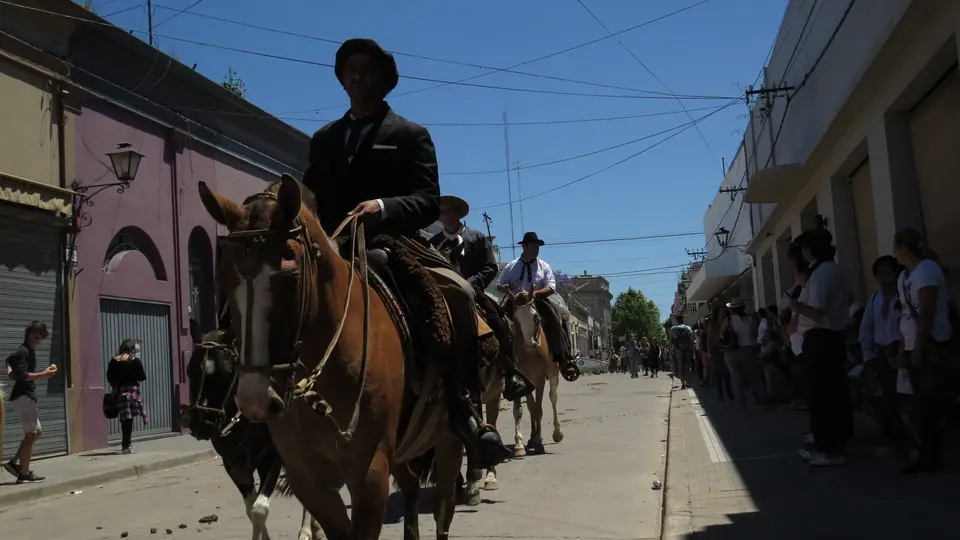
On the weekend nearest 10 November, Argentina’s Day of Tradition, San Antonio de Areco — the national capital of tradition — honours the gaucho with campfire music, ring races and roping contests, and a parade of some 2,000 riders and 60 herds of horses through the town.
November 7 – 8, 2026Estimated
Desfile de Llamadas
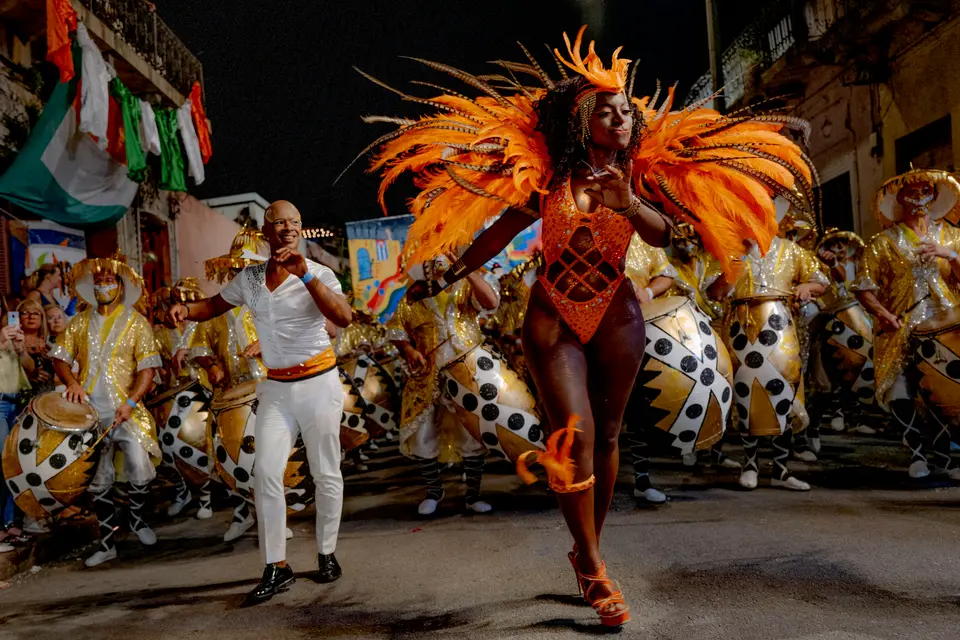
Each February Montevideo’s candombe troupes parade through Barrio Sur and Palermo — flags, moons and stars, dancers, the old healer and the colonial housekeeper, broom-bearers sweeping away bad luck, and at the back at least thirty-six drums beating out the city’s African heritage.
February 2027Approximate window

Fiesta Nacional de la Vendimia
Every March Mendoza celebrates the grape harvest with a night parade of illuminated floats from which the harvest queens throw fruit to the crowd, a morning procession of ox carts and gauchos, and a spectacle of more than a thousand dancers in an open-air theatre that ends with the crowning of the national queen.
March 5, 2027Estimated
Comments
Have you been there? Tell other readers what to expect.
No comments yet.
Comments are read by the site’s owner before they appear.