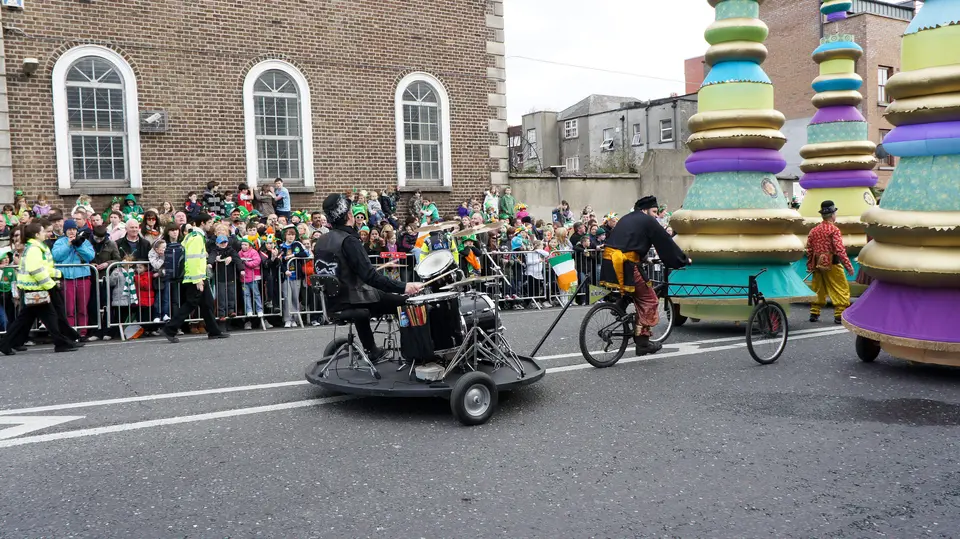
On 17 March Ireland honours its patron saint with parades, traditional music and a sea of green and shamrocks — led by the national parade through Dublin, and echoed in Irish communities and green-lit landmarks around the world.
The saint
Saint Patrick was a fifth-century Christian missionary and bishop. According to the Declaration, a text believed to have been written by Patrick himself, he was born into a wealthy Romano-British family, was kidnapped by Irish raiders at the age of sixteen and spent six years as a slave working as a shepherd, during which he found God. He escaped home, became a priest and, according to tradition, returned to convert the Irish to Christianity. Tradition holds that he died on 17 March and was buried at Downpatrick. His feast day became an official Christian feast in the early seventeenth century, and the Lenten restrictions on eating and drinking were lifted for the day.
Green and shamrocks
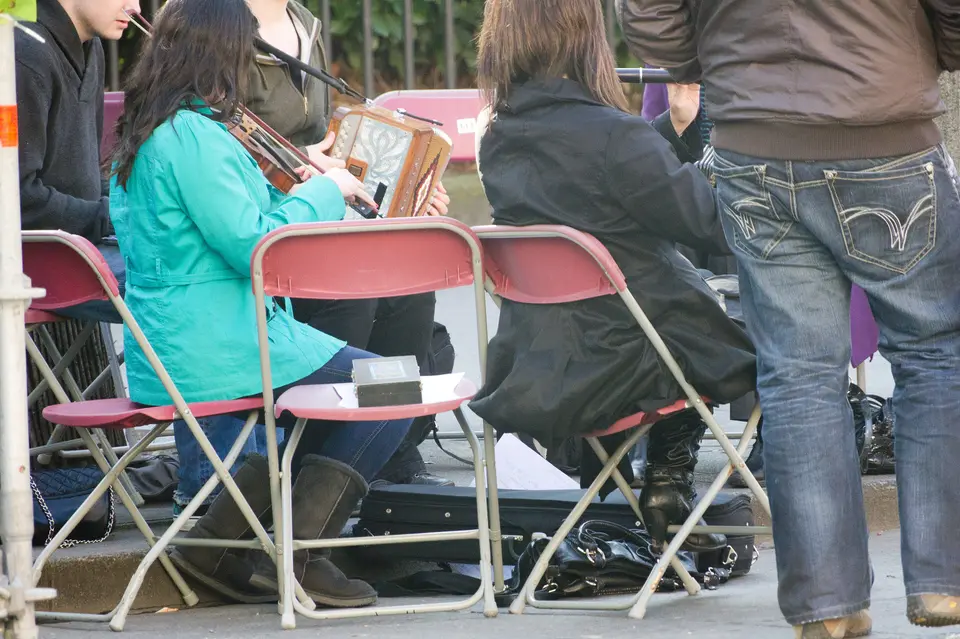
On St Patrick’s Day people wear shamrocks and green. Patrick is said to have used the three-leaved shamrock to explain the Holy Trinity, a story that first appears in writing in 1726. Green ribbons and shamrocks have been worn on the day since at least the 1680s, and the colour grew into a symbol of Ireland over the following centuries. Celebrations include parades, festivals and céilithe, gatherings with traditional music, and the weeks from 1 to 17 March are Seachtain na Gaeilge, Irish Language Week. An old custom, “drowning the shamrock”, puts a shamrock in the bottom of a glass of whiskey, beer or cider, which is drunk as a toast at the end of the day.
Modern celebrations owe much to the Irish abroad. Parades began in North America in the eighteenth century and only spread to Ireland in the twentieth, and until the late twentieth century the day was often celebrated more in the diaspora than at home. Since 2010, Tourism Ireland’s Global Greening has lit up more than 300 landmarks in fifty countries in green.
Dublin’s parade
The National St Patrick’s Day Parade begins at noon on 17 March at Parnell Square, runs down O’Connell Street and over O’Connell Bridge, and crosses the south side of the city to the junction of Cuffe Street and Kevin Street, a route of 3.2 kilometres. International marching bands, pageants and ceremonial groups take part. There are grandstands, but most people find a spot along the route — the organisers advise arriving early.
When it happens
St Patrick’s Day is on 17 March every year, the traditional date of Saint Patrick’s death, and is a public holiday in Ireland. Dublin’s St Patrick’s Festival runs for several days around it — in 2027 from Saturday 13 to Wednesday 17 March — and the national parade starts at noon on the 17th.
- March 17, 2027Calculated
- March 17, 2028Calculated
- March 17, 2029Calculated
- March 17, 2030Calculated
Visiting with respect
Stay safe
- Pickpocketing and bag-snatching happen in Ireland’s larger cities. Keep valuables close in the parade crowds.
Sources
This entry was written from the following sources.
- St Patrick’s Festival DublinSt Patrick’s Festival · read September 17, 2026
- Parade Route & Viewing MapSt Patrick’s Festival · read September 17, 2026
- Saint Patrick's DayWikipedia · read September 17, 2026
- Ireland travel advice: safety and securityUK Foreign, Commonwealth & Development Office · read September 17, 2026
Related festivals
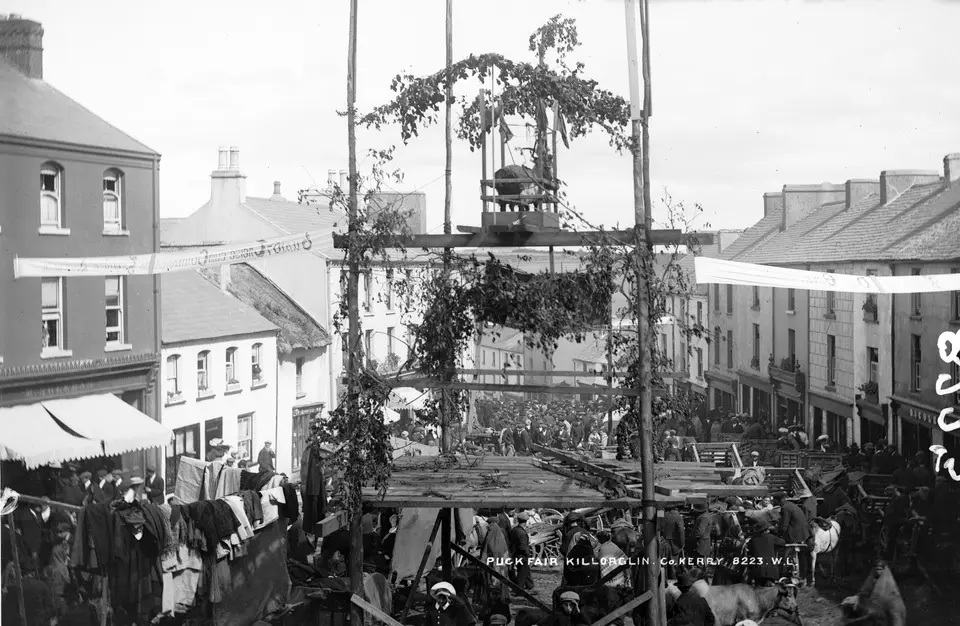
Puck Fair
Aonach an Phoic
Every August a wild goat is brought down from the mountains to the Kerry town of Killorglin, crowned King Puck by a local schoolgirl, and presides over three days of horse and cattle fairs, music and late nights before returning home to the hills.
August 10 – 12, 2027Calculated
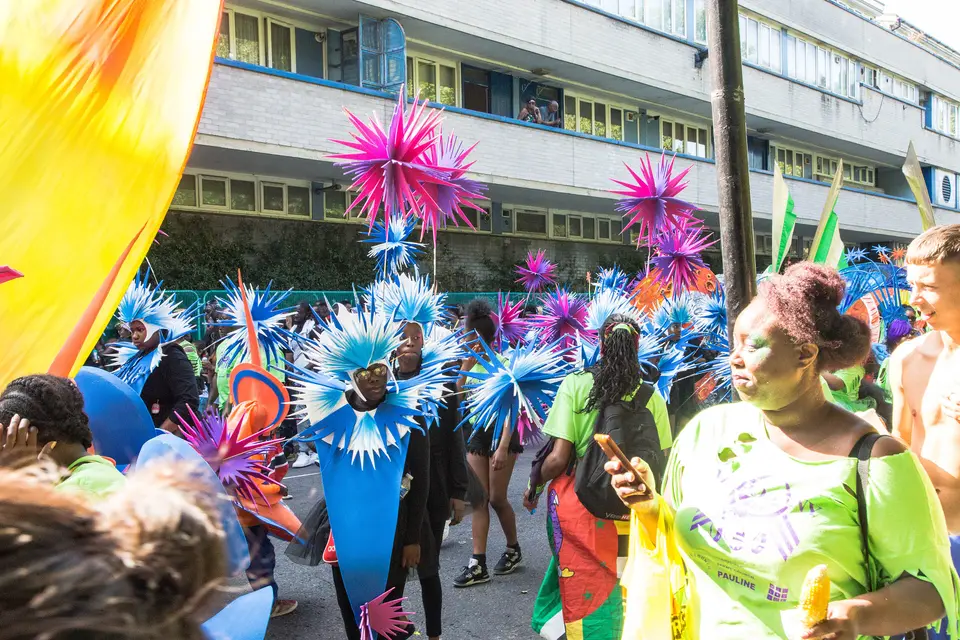
Notting Hill Carnival
Over the August bank holiday weekend around two million people fill the streets of west London for Europe’s largest street festival — Caribbean masquerade bands in feathers and jewels, steel pans, soca and calypso, and the sound systems of Notting Hill.
August 29 – 30, 2027Calculated
Up Helly Aa
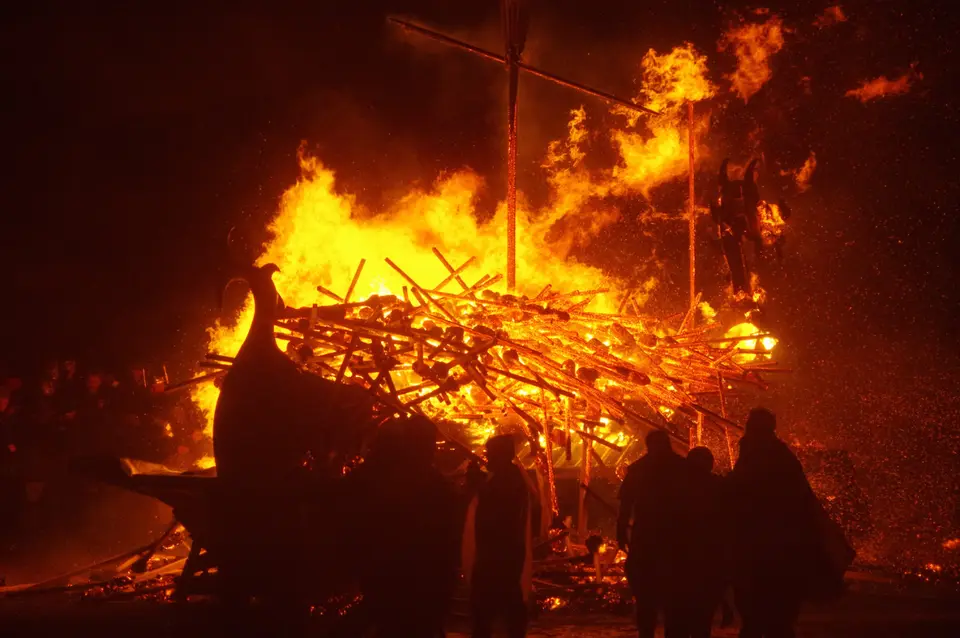
On the last Tuesday of January, Lerwick switches off its streetlights and nearly a thousand costumed guizers carry blazing torches through the town behind a Viking galley — then throw them in and burn it.
January 26, 2027Calculated