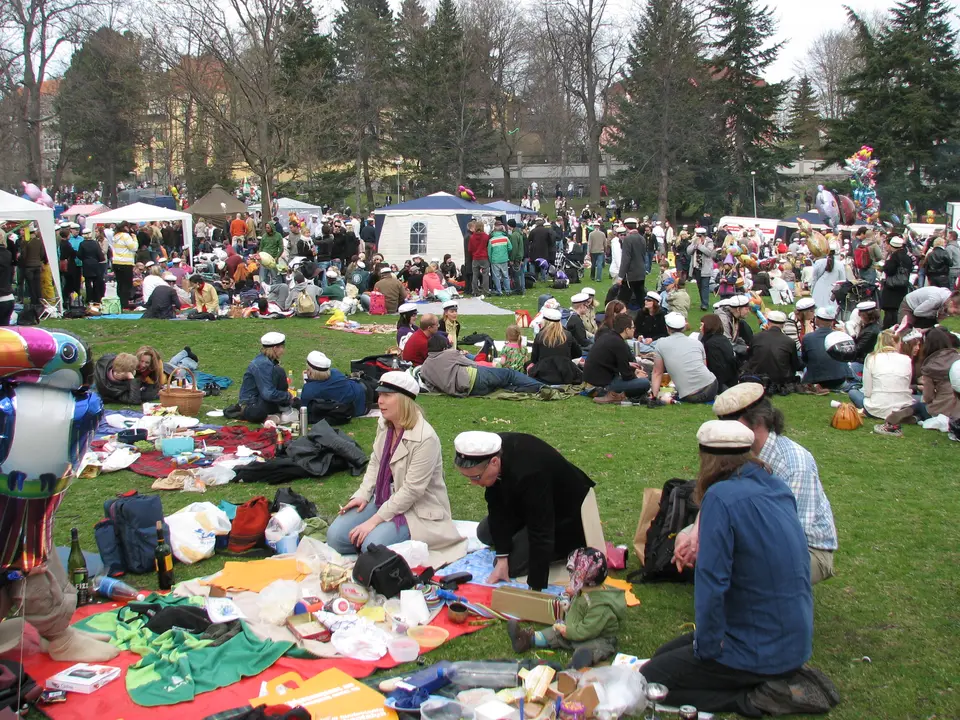
Vappu
Photo: JIP, CC BY-SA 3.0, via Wikimedia Commons
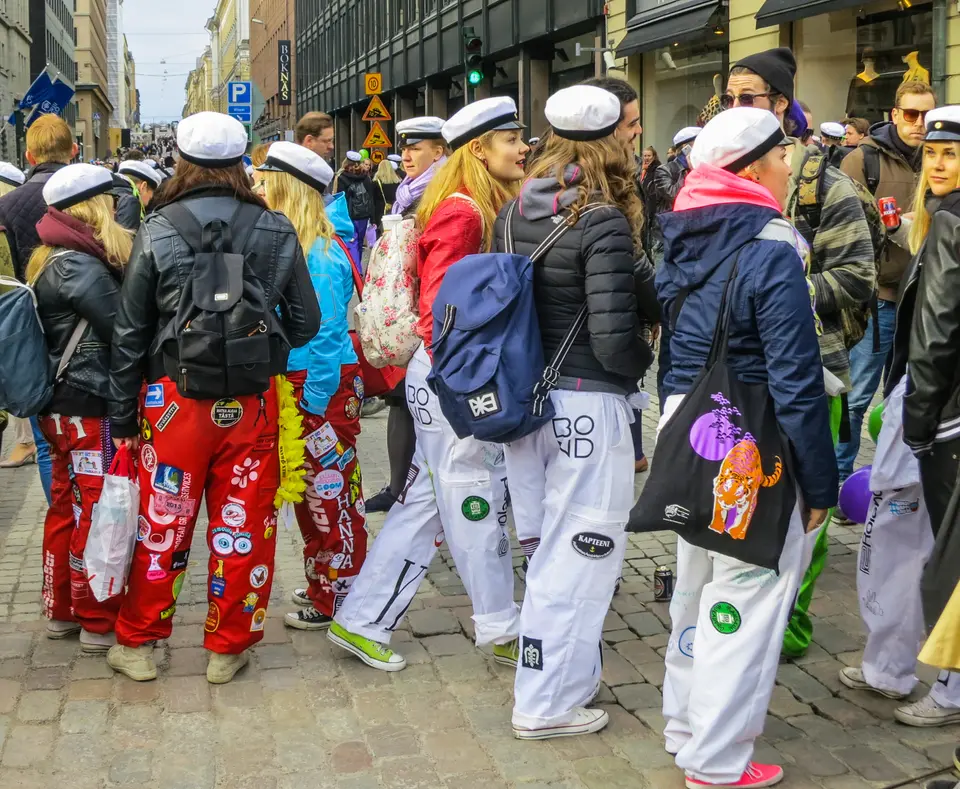
At 6 pm on 30 April, students place a white cap on the head of Helsinki’s mermaid statue, and Finland’s biggest carnival begins — caps and overalls in the streets, sima and sparkling wine, and on 1 May picnics in the parks from early morning.
From an upper-class feast to a student carnival
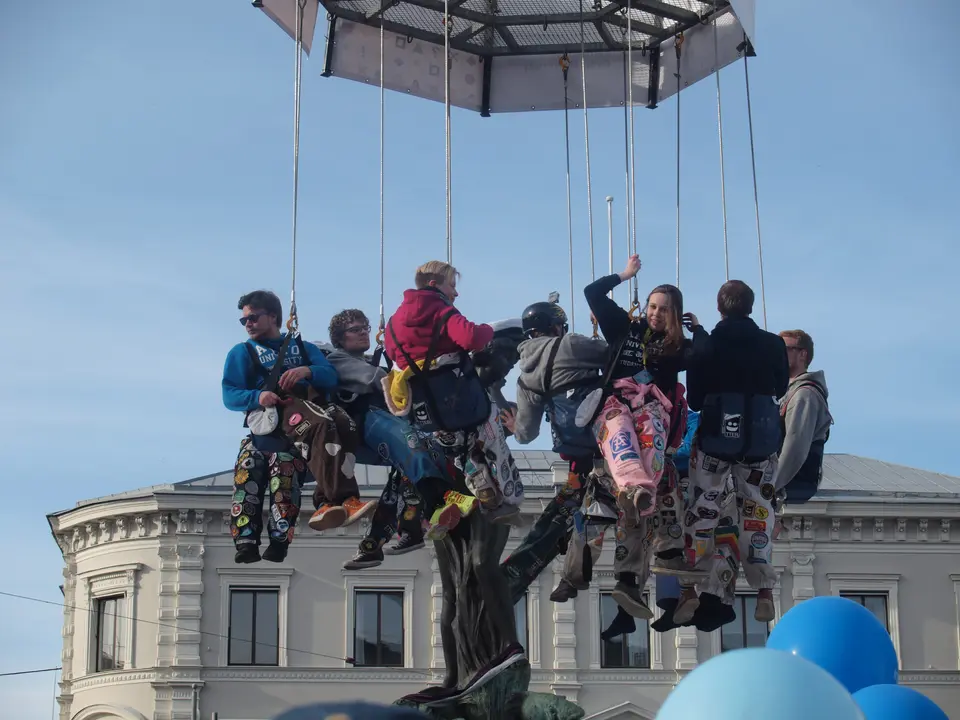
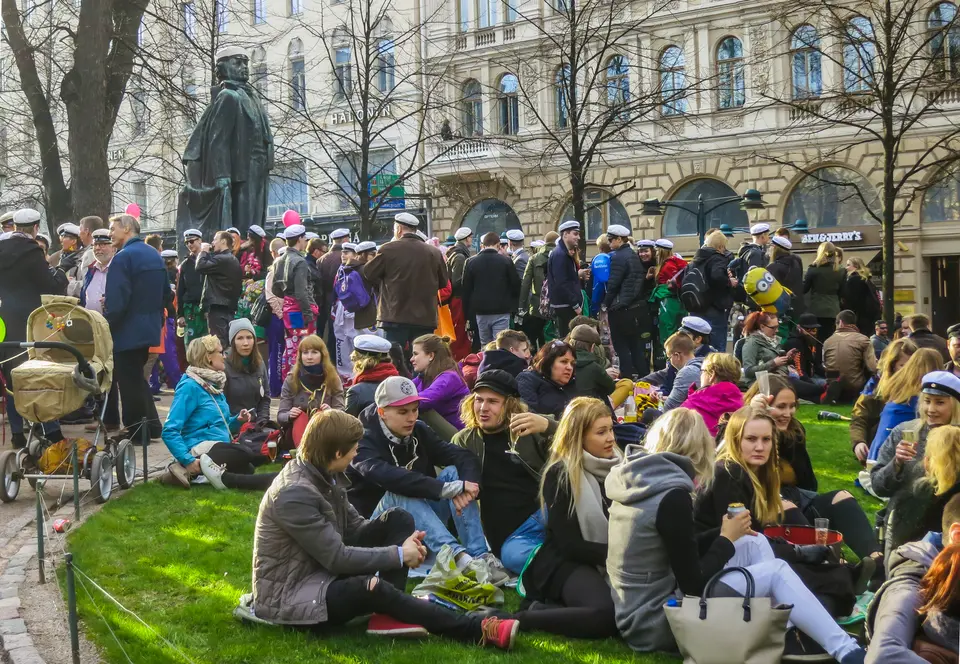
Vappu is the Finnish name for Walpurgis Night, the eve of the feast of Saint Walpurga, an 8th-century abbess, which coincided with older May Eve festivals across northern Europe. In Finland it has become one of the four biggest holidays of the year and the biggest carnival-style festival in the country’s cities and towns. Since the end of the 19th century this traditional upper-class feast has been taken over by university students, and student traditions — particularly those of engineering students — are among its main features. Many former high school students wear the black-and-white student cap, and many university students wear student overalls.
Vappu also coincides with International Workers’ Day. What began with the parties of the left has spread across the whole Finnish political scene, and parties and institutions, including the Lutheran Church, march and make speeches on 1 May.
The capping of Manta
In Helsinki the high point comes at 6 pm on 30 April at Market Square, where university students place a student cap on the head of Havis Amanda, a bronze mermaid rising from the water on a granite fountain, made by the sculptor Ville Vallgren and unveiled in 1908. The ceremony is called Mantan lakitus, “the capping of Manta”, after the statue’s Finnish nickname. Other cities have their own statues: in Turku students cap the Posankka, and in Oulu the statue of Frans Michael Franzén.
On 1 May people celebrate with a picnic in the park, usually with friends on a blanket with food and sparkling wine; some set up lavish spreads with pavilions, white tablecloths, silver candelabras and classical music. The picnics start early in the morning, and some of the previous night’s party-goers simply carry on. Student organisations reserve areas where they camp every year, among student caps, mead, streamers and balloons.
When it happens
Every year from the evening of 30 April through 1 May. In Helsinki the capping of Havis Amanda is at 6 pm on 30 April; for most university students the celebrations start a week earlier.
- April 30 – May 1, 2027Calculated
- April 30 – May 1, 2028Calculated
- April 30 – May 1, 2029Calculated
- April 30 – May 1, 2030Calculated
Visiting with respect
Good to know
- Many high school graduates wear their white student caps, and many university students their overalls; on 1 May the custom is a picnic in the park with friends, food and sparkling wine.
Stay safe
- Crowds gather in city centres and parks; watch out for pickpockets.
- Drink-driving is a serious offence in Finland, and the limit is much lower than in England.
Food and drink
Sima and tippaleipä
Sima is a home-made, low-alcohol mead, traditionally drunk with freshly cooked tippaleipä.
Sources
This entry was written from the following sources.
- Walpurgis NightWikipedia · read September 17, 2026
- Havis AmandaWikipedia · read September 17, 2026
- Finland travel advice: safety and securityUK Foreign, Commonwealth & Development Office · read September 17, 2026
Related festivals
Midsummer
Midsommar
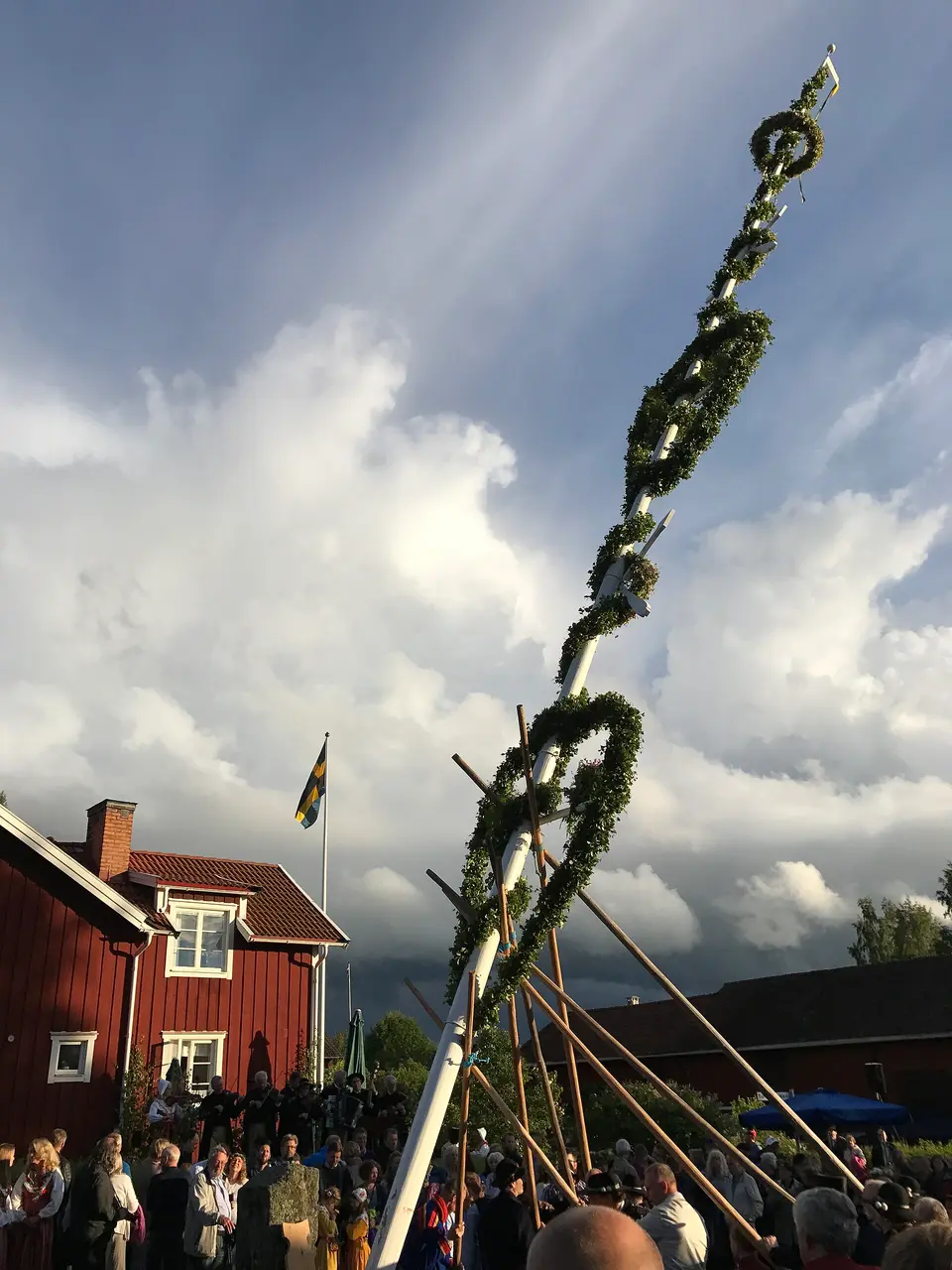
On a Friday in late June, Swedes leave the cities for the countryside, pick flowers for wreaths, raise a pole clad in leaves and dance around it — then sit down to herring, new potatoes and strawberry cake as the light lingers late into the night.
June 25 – 26, 2027Calculated
Syttende mai
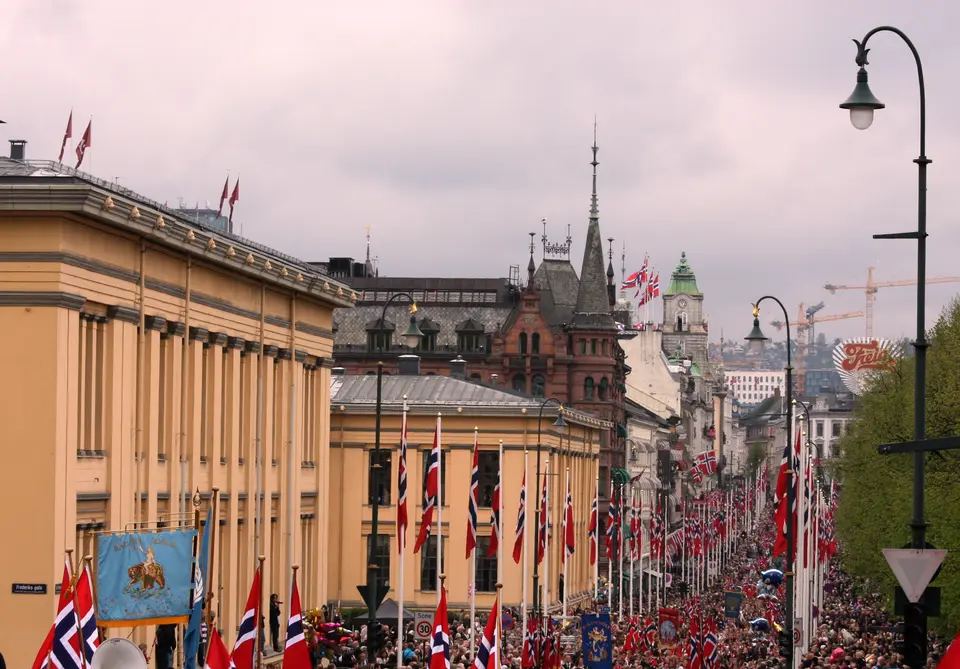
On 17 May, Norway’s National Day, children’s parades with flags, banners and marching bands wind through every community, people in the traditional bunad shout “Hurra!”, and in Oslo the royal family waves from the palace balcony — followed by ice cream and hot dogs.
May 17, 2027Calculated
Oktoberfest
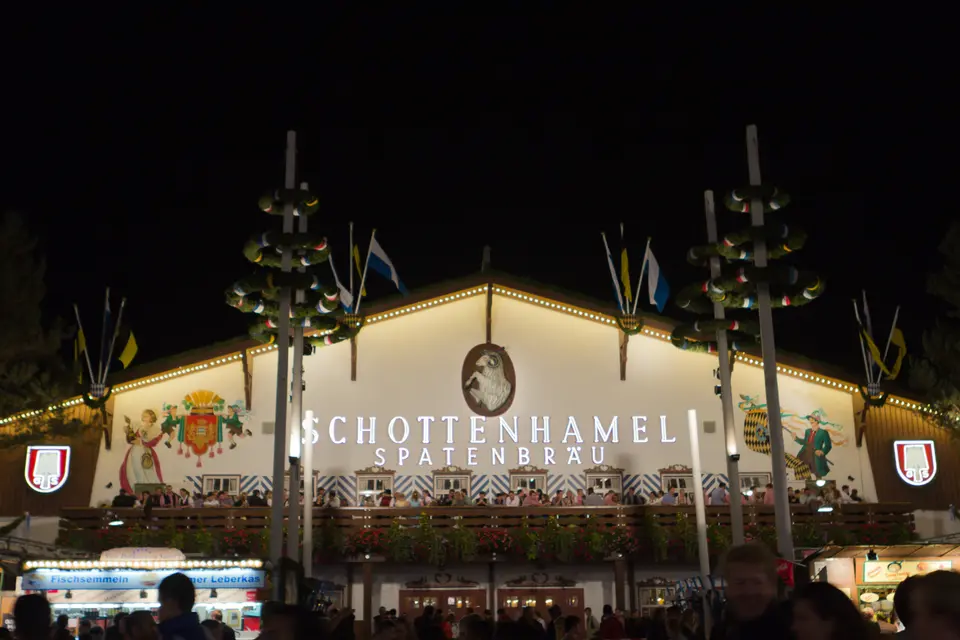
For sixteen days each autumn Munich’s Theresienwiese becomes the world’s largest folk festival — beer tents of the city’s own breweries, a funfair, costume parades and some seven million visitors — a tradition that began with a royal wedding in 1810.
September 19 – October 4, 2026Calculated