Esta página aún no está traducida al español; se muestra el texto original en inglés.
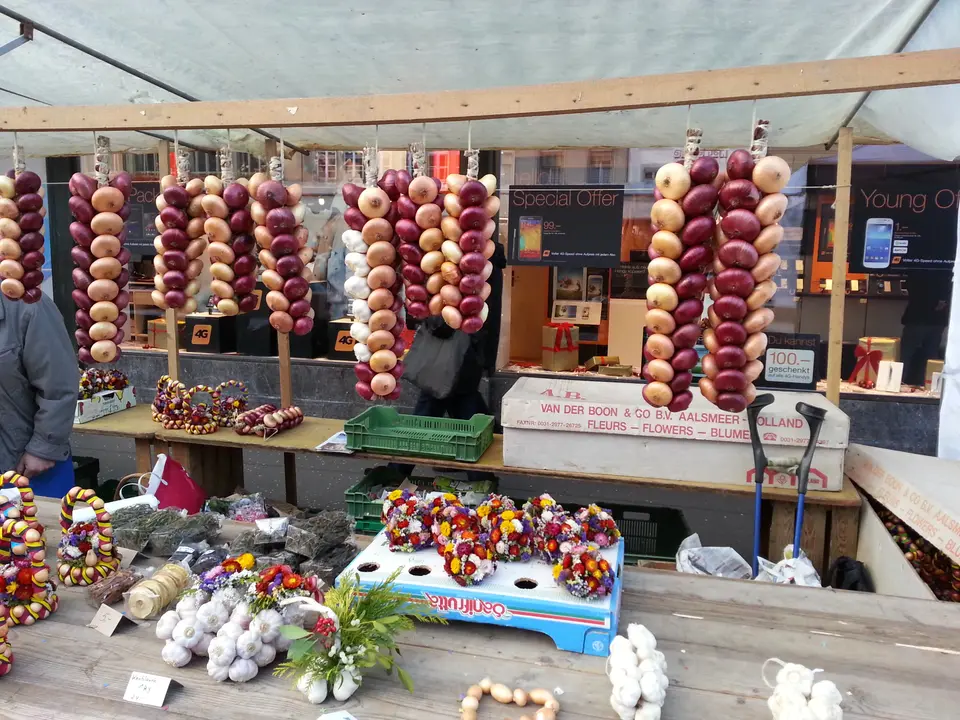
Zibelemärit
Foto: Micha L. Rieser, CC BY-SA 3.0 ch, vía Wikimedia Commons
On the fourth Monday of November, farmers bring tonnes of braided onions and garlic into Bern, and the Swiss capital’s old town turns into a mix of farmers’ market and folk festival — from before dawn until a confetti battle in the afternoon.
Braids of onions
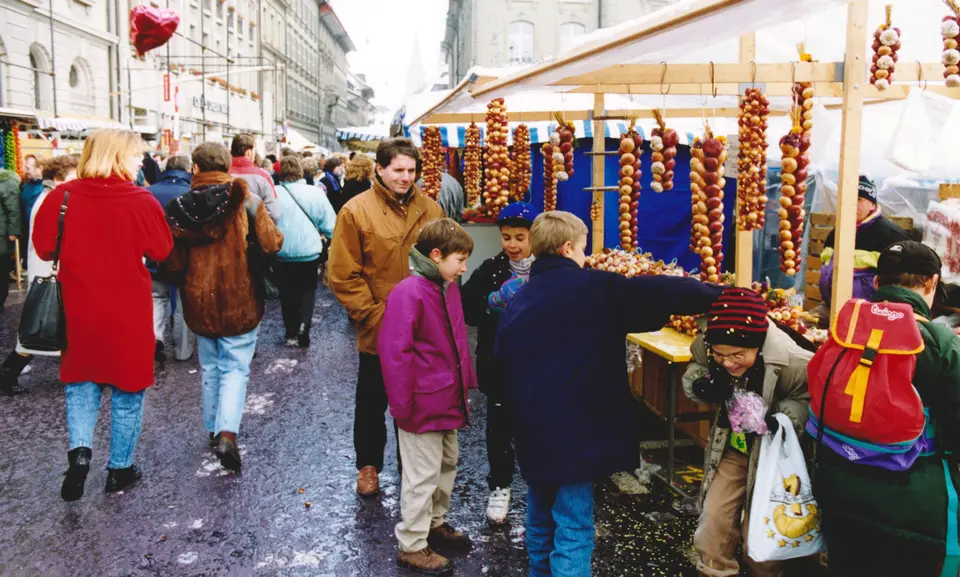
From the official start at six in the morning — and many visitors come earlier — thousands of people crowd the lanes of Bern’s upper old town, the Bundesplatz, the Waisenhausplatz and the Münsterplatz. Farmers sell onions and garlic braided into plaits and wreaths, and decorations and figures made from onions. In 2025 there were 359 stalls in all, and 98 of them sold about 35 tonnes of onions between them. In the afternoon, from about 4 pm, the market dissolves into a wild confetti battle.
From the Martinmas fair
Bern held an autumn market as early as the fifteenth century. Called the Martinimesse, after St Martin’s Day on 11 November, it was where townspeople stocked up for the winter, and in 1439 the authorities made it a toll-free annual fair. A popular legend says the onion market was a reward for the people of Fribourg, who helped Bern after the great fire of 1405, but historians have found no evidence for it. According to the Bernese folklorist Rudolf J. Ramseyer, the onion market itself began in the middle of the nineteenth century, when farm women from the Seeland and the canton of Fribourg — especially from the vegetable-growing slopes of Mont Vully — started bringing their produce to the Martinmas fair. Their braided onions soon became the star of the market. The Zibelemärit is listed among the living traditions of Switzerland.
Cuándo se celebra
The Zibelemärit is always held on the fourth Monday in November. It officially starts at 6 am, although the first sales are made from about 4 am, and ends after 6 pm. It is not a public holiday, but most shops in the old town close at 5 pm.
- 23 de noviembre de 2026Calculada
- 22 de noviembre de 2027Calculada
- 27 de noviembre de 2028Calculada
- 26 de noviembre de 2029Calculada
Comida y bebida
Zwiebelkuchen
Onion tart, sold alongside onion soup and onion pizza; cheese tart is also part of the festive meal.
Chnoblibrot
Garlic bread, sold at the food stalls with mulled wine and other hot drinks.
Nidletäfeli and Bäremutz
Caramels and gingerbread, bought as something sweet after the onion tart.
Fuentes
Esta entrada se escribió a partir de las siguientes fuentes.
- Berner Zibelemärit (Onion Market)Bern Welcome · consultado el 17 de septiembre de 2026
- ZibelemäritWikipedia (German) · consultado el 17 de septiembre de 2026
- ZibelemäritWikipedia · consultado el 17 de septiembre de 2026
Fiestas relacionadas
Nuremberg Christkindlesmarkt
Nürnberger Christkindlesmarkt
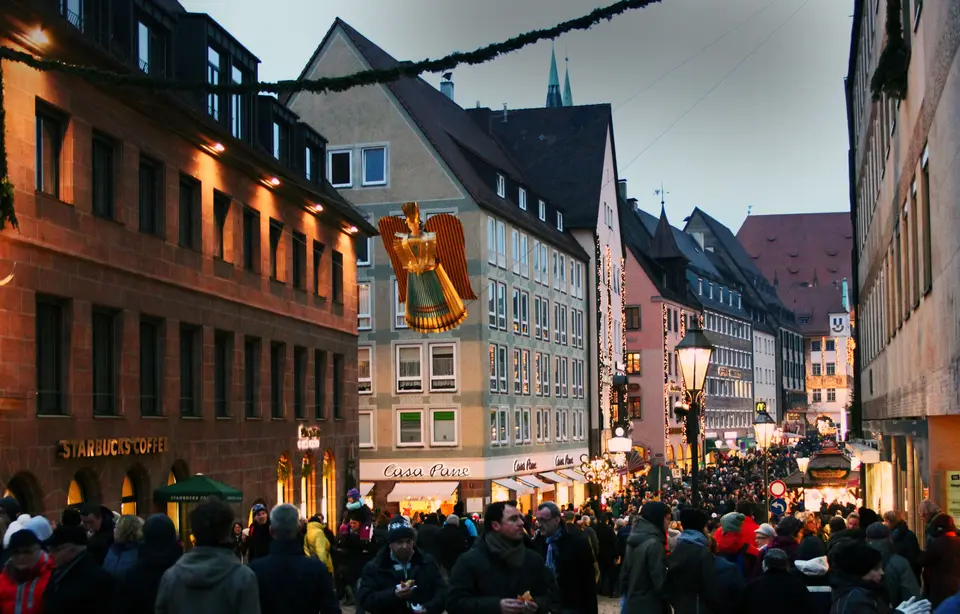
From the Friday before Advent until Christmas Eve, around 180 traders set up red-and-white wooden stalls on Nuremberg’s main square, selling gingerbread, gold-foil angels and nativity figures to more than two and a half million visitors.
27 de noviembre – 24 de diciembre de 2026Calculada
Alasitas
Alasita
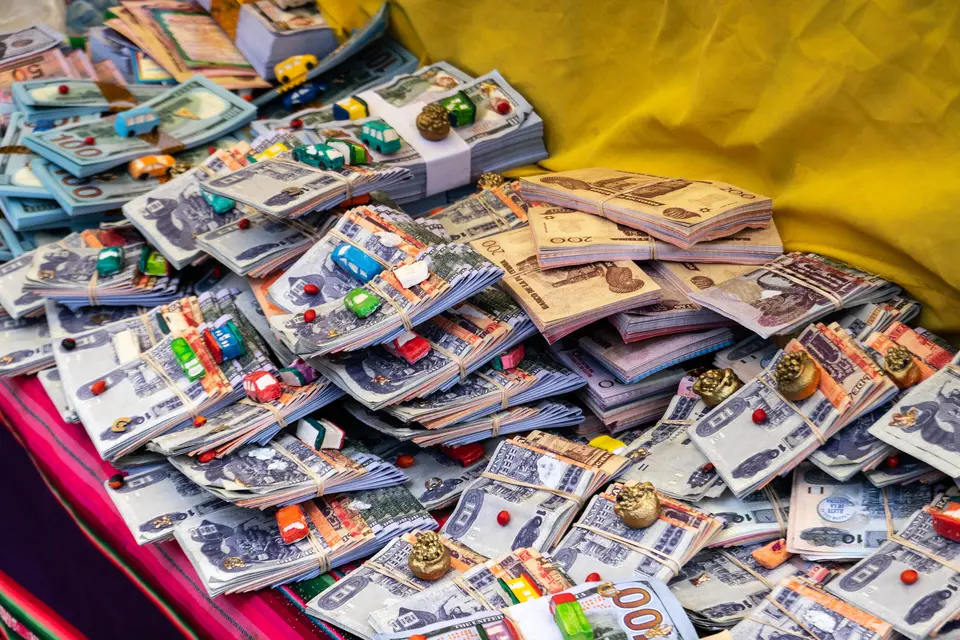
From 24 January, the streets of La Paz fill with stalls selling everything in miniature — houses, cars, diplomas, bundles of tiny banknotes — to be blessed and given away in the hope that the real thing will follow within the year, under the smiling eye of Ekeko, god of abundance.
24 de enero de 2027Calculada

Basel Fasnacht
Basler Fasnacht
At exactly four o’clock on the Monday morning after Ash Wednesday, Basel switches off its lights and thousands of masked piccolo players and drummers march out behind glowing lanterns — the start of 72 hours of satire, confetti and music that UNESCO lists as world heritage.
15–17 de febrero de 2027Calculada