Cette page n’est pas encore traduite en français ; le texte original anglais est affiché.
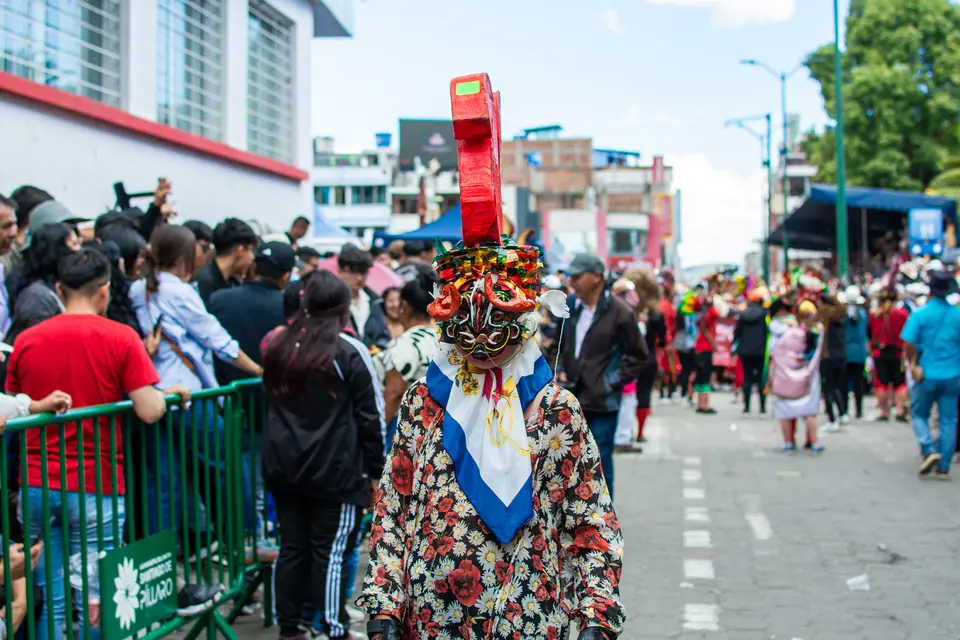
From 1 to 6 January, troupes of devils from the neighbourhoods of Píllaro dance through the town in masks of painted papier-mâché — a tradition said to have begun as a protest against colonial masters and preachers.
Devils against the preachers
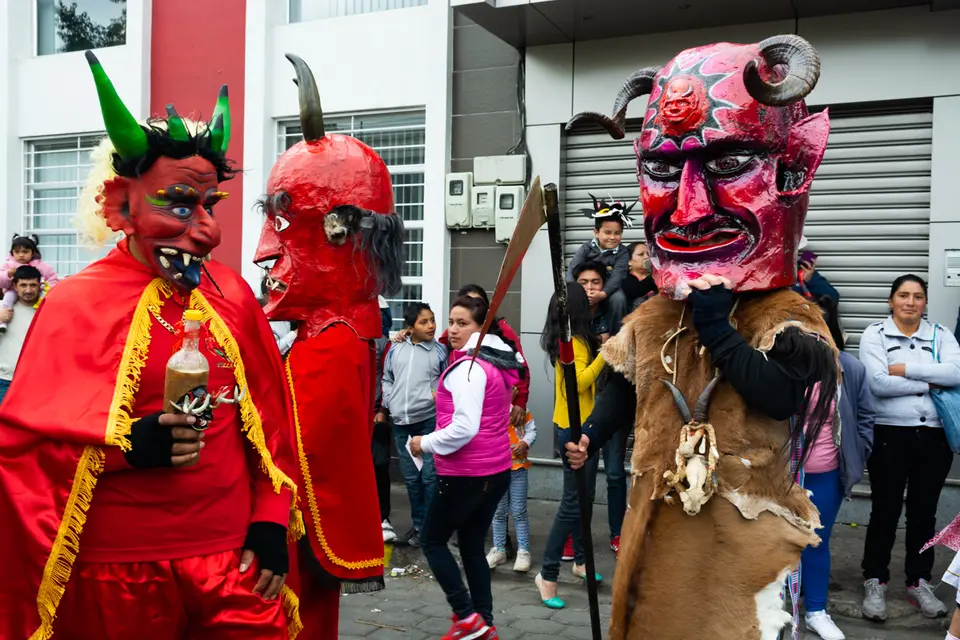
The festival was long known as the fiesta de inocentes, los disfrazados — the disguised ones — or simply los diablos; it took the name diablada later, from the devil dances of the Oruro carnival in Bolivia. Oral tradition says that in colonial times the Indigenous people of the area dressed as devils to reject the imposition of the Catholic faith by the priests and the physical, economic and moral mistreatment they suffered at the hands of the Spaniards. Another story tells of the men of Tunguipamba, who walked to a neighbouring village to court its young women; the local men tried to scare them off with figures made from gourds and, when that failed, dressed up as devils. In 2009 the Diablada was declared part of Ecuador’s Intangible Cultural Heritage.
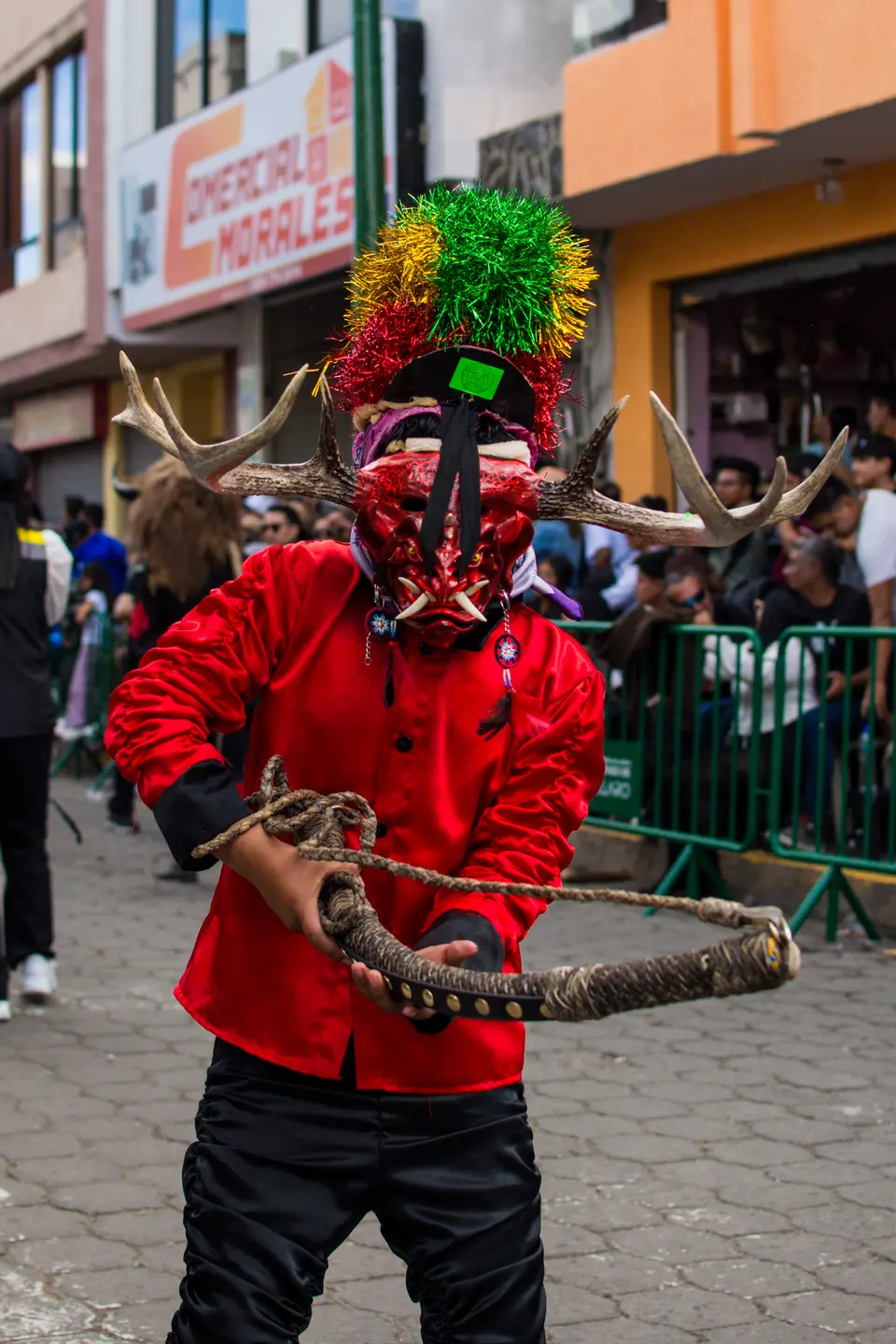
The dance was once a courtship: couples danced side by side in lines, and a man who chose a partner had to speak to her parents and pay the costs of taking part. The devils of the past wore short fringed or zigzag trousers, carried a whip and a goat’s foot, and wore live animals or animal skins on their heads — and trying to find out who was behind a mask could end in a fight with whips.
The troupes and their masks
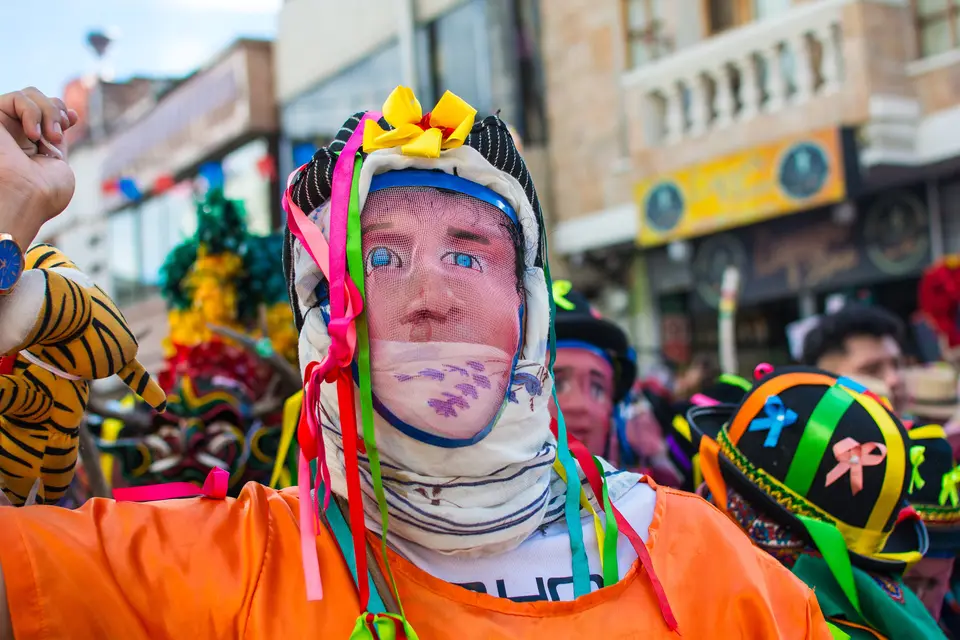
Today the devils dance through the streets in partidas or troupes organised by the neighbourhoods, to pasacalles and pasillos, sanjuanitos, capishcas and albazos played by village bands. Alongside the devils dance the carishinas; the women, who once wore short coloured dresses and ribboned hats, now wear long pleated skirts, short-sleeved blouses and shawls.
Preparations begin months ahead, above all the making of the masks, which are the work of local craftspeople. Layers of paper and card are glued with a paste of cassava flour over a mould, filled out with putty and more paper, cut open at the eyes and mouth and painted in red and black, the colours of hell. Over the years the masks have grown more complex, influenced by those of the festivals of Bolivia and Peru, and the devils who wear them leap and growl as they dance.
Quand a-t-elle lieu
Every year from 1 to 6 January, with troupes from different neighbourhoods parading each day.
- 1–6 janvier 2027Calculée
- 1–6 janvier 2028Calculée
- 1–6 janvier 2029Calculée
- 1–6 janvier 2030Calculée
Visiter avec respect
Sécurité
- Pickpocketing is common in crowds; keep valuables out of sight and carry only the money you need for the day.
- Do not hail taxis on the street — many express kidnappings in Ecuador start that way.
Sources
Cette entrée a été rédigée à partir des sources suivantes.
- Diablada Pillareña 2025Gobierno Autónomo Descentralizado Municipal de Santiago de Píllaro · consulté le 17 septembre 2026
- Diablada de PíllaroWikipedia (Spanish) · consulté le 17 septembre 2026
- PíllaroWikipedia (Spanish) · consulté le 17 septembre 2026
- Ecuador travel advice: safety and securityUK Foreign, Commonwealth & Development Office · consulté le 17 septembre 2026
Fêtes apparentées
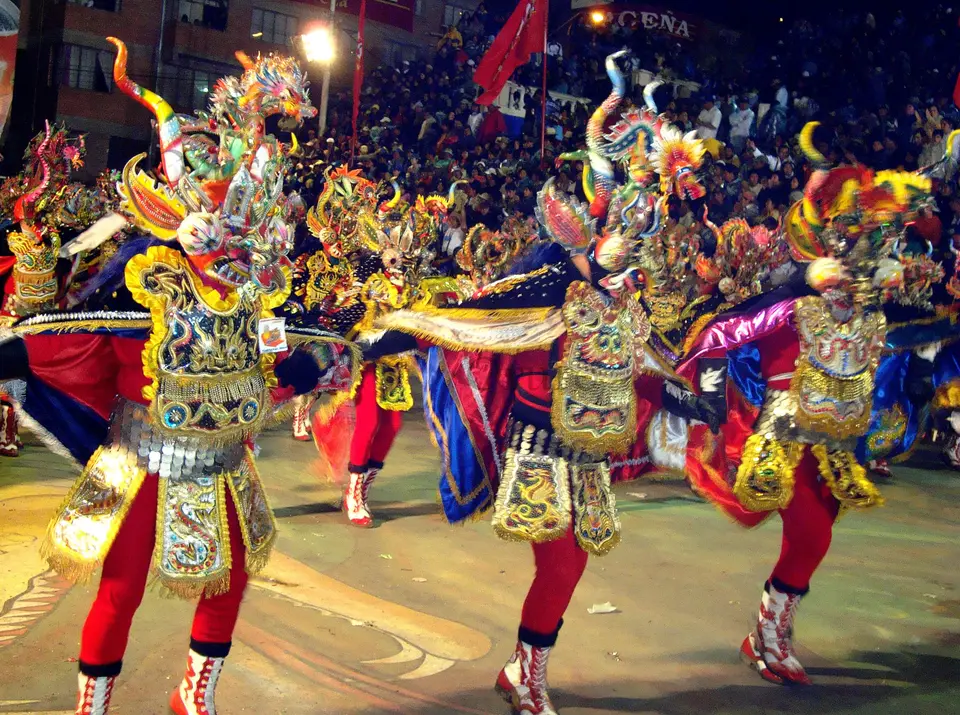
Carnival of Oruro
Carnaval de Oruro
In the Bolivian highlands, some 28,000 dancers and 10,000 musicians dance their way along a four-kilometre route to the Sanctuary of the Virgin of the Mineshaft — devils, llama herders and caporales in a carnival where Andean gods and Catholic saints have long shared the stage.
6–8 février 2027Calculée
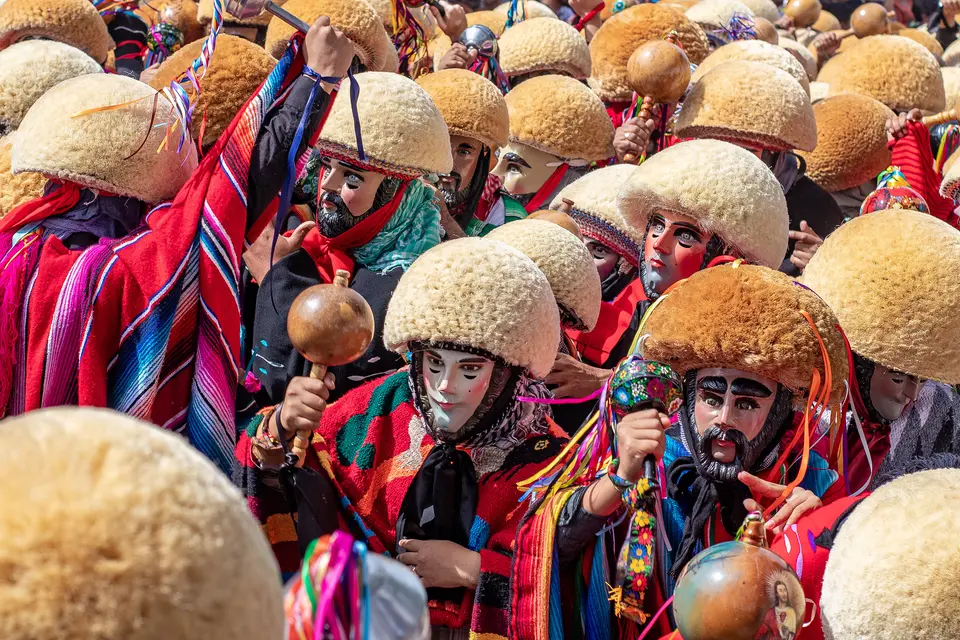
Parachicos of Chiapa de Corzo
Fiesta Grande de Enero — Parachicos
For almost three weeks every January, the dancers of Chiapa de Corzo put on carved wooden masks, shake their maracas and carry the images of their saints through the streets from morning to night, in the town’s Great Feast.
4–23 janvier 2027Calculée
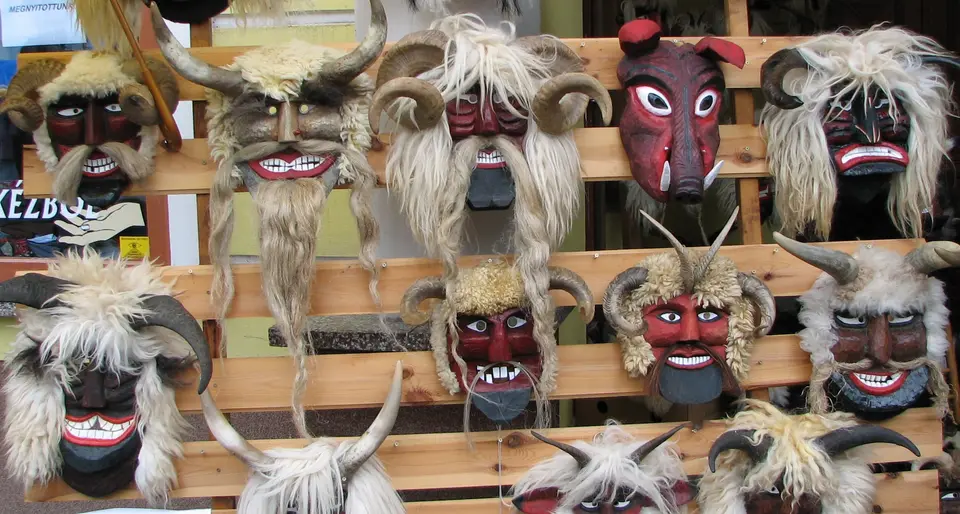
Busójárás
At the end of carnival, the Danube town of Mohács is overrun by busós — men in carved wooden masks and shaggy sheepskins who arrive by rowing boat, parade through the streets with noise and fire, and burn a coffin that stands for winter.
4–9 février 2027Calculée