Halaman ini belum diterjemahkan ke bahasa Indonesia; teks asli bahasa Inggris ditampilkan.

Tunisia keeps the Prophet's birthday with a bowl of dark pudding made from pine seeds — a famine food from the 1860s that became the sweet of the year. In Kairouan it is also a night of banners and devotional singing that fills the oldest mosque in the Maghreb.
The city it belongs to
If Mouled has a capital it is Kairouan. The city was founded in the seventh century and its Great Mosque, begun by the Arab general Uqba ibn Nafi in 50 AH — 670 or 671 CE — became the model for every later mosque in the Maghreb. Its minaret, largely of the early ninth century and about 836, is the oldest minaret standing anywhere in the Muslim world: 31.5 metres on a square base of 10.7. The courtyard runs roughly 67 by 52 metres and the prayer hall 70.6 by 37.5. The town has been a UNESCO World Heritage site since 1988.
The spiritual centre of Mouled in the city is not the Great Mosque but the Zaouia of Sidi Sahib, recognisable by its seven white cupolas and its seventeenth-century tilework. Many of the processions end at the Great Mosque. In recent years close to a million people have come to the city over the festival.
Banners and madih
What you hear is the Sufi side of it. Brotherhoods and folk troupes move through the streets carrying embroidered banners and singing madih, devotional hymns in praise of the Prophet. Stambeli — the Black Tunisian ritual tradition, with roots that run across the Sahara — is part of the sound too.
Away from Kairouan, Mouled turns inward. It is a household day: neighbours exchange bowls, children get new clothes, and the season is a traditional one for weddings.
A famine that became a dessert
Assidat zgougou is what Mouled tastes like. It is made from the seeds of the Aleppo pine, ground to a flour, cooked into a dark pudding and covered with a pale custard and a scatter of nuts.
It was not invented for a feast. It came out of the famine of 1864 to 1867, when families in the north-west found that the pine seeds nobody had bothered with could be turned into flour that would keep a household alive. What was eaten because there was nothing else is now the most anticipated sweet in the Tunisian year — made in quantity, carried between houses, and impossible to find at any other season.
The same night, a different practice
Tivaouane in Senegal keeps the identical date with ten nights of the Burda and a single great vigil. Kairouan keeps it with processions, zaouias and pudding. The calendar is the same arithmetic; what is done with the night is not.
Kapan berlangsung
12 Rabi' al-awwal, the third month of the lunar Hijri calendar, which moves about eleven days earlier each Gregorian year. The day is confirmed locally.
- 14 Agustus 202712 Rabiulawal 1449 HPerkiraan
- 3 Agustus 202812 Rabiulawal 1450 HPerkiraan
- 24 Juli 202912 Rabiulawal 1451 HPerkiraan
- 13 Juli 203012 Rabiulawal 1452 HPerkiraan
Makanan dan minuman
Assidat zgougou
A dark, fragrant pudding of ground Aleppo pine seeds, poured into bowls, topped with pale custard and decorated with pistachios, hazelnuts and almonds. It is particular to Tunisia. Families exchange bowls of it with their neighbours on the day.


Sumber
Entri ini ditulis berdasarkan sumber-sumber berikut.
- Mouled in Tunisia: The Prophet's Birthday, from Kairouan's Processions to a Bowl of ZgougouCarthage Magazine · diakses 26 September 2026
- Great Mosque of KairouanWikipedia · diakses 26 September 2026
Festival terkait

Gamou Tivaouane
Gamou de Tivaouane
Senegal punya dua ziarah raksasa dan keduanya milik dua tarekat. Kaum Murid berjalan ke Touba pada bulan Safar; kaum Tijani memadati Tivaouane pada malam kedua belas Rabiulawal, setelah sepuluh malam melantunkan sebuah kasidah abad ketiga belas untuk memuji Nabi.
14 Agustus 2027Perkiraan
Festival Internasional Sahara
المهرجان الدولي للصحراء بدوز
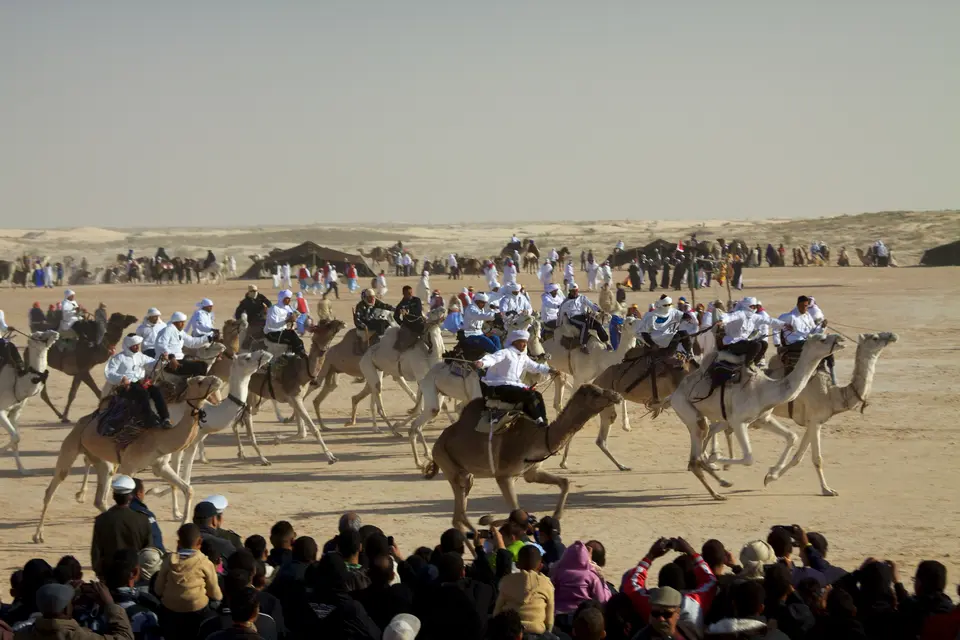
Selama empat hari pada akhir Desember, Douz merayakan kehidupan padang pasir: pacuan unta dan fantasia di lapangan pasir luas yang dikelilingi kemah Badui, berburu dengan anjing sloughi, pernikahan Badui, puisi rakyat, dan pada malam hari musik serta tarian dari seluruh dunia Arab dan sekitarnya.
Desember 2026Perkiraan periode
Moussem Tan-Tan
موسم طانطان
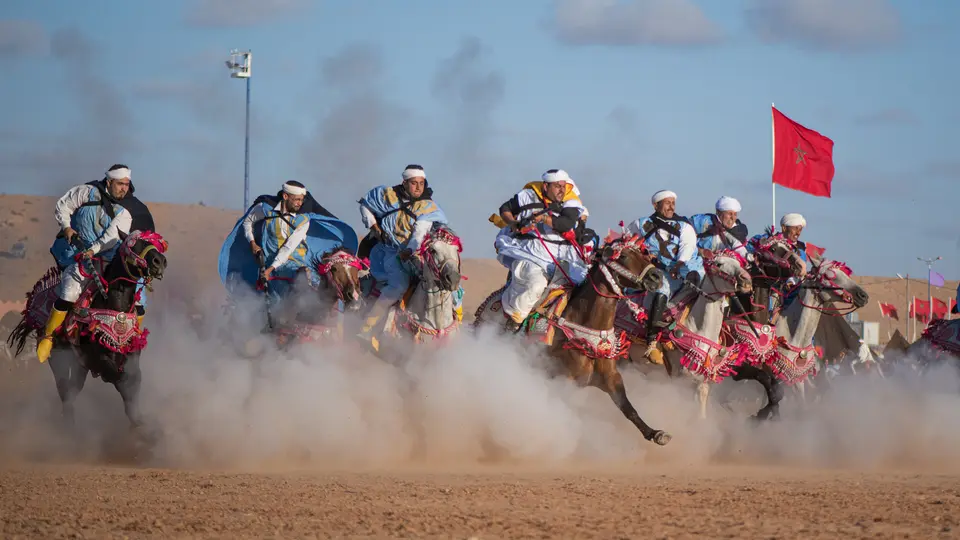
Di tepi Sahara, masyarakat pengembara dari lebih dari tiga puluh suku berkumpul dalam pasar raya tahunan unta dan kuda, kemah dan perdagangan, puisi serta nyanyian Hassani — yang dihidupkan kembali setelah seperempat abad tak dapat digelar.
3–7 Oktober 2026Diumumkan resmi
Komentar
Pernah ke sana? Ceritakan kepada pembaca lain apa yang menanti.
Belum ada komentar.
Komentar dibaca pemilik situs sebelum tampil.