本页尚未翻译成中文,以下为英文原文。

Tunisia keeps the Prophet's birthday with a bowl of dark pudding made from pine seeds — a famine food from the 1860s that became the sweet of the year. In Kairouan it is also a night of banners and devotional singing that fills the oldest mosque in the Maghreb.
The city it belongs to
If Mouled has a capital it is Kairouan. The city was founded in the seventh century and its Great Mosque, begun by the Arab general Uqba ibn Nafi in 50 AH — 670 or 671 CE — became the model for every later mosque in the Maghreb. Its minaret, largely of the early ninth century and about 836, is the oldest minaret standing anywhere in the Muslim world: 31.5 metres on a square base of 10.7. The courtyard runs roughly 67 by 52 metres and the prayer hall 70.6 by 37.5. The town has been a UNESCO World Heritage site since 1988.
The spiritual centre of Mouled in the city is not the Great Mosque but the Zaouia of Sidi Sahib, recognisable by its seven white cupolas and its seventeenth-century tilework. Many of the processions end at the Great Mosque. In recent years close to a million people have come to the city over the festival.
Banners and madih
What you hear is the Sufi side of it. Brotherhoods and folk troupes move through the streets carrying embroidered banners and singing madih, devotional hymns in praise of the Prophet. Stambeli — the Black Tunisian ritual tradition, with roots that run across the Sahara — is part of the sound too.
Away from Kairouan, Mouled turns inward. It is a household day: neighbours exchange bowls, children get new clothes, and the season is a traditional one for weddings.
A famine that became a dessert
Assidat zgougou is what Mouled tastes like. It is made from the seeds of the Aleppo pine, ground to a flour, cooked into a dark pudding and covered with a pale custard and a scatter of nuts.
It was not invented for a feast. It came out of the famine of 1864 to 1867, when families in the north-west found that the pine seeds nobody had bothered with could be turned into flour that would keep a household alive. What was eaten because there was nothing else is now the most anticipated sweet in the Tunisian year — made in quantity, carried between houses, and impossible to find at any other season.
The same night, a different practice
Tivaouane in Senegal keeps the identical date with ten nights of the Burda and a single great vigil. Kairouan keeps it with processions, zaouias and pudding. The calendar is the same arithmetic; what is done with the night is not.
举行时间
12 Rabi' al-awwal, the third month of the lunar Hijri calendar, which moves about eleven days earlier each Gregorian year. The day is confirmed locally.
- 2027年8月14日伊斯兰历1449年3月12日预估日期
- 2028年8月3日伊斯兰历1450年3月12日预估日期
- 2029年7月24日伊斯兰历1451年3月12日预估日期
- 2030年7月13日伊斯兰历1452年3月12日预估日期
节庆饮食
Assidat zgougou
A dark, fragrant pudding of ground Aleppo pine seeds, poured into bowls, topped with pale custard and decorated with pistachios, hazelnuts and almonds. It is particular to Tunisia. Families exchange bowls of it with their neighbours on the day.


资料来源
本条目依据以下资料写成。
- Mouled in Tunisia: The Prophet's Birthday, from Kairouan's Processions to a Bowl of ZgougouCarthage Magazine · 2026年9月26日 查阅
- Great Mosque of KairouanWikipedia · 2026年9月26日 查阅
相关节庆

提瓦万圣纪节
Gamou de Tivaouane
塞内加尔有两场庞大的朝聚,各属一个教团。穆里德派在伊斯兰历二月走向图巴;提加尼派则在三月十二日之夜挤满提瓦万——在此之前,他们已连诵十夜一首十三世纪赞美先知的长诗。
2027年8月14日预估日期
国际撒哈拉节
المهرجان الدولي للصحراء بدوز
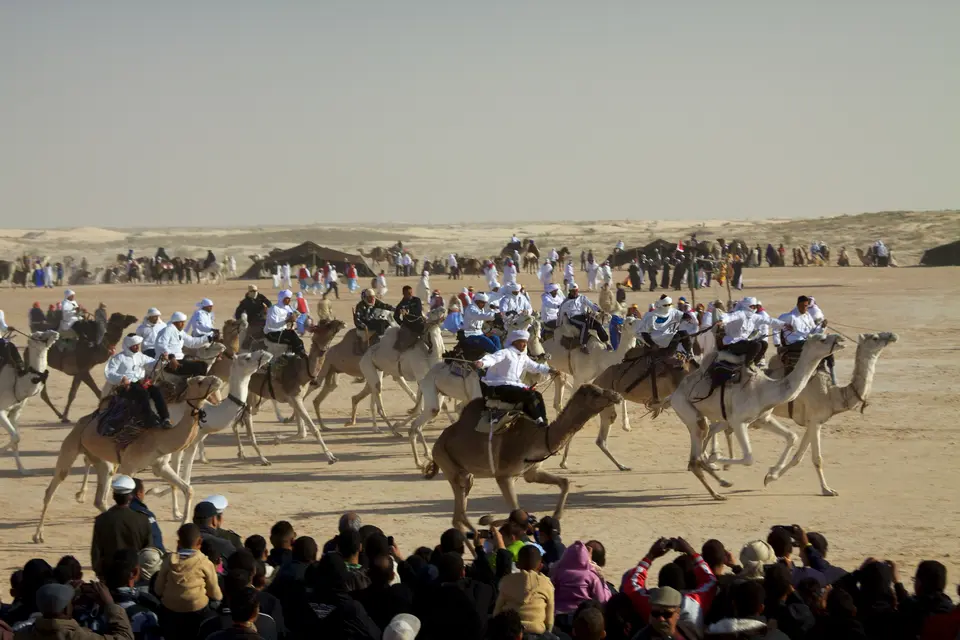
十二月底的四天里,杜兹庆祝沙漠生活——在贝都因帐篷环绕的广阔沙地广场上举行骆驼赛跑和骑术表演,带着萨路基猎犬狩猎,重现贝都因婚礼,吟诵民间诗歌;夜晚则有来自阿拉伯世界及更远地方的音乐和舞蹈。
2026年12月大致时段
坦坦穆塞姆节
موسم طانطان
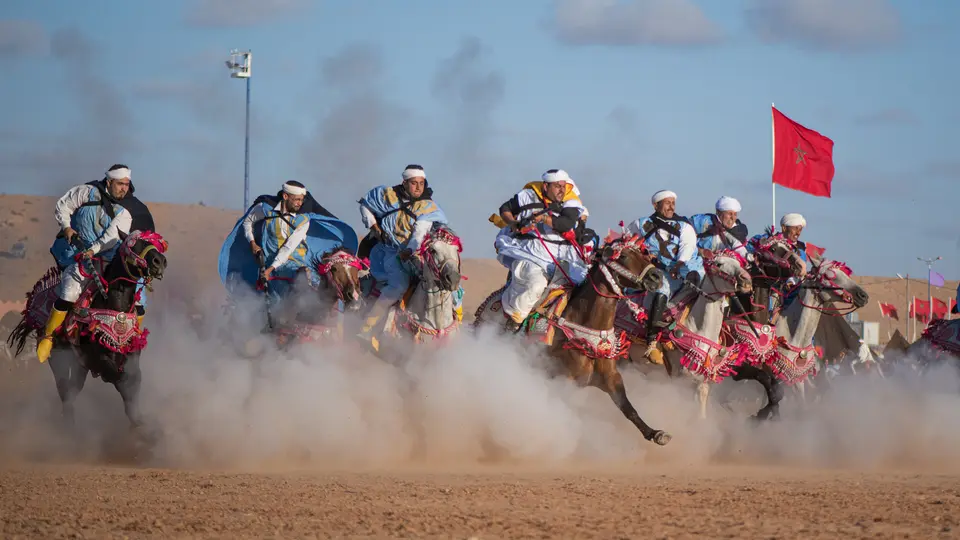
在撒哈拉边缘,来自三十多个部落的游牧民族汇聚一堂,举办盛大的年度集会:骆驼和马匹、帐篷与交易、哈萨尼语的诗歌和歌谣——这个节日曾停办四分之一个世纪,后来又重新举办。
2026年10月3日至7日官方公布
评论
你去过吗?告诉其他读者那里是什么样子。
还没有评论。
评论由站长阅览后才会出现。