このページはまだ日本語に翻訳されていません。英語の原文を表示しています。

At noon on 30 July 1980 the flag went up in Port Vila and at more than ninety other grounds across the islands at the same moment. The country it made has eighty-three islands and over a hundred languages, and the flag carries thirty-nine leaflets for the thirty-nine members of its first parliament.
Two empires, one archipelago
Vanuatu was the New Hebrides, and from 1906 it was run as the Anglo-French Condominium — governed by Britain and France at once, with two police forces, two legal systems and two of most other things. It became independent on 30 July 1980 with Walter Lini as its first prime minister; he stayed in office until 1991.
Independence did not arrive cleanly. On Espiritu Santo the Nagriamel movement, led by Jimmy Stevens and Chief Buluk and funded from abroad by the Phoenix Foundation, had been resisting land clearances and in January 1980 declared an independent Republic of Vemarana. The brief conflict that followed independence is remembered as the Coconut War.
What the day founded is a country of about eighty-three islands, sixty-five of them inhabited, with more than a hundred indigenous languages — all of them Oceanic, all Austronesian — among a population the 2020 census put at 300,019. Few places on earth carry that much linguistic variety for that few people.
Reading the flag
The flag was adopted on 18 February 1980, chosen by a parliamentary committee from designs submitted by local artists; it grew out of a party flag drawn by Kalontas Mahlon in 1977.
Green is the richness of the islands. Red is blood, which unites human beings as human beings. Black is the Melanesian ni-Vanuatu people, and the yellow was added at Walter Lini's request to make the black stand out. The yellow Y is the shape of the archipelago on the map, and the light of the gospel running through it.
In the black field sits a boar's tusk, worn as a pendant on the islands and standing for custom and tradition and for prosperity, crossed by two fronds of the namele tree, which stand for peace. Their leaflets number thirty-nine, one for each of the thirty-nine members of the first parliament. It is a flag that can be read, and on 30 July a great many small paper copies of it are carried by children.
The day itself
The first one set the pattern. At exactly twelve o'clock on 30 July 1980 the flag was raised at the main celebration ground in Port Vila, and at more than ninety other flag-raising centres around the country at the same time.
Port Vila still holds the largest of it, and thousands come for the flag-raising and the parade. Around that there are custom dances, string bands — ukulele and guitar, the popular music of the islands — face painting, kava, and sporting competitions including yacht and canoe races in the harbour. It starts in the afternoon and goes through the night into the next morning.
開催時期
30 July, every year. The flag-raising is at midday; the celebrations run from the afternoon through the night.
- 2027年7月30日算出
- 2028年7月30日算出
- 2029年7月30日算出
- 2030年7月30日算出


出典
この項目は次の資料をもとに書かれています。
- VanuatuWikipedia · 2026年9月26日 閲覧
- Flag of VanuatuWikipedia · 2026年9月26日 閲覧
関連する祭り
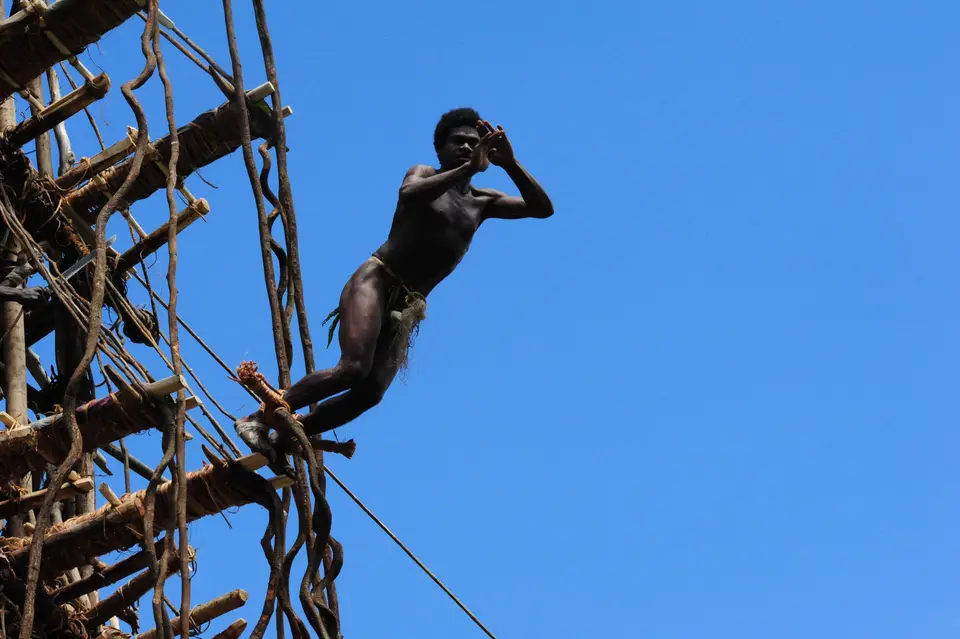
ペンテコスト島の陸のダイビング
Nanggol
ヤムイモの収穫が済むと、ペンテコスト島南部の男たちは切り出したばかりの木を蔓で縛って塔を建て、足首に蔓を結んで台から次々に飛び降ります。耕した土に肩をかすめることをめざし、高く跳ぶほど収穫はよいとされます。
2027/04~2027/06おおよその時期
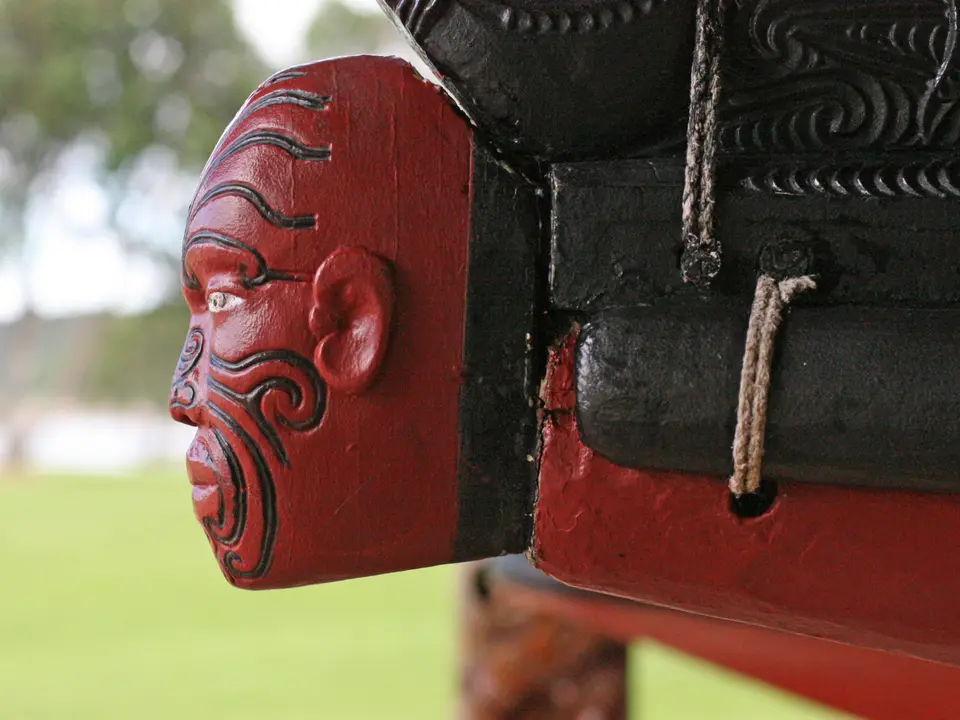
ワイタンギ・デー
Te Rā o Waitangi
ニュージーランドの建国記念日は、1840年2月6日に英国王室とマオリの首長たちが結んだワイタンギ条約の署名を記念します。夜明けの礼拝、演説、カパ・ハカ、条約記念地の入り江のワカ。ときに抗議と議論の日でもあります。
2027年2月6日算出
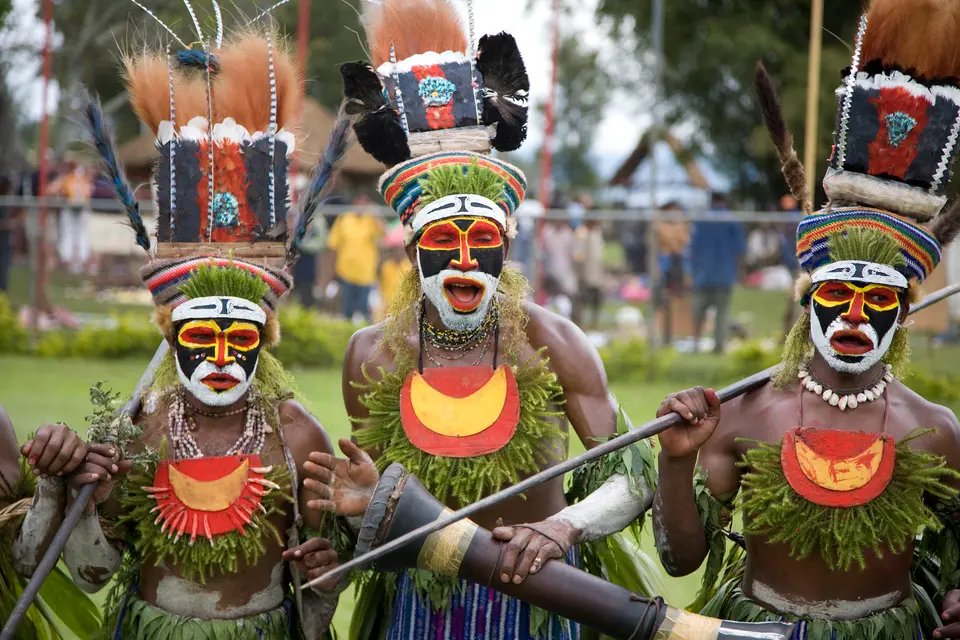
ゴロカ・ショー
Goroka Show
独立記念日のころ、パプアニューギニア各地からおよそ百の部族がゴロカに集まり、国内最大の「シンシン」を開きます。顔に施した彩り、音楽と踊り、そして泥の面をかぶったアサロの「泥人間」たちが現れます。
2027年9月16日推定
感想
行かれたことがありますか。これから行く人に様子を教えてください。
まだ感想はありません。
感想は管理者が目を通してから掲載されます。