本页尚未翻译成中文,以下为英文原文。

At noon on 30 July 1980 the flag went up in Port Vila and at more than ninety other grounds across the islands at the same moment. The country it made has eighty-three islands and over a hundred languages, and the flag carries thirty-nine leaflets for the thirty-nine members of its first parliament.
Two empires, one archipelago
Vanuatu was the New Hebrides, and from 1906 it was run as the Anglo-French Condominium — governed by Britain and France at once, with two police forces, two legal systems and two of most other things. It became independent on 30 July 1980 with Walter Lini as its first prime minister; he stayed in office until 1991.
Independence did not arrive cleanly. On Espiritu Santo the Nagriamel movement, led by Jimmy Stevens and Chief Buluk and funded from abroad by the Phoenix Foundation, had been resisting land clearances and in January 1980 declared an independent Republic of Vemarana. The brief conflict that followed independence is remembered as the Coconut War.
What the day founded is a country of about eighty-three islands, sixty-five of them inhabited, with more than a hundred indigenous languages — all of them Oceanic, all Austronesian — among a population the 2020 census put at 300,019. Few places on earth carry that much linguistic variety for that few people.
Reading the flag
The flag was adopted on 18 February 1980, chosen by a parliamentary committee from designs submitted by local artists; it grew out of a party flag drawn by Kalontas Mahlon in 1977.
Green is the richness of the islands. Red is blood, which unites human beings as human beings. Black is the Melanesian ni-Vanuatu people, and the yellow was added at Walter Lini's request to make the black stand out. The yellow Y is the shape of the archipelago on the map, and the light of the gospel running through it.
In the black field sits a boar's tusk, worn as a pendant on the islands and standing for custom and tradition and for prosperity, crossed by two fronds of the namele tree, which stand for peace. Their leaflets number thirty-nine, one for each of the thirty-nine members of the first parliament. It is a flag that can be read, and on 30 July a great many small paper copies of it are carried by children.
The day itself
The first one set the pattern. At exactly twelve o'clock on 30 July 1980 the flag was raised at the main celebration ground in Port Vila, and at more than ninety other flag-raising centres around the country at the same time.
Port Vila still holds the largest of it, and thousands come for the flag-raising and the parade. Around that there are custom dances, string bands — ukulele and guitar, the popular music of the islands — face painting, kava, and sporting competitions including yacht and canoe races in the harbour. It starts in the afternoon and goes through the night into the next morning.
举行时间
30 July, every year. The flag-raising is at midday; the celebrations run from the afternoon through the night.
- 2027年7月30日推算日期
- 2028年7月30日推算日期
- 2029年7月30日推算日期
- 2030年7月30日推算日期


资料来源
本条目依据以下资料写成。
- VanuatuWikipedia · 2026年9月26日 查阅
- Flag of VanuatuWikipedia · 2026年9月26日 查阅
相关节庆
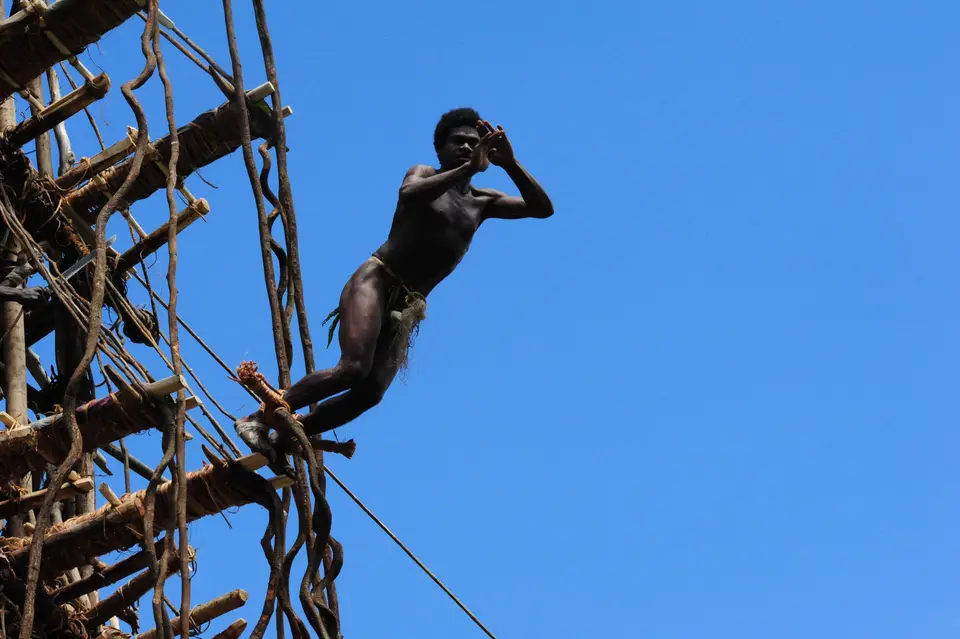
彭特科斯特岛陆地跳水
Nanggol
山药收获时节,彭特科斯特岛南部的男人们用新砍的木头和藤蔓搭起高塔,一个接一个脚踝绑着藤蔓从平台上跃下,力求让肩膀擦过松过的泥土——跳得越高,收成越好。
2027年4月至6月大致时段
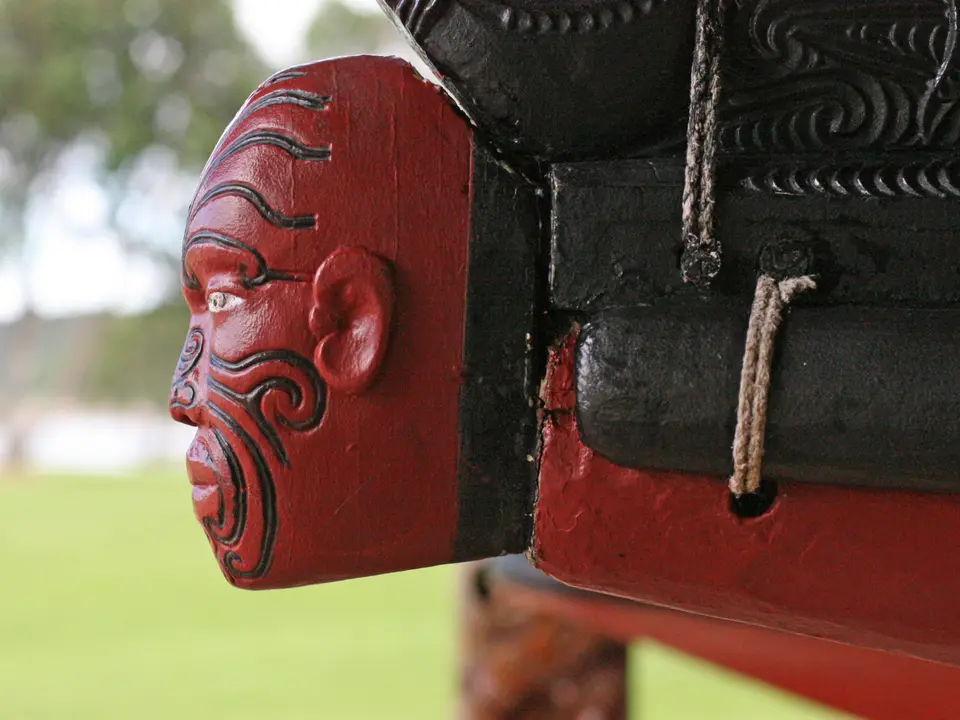
怀唐伊日
Te Rā o Waitangi
新西兰国庆日纪念1840年2月6日英国王室与毛利酋长签订《怀唐伊条约》。条约签署地会举行黎明礼拜、演讲、毛利歌舞表演,港湾里有毛利独木舟(waka)展示,有时也伴随着抗议与辩论。
2027年2月6日推算日期
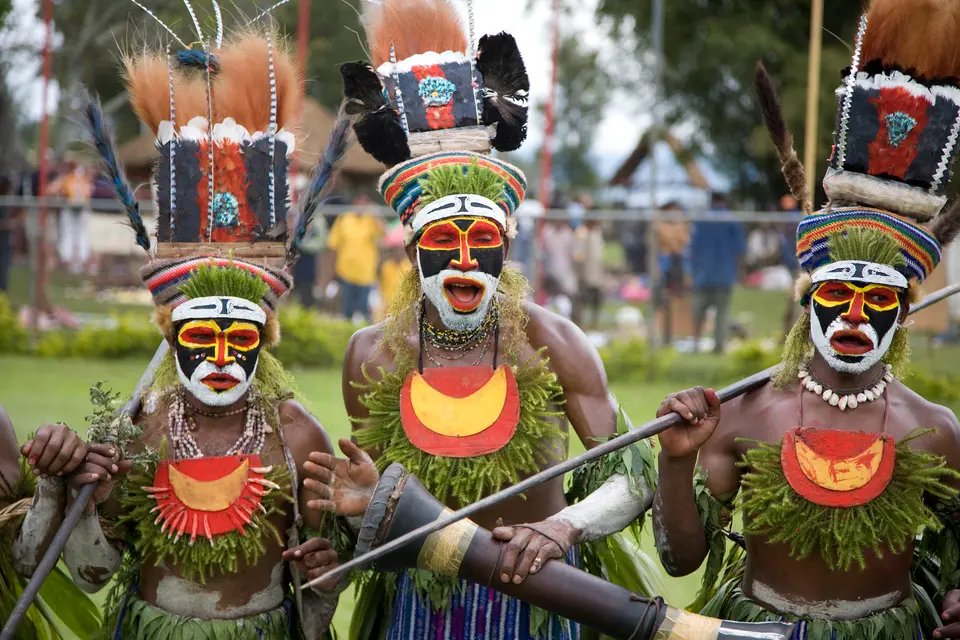
戈罗卡节
Goroka Show
独立日前后,巴布亚新几内亚各地约一百个部落聚集戈罗卡,参加全国最大的“唱唱会”——彩绘的面孔、音乐与舞蹈——还有戴着泥塑面具、宛如幽灵的阿萨罗泥人。
2027年9月16日预估日期
评论
你去过吗?告诉其他读者那里是什么样子。
还没有评论。
评论由站长阅览后才会出现。