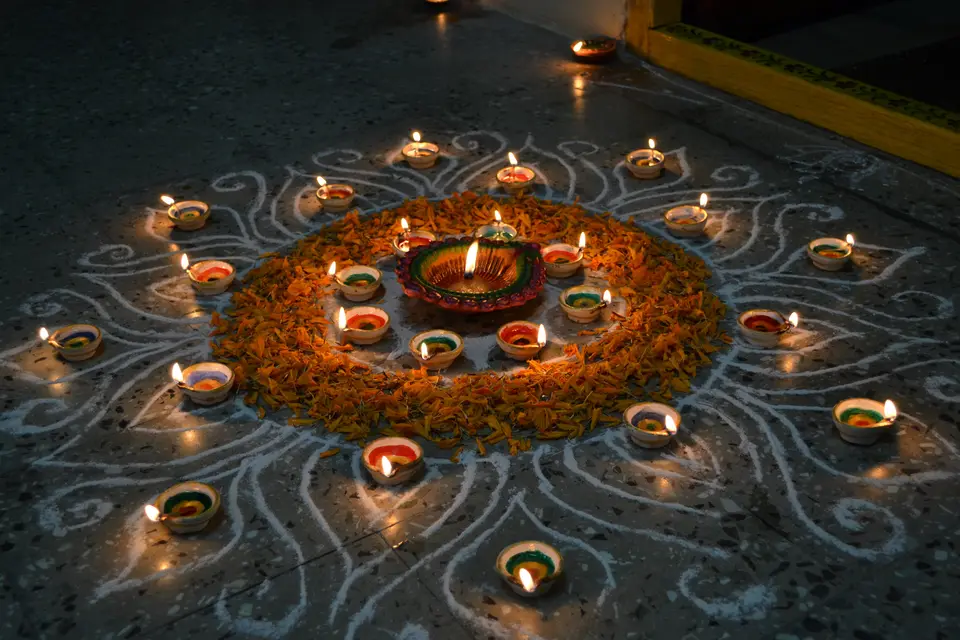
The festival of lights. Over five days around the new moon of autumn, homes, temples and streets glow with oil lamps and lanterns, doorsteps bloom with rangoli, families share sweets and gifts, and the darkest night of the month becomes the brightest of the year.
A row of lights
Diwali comes from the Sanskrit Dipavali, “a row of lights”. It is the Hindu festival of lights, celebrated in different forms by Jains, Sikhs and Newar Buddhists too, and it stands for the victory of light over darkness, good over evil and knowledge over ignorance. Its oldest roots probably lie in ancient harvest festivals of the subcontinent.
The festival carries many stories. Across much of India it marks the day Rama returned to his kingdom of Ayodhya with Sita and Lakshmana after defeating the demon king Ravana. It is closely associated with Lakshmi, goddess of prosperity, and with Ganesha, remover of obstacles. In eastern India, many Hindus worship the goddess Kali at Diwali. Jains mark the final liberation of Mahavira, and Sikhs celebrate Bandi Chhor Divas, the release of Guru Hargobind from a Mughal prison.
Five days
The celebrations run over five days around the new moon (amavasya), and customs differ from region to region:
- Dhanteras — homes and shops are cleaned and decorated, lamps are set out, and families shop for utensils, gold and household goods.
- Naraka Chaturdashi, or Chhoti Diwali — remembered in many regions as the day Krishna destroyed the demon Narakasura; a great day for buying and making sweets, and for visiting friends.
- Lakshmi Puja — the main day and the darkest night of the month, when families dress in their finest clothes, pray to Lakshmi, light up their homes and set off fireworks.
- Govardhan Puja or Padwa — kept in some regions on the day after.
- Bhai Dooj — in many communities, a day for the bond between sisters and brothers.
Lamps and rangoli
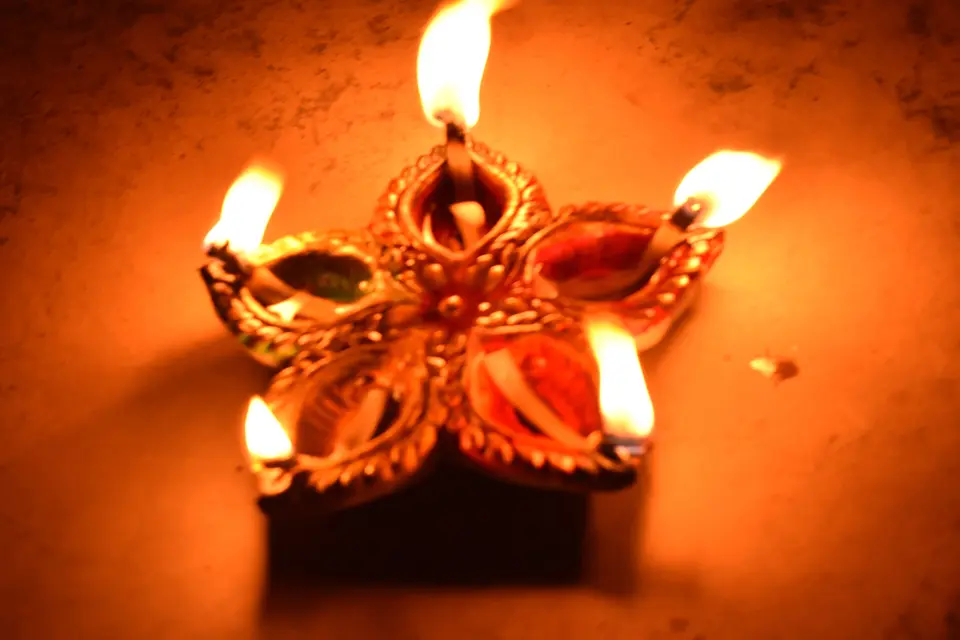
Everywhere the festival is marked with light: small clay diyas filled with oil, candles, lanterns and strings of lights on houses, temples and workplaces. Doorways and courtyards are decorated with rangoli, patterns made from rice flour, flower petals, coloured rice or coloured sand. It is a season of homecoming, when families gather, feast and exchange sweets and gifts, and many towns hold fairs, parades and performances.
When it happens
Diwali falls on the new moon of the Hindu month of Ashvin or Kartika, between mid-October and mid-November, and the celebrations last five days. The main day, Lakshmi Puja, is an official holiday — 8 November 2026 and 29 October 2027 on the Government of India’s lists. Some states observe Naraka Chaturdashi, the day before, instead.
- November 8, 2026Officially announced
- October 29, 2027Officially announced
Visiting with respect
Good to know
- Diwali is above all a family and community festival. If you are invited into a home, a small gift of sweets is in keeping with the season of exchanging mithai and presents.
- Remove your shoes when entering temples and homes where others do, and dress modestly at places of worship.
- Ask before photographing people during prayers.
Stay safe
- Diwali is celebrated with fireworks. Keep a safe distance from firecrackers in streets and courtyards, and take care near open lamp flames, especially in loose clothing.
- Markets and temples are very crowded in the days before Diwali. Take care of your belongings.
Food and drink
Mithai
Sweets are at the heart of Diwali — laddus, barfis, halwa and sandesh among many others — bought or made at home, shared with guests and given as gifts.
Batasha
Hollow sugar cakes, offered with puffed rice and rice cakes during the evening prayers to Lakshmi and Ganesha.
Sources
This entry was written from the following sources.
- DiwaliWikipedia (English) · read September 16, 2026
- List of Holidays for the Year 2027 (Gazetted), DoP&T O.M. dated 16.07.2026Department of Personnel and Training, Government of India (via StaffNews) · read September 16, 2026
- DoPT Holiday List 2026Central 8th Pay Commission (reproducing the DoPT O.M.) · read September 16, 2026
- India travel advice: safety and securityUK Foreign, Commonwealth & Development Office · read September 16, 2026
Related festivals
Durga Puja in Kolkata
দুর্গাপূজা
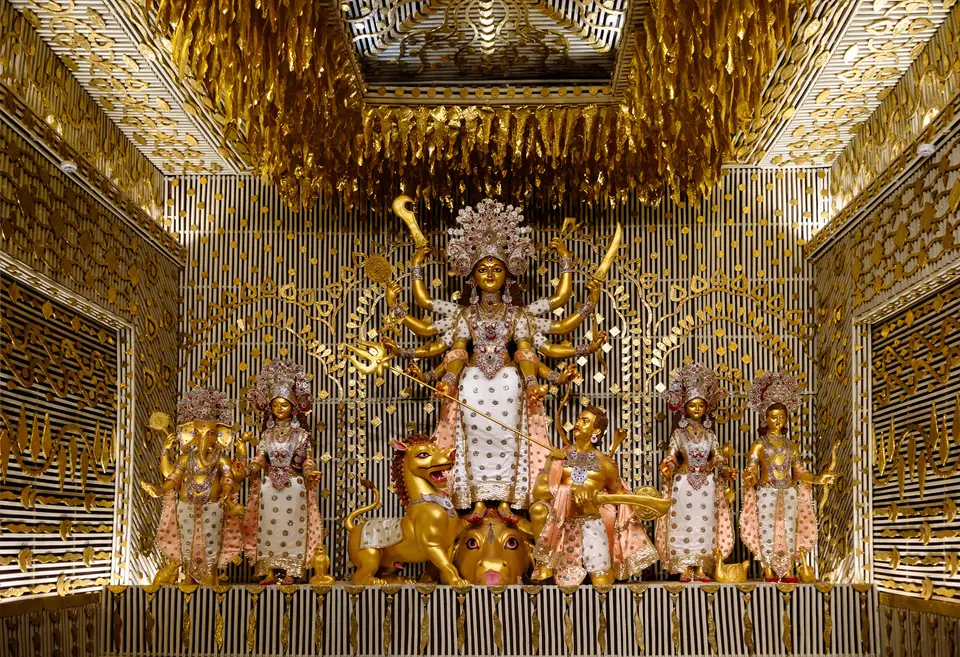
For ten days each autumn Kolkata worships the goddess Durga — and turns into an open-air gallery. Clay images made from the mud of the Ganga fill thousands of pandals, drummers play, and crowds walk the city day and night until the images return to the river.
October 20, 2026Officially announced
Holi
होली
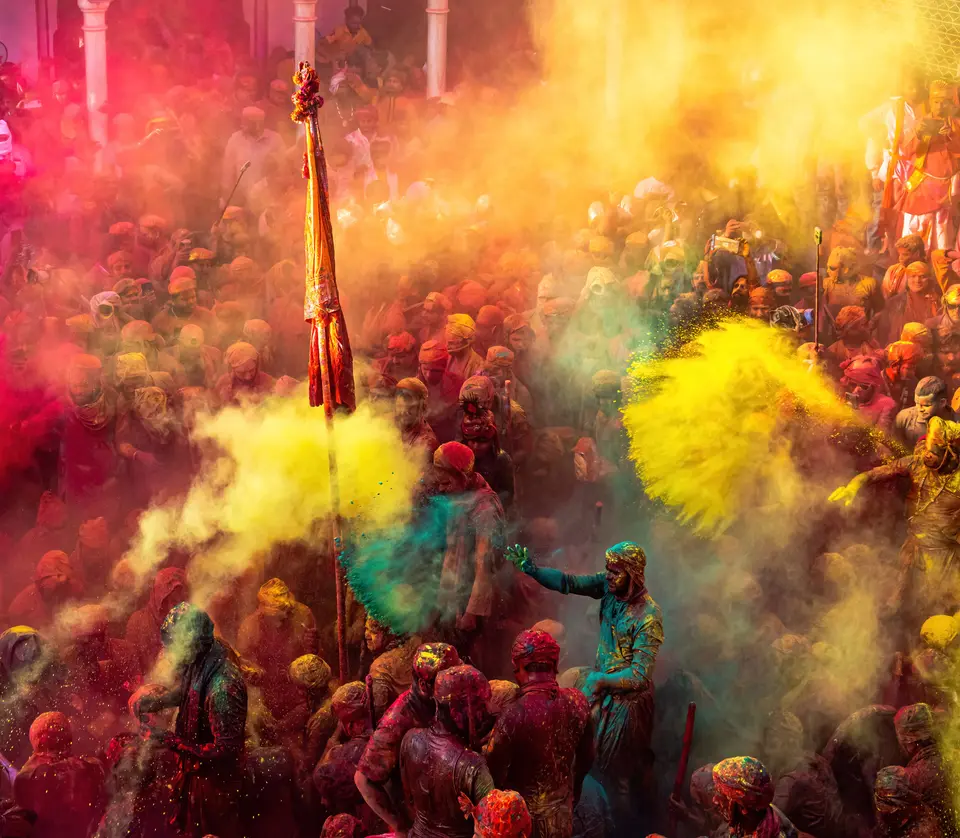
The festival of colours, love and spring. On the night of the full moon bonfires burn for Holika; the next day friends and strangers throw coloured powder and water at each other, sing, dance and share sweets — nowhere more exuberantly than in the towns of Krishna’s Braj.
March 23, 2027Officially announced
Shab-e Yalda
شب یلدا
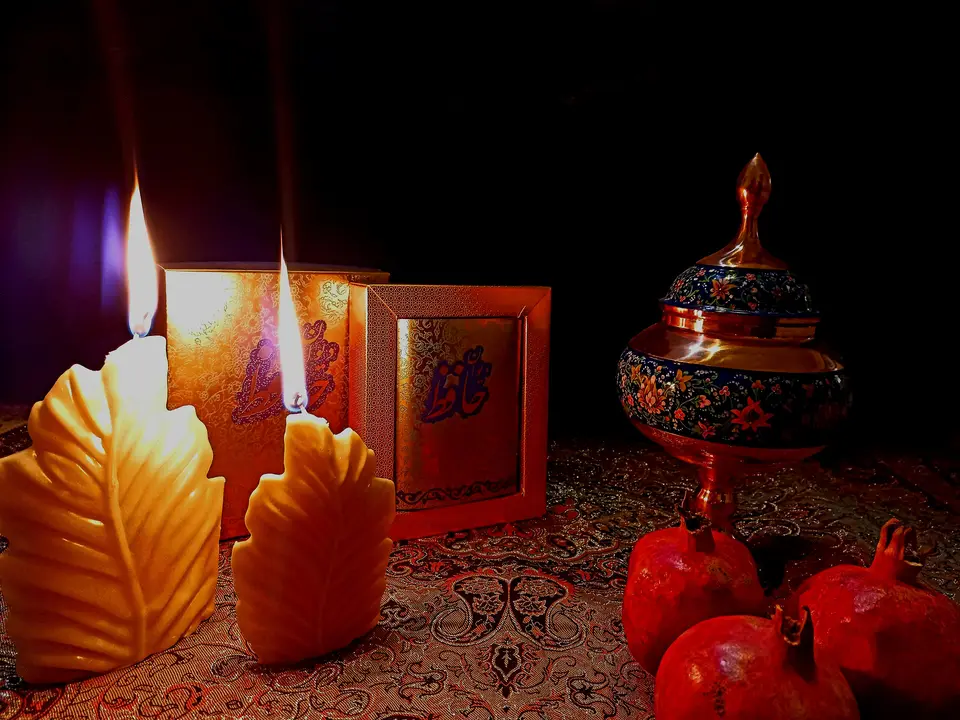
On the longest night of the year, families gather at the homes of their elders to stay up late around a table of pomegranates, watermelon, nuts and dried fruit, reading Hafez and telling stories until well after midnight.
December 21, 2026Calculated