Holi
होली
Photo: Original: Sachinghai09 Derivative work: Radomianin, CC BY-SA 4.0, via Wikimedia Commons
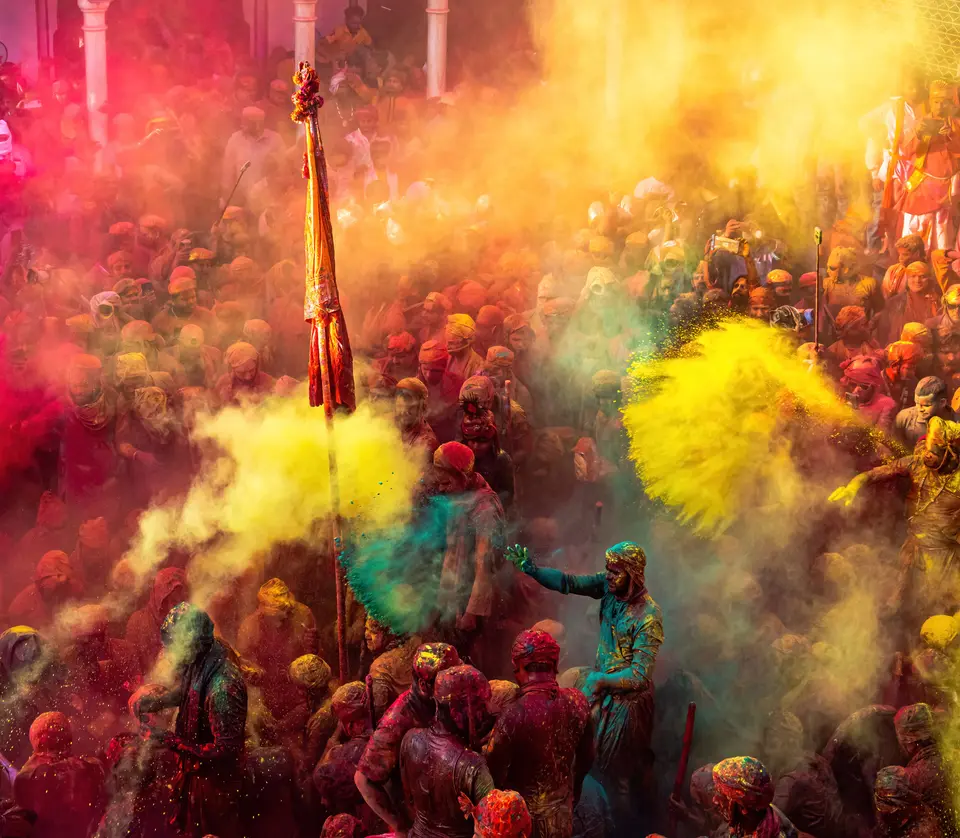
The festival of colours, love and spring. On the night of the full moon bonfires burn for Holika; the next day friends and strangers throw coloured powder and water at each other, sing, dance and share sweets — nowhere more exuberantly than in the towns of Krishna’s Braj.
Colours for the end of winter
Holi is one of the great Hindu festivals, a celebration of colours, of love and of spring. It honours the love of Radha and Krishna, marks the end of winter and the blossoming of the new season, and invokes a good spring harvest. For many, it is also a time to mend broken relationships and set old conflicts aside.
It lasts a night and a day, beginning on the evening of the full moon in the month of Phalguna.
The fire of Holika
On the night before, people gather around bonfires for Holika Dahan, the burning of Holika, singing and dancing around the flames. The fire recalls the legend of the demon king Hiranyakashipu, whose sister Holika tried to kill his son Prahlada, a devotee of Vishnu, by taking him into a fire. Though she was protected against flames, Holika burned to ashes while Prahlada was unharmed — the triumph of good over evil.
The day of colours
The next morning, people take to the streets and throw coloured powder, called gulal, and coloured water at one another. Groups move from house to house singing folk songs and dancing to the dholak drum, and between rounds of colour they offer sweets and drinks. Traditionally the colours were made from flowers and medicinal plants such as palash, neem and turmeric.
Holi in Braj
Holi has a special place in the Braj region of Uttar Pradesh, the land associated with Radha and Krishna: Mathura, Vrindavan, Barsana, Nandgaon and Gokul. In Vrindavan the festival lasts sixteen days. In Barsana, thousands gather in the courtyard of the Radha Rani temple for Lathmar Holi, when the women of the town chase the men with long sticks called lathis while the men shelter behind shields, and the crowd sings and shouts “Radhe Radhe”.
Holi goes by many names across India — Dol Jatra and Basanta Utsav in Bengal, Phakuwa in Assam, Yaosang in Manipur, Shigmo in Goa.
When it happens
Holi begins on the evening of the full moon of the Hindu month of Phalguna, usually in March and sometimes in late February. The day of colours, the official holiday, is on 23 March 2027 according to the Government of India’s list; the bonfires of Holika Dahan burn the night before. In the Braj region around Mathura the celebrations stretch over many days.
- March 23, 2027Officially announced
Visiting with respect
Good to know
- Expect to be covered in colour if you go out on the day of Holi. Wear old clothes you do not mind ruining, and protect your eyes, phone and camera.
- Playing with colour is an invitation, not an obligation. Say so clearly if you do not want to take part, and respect other people’s wish not to.
- Many Holi drinks contain bhang, made from cannabis. Ask what is in a drink before accepting it.
Stay safe
- Holi crowds can be very dense, particularly in Mathura, Vrindavan and Barsana. Stampedes have occurred at crowded events in India, and women travellers frequently report harassment; stay with people you trust.
- Take particular care of your belongings in crowds.
Food and drink
Gujiya
Sweet fried dumplings, among the delicacies offered to friends between rounds of colour.
Thandai
A cold, spiced milk drink of the festival — sometimes mixed with bhang.
Malpua
Sweet pancakes, especially loved in Bengal since Chaitanya Mahaprabhu is said to have asked his followers to share them at Holi.
Sources
This entry was written from the following sources.
- HoliWikipedia (English) · read September 16, 2026
- List of Holidays for the Year 2027 (Gazetted), DoP&T O.M. dated 16.07.2026Department of Personnel and Training, Government of India (via StaffNews) · read September 16, 2026
- India travel advice: safety and securityUK Foreign, Commonwealth & Development Office · read September 16, 2026
Related festivals
Diwali
दीपावली
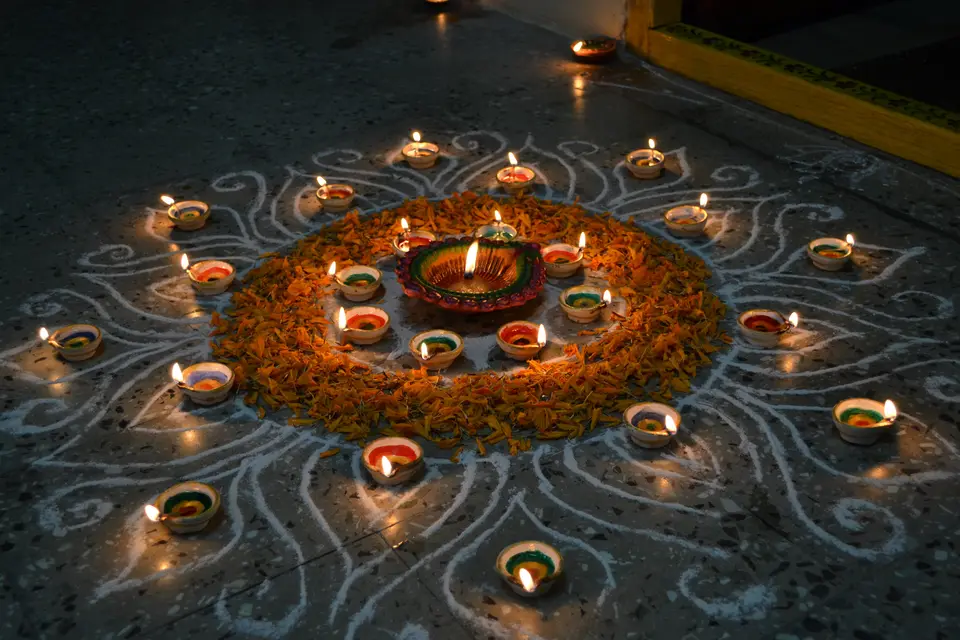
The festival of lights. Over five days around the new moon of autumn, homes, temples and streets glow with oil lamps and lanterns, doorsteps bloom with rangoli, families share sweets and gifts, and the darkest night of the month becomes the brightest of the year.
November 8, 2026Officially announced
Nowruz
نوروز
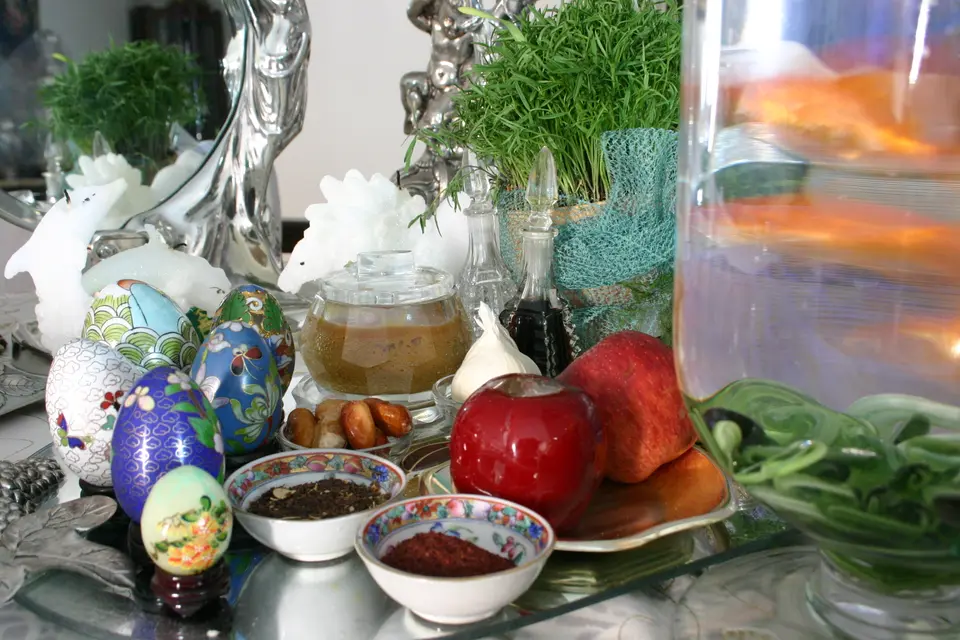
Nowruz, “new day”, is the Iranian New Year. It begins at the March equinox, when families gather around the Haft-sin table to wait for the exact moment the year turns, and opens two weeks of visits, food and time outdoors.
March 21, 2027Calculated
Hıdrellez
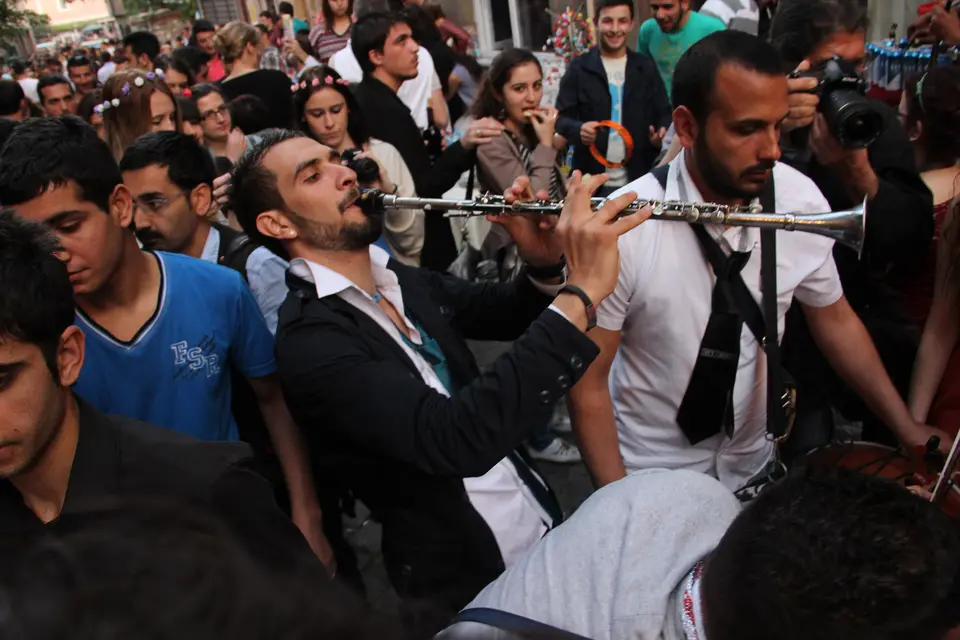
On 6 May, the day nature is said to awaken, Türkiye celebrates spring. People write wishes and leave them at rose trees, gather in green places outside town, and keep old customs of water and wild flowers for health and plenty in the year ahead.
May 6, 2027Calculated