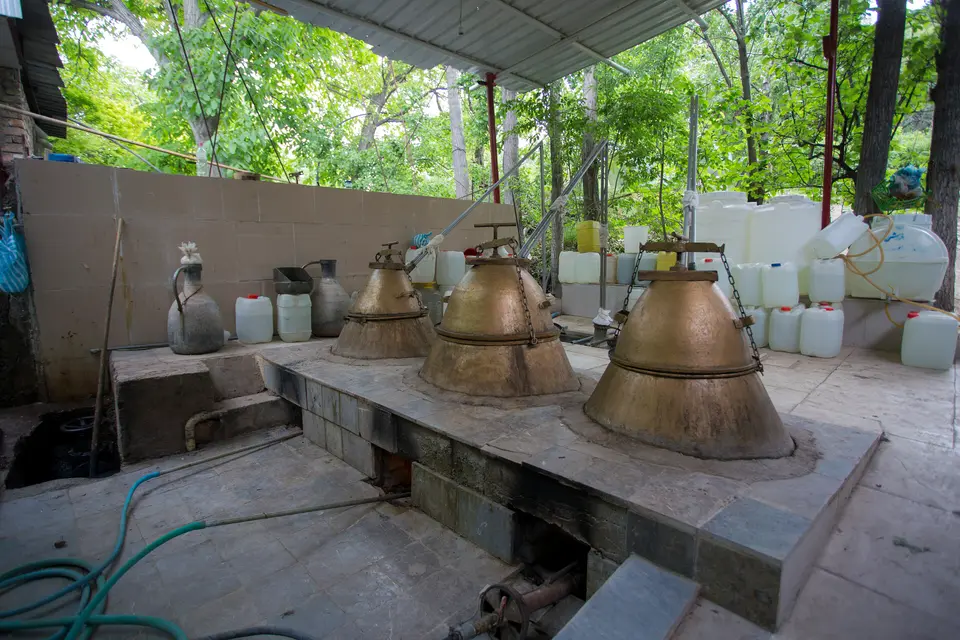
When the Damask roses bloom around Kashan, families pick them before sunrise and distil rosewater in copper stills the old way. Visitors can join the harvest, tour the distilleries and watch the golab being made.
The desert in bloom
Every spring the valleys of Kashan County, above all around the villages of Qamsar and Niasar, fill with the pink blossom of Rosa damascena, the Damask rose, known locally as the gol-e Mohammadi. For a few weeks the hot, dry country turns into gardens of flowers, and the whole region turns to making golab — rosewater. The festival draws anywhere from tens of thousands to, by some counts, two million visitors a year.
Roses have been grown in Iran for more than a thousand years, and Iran is today the world’s largest producer of rosewater. Kashan became a centre of distilling in the sixteenth century, and the festival honours the fact that it still uses the oldest methods, while other places have turned to machines.
From the field to the still
Families go out to pick before sunrise, when the blooms are thought to hold the strongest scent, and are usually done by noon. The petals go straight to the distillery.
There, about thirty kilograms of petals are placed in a large copper pot called a dig, together with water. The pot is sealed and heated; steam rises through the flowers, carries off their oils and fragrance, and condenses in a cooling coil. A single distillation takes several hours — at least four is recommended — and the rosewater is then graded by strength, from heavy first-grade golab to lighter “double-fire” and “triple-fire” waters.
A festival around the craft
Tours take visitors to the rose fields and the old distilleries, and cultural centres hold rosewater ceremonies, handicraft exhibitions and performances of Iranian regional music. One old custom, gol-ghaltan, “rolling in flowers”, sees grandmothers lay a freshly bathed baby on a white cloth heaped with rose petals, thorns and leaves carefully removed, as a blessing against illness and sadness.
When it happens
The season follows the bloom of the roses rather than a calendar date. It usually runs from mid-May to mid-June; ask locally how the season is going before you travel.
- May – June 2027Approximate window
- May – June 2028Approximate window
- May – June 2029Approximate window
- May – June 2030Approximate window
Visiting with respect
Good to know
- The festival is free to attend, and visitors are welcome to join the harvest. Pick only when invited, and follow the family whose field it is.
- Picking happens early — families start before sunrise and are usually finished by noon.
- Public events are subject to Iran’s dress code. Women must cover their hair and wear a long-sleeved tunic or coat over trousers or a floor-length skirt; men should wear long trousers and long sleeves.
Avoid
- Do not photograph military or government buildings. Foreign nationals have been detained for photography near sensitive sites.
- Do not drink alcohol. It is illegal in Iran, and penalties can be severe.
Stay safe
- The festival draws very large crowds to small towns; expect busy roads and full accommodation.
- As of September 2026 the UK government advises against all travel to Iran. Check your own government’s advice before planning a trip.
Food and drink
Golab
Rosewater itself, used in sweets, desserts and drinks, in body care and in religious ceremonies. It is graded by strength, from heavy first-grade rosewater down to lighter grades.
Sources
This entry was written from the following sources.
- GolabgiriWikipedia (English) · read September 16, 2026
- Iran travel advice: safety and securityUK Foreign, Commonwealth & Development Office · read September 16, 2026
Related festivals
Nowruz
نوروز
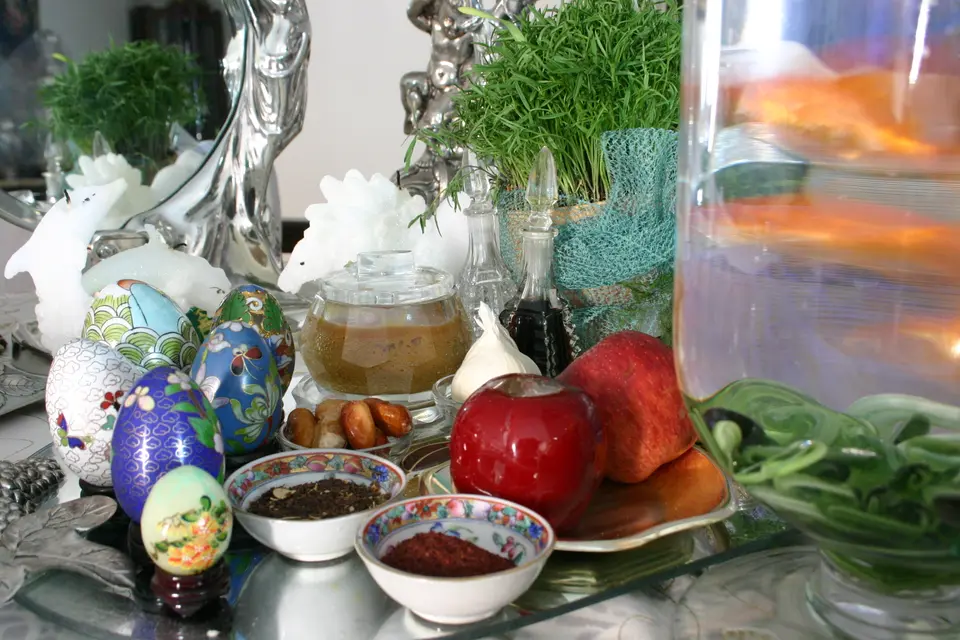
Nowruz, “new day”, is the Iranian New Year. It begins at the March equinox, when families gather around the Haft-sin table to wait for the exact moment the year turns, and opens two weeks of visits, food and time outdoors.
March 21, 2027Calculated
Mehregan
مهرگان
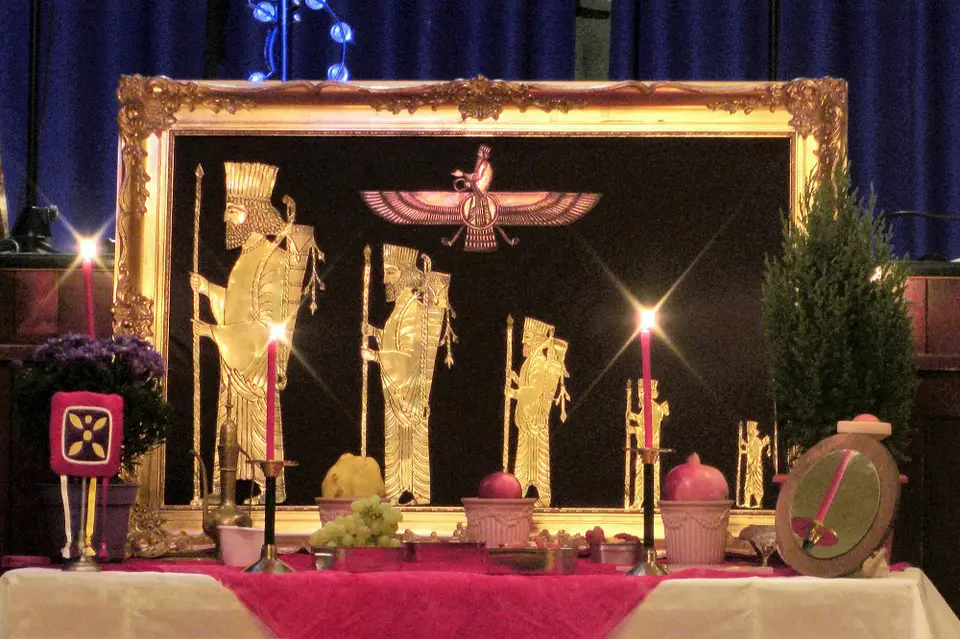
The ancient Iranian autumn festival of Mehr — friendship, affection and the harvest. Tables are laid with pomegranates, apples and grapes, prayers are said, and there is music, dance and, in places, wrestling.
October 2 – November 2, 2026Estimated