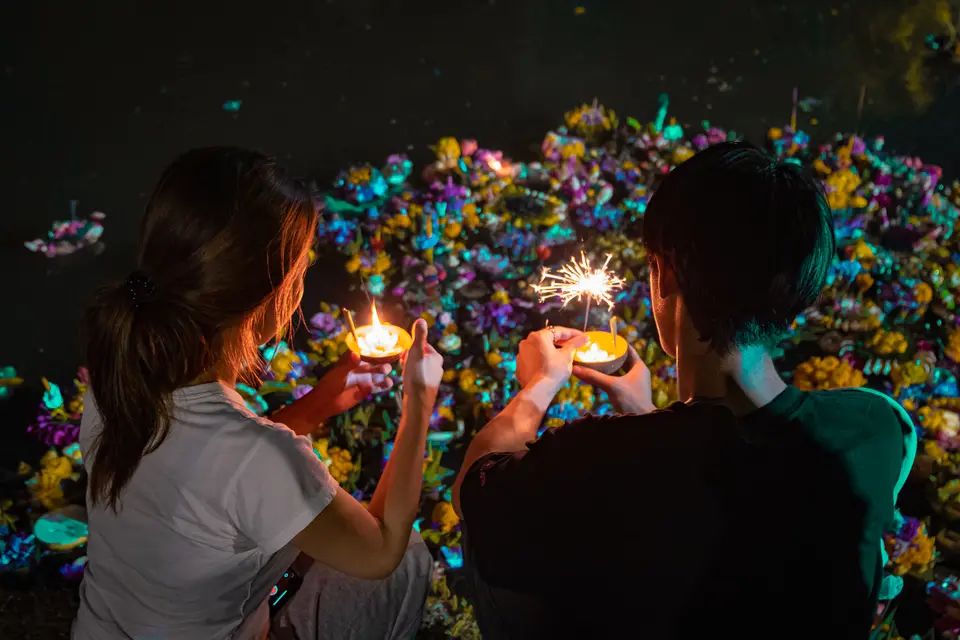
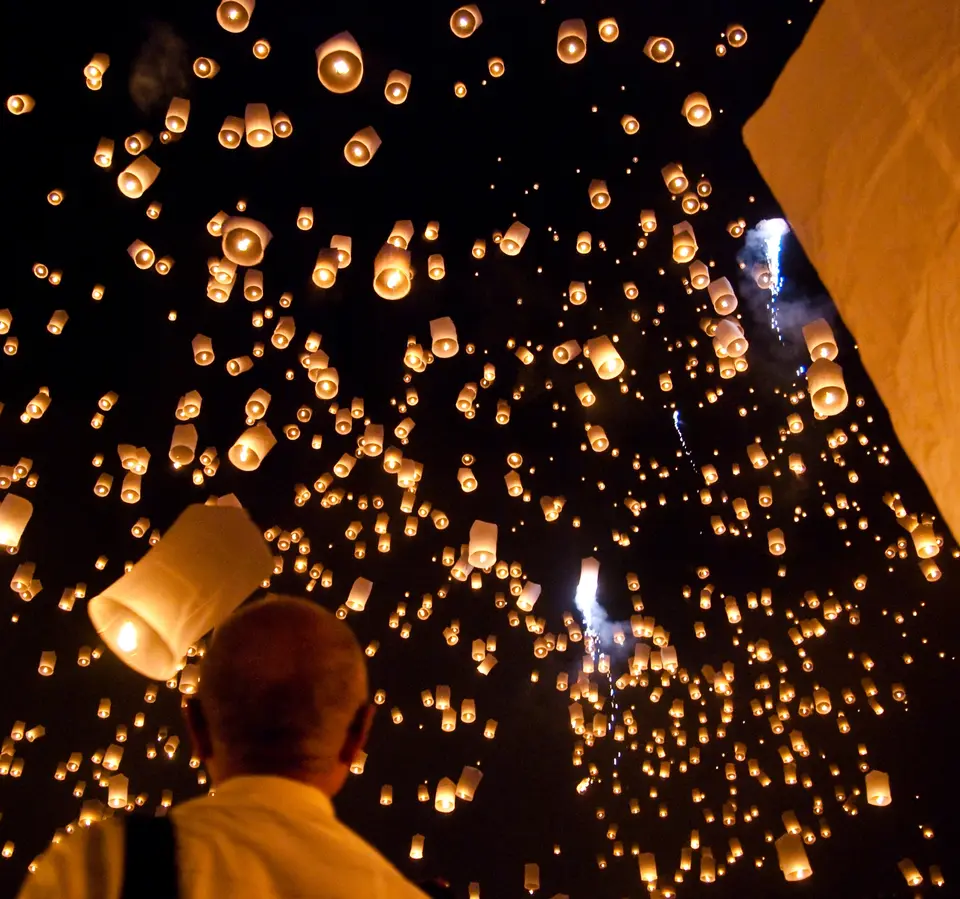
On the full-moon night of the twelfth Thai month, people float small decorated baskets bearing a candle, incense and a wish on rivers, canals and ponds across Thailand. In Chiang Mai the night coincides with Yi Peng, when sky lanterns drift up into the dark.
Floating a wish
Loy means to float and a krathong is a small decorated vessel. The traditional krathong is made from a slice of banana trunk or a spider-lily plant, folded banana leaves and flowers, holding a candle and three sticks of incense, sometimes with a coin as an offering. On the night of the full moon people light the candle and set the krathong on a river, canal or pond, making a wish as it floats away. Many Thais do it to thank Khongkha, the goddess of water.
Government offices, companies and organisations launch large decorated krathongs, often in competition, and fireworks and beauty contests have become part of the night.
Old roots, modern festival
The custom is related to Hindu and Brahmanical traditions that reached the region long ago, and the earliest known image of floating a krathong is a bas-relief at the Bayon temple in Cambodia, from the late twelfth or early thirteenth century. Historians note that the festival was little known outside Bangkok’s elite before the Second World War, and that it spread nationwide from the 1950s and 1960s, helped by nationalism, a popular song and efforts to attract tourists.
Similar full-moon festivals are held in neighbouring countries — Tazaungdaing in Myanmar and Bon Om Touk in Cambodia among them.
Lanterns over Chiang Mai
In Chiang Mai, Loy Krathong coincides with Yi Peng, a northern Thai tradition of releasing sky lanterns. Where Loy Krathong centres on floating krathongs on water, Yi Peng fills the sky with rising lights, and the two together make Chiang Mai the best-known place to spend the festival.
When it happens
Loy Krathong takes place on the evening of the full moon of the twelfth month of the traditional Thai lunar calendar, usually in November. In 2026 it is expected on 25 November, with some listings giving 24 November; in Chiang Mai the celebrations last three days. Confirm local schedules before travelling.
- November 25, 2026Estimated
Visiting with respect
Good to know
- Choose a krathong made of banana trunk, leaves or bread, which break down in the water. Styrofoam krathongs pollute rivers and are increasingly banned.
- Releasing sky lanterns is regulated in Chiang Mai. Take part only in approved lantern events and follow the organisers’ instructions.
- At temples, dress modestly and behave quietly.
Stay safe
- Riverbanks and piers become very crowded after dark. Watch your footing near the water, and keep children close.
Sources
This entry was written from the following sources.
- Loy KrathongWikipedia (English) · read September 16, 2026
- Loy Krathong 2026: Dates, Times and Best PlacesChiang Rai Times · read September 16, 2026
- Thailand travel advice: safety and securityUK Foreign, Commonwealth & Development Office · read September 16, 2026
Related festivals
Songkran
สงกรานต์
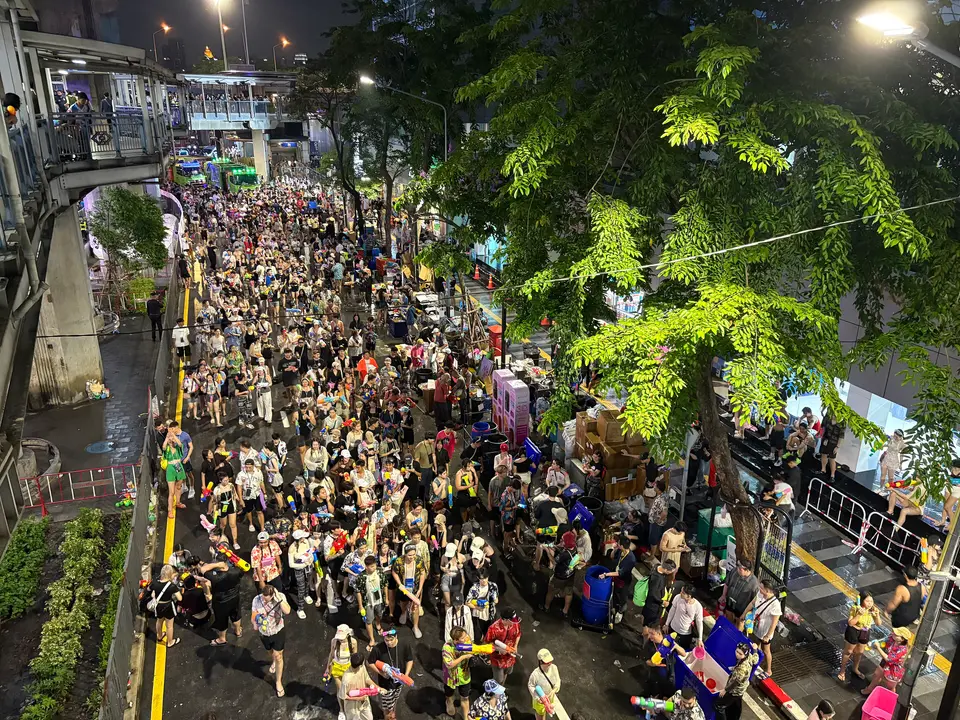
The traditional Thai New Year falls in mid-April, in the hottest weeks of the year. Families gather, pour water over the hands of their elders and over Buddha images — and in the streets, the gentle blessing becomes a nationwide water fight.
April 13 – 15, 2027Calculated
Diwali
दीपावली
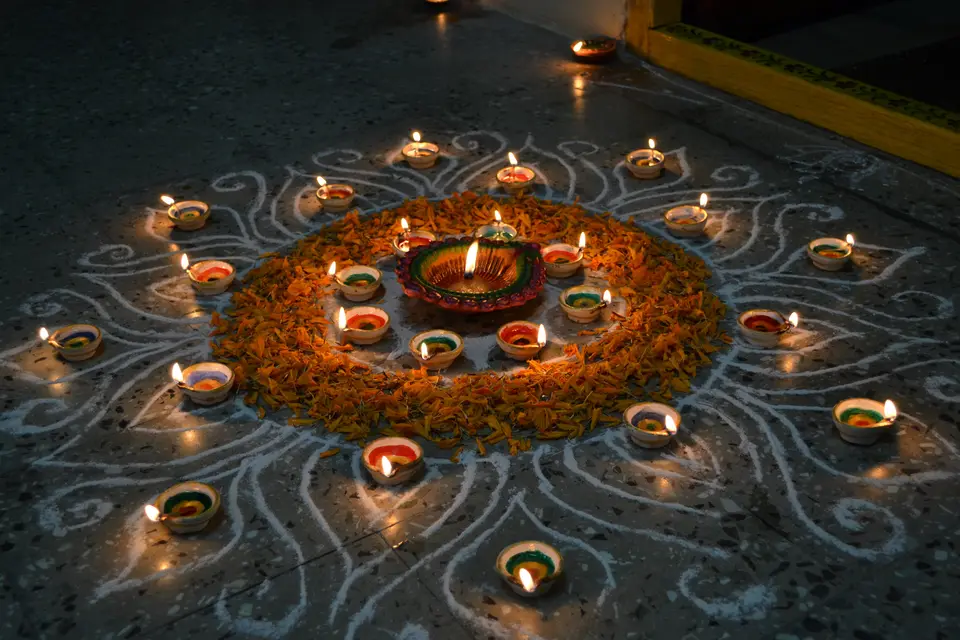
The festival of lights. Over five days around the new moon of autumn, homes, temples and streets glow with oil lamps and lanterns, doorsteps bloom with rangoli, families share sweets and gifts, and the darkest night of the month becomes the brightest of the year.
November 8, 2026Officially announced
Obon
お盆
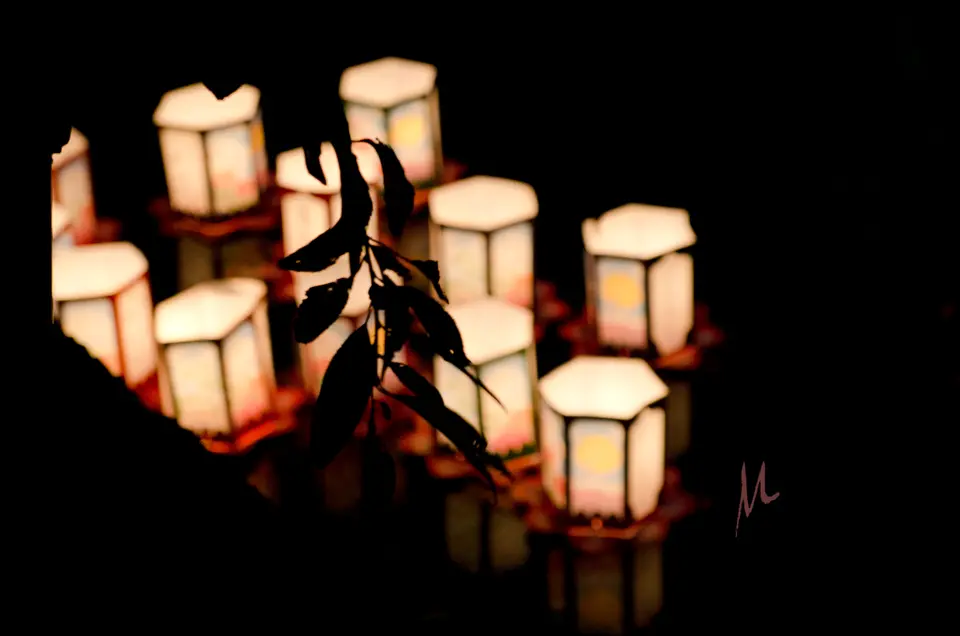
Japan’s summer days of the dead, when ancestors are said to come home for a few days. Families light lanterns to guide them, visit graves, and at the end set lanterns on the water to send them back. Mostly kept in August; in some places in July.
July 13 – 15, 2027Calculated