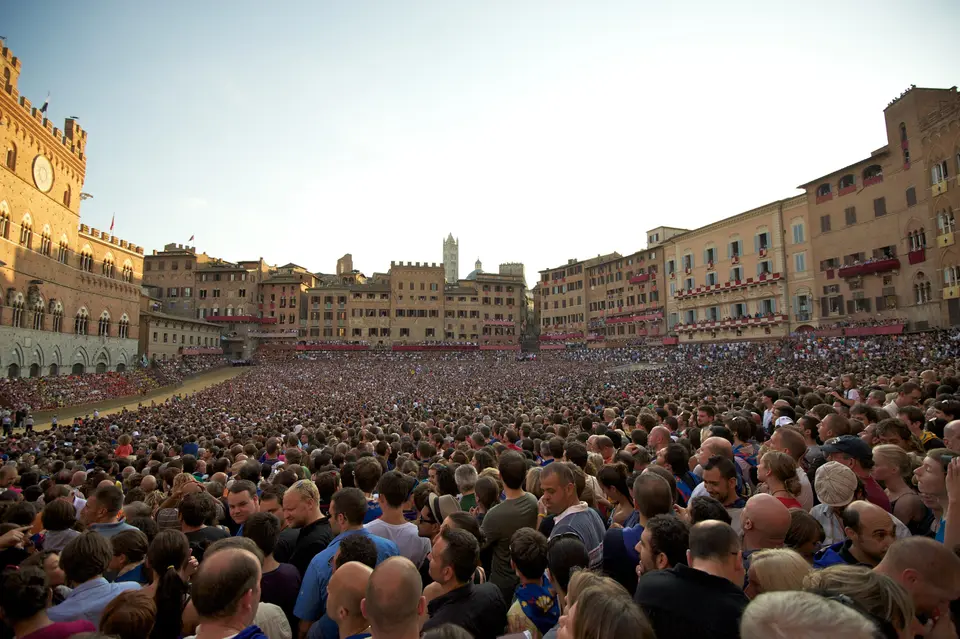
Palio di Siena
Photo: Janus Kinase, CC BY-SA 2.0, via Wikimedia Commons
Twice every summer, ten of Siena’s seventeen city wards race horses bareback three times around the Piazza del Campo. The race lasts about ninety seconds; the rivalries, alliances, pageantry and devotion around it last all year.
Seventeen wards, ten horses
The Palio is a horse race between the contrade, the wards of Siena. Of the city’s seventeen contrade, only ten run in each race: the seven that did not take part in the same Palio the year before, plus three drawn by lot. Horses are assigned to the contrade by another lottery a few days before the race, after trial runs and veterinary checks. The jockeys ride bareback.
The race circles the Piazza del Campo three times on a track of earth laid over the paving, with padded barriers at the corners. It usually lasts no more than ninety seconds. Jockeys are often thrown at the sharp turns, and a horse can win without its rider.
History and devotion
Races in Siena go back to the Middle Ages, and the first modern Palio around the Piazza del Campo was run in 1633. In 1729 the number of contrade was fixed at seventeen, and the number allowed to race at ten. The July Palio honours the Madonna of Provenzano; the August race, first added in 1701, follows the Feast of the Assumption. The winner receives the drappellone, a painted silk banner commissioned from an artist for each race.
The day of the race
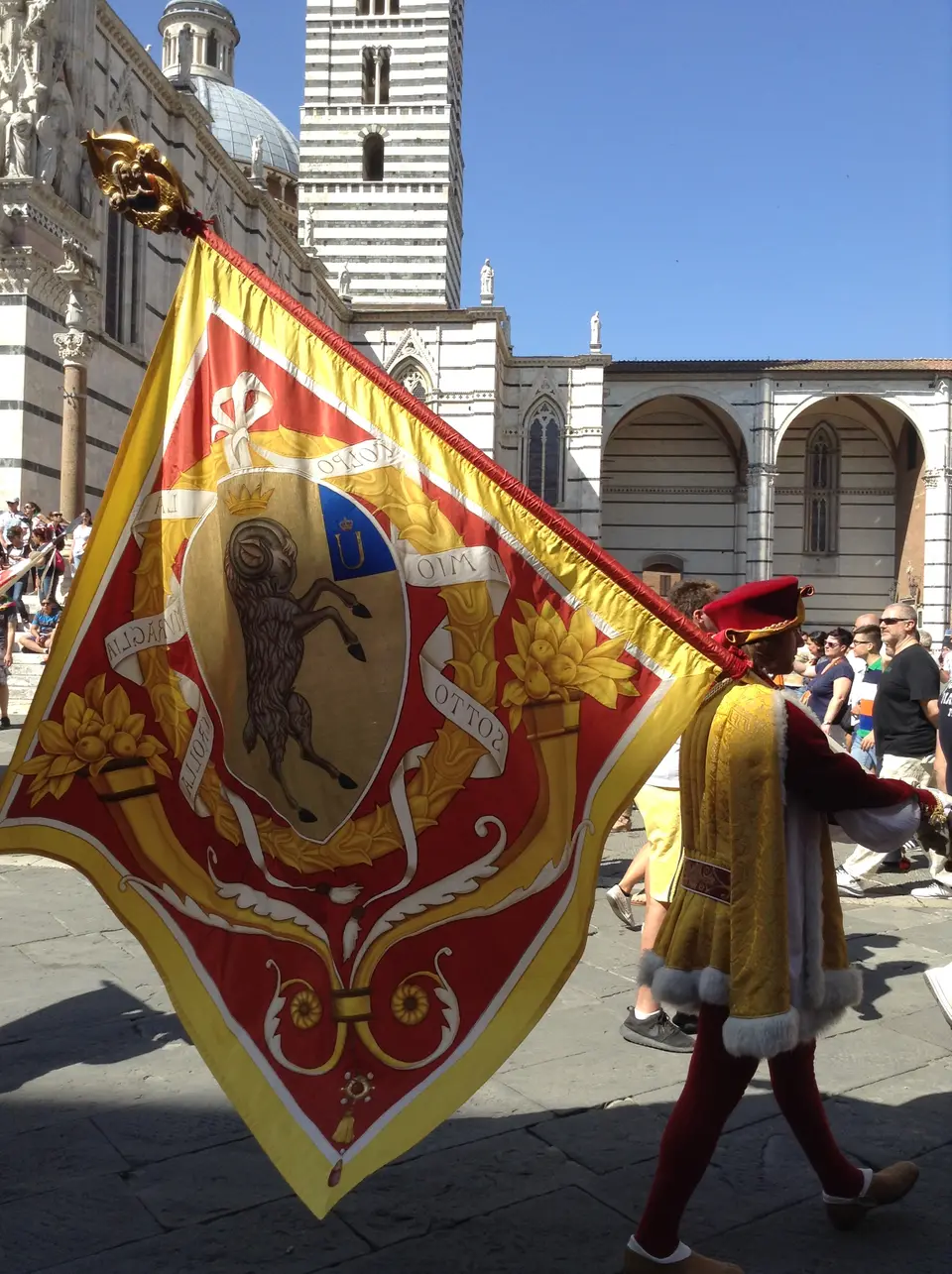
For four days the city lives around the Palio: trial races in the piazza, dinners in the contrade, the blessing of each horse and jockey. On race day the Corteo Storico, a two-hour historical pageant with flag-wavers in medieval costume, fills the square before the start. The start itself can take a long time, as the jockeys manoeuvre and deals between contrade play out.
The horses
The Palio has long been criticised by animal-rights organisations, and by some veterinarians, over falls that have injured and killed horses. Supporters point to protocols introduced since the 1990s to protect horses and riders, including registers of approved horses and breeders; critics still call for the race to be abolished.
When it happens
The Palio is run every year on 2 July (Palio di Provenzano) and 16 August (Palio dell’Assunta), starting in the evening. Races are sometimes postponed — in 2026 the August Palio was won on 18 August — and the city occasionally holds an extra Palio between May and September.
- July 2, 2027Palio di ProvenzanoCalculated
- August 16, 2027Palio dell’AssuntaCalculated
- July 2, 2028Palio di ProvenzanoCalculated
- August 16, 2028Palio dell’AssuntaCalculated
- July 2, 2029Palio di ProvenzanoCalculated
- August 16, 2029Palio dell’AssuntaCalculated
- July 2, 2030Palio di ProvenzanoCalculated
- August 16, 2030Palio dell’AssuntaCalculated
Visiting with respect
Good to know
- Watching from the centre of the piazza is free, but you must arrive early; the police seal the entrances once the festivities begin. Seats in the stands and on balconies around the square are sold in advance.
- The contrade take the Palio very seriously. Respect their colours, rituals and emotions, especially in the streets of a ward after a win or a loss.
Stay safe
- The centre of the square becomes packed to capacity and you cannot leave until the race is over. Bring water, avoid the crowd with small children, and do not go in if you feel unwell in dense crowds.
Sources
This entry was written from the following sources.
- Palio di SienaWikipedia (English) · read September 16, 2026
- Italy travel advice: safety and securityUK Foreign, Commonwealth & Development Office · read September 16, 2026
Related festivals
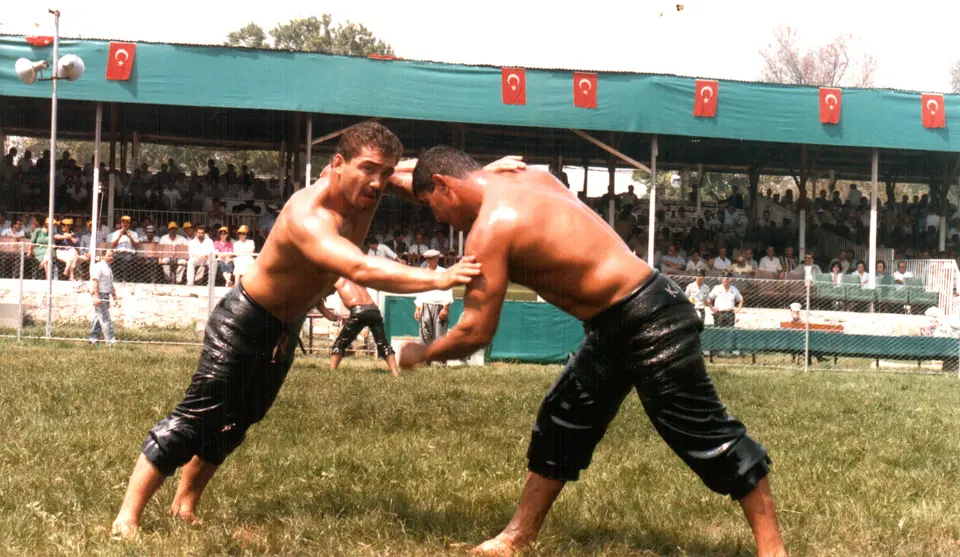
Kırkpınar Oil Wrestling
Kırkpınar Yağlı Güreşleri
Every summer in Edirne, wrestlers slick with oil and wearing leather kıspet trousers fight for the Golden Belt and the title of Chief Pehlivan, to the sound of drum and shawm — a festival that counts its editions in the hundreds.
June – July 2027Approximate window
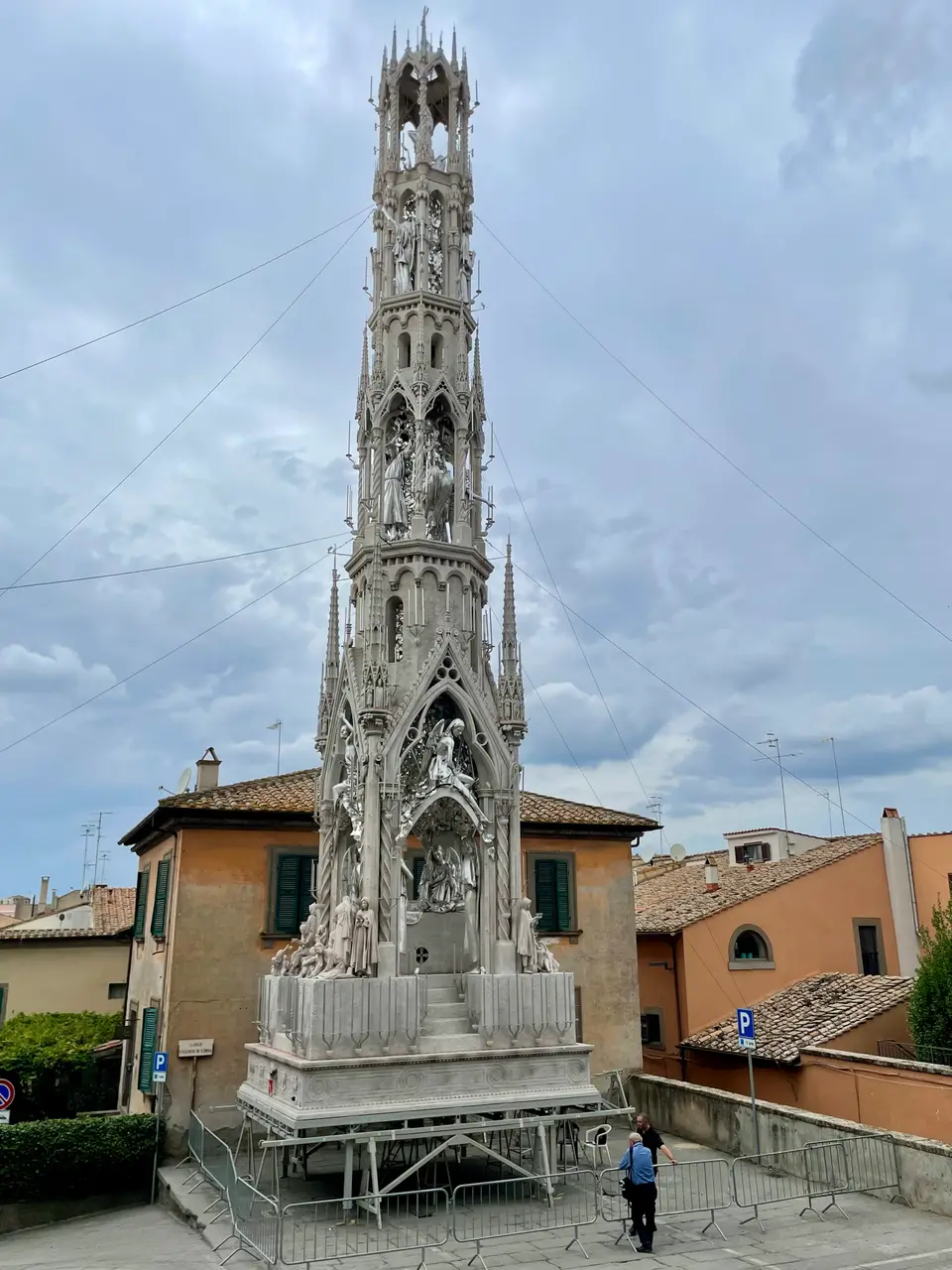
Macchina di Santa Rosa
On the evening of 3 September, a hundred porters lift a tower some thirty metres tall and five tonnes in weight onto their shoulders and carry it through the medieval streets of Viterbo in honour of the city’s patron saint.
September 3, 2027Calculated
Carnival of Venice
Carnevale di Venezia
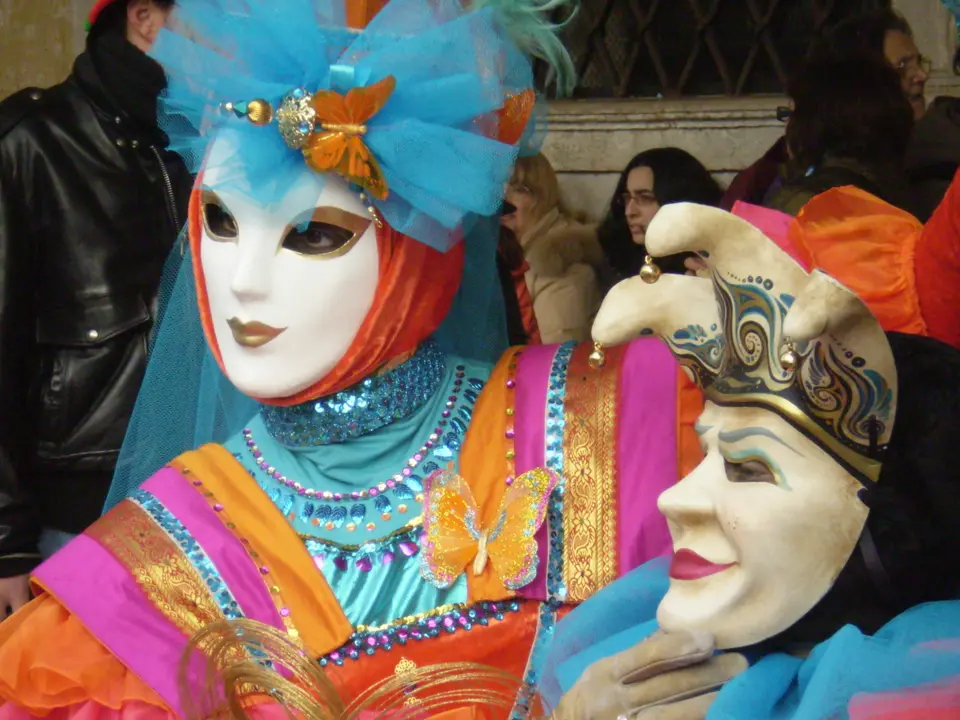
For two and a half weeks before Lent, Venice returns to the masks and costumes that made its carnival famous across Europe — banned for almost two centuries, revived in 1979, and now drawing millions of visitors to the city’s squares and canals.
January 23 – February 9, 2027Officially announced