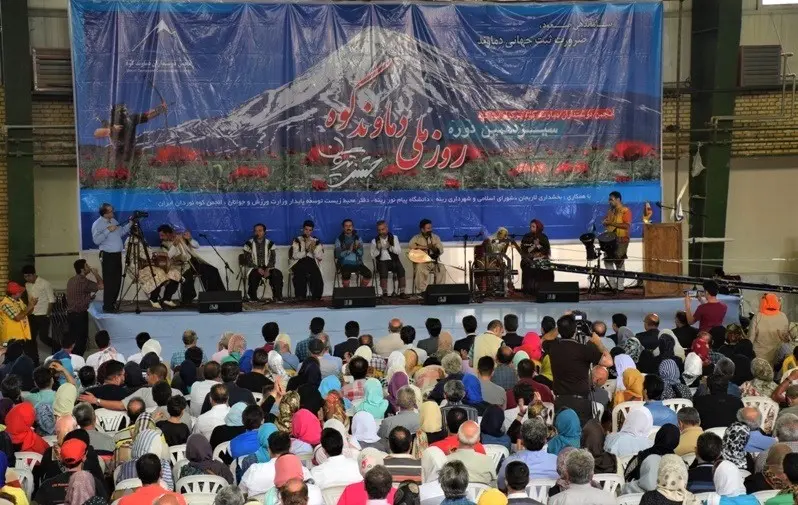
An ancient midsummer festival of water and rain. People splash each other with water, dance and recite poetry, share spinach soup and saffron rice pudding, and tie rainbow-coloured bands around their wrists.
Water in the heat of summer
Tirgan is dedicated to Tishtrya, the star-being of Zoroastrian belief who brings thunder, lightning and the rain that dry lands need. In the middle of summer, people celebrate it by splashing water on one another, dancing, reciting poetry and sharing traditional food. Historians from Gardizi and Biruni to European travellers of the Safavid era wrote about it.
Children especially enjoy one custom: rainbow-coloured bands are tied around the wrist, worn for ten days, and then thrown into a stream.
Arash the Archer
Tirgan remembers the legend of Arash. When the kings of Iran and Turan agreed to settle a dispute over their border, Arash was chosen to shoot a single arrow; wherever it fell would be the frontier. He loosed it on the thirteenth day of Tir, and it flew from the mountains of Amol to the far frontier of Khorasan. Turan had long suffered drought — and once the border was settled, rain fell on both lands and peace followed.
Where it lives on
Tirgan is still celebrated in Mazandaran and Amol in the north, in Tehran and Karaj, and in Yazd, Meybod, Ardakan, Kerman, Bam, Shiraz, Isfahan and other cities. Along the Caspian coast it survives as Tirema Sizda, “the thirteenth of Tir”, which has drifted later into the summer in the local calendar. Zoroastrian communities abroad celebrate it too.
When it happens
Tirgan falls on 13 Tir in the Iranian solar calendar, which is 3 or 4 July in most years.
- July 4, 2027Tir 13, 1406 APCalculated
- July 3, 2028Tir 13, 1407 APCalculated
- July 3, 2029Tir 13, 1408 APCalculated
- July 4, 2030Tir 13, 1409 APCalculated
Visiting with respect
Good to know
- Expect to get wet; water-splashing is part of the celebration.
- Public celebrations are subject to Iran’s dress code. Women must cover their hair and wear a long-sleeved tunic or coat over trousers or a floor-length skirt; men should wear long trousers and long sleeves.
- Ask before photographing people.
Avoid
- Do not photograph military or government buildings. Foreign nationals have been detained for photography near sensitive sites.
- Do not drink alcohol. It is illegal in Iran, and penalties can be severe.
Stay safe
- As of September 2026 the UK government advises against all travel to Iran. Check your own government’s advice before planning a trip.
Food and drink
Ash-e esfenaj
Spinach soup, one of the traditional dishes served at Tirgan.
Sholeh zard
Saffron rice pudding, the festival’s traditional sweet.
Sources
This entry was written from the following sources.
- TirganWikipedia (English) · read September 16, 2026
- Iran travel advice: safety and securityUK Foreign, Commonwealth & Development Office · read September 16, 2026
Related festivals
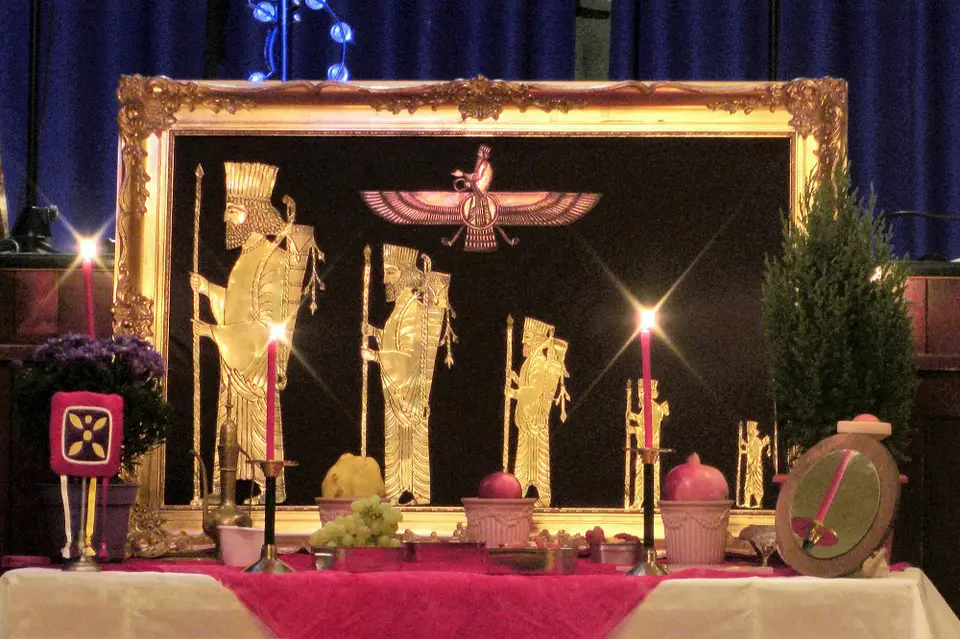
Mehregan
مهرگان
The ancient Iranian autumn festival of Mehr — friendship, affection and the harvest. Tables are laid with pomegranates, apples and grapes, prayers are said, and there is music, dance and, in places, wrestling.
October 2 – November 2, 2026Estimated
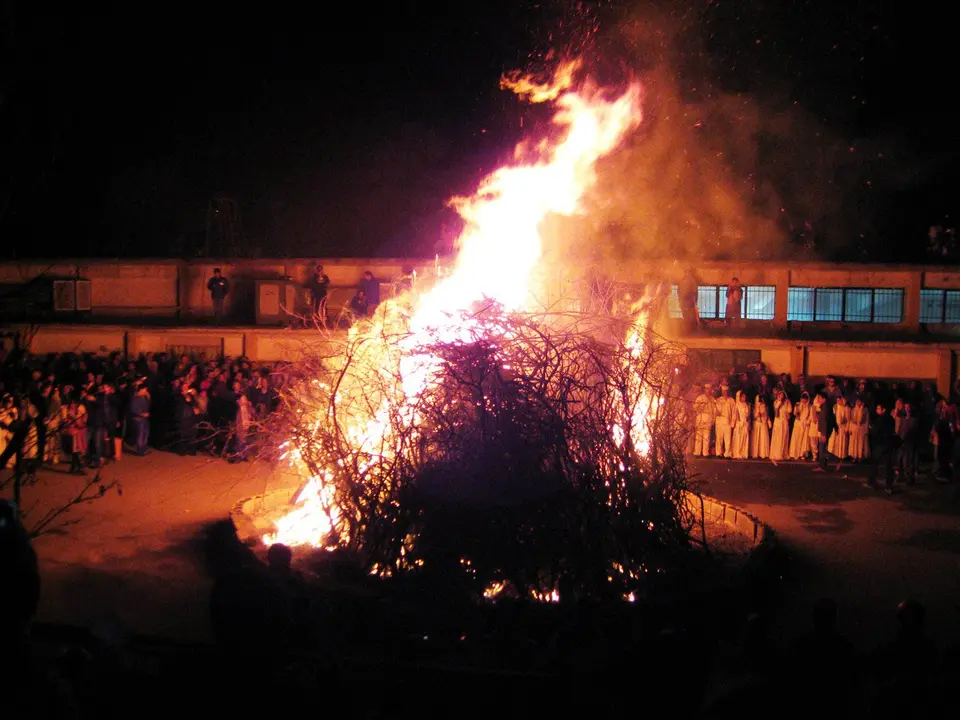
Jashn-e Sadeh
جشن سده
In the depth of winter, fifty days before spring, a great bonfire is lit at sunset. People gather around it to sing, dance and pray, offer blessings and fruit, and celebrate the passing of the coldest days.
January 30, 2027Calculated
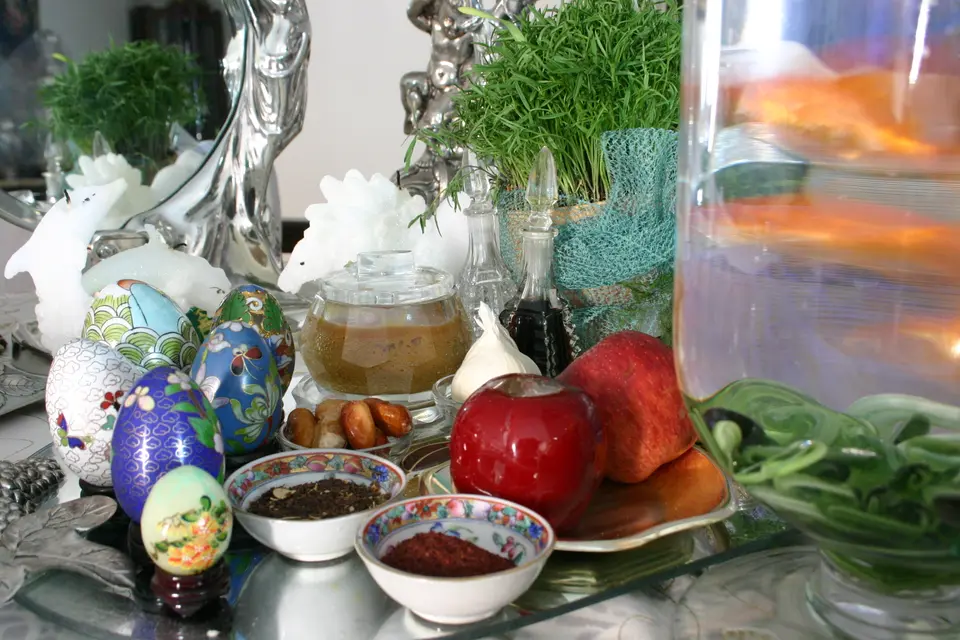
Nowruz
نوروز
Nowruz, “new day”, is the Iranian New Year. It begins at the March equinox, when families gather around the Haft-sin table to wait for the exact moment the year turns, and opens two weeks of visits, food and time outdoors.
March 21, 2027Calculated