Esta página aún no está traducida al español; se muestra el texto original en inglés.
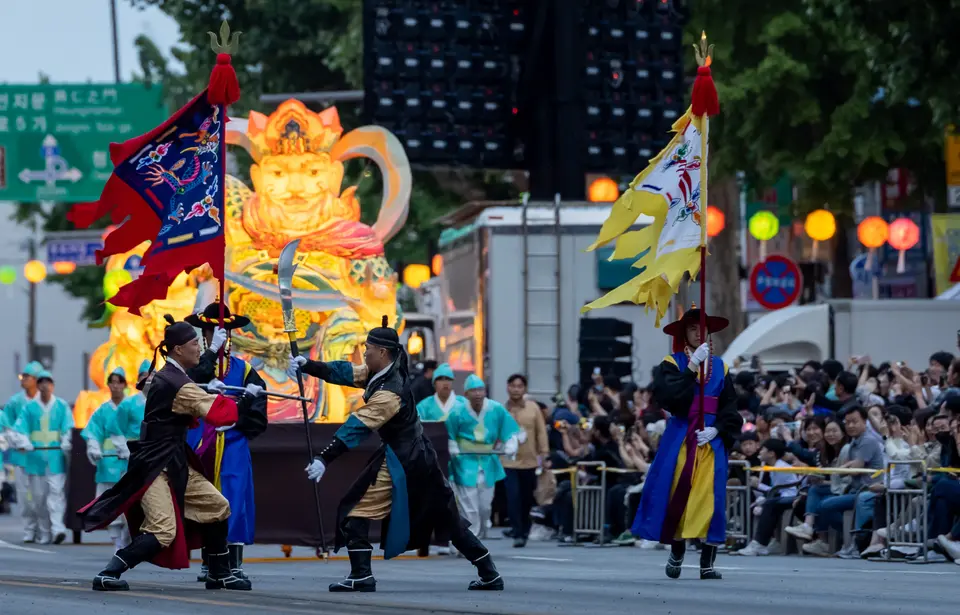
Yeondeunghoe (Lotus Lantern Festival)
연등회
En la Lista del Patrimonio Cultural Inmaterial de la Humanidad de la UNESCO
Foto: Republic of Korea, CC BY-SA 2.0, vía Wikimedia Commons
As Buddha’s Birthday approaches, Korea lights up with lanterns — lotus lanterns strung over temple courtyards, a parade of giant glowing figures through the streets of Seoul, and a festival with more than a thousand years of history that UNESCO praises for dissolving social boundaries.
Lighting a lantern
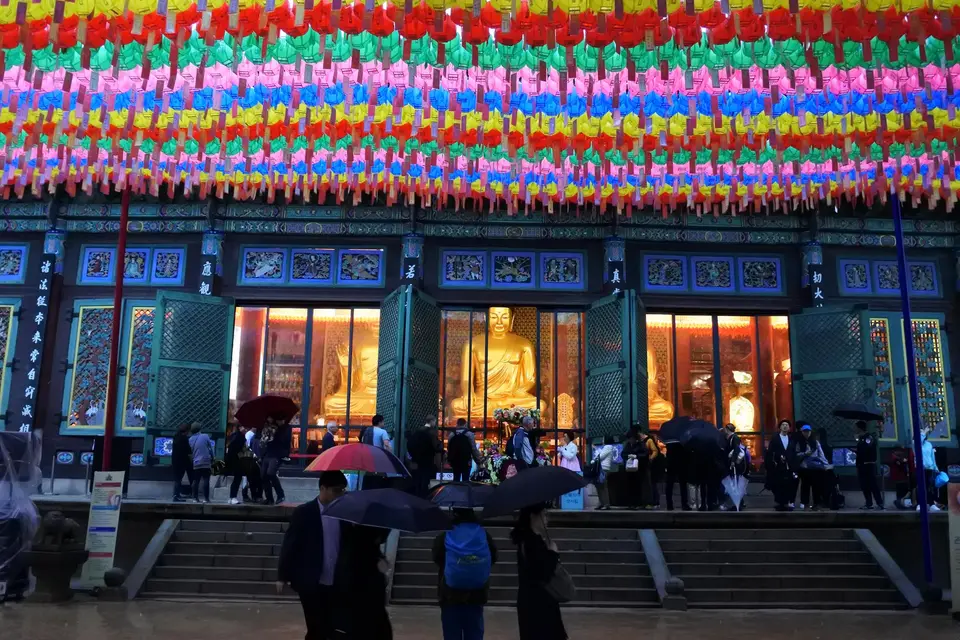
Yeondeunghoe means “lighting lanterns”, and is often translated as the Lotus Lantern Festival. It celebrates the birth of the Buddha, and the lanterns stand for light, hope and unity; lighting them is meant to enlighten the minds of individuals, communities and society through the Buddha’s wisdom. The festival is thought to have grown out of Palgwanhoe, begun in 551 under King Jinheung, and records mention it at Hwangnyongsa temple in Gyeongju in 866. In Silla the lantern festivals combined Buddhist lantern offerings with rites to the dragon god for the protection of farmers and the nation.
The celebration begins with the ritual bathing of a statue of the baby Buddha: water is poured over its head and shoulders with a ladle. Then come public processions in which people carry lanterns they have made, followed by games and recreation. UNESCO, which inscribed the festival in 2020, noted that it is a time when social boundaries are temporarily erased, and that in hard times it has helped hold communities together.
How the lanterns are made
The lotus is the most common design, a Buddhist symbol of dignity and awakening, but lanterns also take the shape of drums, cranes, fish, dragons, tigers, historical figures and ships. Large lanterns have a frame of split bamboo or wire covered in hanji, the strong traditional paper made from mulberry bark, or in silk, and are lit from inside — once with candles, now usually with LEDs. Simple lotus lanterns are made at home and in community workshops by twisting tissue-paper petals onto a white paper globe.
The festival in Jongno, home to Jogyesa, the chief temple of the Jogye Order, is the best known. It has been cancelled only a handful of times in modern history, most recently in 2020 because of the pandemic.
Cuándo se celebra
Buddha’s Birthday is the eighth day of the fourth lunar month, usually in May. Lanterns go up across the country in the weeks before, and the best-known celebrations are around Jogyesa temple in Jongno, Seoul.
- 13 de mayo de 2027Calculada
- 2 de mayo de 2028Calculada
- 20 de mayo de 2029Calculada
- 9 de mayo de 2030Calculada
Fuentes
Esta entrada se escribió a partir de las siguientes fuentes.
- Yeondeunghoe, lantern lighting festival in the Republic of KoreaUNESCO Intangible Cultural Heritage · consultado el 16 de septiembre de 2026
- YeondeunghoeWikipedia · consultado el 16 de septiembre de 2026
- Gregorian-Lunar Calendar Conversion TablesHong Kong Observatory · consultado el 16 de septiembre de 2026
- Phases of the MoonUS Naval Observatory, Astronomical Applications · consultado el 16 de septiembre de 2026
- South Korea travel advice: safety and securityUK Foreign, Commonwealth & Development Office · consultado el 16 de septiembre de 2026
Fiestas relacionadas
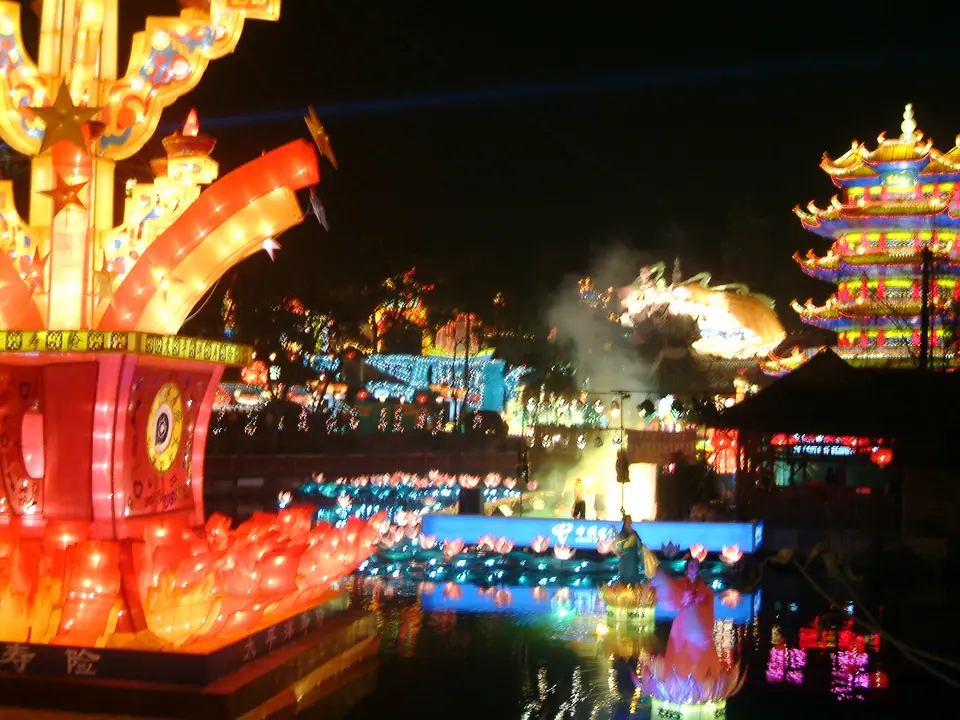
Lantern Festival
元宵节
On the first full moon of the Chinese year, the New Year season ends in light — lantern riddles, sweet rice balls, and great lantern fairs such as those at Nanjing’s Confucius Temple and in Zigong, Sichuan, which run from the Spring Festival to this night.
20 de febrero de 2027Calculada
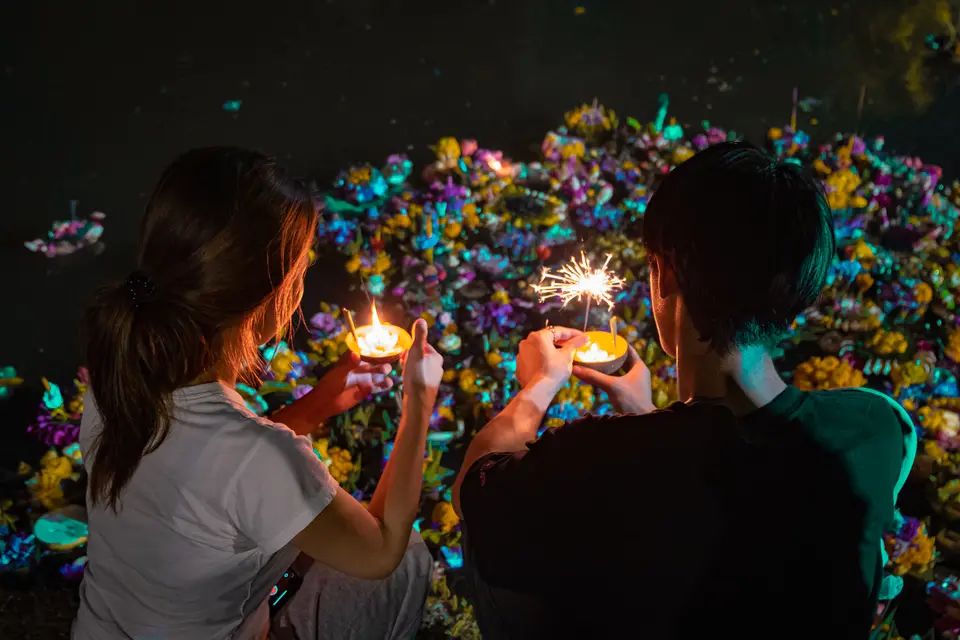
Loy Krathong
ลอยกระทง
On the full-moon night of the twelfth Thai month, people float small decorated baskets bearing a candle, incense and a wish on rivers, canals and ponds across Thailand. In Chiang Mai the night coincides with Yi Peng, when sky lanterns drift up into the dark.
25 de noviembre de 2026Estimada
Gangneung Danoje Festival
강릉단오제
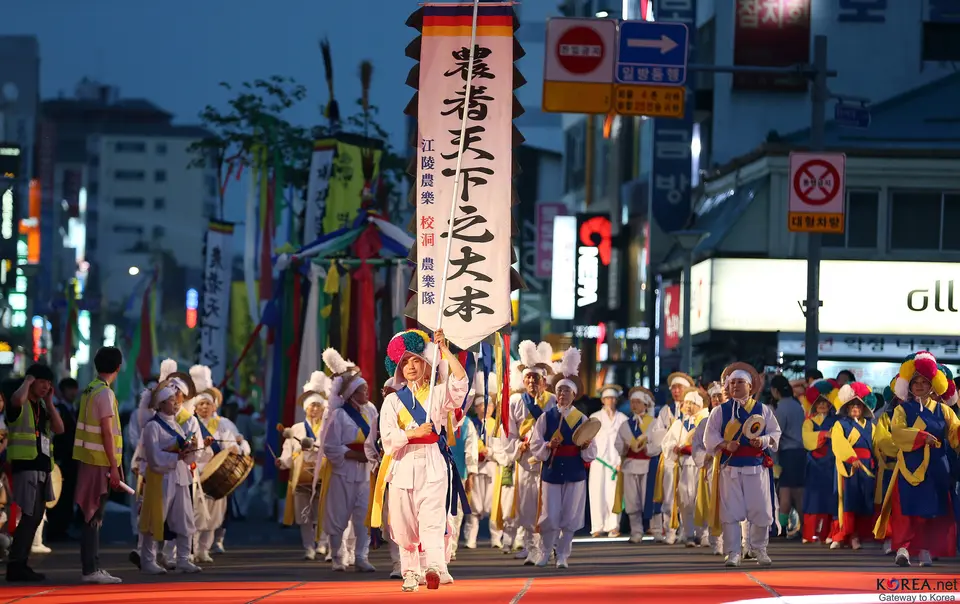
For weeks each spring, Gangneung on Korea’s east coast brews a sacred liquor, fetches its guardian god down from the mountain pass, marries him to a goddess, and then gives a week to shamanic rites, mask drama and the country’s largest open-air market.
26 de abril de 2027Calculada