Nepal

Nepal keeps its own calendar and its own year. The autumn holds three festivals in seven weeks — the chariots of Indra Jatra in Kathmandu, the fortnight of Dashain when the whole country goes home, and the lamps of Tihar — and the spring opens with chariots again, in Bhaktapur, around the solar new year.

Photo: Shadow Ayush, CC BY-SA 4.0, via Wikimedia Commons

Nepal does not run on the Gregorian calendar. The official year is Bikram Sambat, roughly fifty-seven years ahead, and its months begin in the middle of ours; the great festivals are set by the lunar tithi within it, so their Gregorian dates move by weeks from year to year. The dates in this atlas come from the public-holiday list the government publishes for each Bikram Sambat year.

Three of the four festivals here fall within seven weeks of the autumn. Indra Jatra belongs to Kathmandu and to the Newar city underneath the capital: a pole raised at the old palace, masked dances in the squares, and the living goddess Kumari drawn through the streets. Dashain is the whole country's fortnight, the one time of year when everyone travels home; the roads fill, then empty. Tihar follows two and a half weeks later and lights the houses for five days, one of them given to dogs.

The fourth is the spring. Bisket Jatra in Bhaktapur is one of the few Nepali festivals fixed to the solar year rather than the moon, which is why it sits on the Nepali new year in the middle of April, and why the chariots are hauled through the same streets on nearly the same dates every year.

Festivals in Nepal

NepalProcession

Indra Jatra

इन्द्रजात्रा

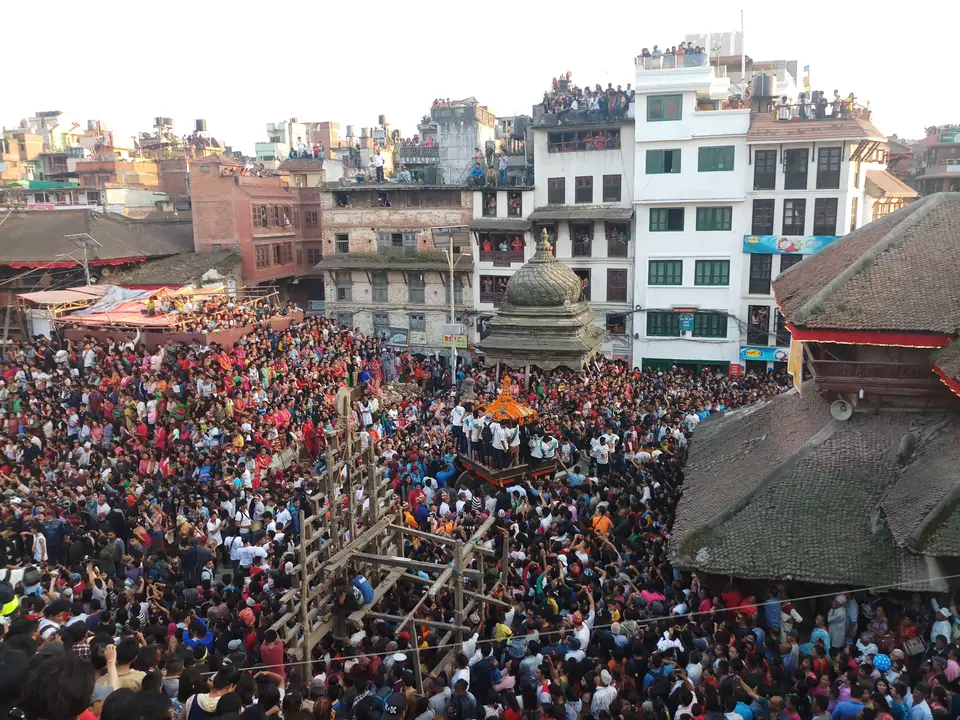
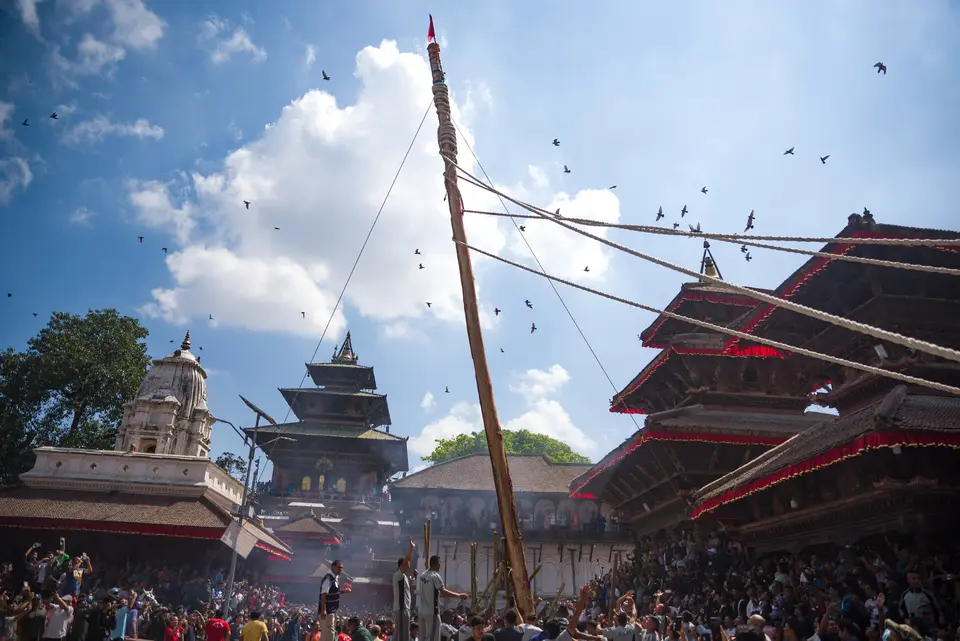
For eight days in the monsoon's last weeks, Kathmandu raises a stripped tree at the old palace, fills its squares with masked dances, and draws the chariot of the living goddess Kumari through the streets of the Newar city. It began as an apology to a god the town had tied up.

September 25, 2026Officially announced
NepalReligious

Dashain

दशैँ

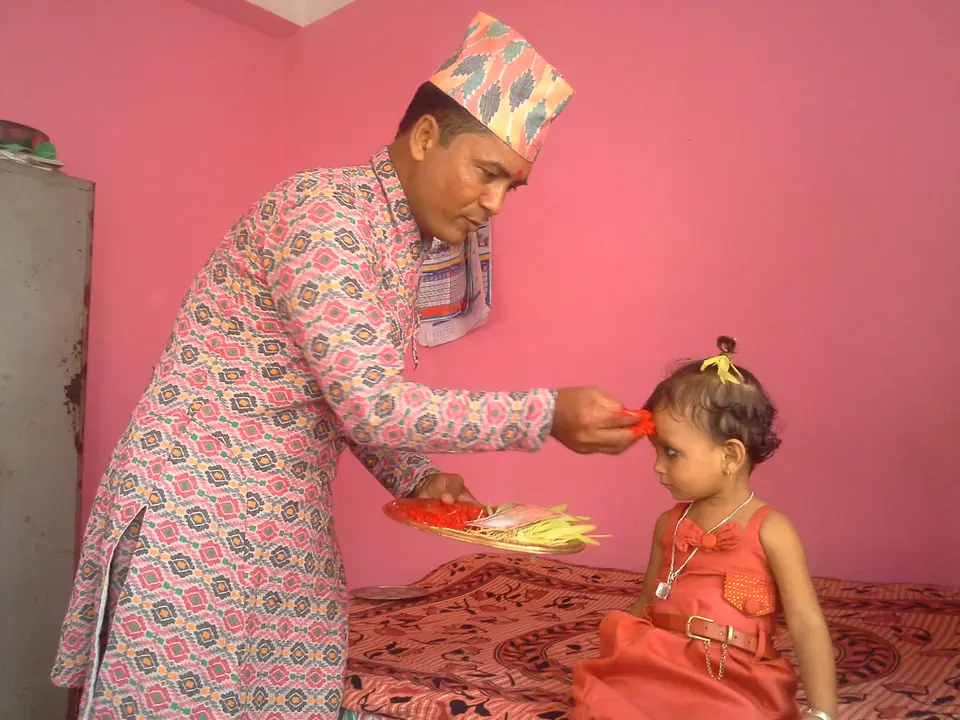
Nepal's longest festival runs fifteen days and empties the cities. Barley is sown in a pot on the first day; on the tenth, elders press red tika and the yellow barley shoots on the foreheads of the young and give them a little money. Offices close, and the whole country travels home.

October 11 – 21, 2026Officially announced

NepalReligious

Tihar

तिहार

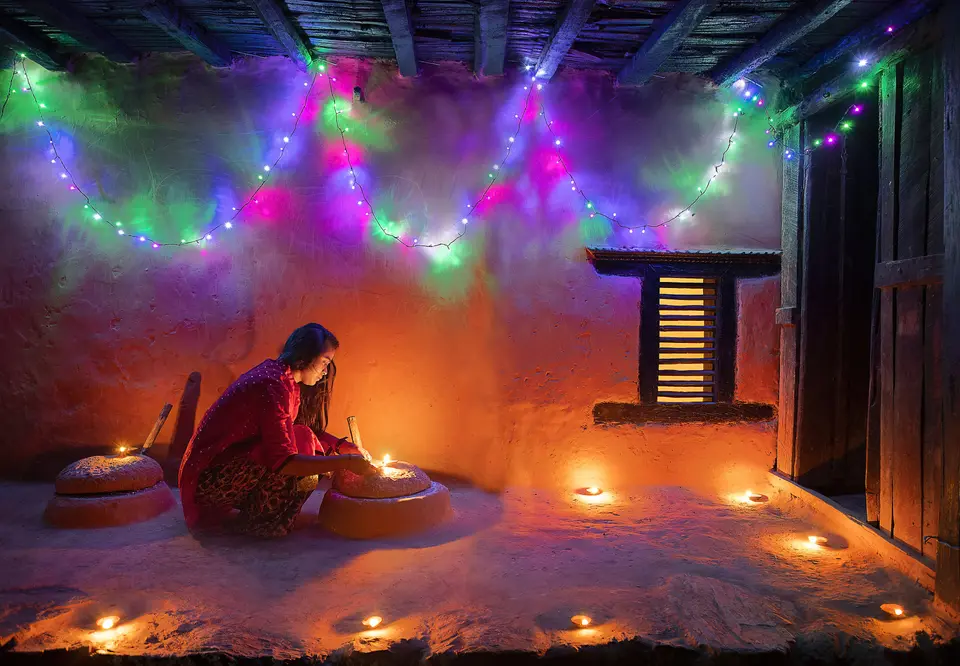
Five days in which Nepal lights its doorways and honours, in turn, the crow, the dog, the cow, the ox and the brother. Oil lamps stand along the window ledges, coloured patterns are laid on the floor at the threshold, and children go from house to house singing for sweets and coins.

November 8 – 11, 2026Officially announced

NepalNew year

Bisket Jatra

बिस्केट जात्रा

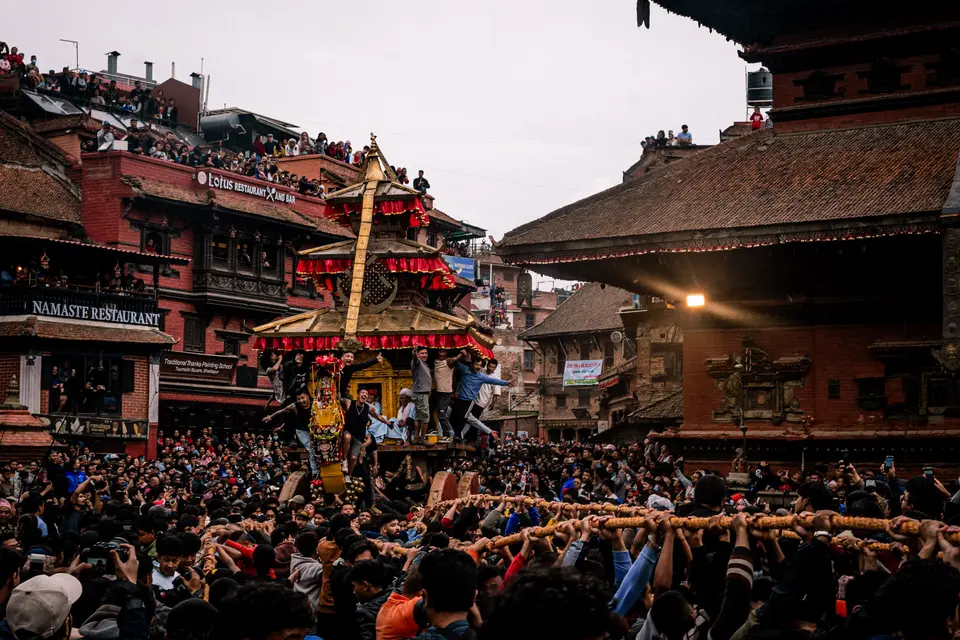
Bhaktapur brings out two chariots for the new year and lets the two halves of the town fight over them. A tall wooden pole is raised at the edge of the city and pulled down again on the last night of the old year, and the year turns when it falls.

April 10 – 18, 2027Estimated

Sources for this page

  1. Nepal travel advice: safety and securityUK Foreign, Commonwealth & Development Office · read September 24, 2026
  2. Nepali public holidays 2083 BSHamro Patro · read September 24, 2026
  3. List of public holidays of Nepal 2083, as published in the Nepal GazetteEdusanjal · read September 24, 2026
  4. DashainWikipedia · read September 24, 2026
  5. Indra JatraWikipedia · read September 24, 2026