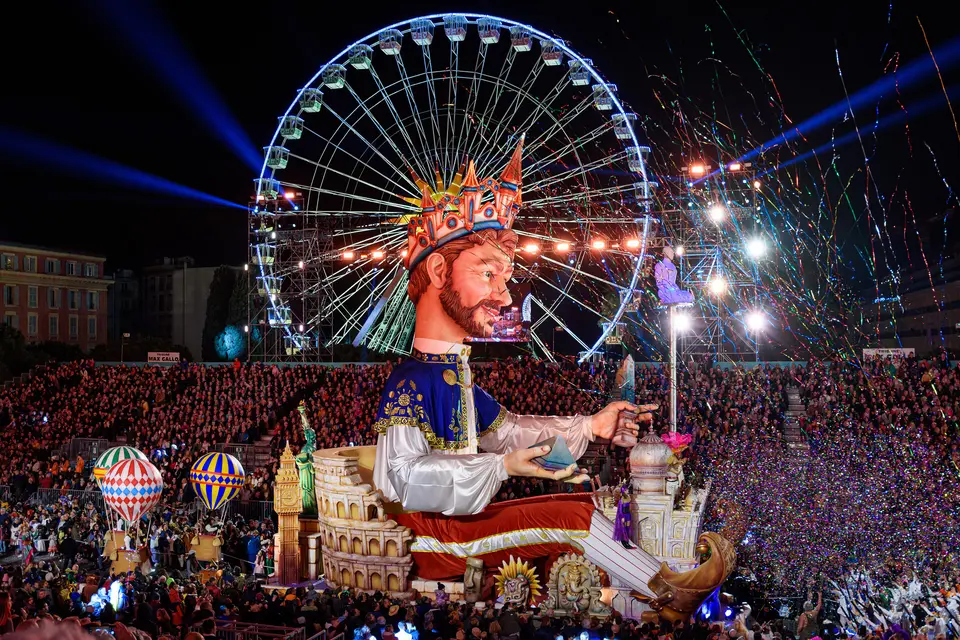
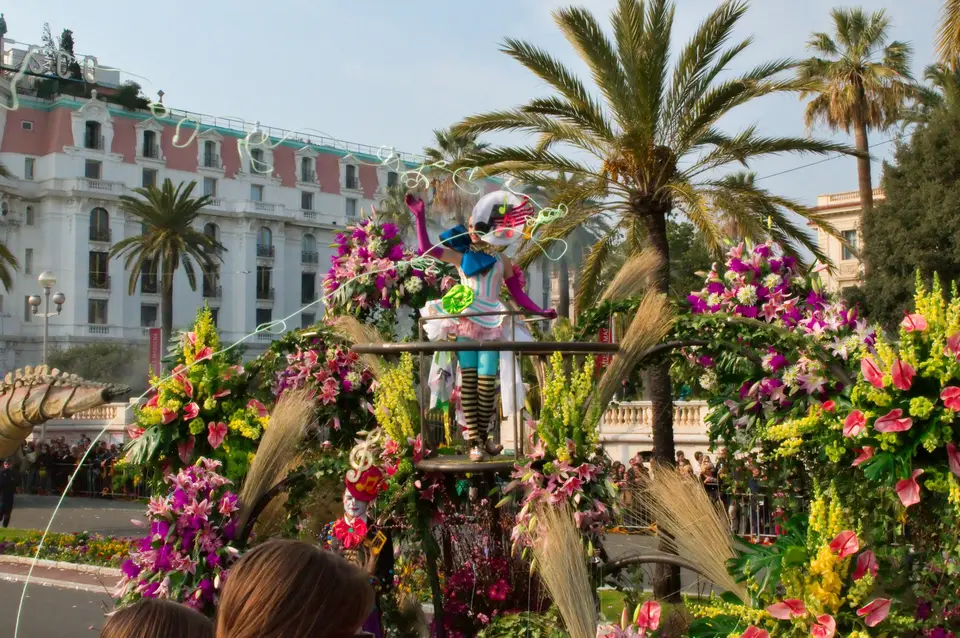
For nearly three weeks in February, Nice fills Place Masséna with monumental papier-mâché floats by day and by night, and the Promenade des Anglais with floats dressed in fresh flowers whose riders throw them into the crowd. It ends with the King burnt at the water's edge.
A carnival with a birth certificate
Nice has been keeping carnival for a very long time: in 1294 Charles of Anjou, Count of Provence, wrote of visiting the city for “the joyous days of Carnival”. In 1539 the celebrations were run by the abbés des fous, who organised four separate balls, one for each order of society. When Nice became a winter resort in the nineteenth century, the visit of King Charles-Félix in 1830 was marked with an organised carnival on the Cours Saleya.
The carnival as it is now dates from 1873, when the businessman Andriot Saëtone set up a carnival committee and gave the street festival a programme, floats and masquerades — partly to hold the wealthy winter visitors in the city. The first flower battle followed in 1876; motorised floats arrived in 1964. The carnival has stopped only three times: for the two world wars and, briefly, for the Gulf War in 1991.
Floats by night, flowers by day
Two things run side by side. The corso carnavalesque is the parade of monumental floats — heads several metres high, all built to the year's theme and finished in papier-mâché by a few local workshops — which goes around Place Masséna by day and again, lit, by night. The bataille de fleurs is the older and gentler one: floats dressed in fresh cut flowers move along the Promenade des Anglais and the people riding them throw the flowers to the crowd. The theme changes every year; 2026 was “Vive la Reine”, and 2027 is “Vive l'Amour”, with the Queen now standing as the King's equal.
The last night ends with the burning of the King and fireworks over the Promenade des Anglais.
Going
The 2027 edition runs from 9 to 28 February. The 2026 carnival drew more than 420,000 people in all: about 226,000 at the parades, the flower battles and the Veglione ball, and nearly 140,000 more at the Carnival Village, the free part of the programme with its stands and stages. Tickets for the grandstands are sold by the city; the pedestrian zones along the route are free to anyone in full costume, which is why so much of the crowd is in one.
When it happens
The carnival is held in the weeks before Lent, and the City of Nice announces the dates for each edition in the autumn before it. The 2027 edition runs from 9 to 28 February under the theme “Vive l'Amour”.
- February 9 – 28, 2027Officially announced
Visiting with respect
Good to know
- There are ticketed grandstands along the parade routes, and pedestrian zones where anyone in full costume is let in free. Dressing up is the cheapest ticket in the city.
- At the flower battles the riders throw flowers to be caught. Catch them; do not climb the float to take them.
- The floats are built by a handful of local workshops over months. If you are photographing the makers rather than the floats, ask first.
Avoid
- Do not walk into the parade route between floats, however wide the gap looks; the vehicles are large and the drivers see very little.
- Do not throw anything back at the floats or the performers.
Stay safe
- The parades draw dense crowds on the Promenade des Anglais and around Place Masséna. Keep children within reach and agree on a meeting point.
- Thieves and pickpockets work crowds in France; keep valuables out of outer pockets and your bag closed and across your body.
- Terrorists are very likely to try to carry out attacks in France, including at crowded events. Stay aware of your surroundings and follow police instructions.
Sources
This entry was written from the following sources.
- Carnaval de Nice — the originsVille de Nice · read September 24, 2026
- Le Carnaval de NiceVille de Nice · read September 24, 2026
- Carnaval de Nice 2027 « Vive l'Amour »Office de tourisme métropolitain Nice Côte d'Azur · read September 24, 2026
- Carnaval de Nice : 420 000 participants en 2026, « Vive l'Amour » en 2027Nice Premium · read September 24, 2026
- France travel advice: safety and securityUK Foreign, Commonwealth & Development Office · read September 24, 2026
Related festivals
Carnival of Venice
Carnevale di Venezia
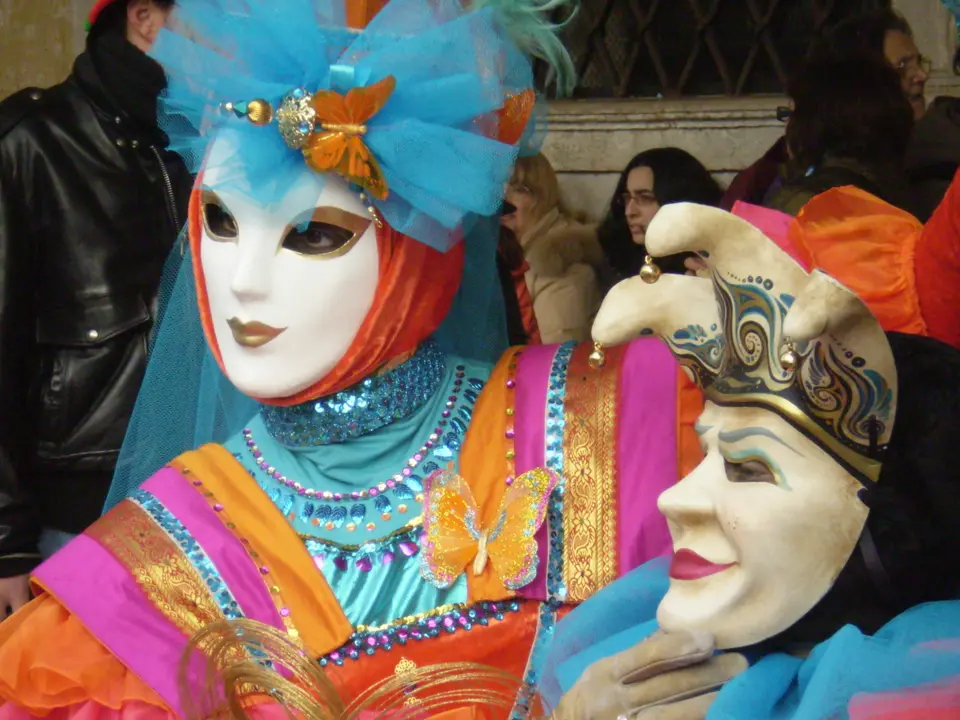
For two and a half weeks before Lent, Venice returns to the masks and costumes that made its carnival famous across Europe — banned for almost two centuries, revived in 1979, and now drawing millions of visitors to the city’s squares and canals.
January 23 – February 9, 2027Officially announced
Cologne Carnival
Kölner Karneval
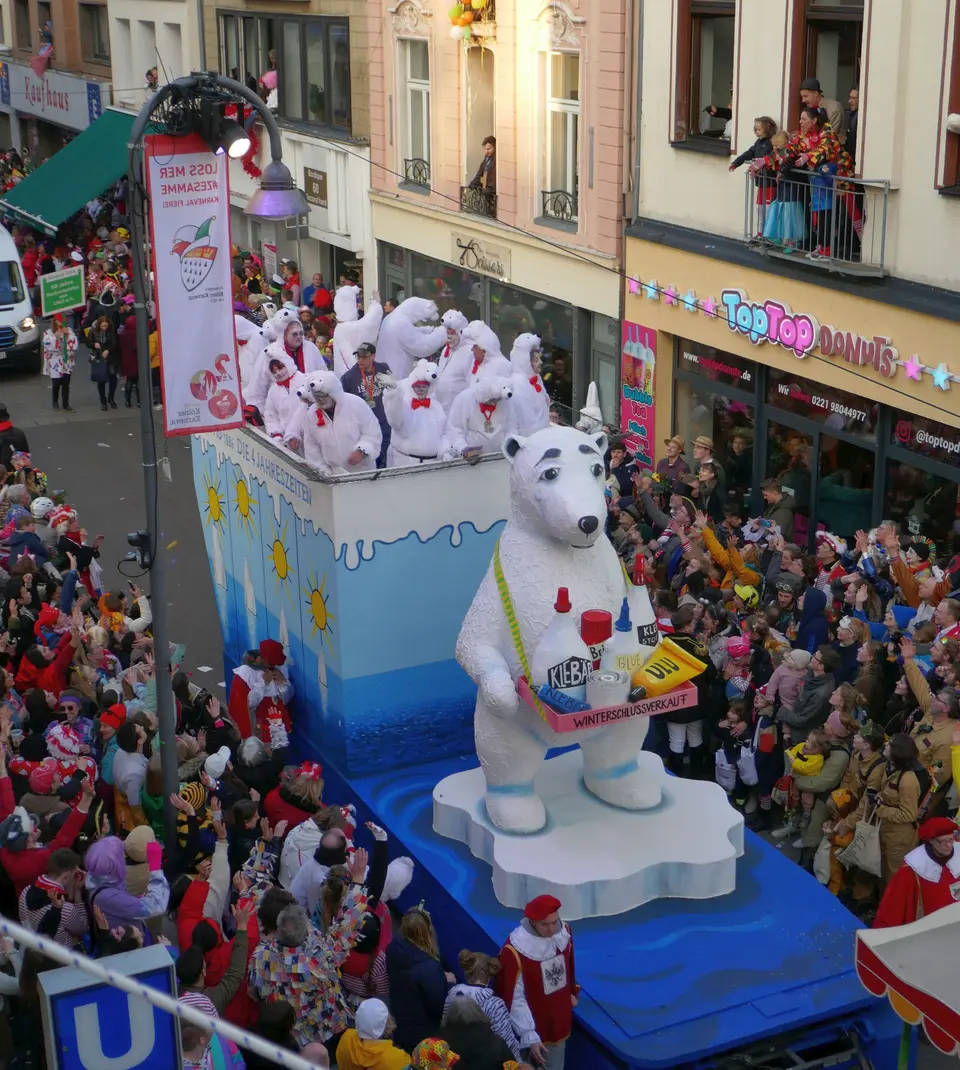
Cologne’s “fifth season” opens at 11:11 on 11 November and explodes onto the streets in the days before Lent, when costumed crowds shout “Kölle Alaaf!” and more than a million people watch the Rose Monday parade throw sweets from its floats.
November 11, 2026Calculated
Patras Carnival
Πατρινό Καρναβάλι
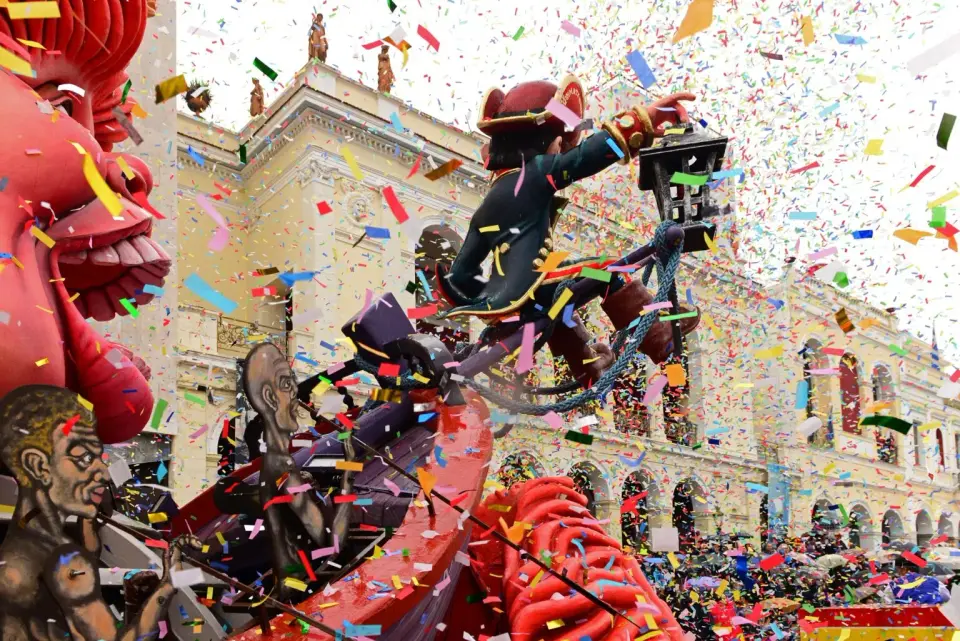
Greece’s largest carnival opens on St Anthony’s Day and builds for weeks — balls, a city-wide treasure hunt, a night parade — to a Sunday procession of satirical floats and tens of thousands of costumed revellers, ending with the burning of the Carnival King in the harbour.
January 17, 2027Calculated
Comments
Have you been there? Tell other readers what to expect.
No comments yet.
Comments are read by the site’s owner before they appear.