Diese Seite ist noch nicht ins Deutsche übersetzt; der englische Originaltext wird angezeigt.

Mount Hagen Cultural Show
Foto: Yves Picq, CC BY-SA 3.0, über Wikimedia Commons
In 1961, before independence, someone had the idea of getting highland groups who had been fighting to come and dance at each other instead. Sixty-odd years later more than eighty sing-sing groups fill a park in Mount Hagen with feathers, shell and ochre for three days in August.
A show instead of a fight
Mount Hagen is the third-largest city in Papua New Guinea, capital of Western Highlands Province, 46,250 people at 1,677 metres. It is named after a volcano twenty-four kilometres to the north-west, which was itself named after Curt von Hagen, a German colonial officer who lived from 1859 to 1897.
The show was first staged in 1961, fourteen years before independence, and the point of it was unity: to bring together tribes from across the highlands who had reason not to be in the same field. It is now one of the largest cultural events in the country, and groups come from well beyond the highlands — regional, provincial and national.
Sing-sing
The form is the sing-sing: a group performs its own dance, in its own dress, together. More than eighty groups take part across the three days. What that means in practice is feathers — bird of paradise, cassowary, parrot — built into headdresses, shell ornaments at the nose and chest, ochre and charcoal and pigment on the face and body, drums, and a great deal of noise made deliberately. Each group is showing what it is, next to everyone else showing what they are, which is the whole idea.
It happens at Queen's Park in the middle of Mount Hagen city. The National Cultural Commission and the tourism authority publish the dates; they have fallen over the third Saturday in August in each recent year.
The other one
Papua New Guinea's other great show is at Goroka, in the Eastern Highlands, in September. The two are often done as a pair by people who have come a long way, and between them they are how most outsiders ever see a sing-sing.
Wann es stattfindet
Three days in mid-August, Friday to Sunday, around the third Saturday. The dates are announced each year — 17–18 August in 2024, 15–17 August in 2025, 14–16 August in 2026.
- 20.–22. August 2027Geschätzt
- 18.–20. August 2028Geschätzt
- 17.–19. August 2029Geschätzt
- 16.–18. August 2030Geschätzt
Respektvoll besuchen
Gut zu wissen
- Performers are used to cameras and the show exists partly to be photographed, but the groups have spent hours on the paint and the feathers. Ask before taking a close portrait.


Quellen
Dieser Eintrag beruht auf den folgenden Quellen.
- Hagen ShowPapua New Guinea Tourism Promotion Authority · abgerufen am 26. September 2026
- Mount HagenWikipedia · abgerufen am 26. September 2026
Verwandte Feste
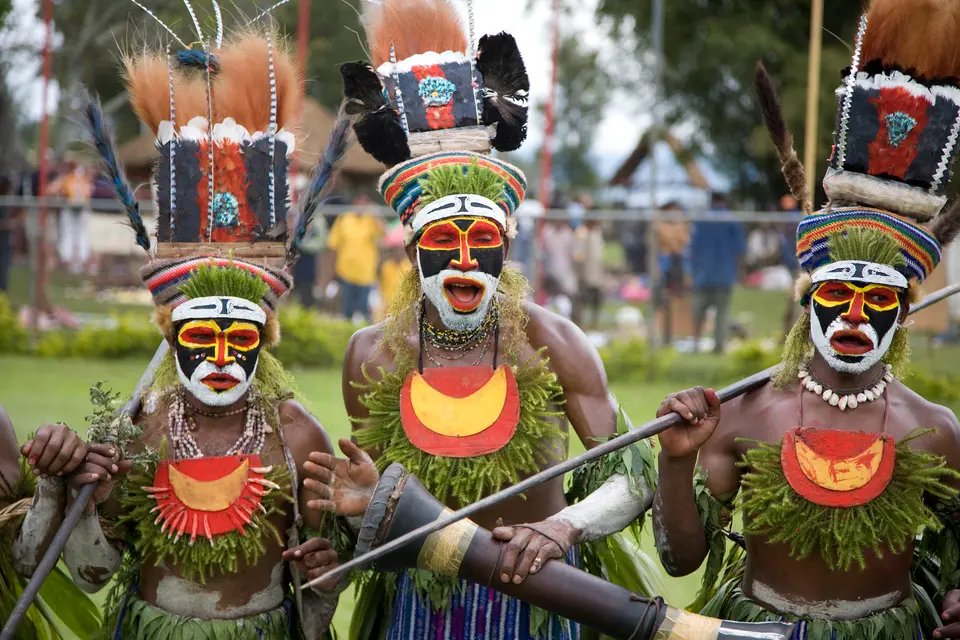
Goroka Show
Rund um den Unabhängigkeitstag kommen etwa hundert Stämme aus ganz Papua-Neuguinea in Goroka zum größten Sing-sing des Landes zusammen, mit bemalten Gesichtern, Musik und Tanz — und den geisterhaften Schlammmännern von Asaro in ihren Lehmmasken.
16. September 2027Geschätzt
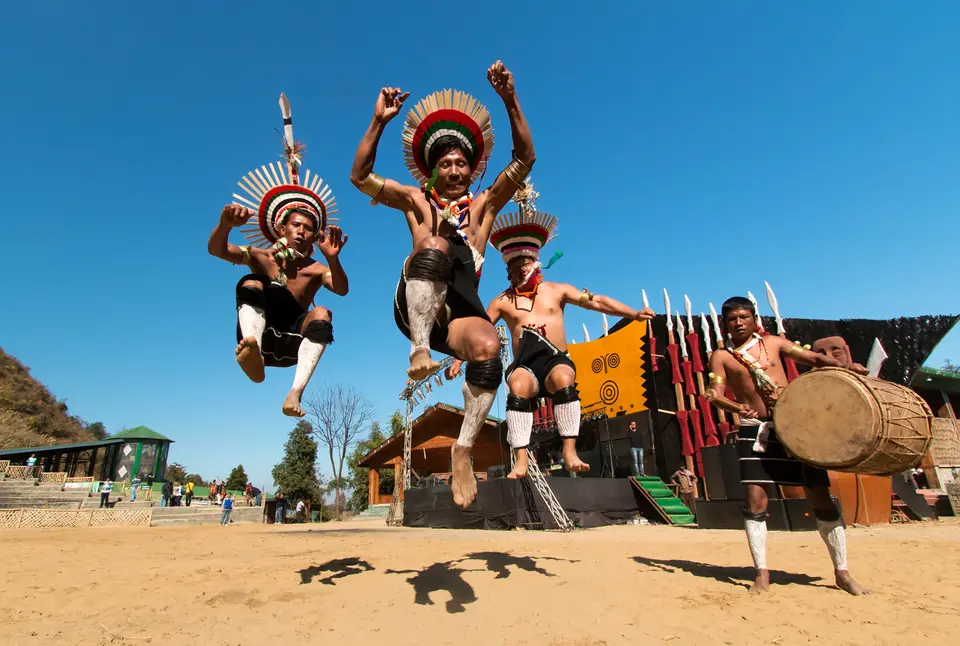
Hornbill-Festival
Hornbill Festival
In den ersten zehn Dezembertagen treffen sich die Stämme Nagalands in einem Heritage-Dorf in den Bergen bei Kohima, um ihre Lieder, Tänze, Handwerke, Spiele und Speisen zu teilen — das „Fest der Feste“, benannt nach dem Waldvogel der Naga-Überlieferung.
1.–10. Dezember 2026Berechnet
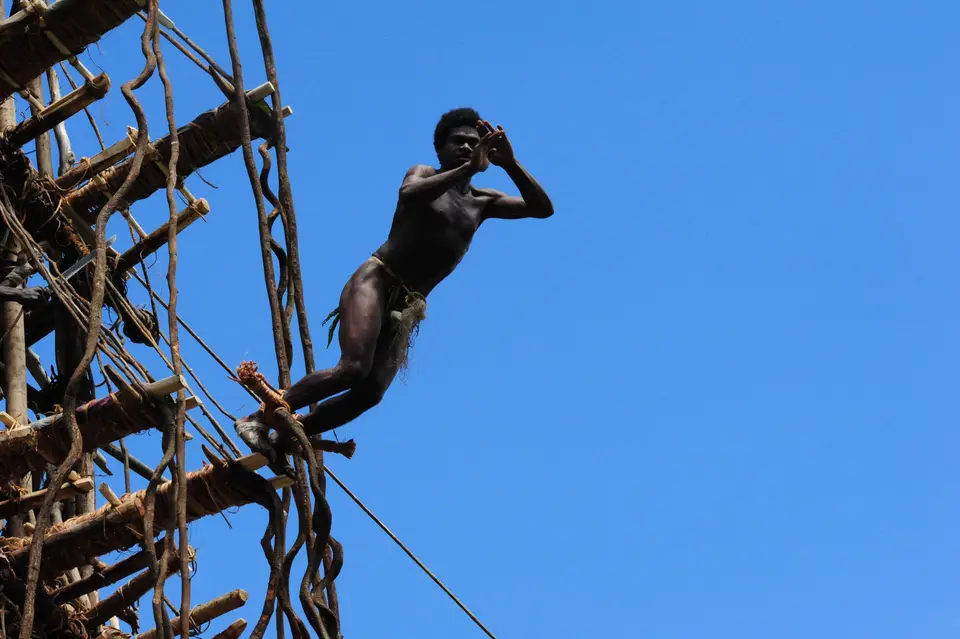
Turmspringen auf der Insel Pentecost
Nanggol
Wenn die Jamswurzeln geerntet sind, bauen die Männer im Süden von Pentecost Türme aus frisch geschlagenem Holz, mit Lianen verschnürt, und springen nacheinander von ihren Plattformen, Lianen an den Knöcheln, um mit den Schultern die gepflügte Erde zu streifen — je höher der Sprung, desto besser die Ernte.
April–Juni 2027Ungefährer Zeitraum
Kommentare
Waren Sie dort? Sagen Sie anderen, was sie erwartet.
Noch keine Kommentare.
Kommentare werden vom Betreiber gelesen, bevor sie erscheinen.