
Mount Hagen Cultural Show
Photo: Yves Picq, CC BY-SA 3.0, via Wikimedia Commons
In 1961, before independence, someone had the idea of getting highland groups who had been fighting to come and dance at each other instead. Sixty-odd years later more than eighty sing-sing groups fill a park in Mount Hagen with feathers, shell and ochre for three days in August.
A show instead of a fight
Mount Hagen is the third-largest city in Papua New Guinea, capital of Western Highlands Province, 46,250 people at 1,677 metres. It is named after a volcano twenty-four kilometres to the north-west, which was itself named after Curt von Hagen, a German colonial officer who lived from 1859 to 1897.
The show was first staged in 1961, fourteen years before independence, and the point of it was unity: to bring together tribes from across the highlands who had reason not to be in the same field. It is now one of the largest cultural events in the country, and groups come from well beyond the highlands — regional, provincial and national.
Sing-sing
The form is the sing-sing: a group performs its own dance, in its own dress, together. More than eighty groups take part across the three days. What that means in practice is feathers — bird of paradise, cassowary, parrot — built into headdresses, shell ornaments at the nose and chest, ochre and charcoal and pigment on the face and body, drums, and a great deal of noise made deliberately. Each group is showing what it is, next to everyone else showing what they are, which is the whole idea.
It happens at Queen's Park in the middle of Mount Hagen city. The National Cultural Commission and the tourism authority publish the dates; they have fallen over the third Saturday in August in each recent year.
The other one
Papua New Guinea's other great show is at Goroka, in the Eastern Highlands, in September. The two are often done as a pair by people who have come a long way, and between them they are how most outsiders ever see a sing-sing.
When it happens
Three days in mid-August, Friday to Sunday, around the third Saturday. The dates are announced each year — 17–18 August in 2024, 15–17 August in 2025, 14–16 August in 2026.
- August 20 – 22, 2027Estimated
- August 18 – 20, 2028Estimated
- August 17 – 19, 2029Estimated
- August 16 – 18, 2030Estimated
Visiting with respect
Good to know
- Performers are used to cameras and the show exists partly to be photographed, but the groups have spent hours on the paint and the feathers. Ask before taking a close portrait.


Sources
This entry was written from the following sources.
- Hagen ShowPapua New Guinea Tourism Promotion Authority · read September 26, 2026
- Mount HagenWikipedia · read September 26, 2026
Related festivals
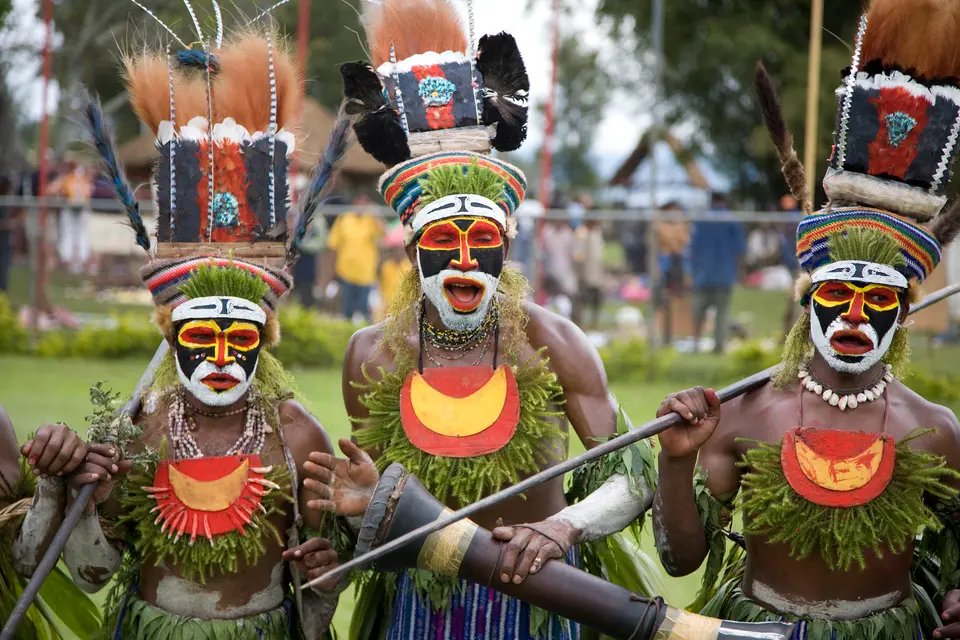
Goroka Show
Close to Independence Day, about a hundred tribes from across Papua New Guinea gather in Goroka for the country’s biggest sing-sing, with painted faces, music and dance — and the ghostly Asaro Mudmen in their clay masks.
September 16, 2027Estimated
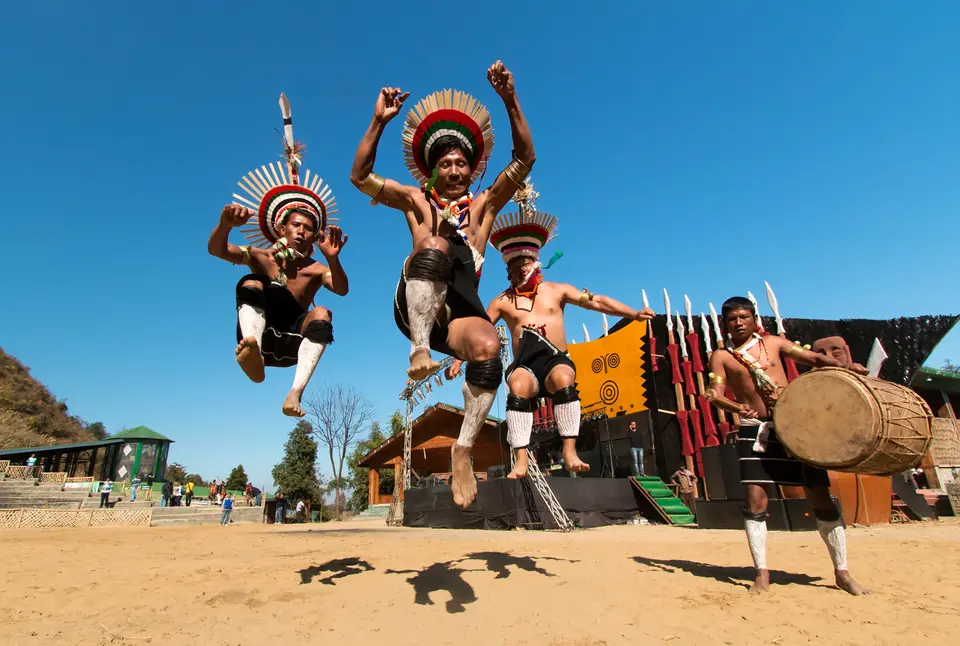
Hornbill Festival
For the first ten days of December, the tribes of Nagaland gather at a heritage village in the hills near Kohima to share their songs, dances, crafts, games and food — the “Festival of Festivals”, named after the forest bird of Naga folklore.
December 1 – 10, 2026Calculated
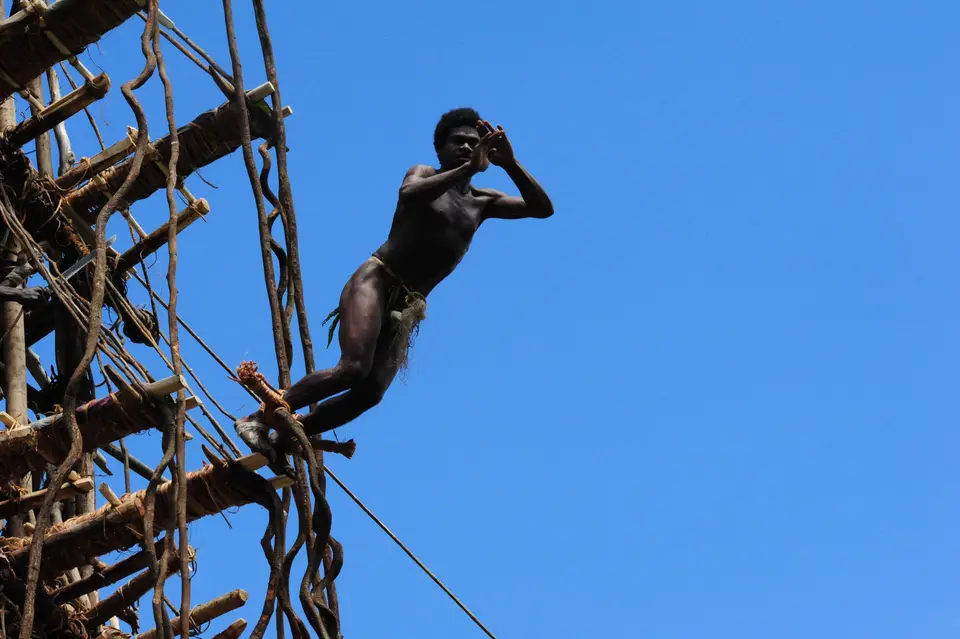
Land diving on Pentecost Island
Nanggol
When the yams are harvested, the men of southern Pentecost build towers of freshly cut wood lashed with vines, and one after another dive from their platforms with vines tied to their ankles, trying to brush the tilled earth with their shoulders — the higher the dive, the better the harvest.
April – June 2027Approximate window
Comments
Have you been there? Tell other readers what to expect.
No comments yet.
Comments are read by the site’s owner before they appear.