Cette page n’est pas encore traduite en français ; le texte original anglais est affiché.

Mount Hagen Cultural Show
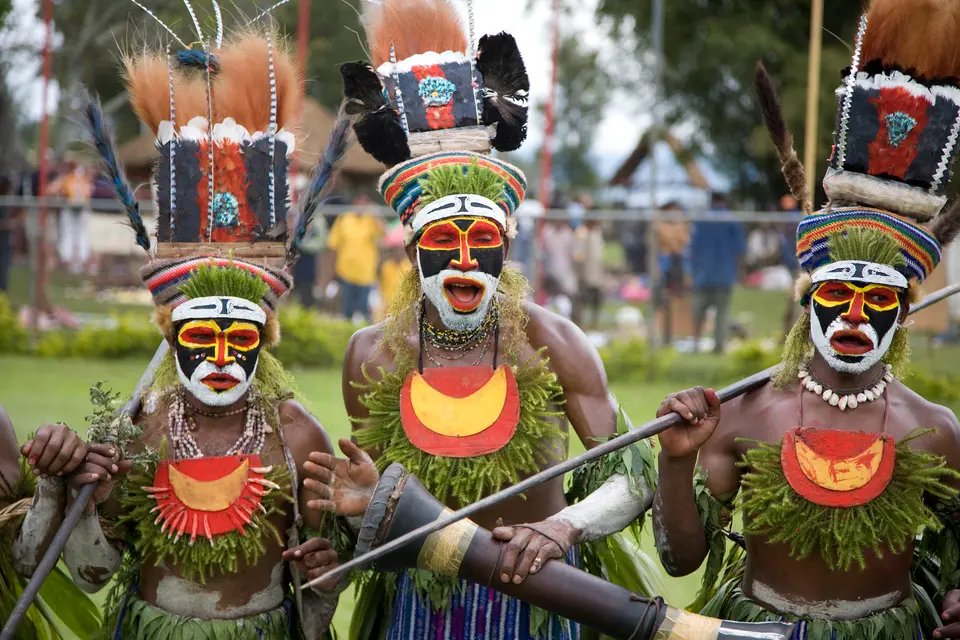
Photo : Yves Picq, CC BY-SA 3.0, via Wikimedia Commons
In 1961, before independence, someone had the idea of getting highland groups who had been fighting to come and dance at each other instead. Sixty-odd years later more than eighty sing-sing groups fill a park in Mount Hagen with feathers, shell and ochre for three days in August.
A show instead of a fight
Mount Hagen is the third-largest city in Papua New Guinea, capital of Western Highlands Province, 46,250 people at 1,677 metres. It is named after a volcano twenty-four kilometres to the north-west, which was itself named after Curt von Hagen, a German colonial officer who lived from 1859 to 1897.
The show was first staged in 1961, fourteen years before independence, and the point of it was unity: to bring together tribes from across the highlands who had reason not to be in the same field. It is now one of the largest cultural events in the country, and groups come from well beyond the highlands — regional, provincial and national.
Sing-sing
The form is the sing-sing: a group performs its own dance, in its own dress, together. More than eighty groups take part across the three days. What that means in practice is feathers — bird of paradise, cassowary, parrot — built into headdresses, shell ornaments at the nose and chest, ochre and charcoal and pigment on the face and body, drums, and a great deal of noise made deliberately. Each group is showing what it is, next to everyone else showing what they are, which is the whole idea.
It happens at Queen's Park in the middle of Mount Hagen city. The National Cultural Commission and the tourism authority publish the dates; they have fallen over the third Saturday in August in each recent year.
The other one
Papua New Guinea's other great show is at Goroka, in the Eastern Highlands, in September. The two are often done as a pair by people who have come a long way, and between them they are how most outsiders ever see a sing-sing.
Quand a-t-elle lieu
Three days in mid-August, Friday to Sunday, around the third Saturday. The dates are announced each year — 17–18 August in 2024, 15–17 August in 2025, 14–16 August in 2026.
- 20–22 août 2027Estimée
- 18–20 août 2028Estimée
- 17–19 août 2029Estimée
- 16–18 août 2030Estimée
Visiter avec respect
Bon à savoir
- Performers are used to cameras and the show exists partly to be photographed, but the groups have spent hours on the paint and the feathers. Ask before taking a close portrait.


Sources
Cette entrée a été rédigée à partir des sources suivantes.
- Hagen ShowPapua New Guinea Tourism Promotion Authority · consulté le 26 septembre 2026
- Mount HagenWikipedia · consulté le 26 septembre 2026
Fêtes apparentées
Goroka Show
Près de la fête de l’Indépendance, une centaine de tribus de toute la Papouasie-Nouvelle-Guinée se réunissent à Goroka pour le plus grand sing-sing du pays, avec visages peints, musique et danse — et les fantomatiques Hommes de boue d’Asaro sous leurs masques d’argile.
16 septembre 2027Estimée
Festival Hornbill
Hornbill Festival
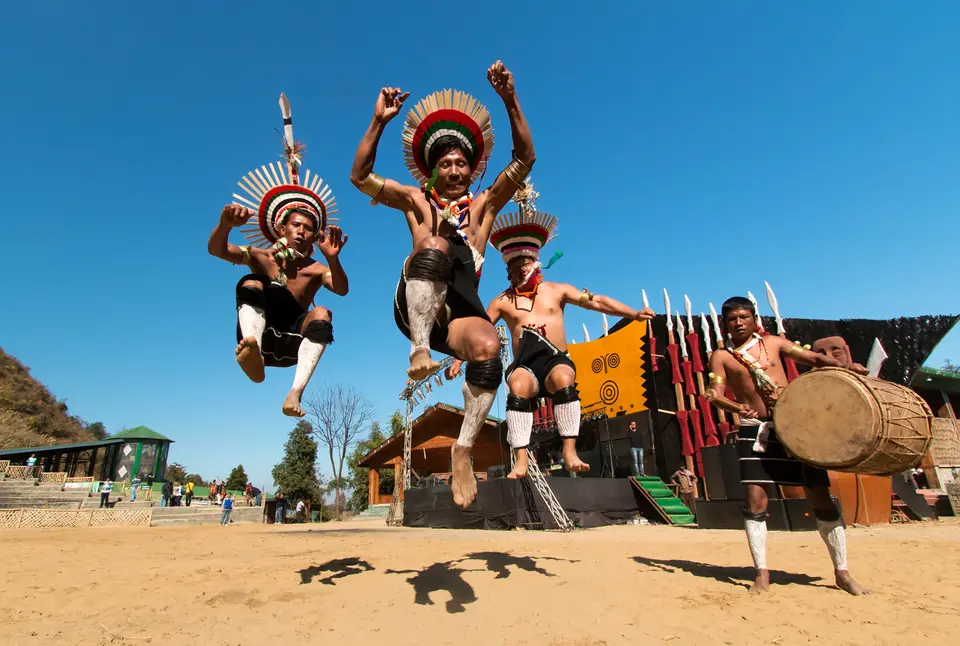
Les dix premiers jours de décembre, les tribus du Nagaland se réunissent dans un village patrimonial des collines près de Kohima pour partager chants, danses, artisanat, jeux et cuisine — le « festival des festivals », nommé d’après l’oiseau de forêt du folklore naga.
1–10 décembre 2026Calculée
Saut du Gol sur l’île de Pentecôte
Nanggol
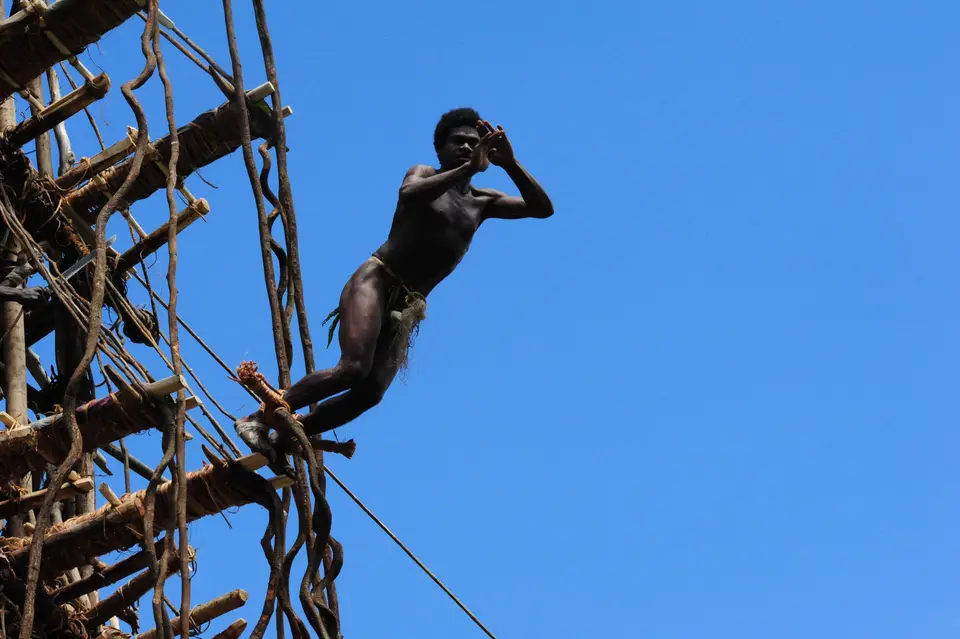
Quand l’igname est récoltée, les hommes du sud de Pentecôte dressent des tours de bois fraîchement coupé, liées de lianes, et s’élancent l’un après l’autre de leurs plates-formes, des lianes nouées aux chevilles, cherchant à frôler des épaules la terre labourée — plus le saut est haut, meilleure sera la récolte.
avril – juin 2027Période approximative
Commentaires
Vous y étiez ? Dites aux autres lecteurs à quoi s’attendre.
Pas encore de commentaires.
Les commentaires sont lus par le propriétaire du site avant de paraître.