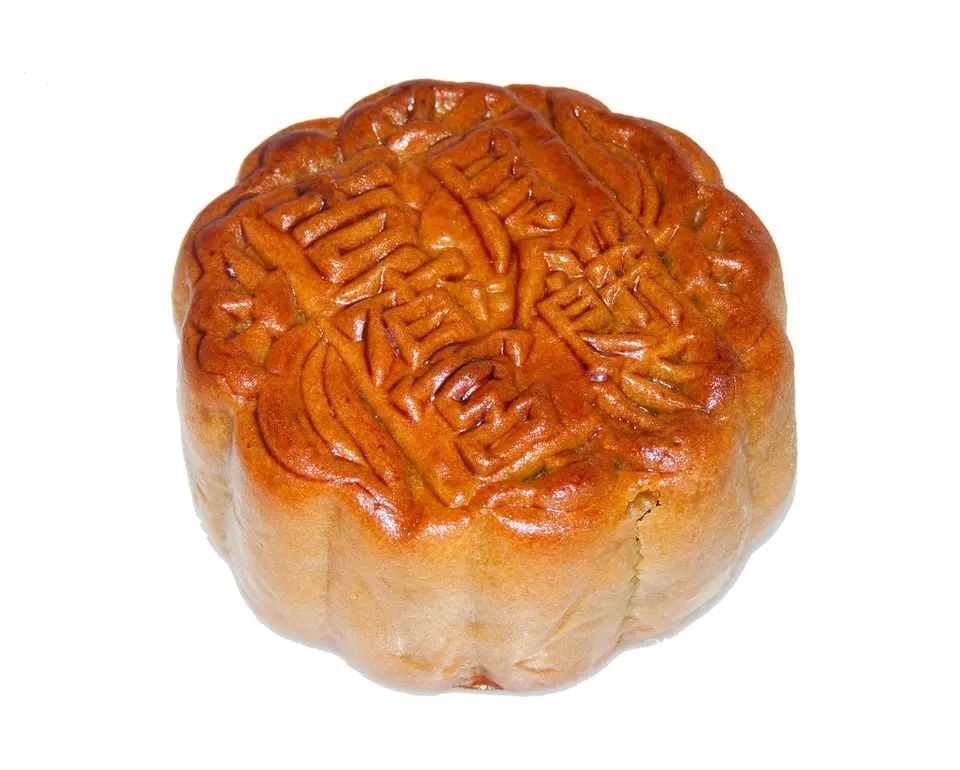
A dense round pastry about ten centimetres across, stamped on top with the name of the bakery and a word like longevity, and cut into small wedges so that everyone at the table gets a piece. Inside, sometimes, a salted duck egg yolk standing in for the full moon.
A very small cake that is mostly filling
A mooncake is a round baked pastry eaten at the Mid-Autumn Festival. The Cantonese one, which is the best-known, is about ten centimetres across and three or four thick, and the crust is only two or three millimetres of it — the rest is a dense, sweet filling that weighs several times what the skin does.
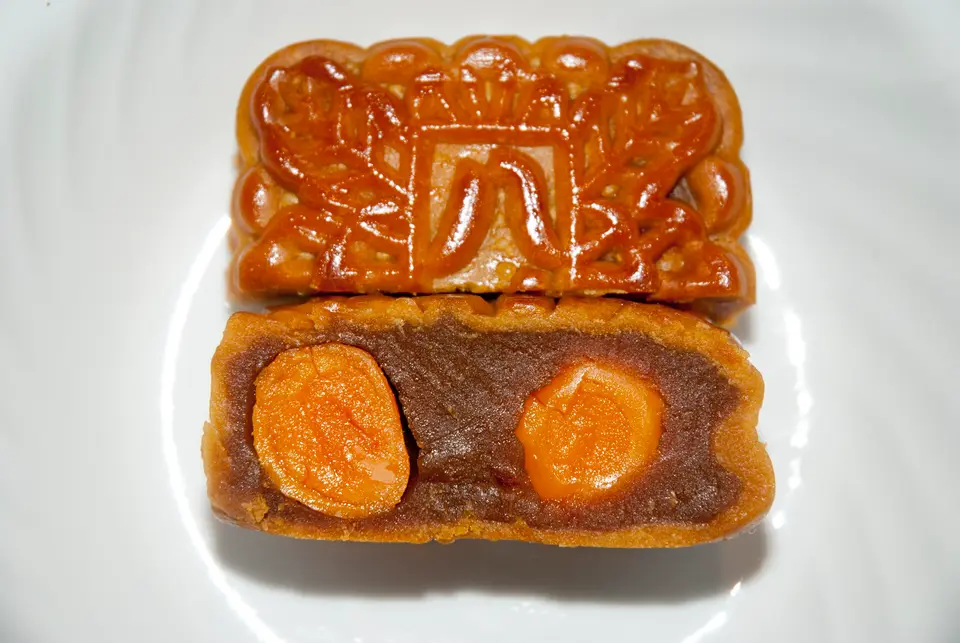
The classic filling is lotus seed paste, which is the oldest and the costliest. Red bean paste, made from azuki beans, is the everyday one. Into the middle of either may go whole salted duck egg yolks, which stand for the full moon; the more elaborate Cantonese cakes carry four of them, one for each phase of it.
The top is pressed in a mould, so the surface comes out in relief. What is stamped there is usually the characters for longevity or harmony together with the name of the bakery and what is inside, and around that the moon, or Chang'e the moon goddess, or flowers, or a rabbit.
Cut, not bitten
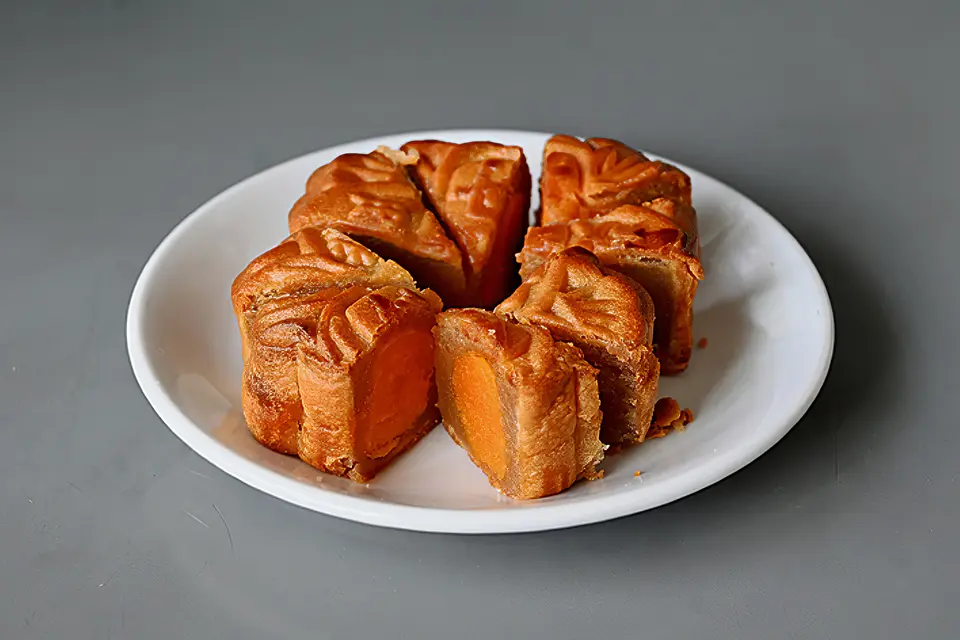
A mooncake is eaten in small wedges with tea. That is not a nicety — one cake is very rich, and it is made to be divided among the people at the table on the night of the festival rather than eaten by one person.
Outside the festival itself, the mooncake is a gift. Families give boxes to relatives and businesses give them to clients in the weeks beforehand, which has grown a whole market in expensive ones: an average box of four in Singapore runs to about sixty US dollars.
Song name, Ming festival
The word yuèbǐng first appears in the Southern Song, in Wu Zimu's Menglianglu — but at that point it had nothing to do with the Mid-Autumn Festival. The connection was made later. It is documented for the Ming in Liu Ruoyu's Zhuozhongzhi, which records that in the eighth month the palace admired the autumn begonias, and that by the fifteenth day every household set out mooncakes and fruit.
There is also a folk tale, which is told far more often than either of those books. It has the Han rebels against Yuan rule passing word of an uprising inside mooncakes: on the fifteenth day of the eighth month, kill the rulers. In one version the message is spread across four cakes and only readable when they are cut and laid together. It is a folk tale rather than a record, and it is the story most people know.
The two traditions
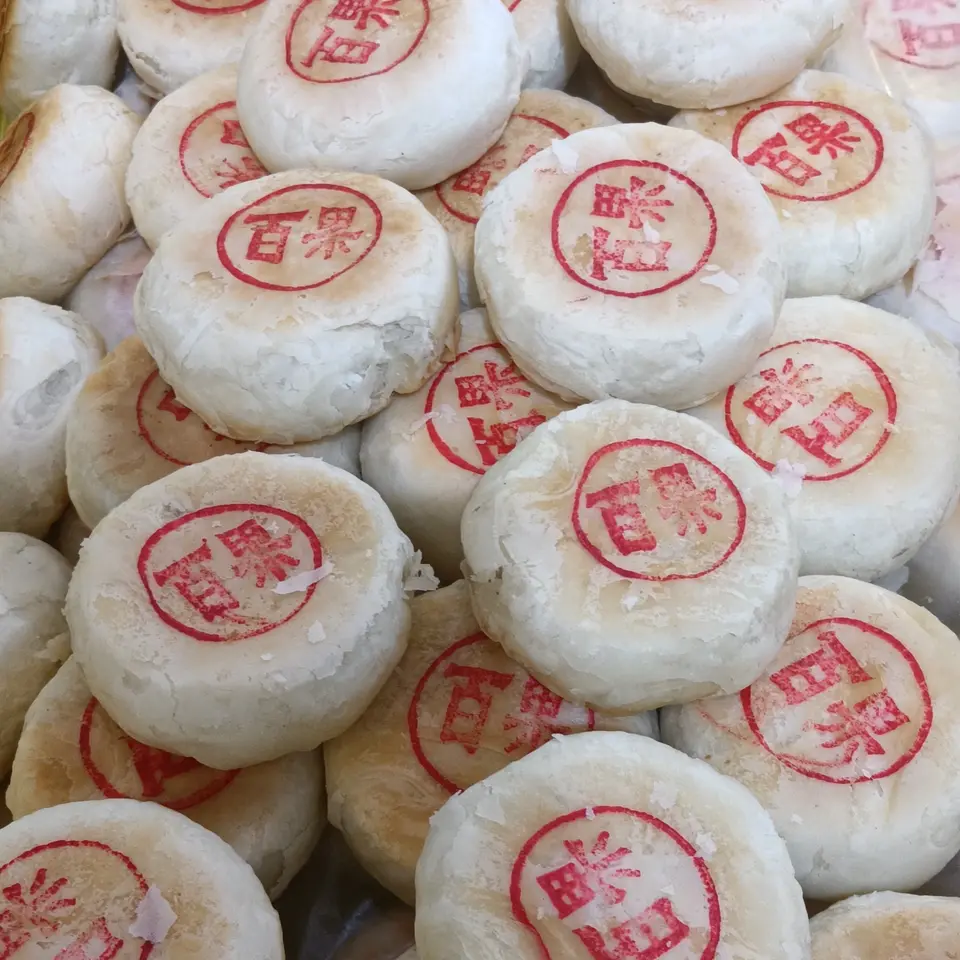
Cantonese is one style among many. Its skin is thin, glossy and golden, and the filling is generous and soft. Suzhou's is the opposite: a pale crust of many layers, worked with lard and sugar, crisp rather than tender, and its fillings are as often savoury as sweet — the fresh-meat mooncake is a Suzhou thing, eaten hot.
Beijing's uses sesame oil heavily and comes out lightly sweet with a crisp outside. Chaoshan folds its pastry over and over and fries it in warm oil. Taiwan's tends to be flaky with mung bean or taro. There is a snow-skin kind too, not baked at all, kept in the fridge, which is recent and which younger buyers like.
When it is eaten
The Mid-Autumn Festival, the fifteenth day of the eighth lunar month. Boxes are given for weeks beforehand; the eating is done on the night itself, with tea, under the moon.
Where you will meet it
- The table on the night of the festival, cut into wedges and handed round with tea rather than eaten whole by one person.
- A bakery in the weeks before, where the boxes are bought to be given away — to relatives, and by businesses to their clients.
- Guangdong and the cities that follow it, for the thin-skinned Cantonese mooncake with the deep imprint.
- Suzhou, for the other tradition entirely — a pale flaky crust made with lard, and fillings that can be savoury.
The atlas names occasions and kinds of place, never a particular restaurant. We cannot read a kitchen from here, and a recommendation we could not check would be worth less than none.
What goes into it
- A thin skin, two to three millimetres of it, holding a filling several times its own weight.
- Lotus seed paste, the original and the expensive one.
- Red bean paste, from azuki beans, the common one.
- Salted duck egg yolks, whole, one or several, set in the middle of the paste.
- In Suzhou, lard and sugar worked into the dough in layers, and sometimes pork instead of sweet filling.
At the table
Good to know
- Cut it, do not bite it. One mooncake is shared, in small wedges, and cutting it is part of the evening.
- Drink tea with it. It is very rich and very sweet and the tea is not optional.
- If someone gives you a box, it is a gift with a season attached — open it at the festival rather than the same afternoon.
Avoid
- Do not eat a whole one yourself. It is roughly a meal, and it was not made to be eaten alone in either sense.
- Do not throw away the yolk. It is the most expensive thing in the cake and the reason for its shape.
- Do not assume all mooncakes are sweet. Suzhou's fresh-meat mooncake is a hot savoury pastry and a different thing altogether.
Sources
This entry was written from the following sources.
Eaten at
Mid-Autumn Festival
中秋节
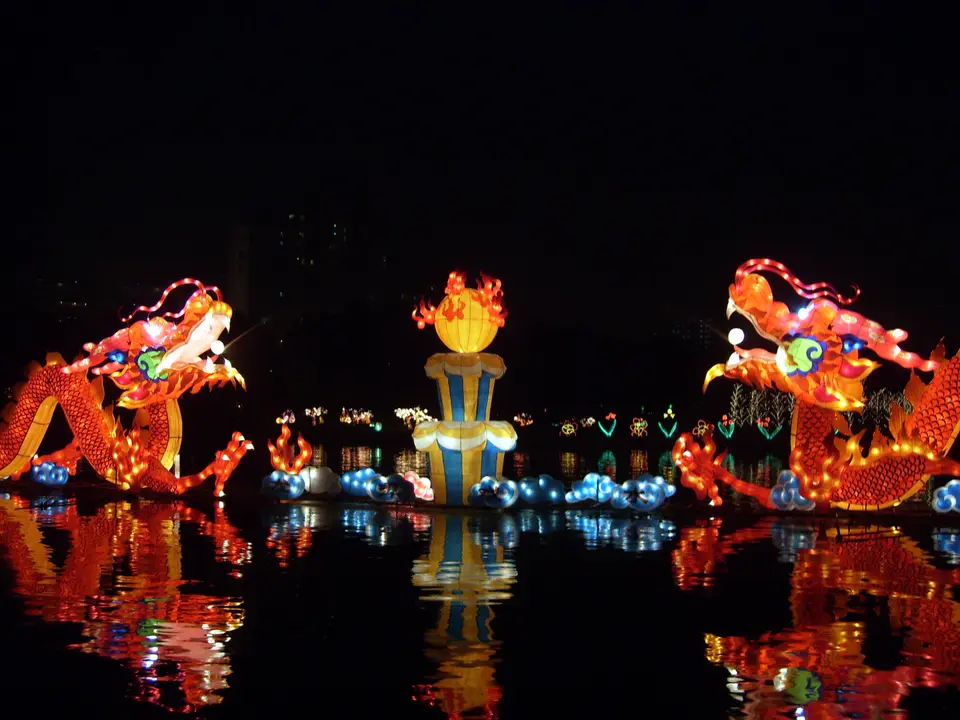
On the fifteenth night of the eighth lunar month, when the moon is held to be at its fullest and brightest, Chinese families gather to share mooncakes, carry lanterns and look at the moon — a harvest festival with the legend of Chang’e at its heart.
September 15, 2027Calculated