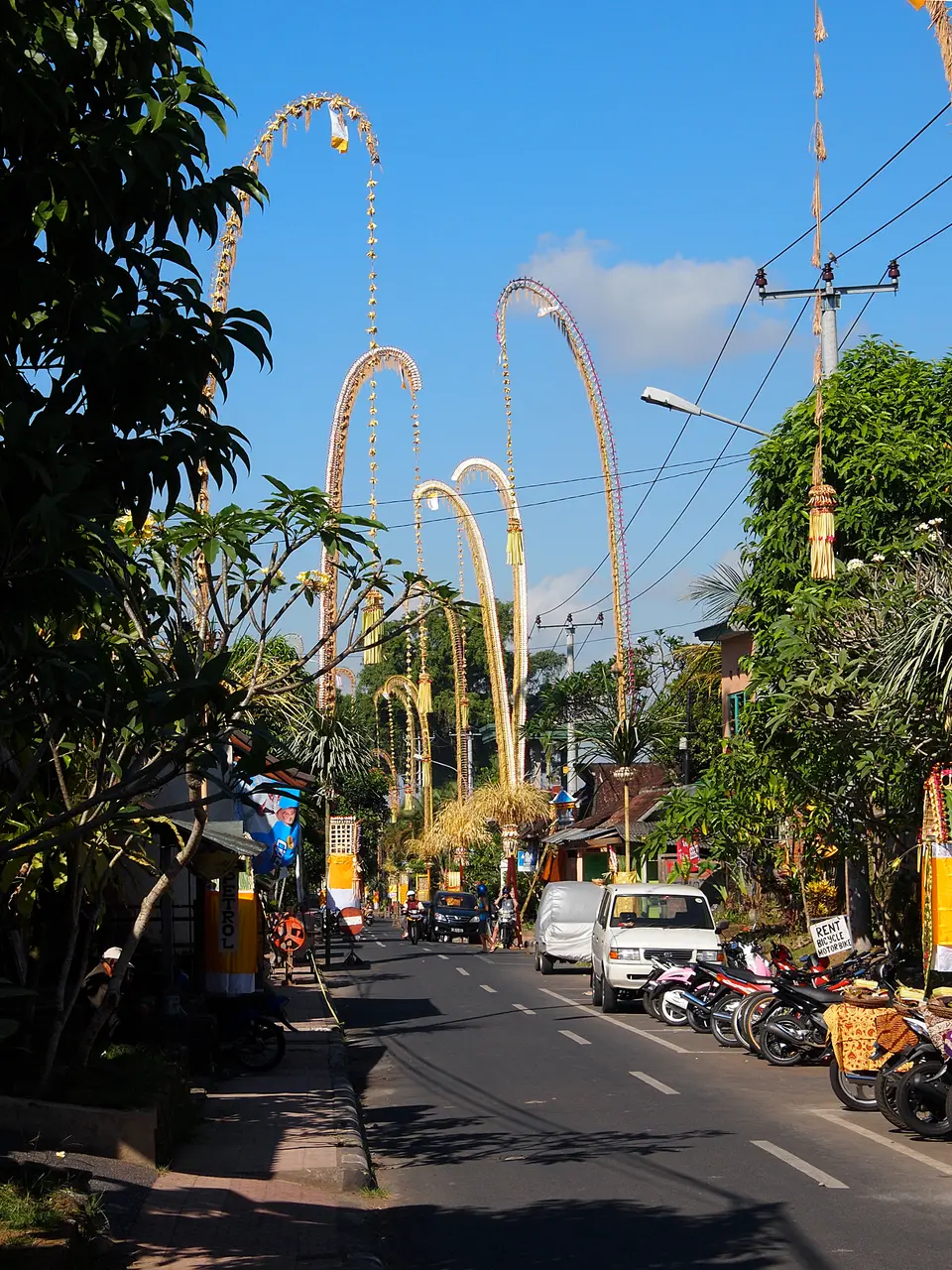
Every 210 days Bali bends. Penjor — bamboo poles too tall to stand straight — arch over every road while the ancestors come down to the house shrines; ten days later, before the sun reaches its height, Kuningan sends them back with yellow rice and provisions for the road.
A calendar that does not care about the sun
The pawukon is 210 days long and has no leap day, no intercalation and no relationship to the sun or the moon. It is built from ten weeks running at once — weeks of one, two, three, four, five, six, seven, eight, nine and ten days — and 210 is simply where the five-, six- and seven-day weeks come back into step. The 210 days are divided into thirty named wuku: Sinta, Landep, Ukir and so on through Dungulan and Kuningan to Watugunung.
Galungan is Buda Kliwon Dungulan — Buda is Wednesday in the seven-day week, Kliwon a day of the five-day week, Dungulan the eleventh wuku. Because the cycle is a plain count of days and the Gregorian year is not, the festival slides backwards about a month and a half each time it comes round, and falls roughly twice a solar year. It is exact arithmetic: the twenty-two Galungan dates published for 2018 to 2030 are every one of them a whole number of 210-day steps apart, and every one of them a Wednesday.
The poles
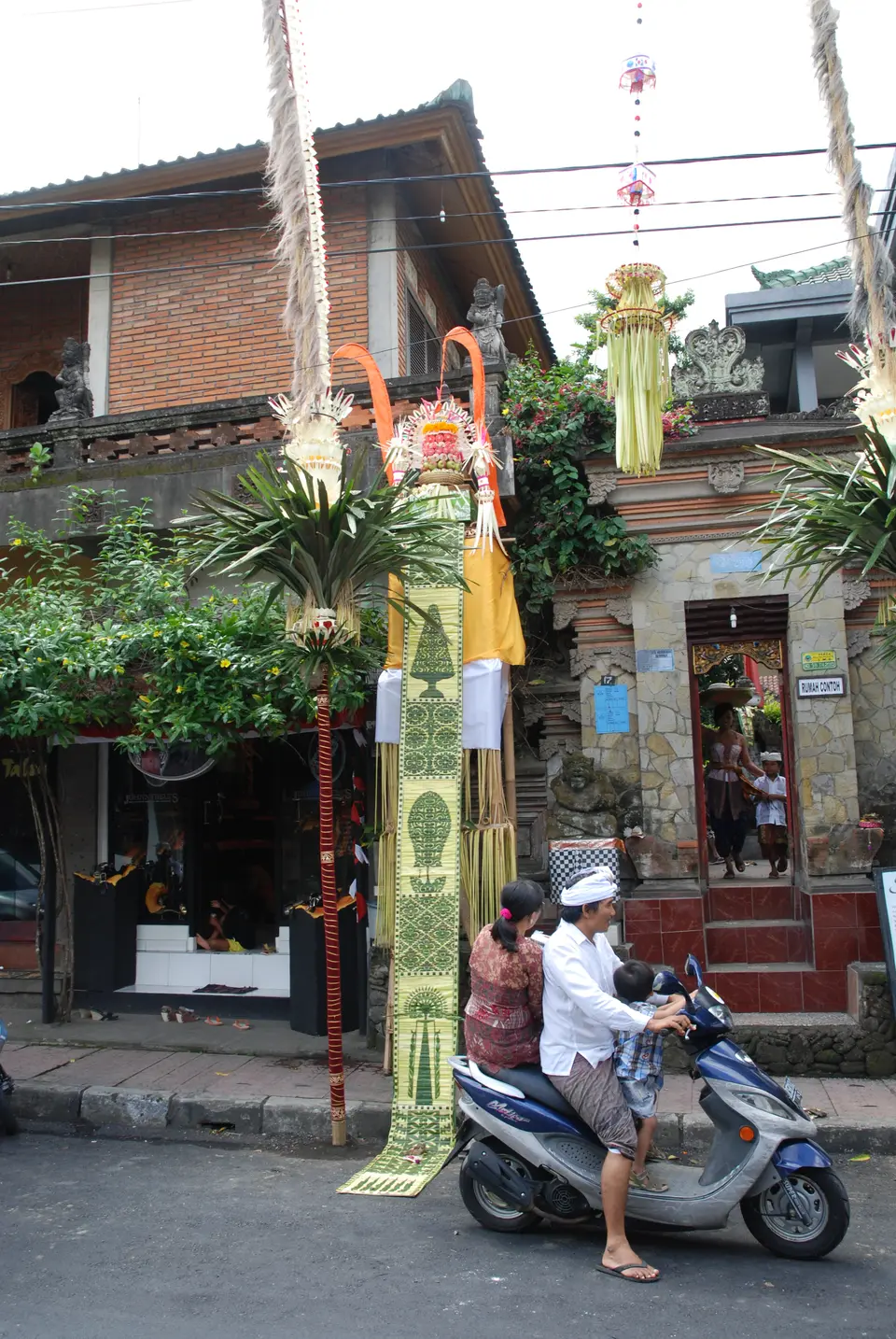
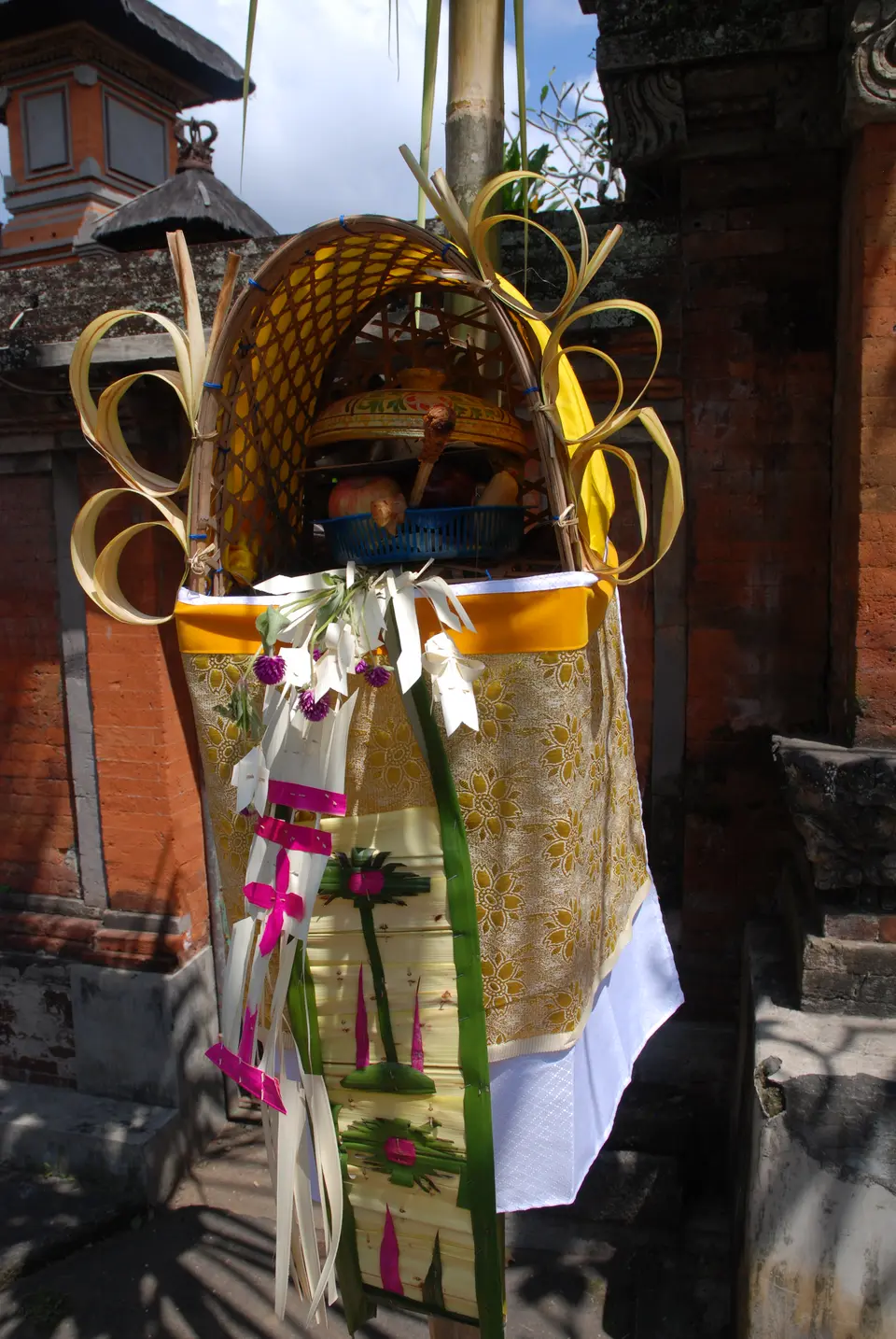
Galungan celebrates the victory of dharma over adharma, and it is when the ancestral spirits come down to visit the household shrines. What a visitor sees first is the penjor: a single bamboo pole, tall enough that its own weight bows it into an arch over the road, hung with palm leaf, ears of rice and fruit, with a small shrine — the sanggah penjor — at its foot and a woven lamak hanging at the gate. They go up outside every house, and a village road becomes a tunnel.
The day before is Penampahan, when pigs and chickens are killed for the feasting. The day after is Manis Galungan, which is for visiting family.
Kuningan, before noon
Ten days later comes Kuningan, on Saniscara Kliwon Kuningan, when the spirits go back. The name is taken to come from kauningan, to receive awareness. The offerings are yellow: nasi kuning, yellow rice, for prosperity. Among them are the tamiang, round like a shield and like the turning of the cycle, for protection; the kolem; and the endongan, which is provisions — food for the journey the ancestors are about to make.
It all has to be done in the morning. The blessing is understood to be there only until the sun reaches its zenith, so by midday Kuningan is over and the island goes quiet again for another two hundred days.
When it happens
Galungan falls on Buda Kliwon Dungulan, the Wednesday of the eleventh week of the 210-day pawukon calendar, and Kuningan ten days after it. Because 210 days is shorter than a solar year, both come round roughly twice a year and arrive earlier each time.
- January 13, 2027Buda Kliwon Dungulan — every 210 days, so usually twice a yearCalculated
- January 23, 2027Kuningan, ten days later, finished before noonCalculated
- August 11, 2027Buda Kliwon Dungulan — every 210 days, so usually twice a yearCalculated
- August 21, 2027Kuningan, ten days later, finished before noonCalculated
- March 8, 2028Buda Kliwon Dungulan — every 210 days, so usually twice a yearCalculated
- March 18, 2028Kuningan, ten days later, finished before noonCalculated
- October 4, 2028Buda Kliwon Dungulan — every 210 days, so usually twice a yearCalculated
- October 14, 2028Kuningan, ten days later, finished before noonCalculated
- May 2, 2029Buda Kliwon Dungulan — every 210 days, so usually twice a yearCalculated
- May 12, 2029Kuningan, ten days later, finished before noonCalculated
- November 28, 2029Buda Kliwon Dungulan — every 210 days, so usually twice a yearCalculated
- December 8, 2029Kuningan, ten days later, finished before noonCalculated
- June 26, 2030Buda Kliwon Dungulan — every 210 days, so usually twice a yearCalculated
- July 6, 2030Kuningan, ten days later, finished before noonCalculated
Visiting with respect
Good to know
- Kuningan's offerings are made in the morning. The blessing is held to be present only while the sun is still climbing, so the rites are finished before noon.
Sources
This entry was written from the following sources.
- GalunganWikipedia · read September 26, 2026
- Kuningan (Bali)Wikipedia · read September 26, 2026
- Balinese pawukon calendarWikipedia · read September 26, 2026
Related festivals
Nyepi
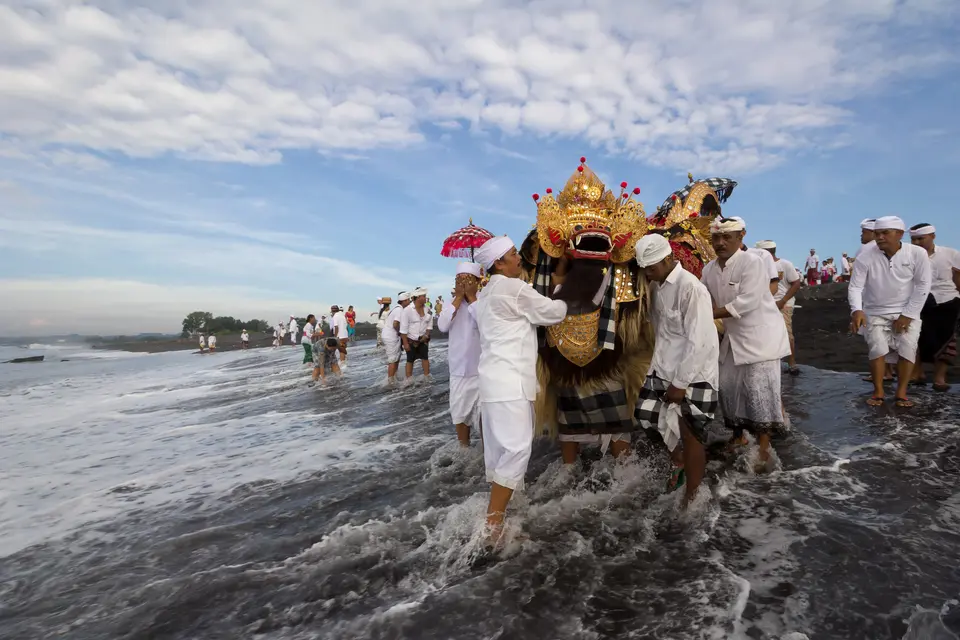
On the Balinese New Year the whole island stops for 24 hours — no fire or lights, no work, no travel, no entertainment, and even the airport closes — after a night in which villages parade giant demon figures, the ogoh-ogoh, through the streets to drive evil away.
March 8, 2027Officially announced
Diwali
दीपावली
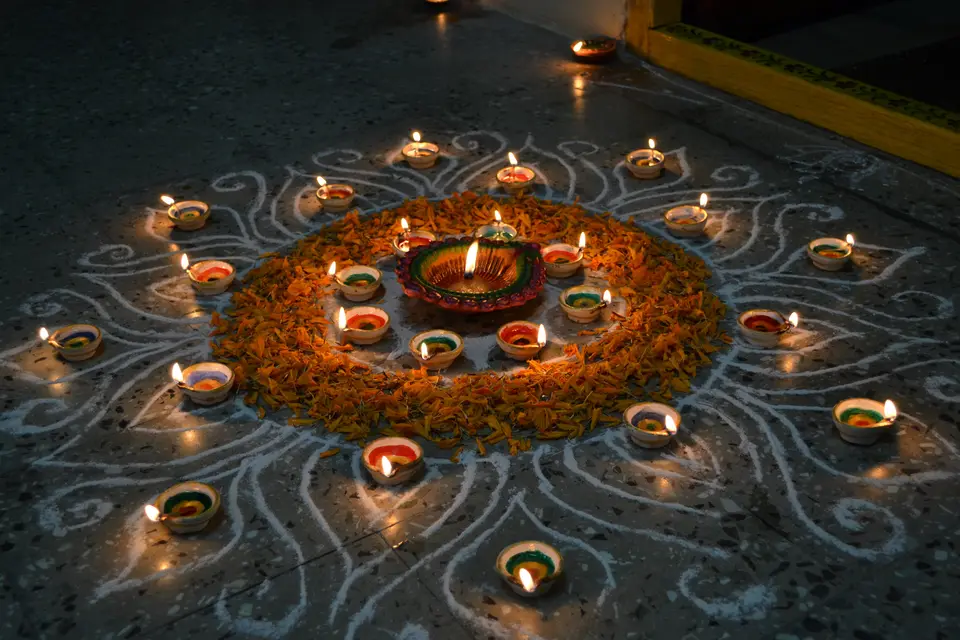
The festival of lights. Over five days around the new moon of autumn, homes, temples and streets glow with oil lamps and lanterns, doorsteps bloom with rangoli, families share sweets and gifts, and the darkest night of the month becomes the brightest of the year.
November 8, 2026Officially announced
Bisket Jatra
बिस्केट जात्रा
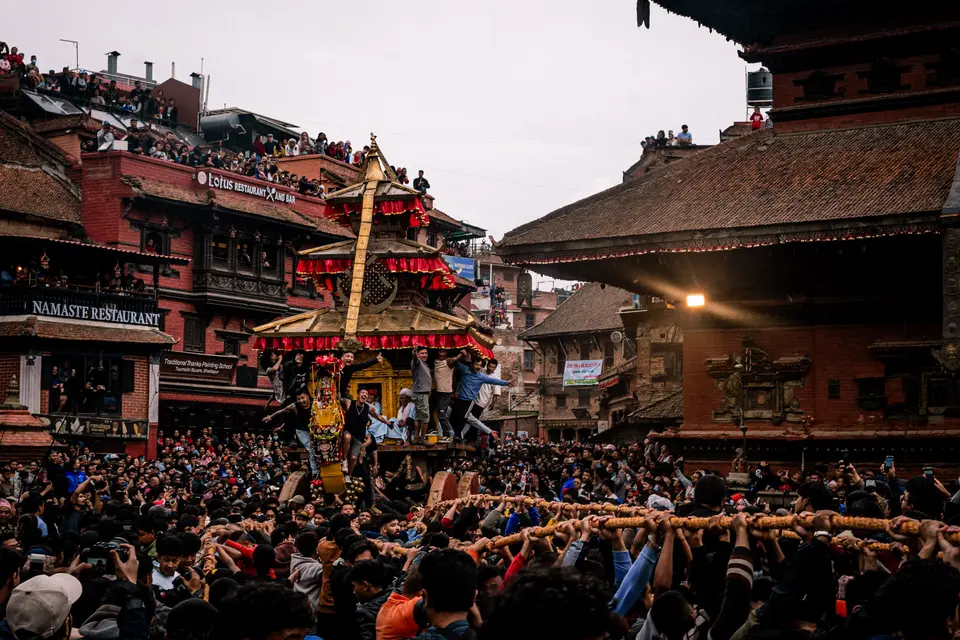
Bhaktapur brings out two chariots for the new year and lets the two halves of the town fight over them. A tall wooden pole is raised at the edge of the city and pulled down again on the last night of the old year, and the year turns when it falls.
April 10 – 18, 2027Estimated
Comments
Have you been there? Tell other readers what to expect.
No comments yet.
Comments are read by the site’s owner before they appear.