Diese Seite ist noch nicht ins Deutsche übersetzt; der englische Originaltext wird angezeigt.

Debrecen Flower Carnival
Debreceni Virágkarnevál
Foto: Björn Láczay, CC BY-SA 2.0, über Wikimedia Commons
On the day Hungary celebrates Saint Stephen and the founding of the state, Debrecen sends floats built out of several hundred thousand flowers down Piac utca, past the great yellow church, and out to the woods — a habit that began in 1905 as a fundraiser for an ambulance.
The twentieth of August
20 August is Hungary's national day. It marks Saint Stephen — the first king, who brought the country into the Christian church and built the institutions of the kingdom — and it is the anniversary of his canonisation on 20 August 1083. It is also the day of the new bread. In Budapest it ends with half an hour of fireworks over the Danube, and the highest state honours, including the Grand Cross of the Order of Saint Stephen, are handed out. Between 1949 and 1989 the same date was kept but renamed, as the feast of the founding of the socialist republic.
In Debrecen it means flowers.
An ambulance, and then a habit
The first flower parade in the city was held on 14 June 1905, for charity. Twenty-three decorated vehicles went down Simonyi út, and the 1,600 korona they raised bought Debrecen an ambulance. It was meant to happen once. It was popular enough that it kept happening, in a loose way, through the first decades of the century.
What exists now began on 20 August 1966, when the first national flower carnival set out at nine in the morning with its decorated floats and drew an enormous crowd, in the streets and in the stadium. That is the line that has run unbroken since.
Piac utca to the Nagyerdő
The route has not changed in decades. The parade forms up where Piac utca crosses Szent Anna utca, goes the length of Piac utca — past the Reformed Great Church, the yellow twin-towered building that is the city's face — and carries on to the Nagyerdei körút and the woods at the edge of town.
The floats are built from several hundred thousand flowers, fresh and dried, and the subjects range from the Holy Crown with its orb and sceptre to figures out of Hungarian children's poems. Around fifteen hundred dancers, musicians and performers walk with them. What was one day of flower floats has become a week: the Karneváli Hét, with concerts, theatre and programmes for children, and about half a million people come to it.
Wann es stattfindet
20 August, every year. The parade sets off in the morning; the week around it is the Carnival Week, with concerts, theatre and children's programmes.
- 20. August 2027Berechnet
- 20. August 2028Berechnet
- 20. August 2029Berechnet
- 20. August 2030Berechnet


Quellen
Dieser Eintrag beruht auf den folgenden Quellen.
- Debreceni VirágkarneválWikipédia · abgerufen am 26. September 2026
- A debreceni virágkarnevál történetekultura.hu · abgerufen am 26. September 2026
- Saint Stephen's DayWikipedia · abgerufen am 26. September 2026
Verwandte Feste
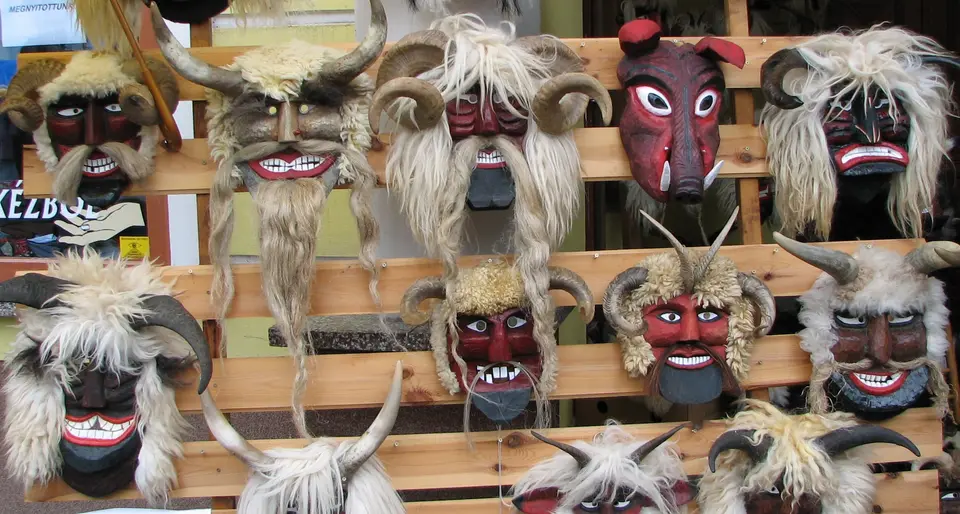
Busójárás
Am Ende des Faschings wird die Donaustadt Mohács von Busós überrannt — Männern mit geschnitzten Holzmasken und zotteligen Schafspelzen, die in Ruderbooten ankommen, mit Lärm und Feuer durch die Straßen ziehen und einen Sarg verbrennen, der für den Winter steht.
4.–9. Februar 2027Berechnet
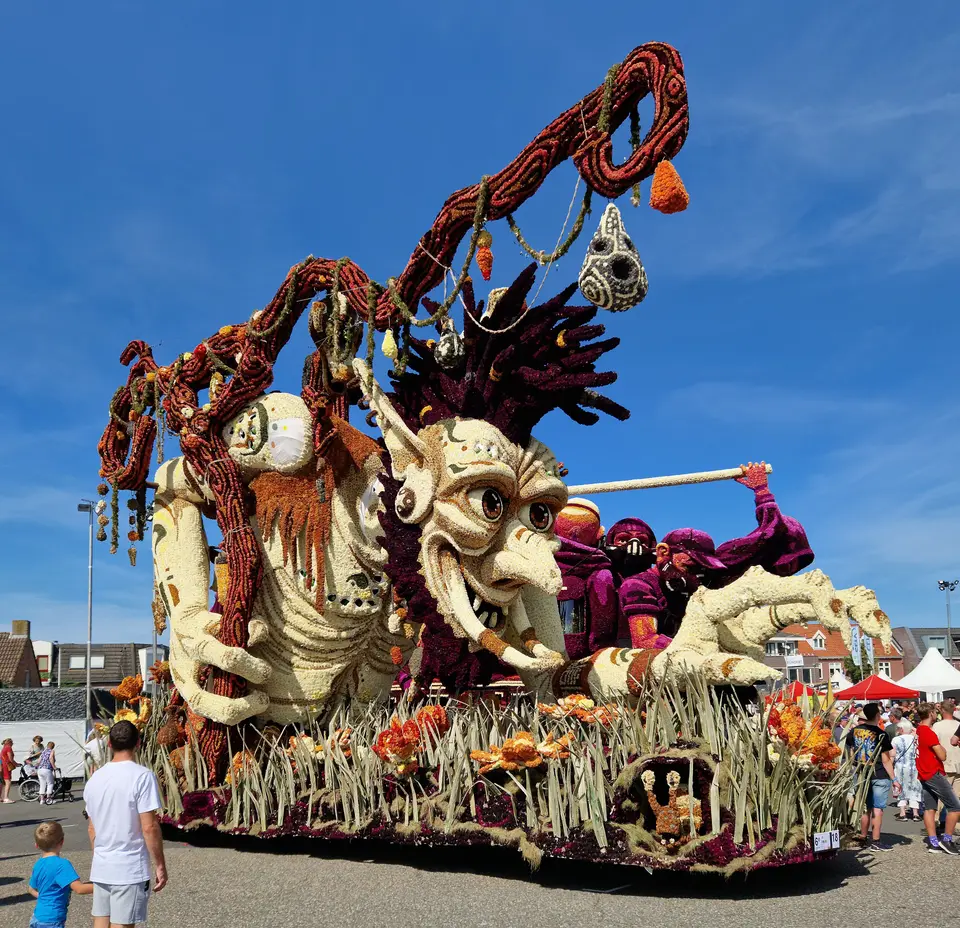
Blumenkorso von Zundert
Bloemencorso Zundert
Zwanzig Weiler eines Brabanter Dorfes bauen ein Jahr lang Wagen von bis zu neun Metern Höhe und neunzehn Metern Länge, bedecken sie mit eigens gezogenen Dahlien und schieben sie am ersten Septembersonntag von Hand durch die Straßen. Rund acht Millionen Blüten werden dafür verbraucht.
5.–6. September 2027Berechnet
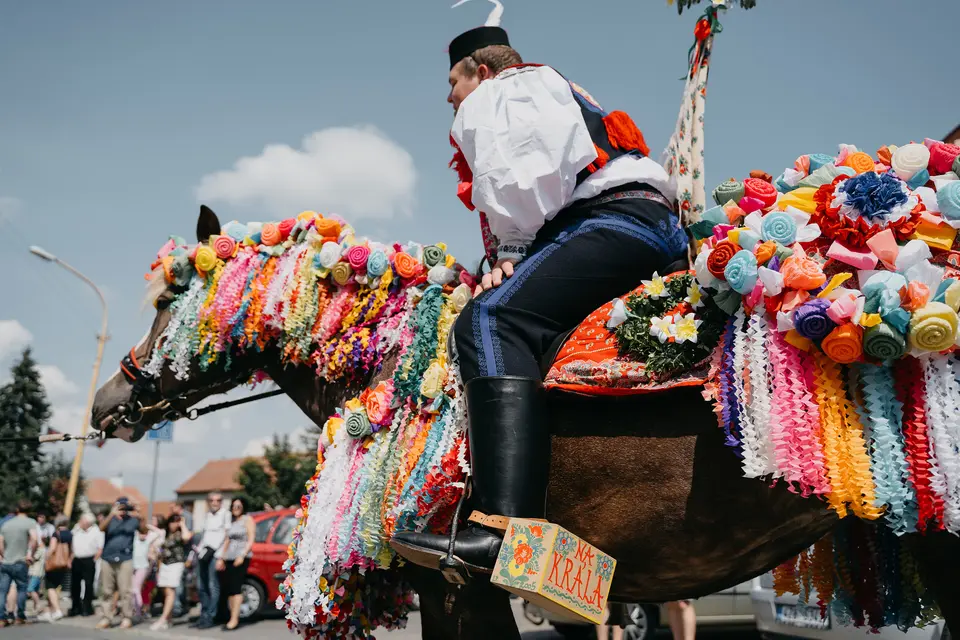
Ritt der Könige
Jízda králů
Ein Junge von zehn oder zwölf Jahren reitet in weiblicher Festtracht durch ein mährisches Dorf, das Gesicht halb verdeckt, eine Rose zwischen den Zähnen, damit er nicht sprechen kann. Reiter mit gezogenen Säbeln bewachen ihn, Rufer reimen an jedem Haus, und die Pferde verschwinden unter Papierblumen.
29.–30. Mai 2027Berechnet
Kommentare
Waren Sie dort? Sagen Sie anderen, was sie erwartet.
Noch keine Kommentare.
Kommentare werden vom Betreiber gelesen, bevor sie erscheinen.