Cette page n’est pas encore traduite en français ; le texte original anglais est affiché.

Debrecen Flower Carnival
Debreceni Virágkarnevál
Photo : Björn Láczay, CC BY-SA 2.0, via Wikimedia Commons
On the day Hungary celebrates Saint Stephen and the founding of the state, Debrecen sends floats built out of several hundred thousand flowers down Piac utca, past the great yellow church, and out to the woods — a habit that began in 1905 as a fundraiser for an ambulance.
The twentieth of August
20 August is Hungary's national day. It marks Saint Stephen — the first king, who brought the country into the Christian church and built the institutions of the kingdom — and it is the anniversary of his canonisation on 20 August 1083. It is also the day of the new bread. In Budapest it ends with half an hour of fireworks over the Danube, and the highest state honours, including the Grand Cross of the Order of Saint Stephen, are handed out. Between 1949 and 1989 the same date was kept but renamed, as the feast of the founding of the socialist republic.
In Debrecen it means flowers.
An ambulance, and then a habit
The first flower parade in the city was held on 14 June 1905, for charity. Twenty-three decorated vehicles went down Simonyi út, and the 1,600 korona they raised bought Debrecen an ambulance. It was meant to happen once. It was popular enough that it kept happening, in a loose way, through the first decades of the century.
What exists now began on 20 August 1966, when the first national flower carnival set out at nine in the morning with its decorated floats and drew an enormous crowd, in the streets and in the stadium. That is the line that has run unbroken since.
Piac utca to the Nagyerdő
The route has not changed in decades. The parade forms up where Piac utca crosses Szent Anna utca, goes the length of Piac utca — past the Reformed Great Church, the yellow twin-towered building that is the city's face — and carries on to the Nagyerdei körút and the woods at the edge of town.
The floats are built from several hundred thousand flowers, fresh and dried, and the subjects range from the Holy Crown with its orb and sceptre to figures out of Hungarian children's poems. Around fifteen hundred dancers, musicians and performers walk with them. What was one day of flower floats has become a week: the Karneváli Hét, with concerts, theatre and programmes for children, and about half a million people come to it.
Quand a-t-elle lieu
20 August, every year. The parade sets off in the morning; the week around it is the Carnival Week, with concerts, theatre and children's programmes.
- 20 août 2027Calculée
- 20 août 2028Calculée
- 20 août 2029Calculée
- 20 août 2030Calculée


Sources
Cette entrée a été rédigée à partir des sources suivantes.
- Debreceni VirágkarneválWikipédia · consulté le 26 septembre 2026
- A debreceni virágkarnevál történetekultura.hu · consulté le 26 septembre 2026
- Saint Stephen's DayWikipedia · consulté le 26 septembre 2026
Fêtes apparentées
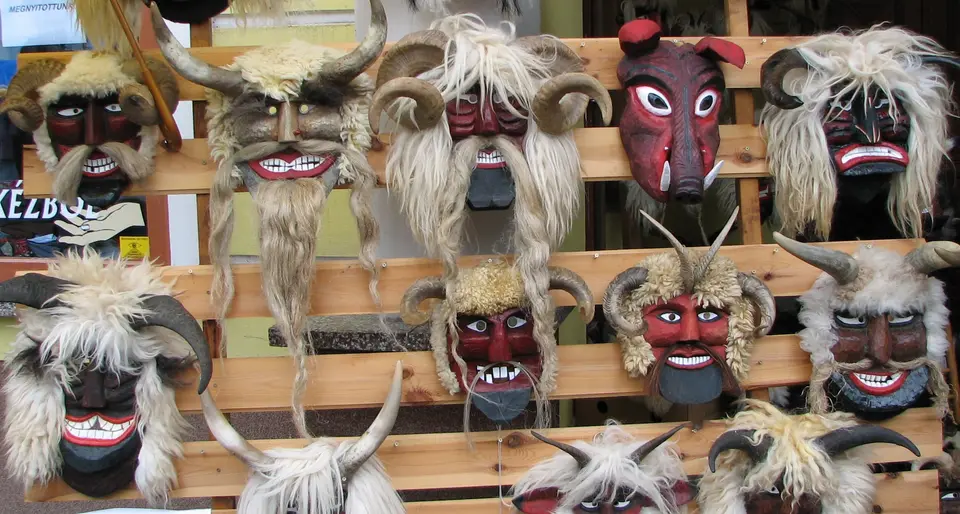
Busójárás
À la fin du carnaval, la ville danubienne de Mohács est envahie par les busós — des hommes aux masques de bois sculpté et aux peaux de mouton hirsutes qui arrivent en barque, défilent dans les rues dans le bruit et le feu, et brûlent un cercueil qui figure l’hiver.
4–9 février 2027Calculée
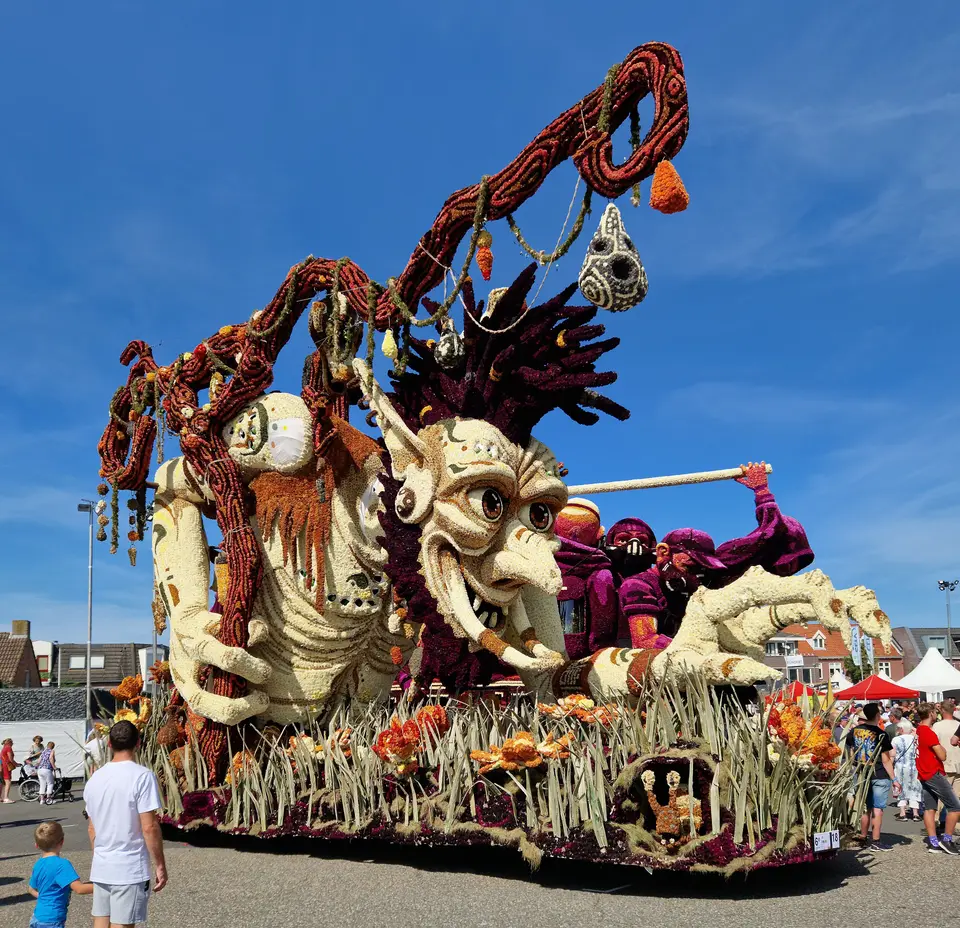
Corso fleuri de Zundert
Bloemencorso Zundert
Vingt hameaux d'un village brabançon passent un an à bâtir des chars pouvant atteindre neuf mètres de haut et dix-neuf de long, les couvrent de dahlias cultivés pour l'occasion et les poussent à la main le premier dimanche de septembre. Environ huit millions de fleurs y passent.
5–6 septembre 2027Calculée
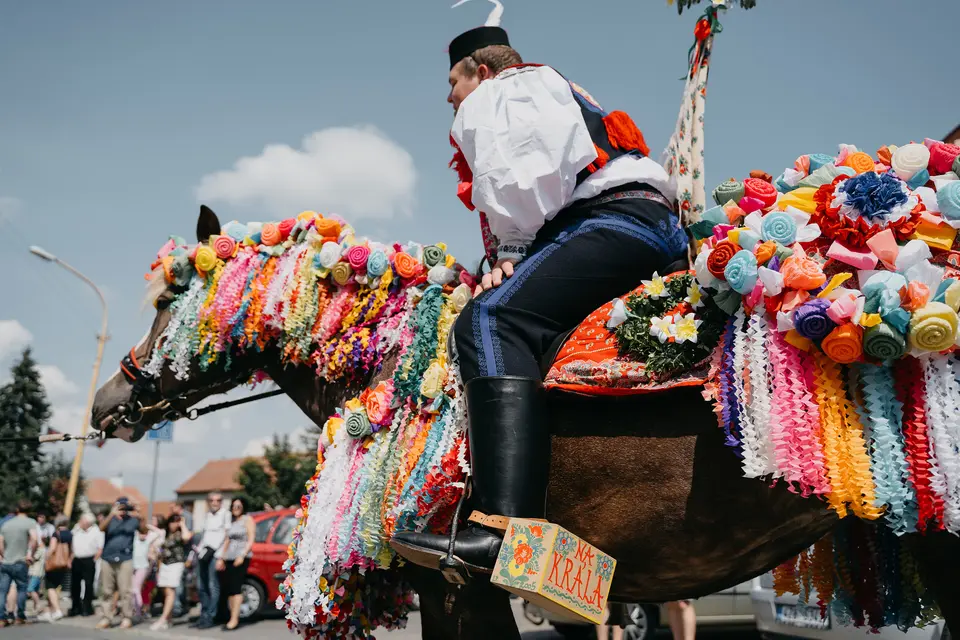
Chevauchée des rois
Jízda králů
Un garçon de dix ou douze ans traverse à cheval un village morave en costume de cérémonie de femme, le visage à demi couvert, une rose entre les dents pour ne pas pouvoir parler. Des cavaliers au sabre nu le gardent, des crieurs riment à chaque maison, et les chevaux disparaissent sous les fleurs de papier.
29–30 mai 2027Calculée
Commentaires
Vous y étiez ? Dites aux autres lecteurs à quoi s’attendre.
Pas encore de commentaires.
Les commentaires sont lus par le propriétaire du site avant de paraître.