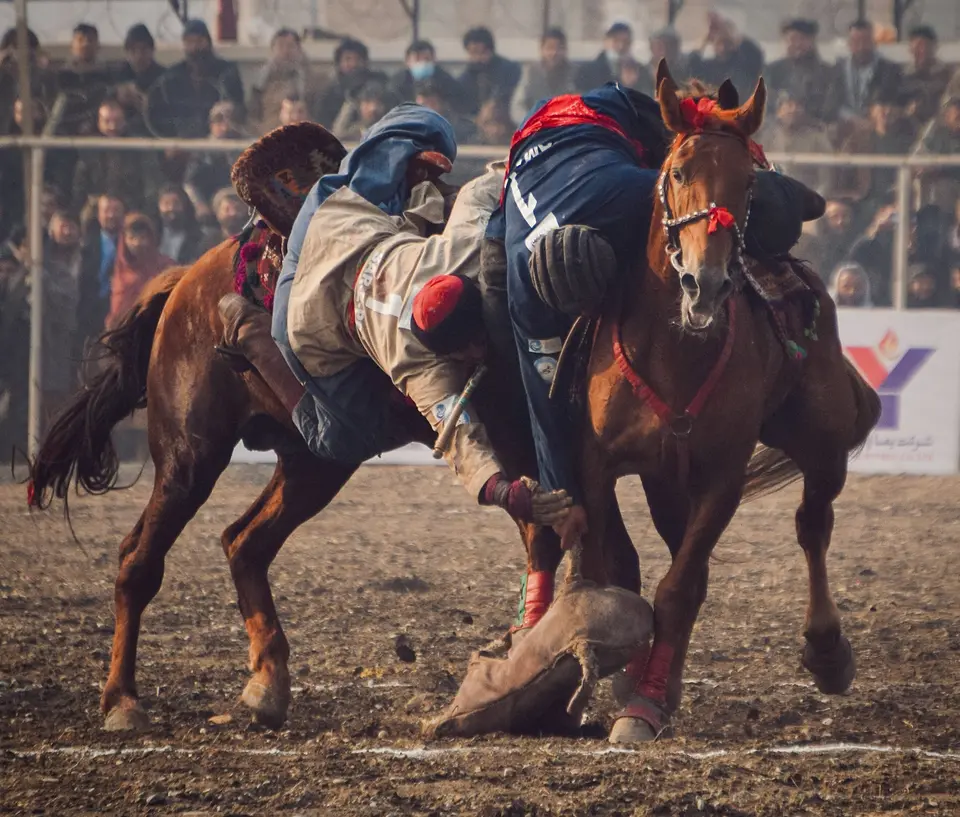
Afghanistan's national game. Riders fight over a headless calf carcass, carry it round a flag and drop it in a chalked circle. It has no written rulebook — it is governed by its own traditions and by what the players understand between them.
A game without a rulebook
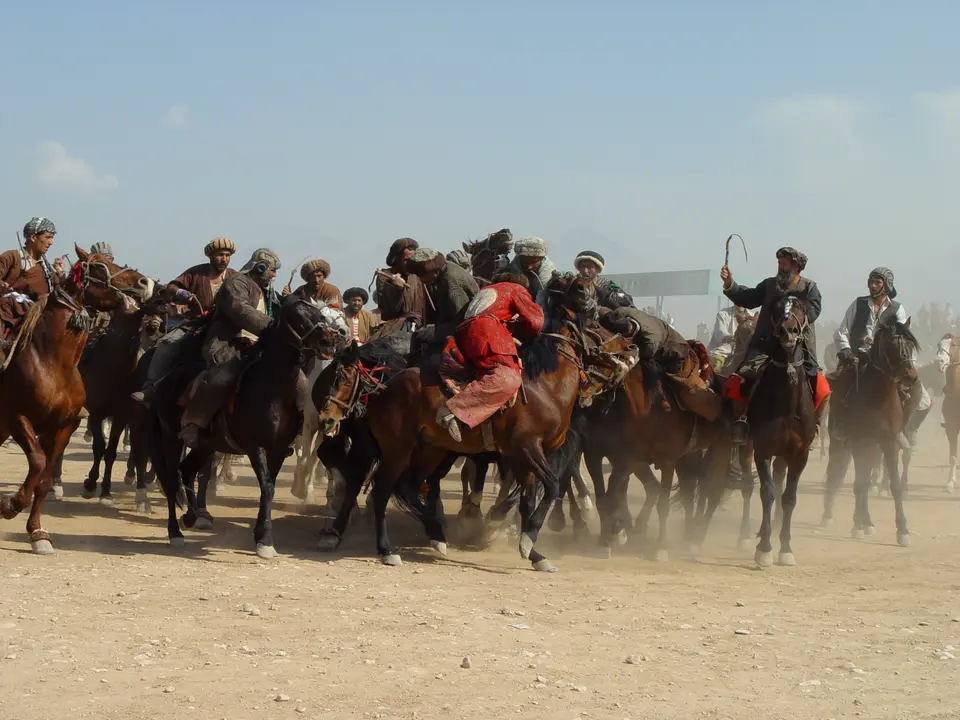
Buzkashi is the national sport of Afghanistan. Riders on horseback compete to place a goat or calf carcass in a goal. The carcass is beheaded and disembowelled, two limbs are cut off, and it is soaked in cold water for a day before play to toughen it.
There is no written code. Buzkashi is, in the description given of it, governed and regulated by its own traditions, by the social context and its customs, and by the implicit understandings among the players. The objective in the more demanding form is to take the carcass, round a flag at the far end of the field, and drop it into a chalked circle — the circle of justice.
There are two main forms. Tudabarai is the simpler: get hold of the carcass and carry it free and clear in any direction. Qarajai is the one with the flag and the circle.
The rider and the horse
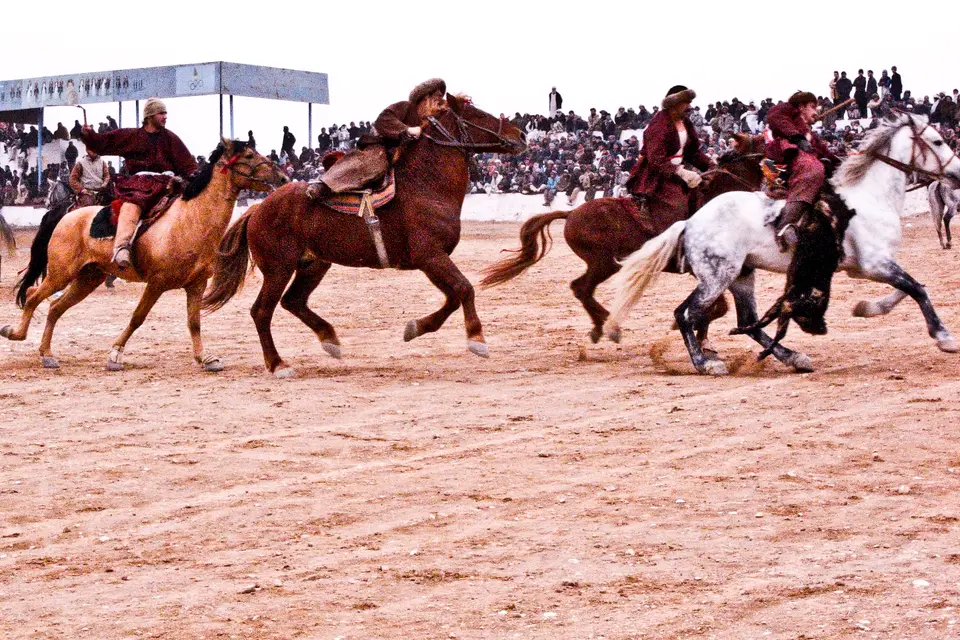
A player is a chapandaz. It takes a long apprenticeship of practice and watching, and a chapandaz is typically in his forties before he is any good. The saying is that a win is eighty per cent horse and twenty per cent rider, and the horses train at least as hard as the men. A buzkashi horse can cost up to fifty thousand dollars, and they are bought in from Uzbekistan and elsewhere in Central Asia — Afghanistan lost its capacity to breed champion horses through the decades of war.
Matches are usually paid for by someone. Powerful figures sponsor them as a demonstration of wealth and influence. Whoever scores takes a cash prize and another round begins, until the organisers call a final round with larger prizes.
Winter Fridays
The game belongs to the cold months, because heat is hard on the horses. Major matches are held in winter after Friday prayers; in Sheberghan in the north you could catch a game after noon prayers most Fridays through the season. Mazar-i-Sharif is the best-known venue, and a tournament is played there during the Gul-e Surkh festival in spring.
The window shown here is approximate. The Afghan sources say only "winter", without naming months; the months given are the reckoning used for the season in Tajikistan, where high temperatures stop play outside them. Treat it as when to start asking, not as a calendar.
Banned, then allowed
The Taliban banned buzkashi during their first period in power, along with many other forms of entertainment, as immoral. When they returned in 2021 they allowed the sport to continue — which makes it one of the few things on this atlas's Afghan pages that was not taken away.
When it happens
Winter. Major matches are played after Friday prayers, when the cold puts less strain on the horses, and a tournament is held at Mazar-i-Sharif during the Gul-e Surkh festival in spring.
- November 2026 – April 2027Approximate window
- November 2027 – April 2028Approximate window
- November 2028 – April 2029Approximate window
- November 2029 – April 2030Approximate window
Visiting with respect
Good to know
- This is a spectator crowd, not a stadium with seats. Stand where everyone else stands and expect the play to come off the field.
- The sponsors are the point of the occasion as much as the riders. Matches are often paid for by powerful figures as a show of wealth and standing.
- Ask before photographing people, and do not photograph checkpoints or official buildings anywhere in the country.
Avoid
- Do not travel. The UK Foreign, Commonwealth & Development Office advises against all travel to Afghanistan and warns of a significant risk of detention.
- Do not expect a fixed calendar. Matches are arranged locally and the season is weather-bound.
Sources
This entry was written from the following sources.
- BuzkashiWikipedia · read September 29, 2026
- BuzkashiNPR · read September 29, 2026
- Trouble lurks for Afghanistan's beloved 'goat grabbing' national sportNational Geographic · read September 29, 2026
- Afghanistan travel advice: safety and securityUK Foreign, Commonwealth & Development Office · read September 29, 2026
Related festivals
Gul-e Surkh
میلهٔ گل سرخ
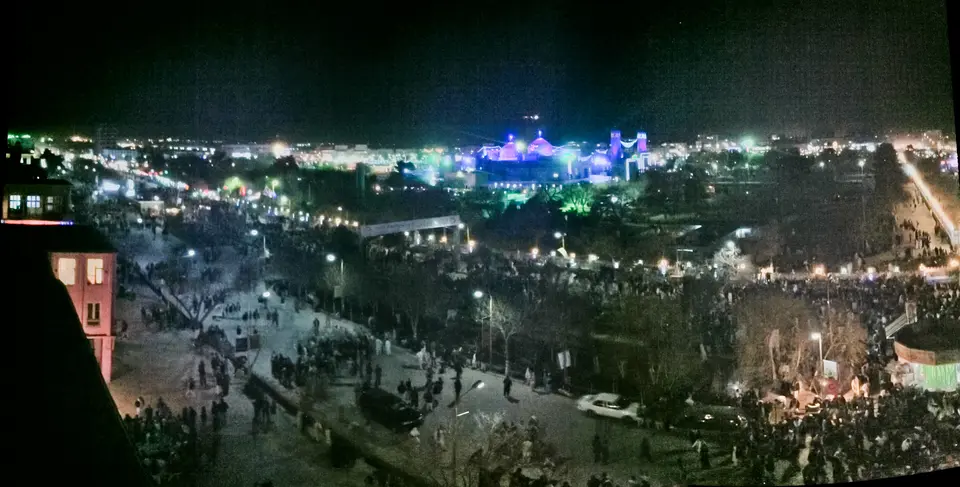
The Red Flower festival at Mazar-i-Sharif ran through the first forty days of the year, while the tulips were out on the plains around the city. The banner-raising at the shrine drew up to two hundred thousand people — the largest Nowruz gathering recorded anywhere.
March 21 – April 29, 2027Calculated
Comments
Have you been there? Tell other readers what to expect.
No comments yet.
Comments are read by the site’s owner before they appear.