Ride of the Kings
Jízda králů
On UNESCO’s list of the Intangible Cultural Heritage of Humanity
Photo: Filipzverina, CC BY-SA 4.0, via Wikimedia Commons
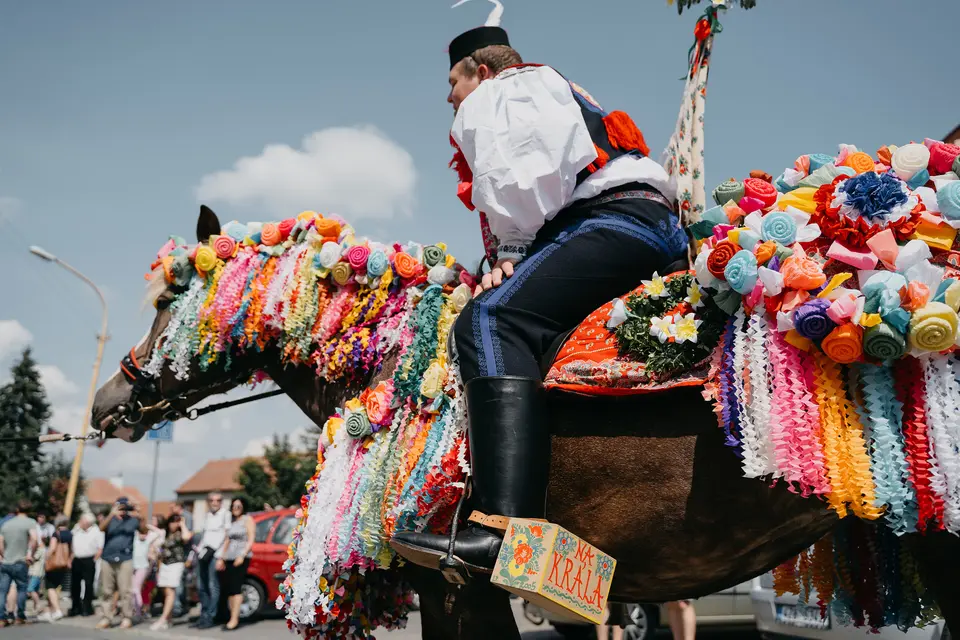
A boy of ten or twelve rides through a Moravian village dressed in a woman's ceremonial costume, his face half covered, a rose held in his teeth so that he cannot speak. Riders with drawn sabres guard him, chanters stop at each house and rhyme about the people standing there, and the horses are buried in paper flowers.
A king who may not speak
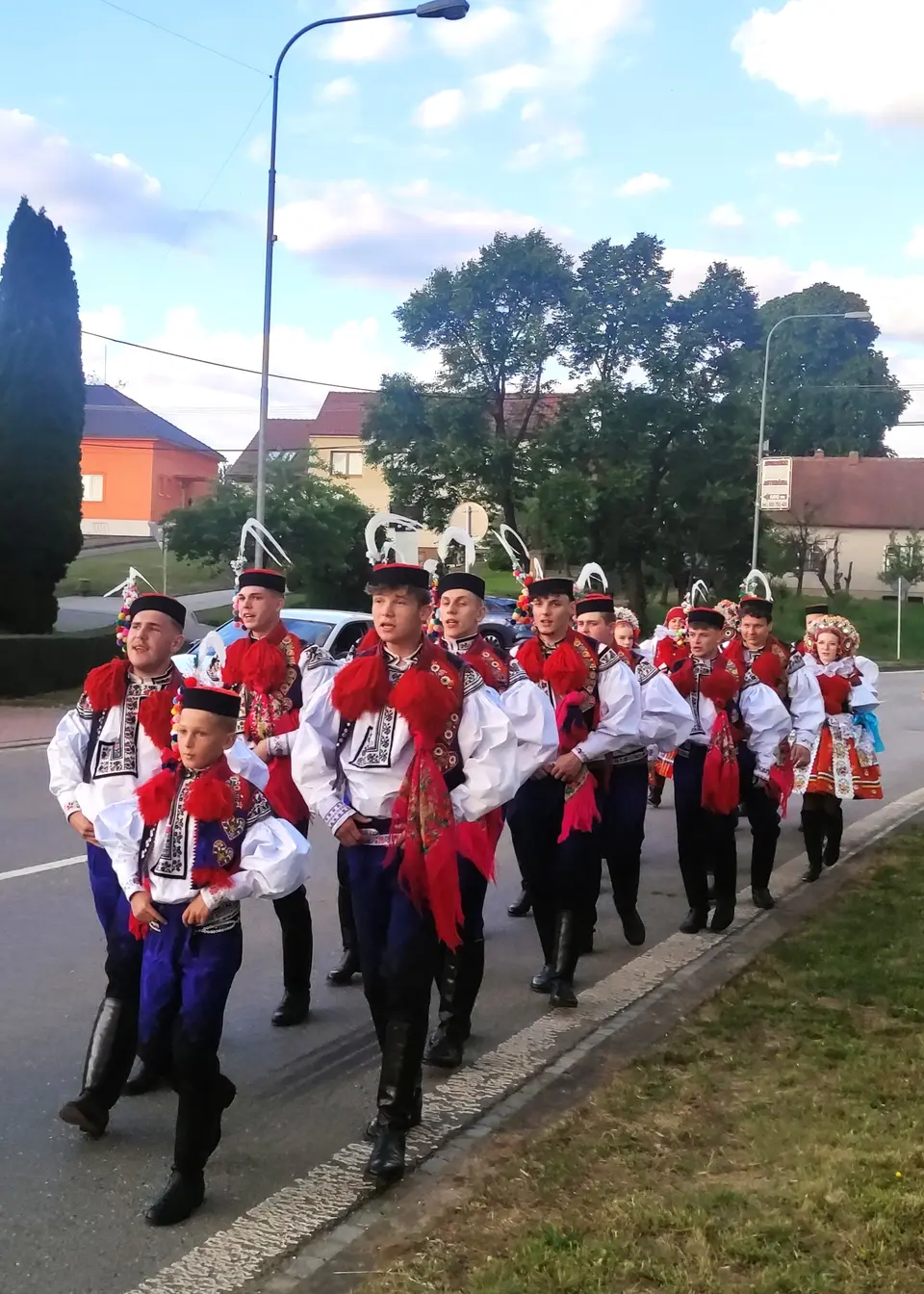
UNESCO describes the ride as it is kept in four places in the south-east of the country: the towns of Hluk and Kunovice and the villages of Skoronice and Vlčnov, in the region called Slovácko, Moravian Slovakia. A boy of about ten to twelve is chosen as the King. He rides in a woman's ceremonial costume, his face half hidden by ribbons, with a white rose between his teeth, and he may not speak for the length of the ride. Pageboys in women's dress ride on either side of him with drawn sabres; the other riders, young men of eighteen and over, wear men's dress.
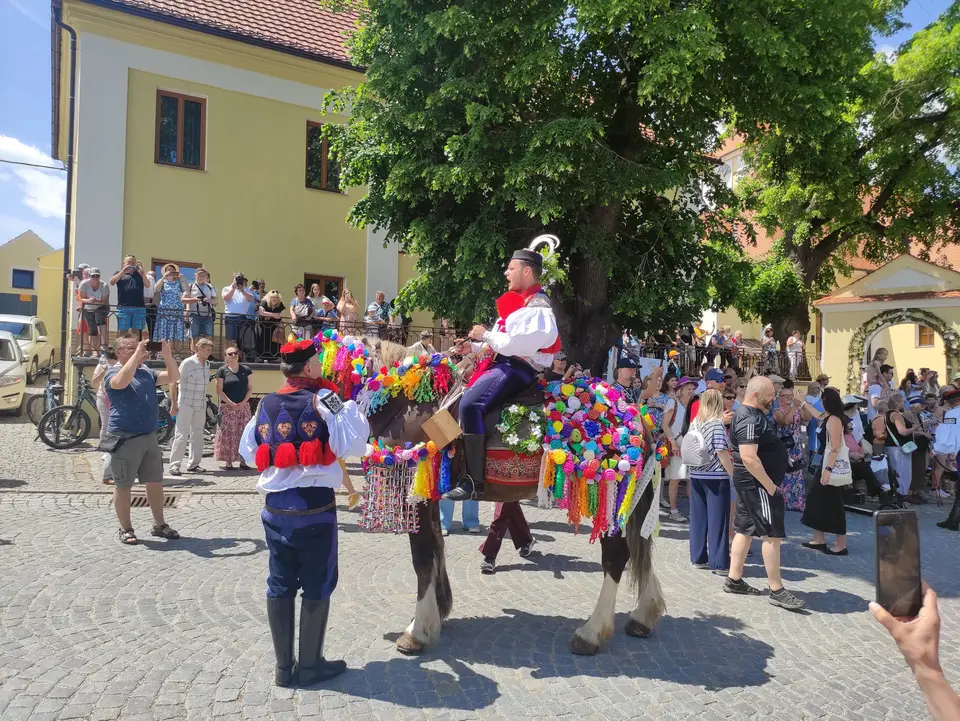
The procession goes at a walk from house to house. At each stop the chanters call out rhymed verses — comic, topical, about the people standing in front of that house — and the household puts money into a box or straight into a rider's boot. After several hours the ride ends at the King's own house, and the evening goes on there.
Made by the village
The horses are covered in paper flowers, and both the flowers and the costumes are made by the women and girls of the village, to colour patterns and shapes that are specific to that village and are passed on within families. The ride has been kept in more or less its present form since the early nineteenth century. In the Czech telling it is linked to the Hungarian king Matthias Corvinus, said to have escaped a lost battle disguised as a woman; scholars also read it as a rite of initiation, the year the young men of a village are counted as adults.
When and where
Vlčnov, a village of about three thousand people, rides every year, and its ride is the one most visitors see: the festival fills the last weekend of May and the ride itself goes out on the Sunday at midday. Hluk rides every three years, Kunovice every two, and Skoronice in the years when the Slovácký rok festival is held. The date belonged to Whitsun, and older descriptions still say so, but the village now sets it; the programme is published in Vlčnov in the spring.
When it happens
Vlčnov holds the ride every year on the last weekend of May, with the ride itself on the Sunday at midday. The custom belonged to Whitsun and is still described that way, but the village now fixes the date. Hluk rides every three years, Kunovice every two, and Skoronice in the years of the Slovácký rok festival.
- May 29 – 30, 2027Calculated
- May 27 – 28, 2028Calculated
- May 26 – 27, 2029Calculated
- May 25 – 26, 2030Calculated
Visiting with respect
Good to know
- This is a village rite that became famous, not a show. Stay on the street, do not step into yards uninvited, and let the riders through.
- When a chanter stops in front of you and rhymes, put money in the box or in the rider's boot. That is the old exchange, and it pays for the horses.
- The paper flowers on the horses and the costumes are made by the women and girls of the village over months, to patterns that belong to that village. Ask before you touch anything.
Avoid
- Do not call the king over for a photograph. He is not allowed to speak or to take the rose from his mouth while he rides.
- Do not walk between the horses. The lanes are narrow, the riders are young, and the animals are dressed in things that rustle.
Stay safe
- Horses in a closed village street, with a crowd on both sides. Follow the stewards and keep small children in hand.
- Petty theft is common at crowded Czech events. Keep valuables out of outer pockets.
- There is wine, and a great deal of it, from the afternoon on. Plan how you are getting back before you start.
Sources
This entry was written from the following sources.
- Ride of the Kings in the south-east of the Czech RepublicUNESCO · read September 24, 2026
- Jízda králů Vlčnov 2027CzechTourism — Kudy z nudy · read September 24, 2026
- Jízda králůObec Vlčnov · read September 24, 2026
- Ride of the KingsWikipedia · read September 24, 2026
- Czech Republic travel advice: safety and securityUK Foreign, Commonwealth & Development Office · read September 24, 2026
Related festivals
Sinjska alka
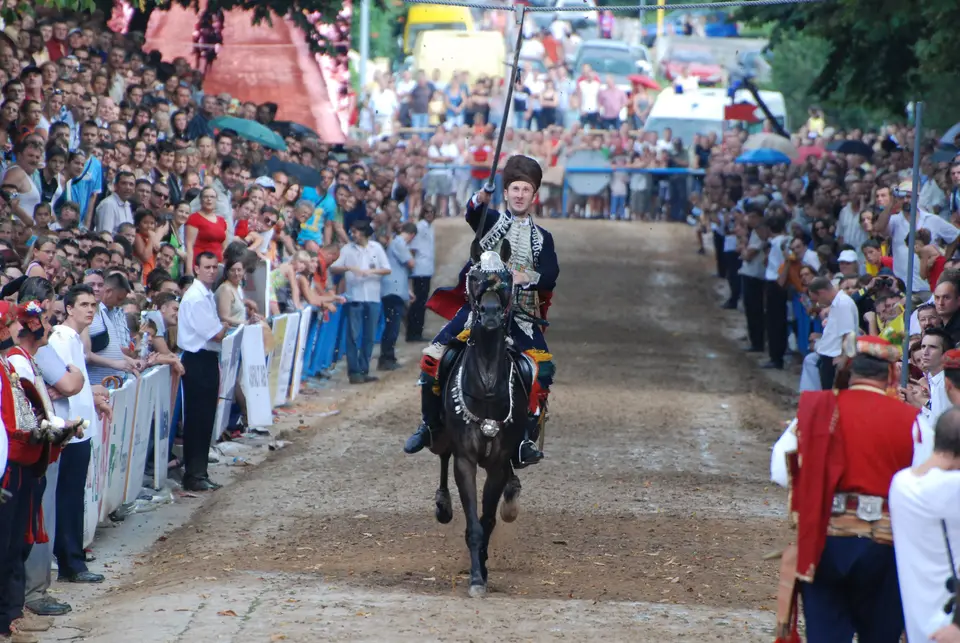
In the Croatian town of Sinj, horsemen in eighteenth-century dress gallop down a 160-metre track and try to spear a small iron ring hanging on a rope — a knights’ tournament held since the 1700s to remember a victory over an Ottoman army in 1715.
August 8, 2027Calculated
Palio di Siena
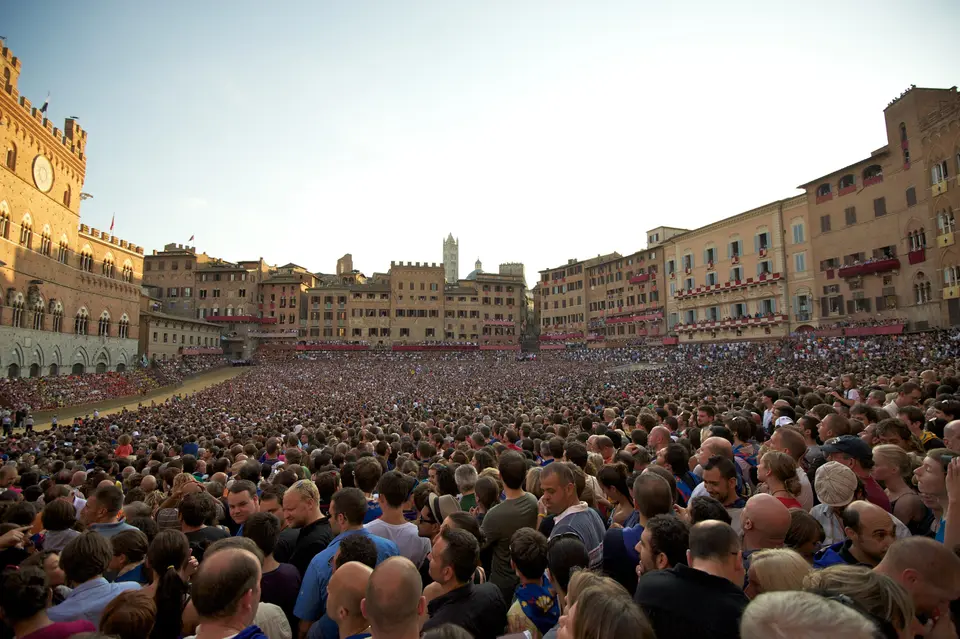
Twice every summer, ten of Siena’s seventeen city wards race horses bareback three times around the Piazza del Campo. The race lasts about ninety seconds; the rivalries, alliances, pageantry and devotion around it last all year.
July 2, 2027Calculated
Lajkonik Parade
Pochód Lajkonika
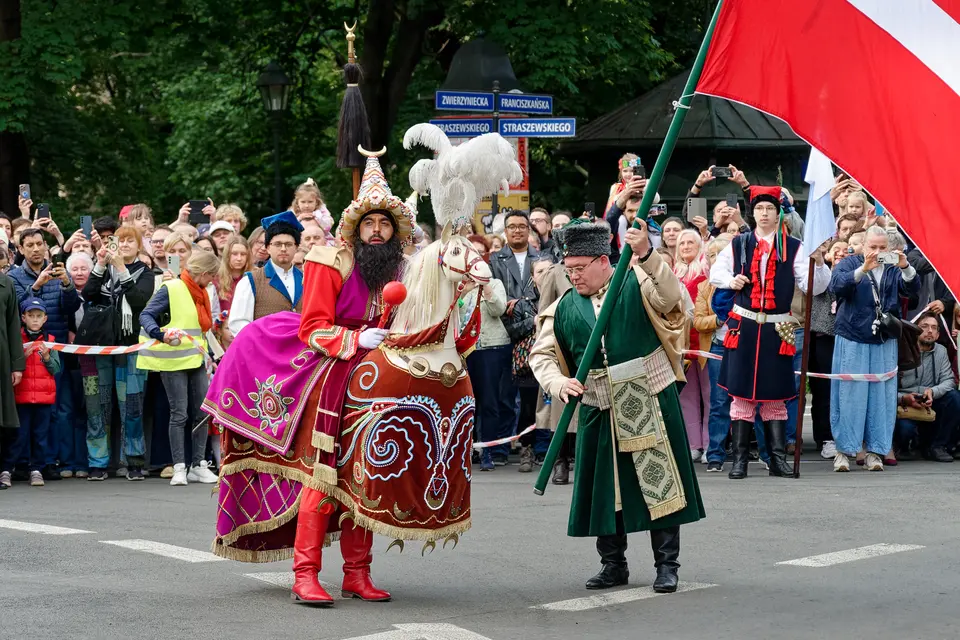
On the first Thursday after Corpus Christi, a bearded rider in a red Tatar costume, with a wooden horse around his waist, dances through Kraków with a band and an escort of “Tatars”, tapping passers-by with his mace for luck before toasting the city with the mayor.
June 3, 2027Calculated
Comments
Have you been there? Tell other readers what to expect.
No comments yet.
Comments are read by the site’s owner before they appear.