Couscous
كسكس
On UNESCO’s list of the Intangible Cultural Heritage of Humanity
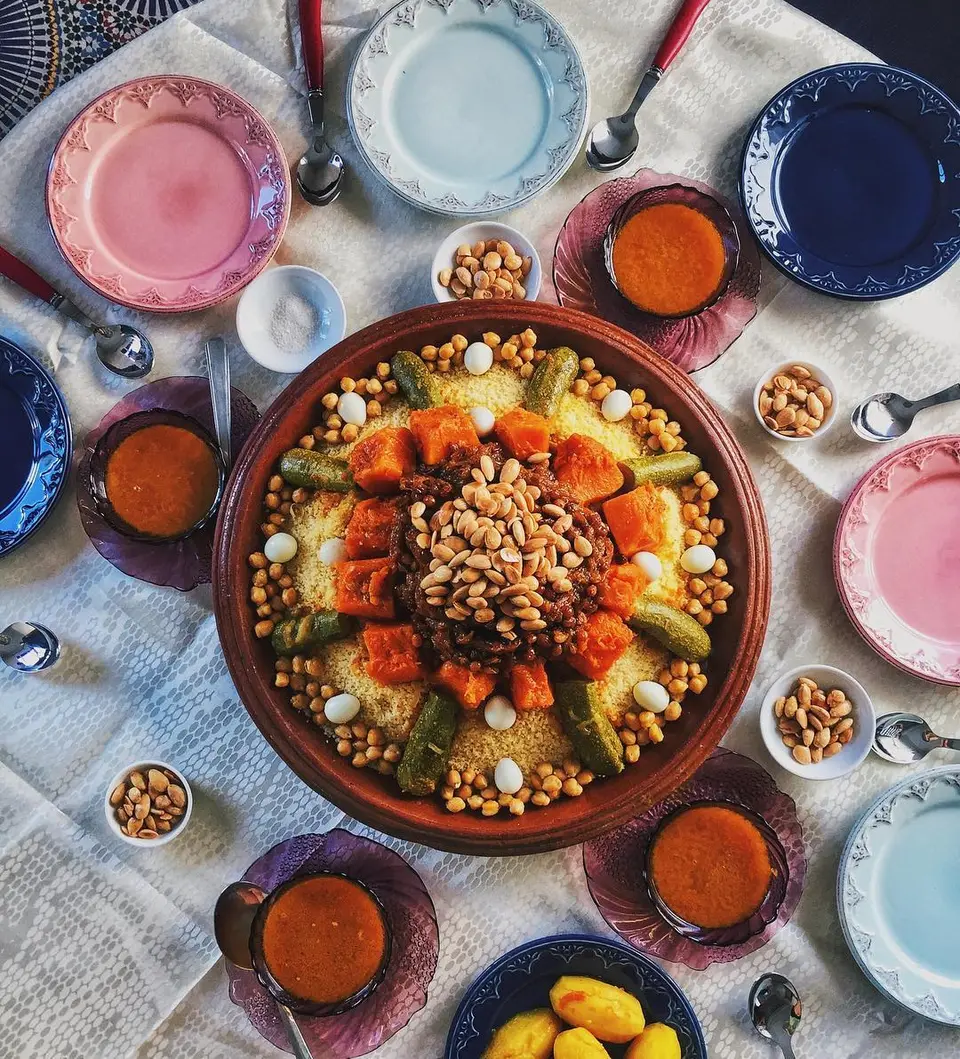
Photo: Lmmima, CC BY-SA 4.0, via Wikimedia Commons
Not a grain but a made thing — semolina moistened, rolled between the palms into pellets, sieved, and steamed over the stew it will be eaten with. Four countries put it on UNESCO's list together in 2020, which is rarer than the dish.
A grain that is made, not harvested
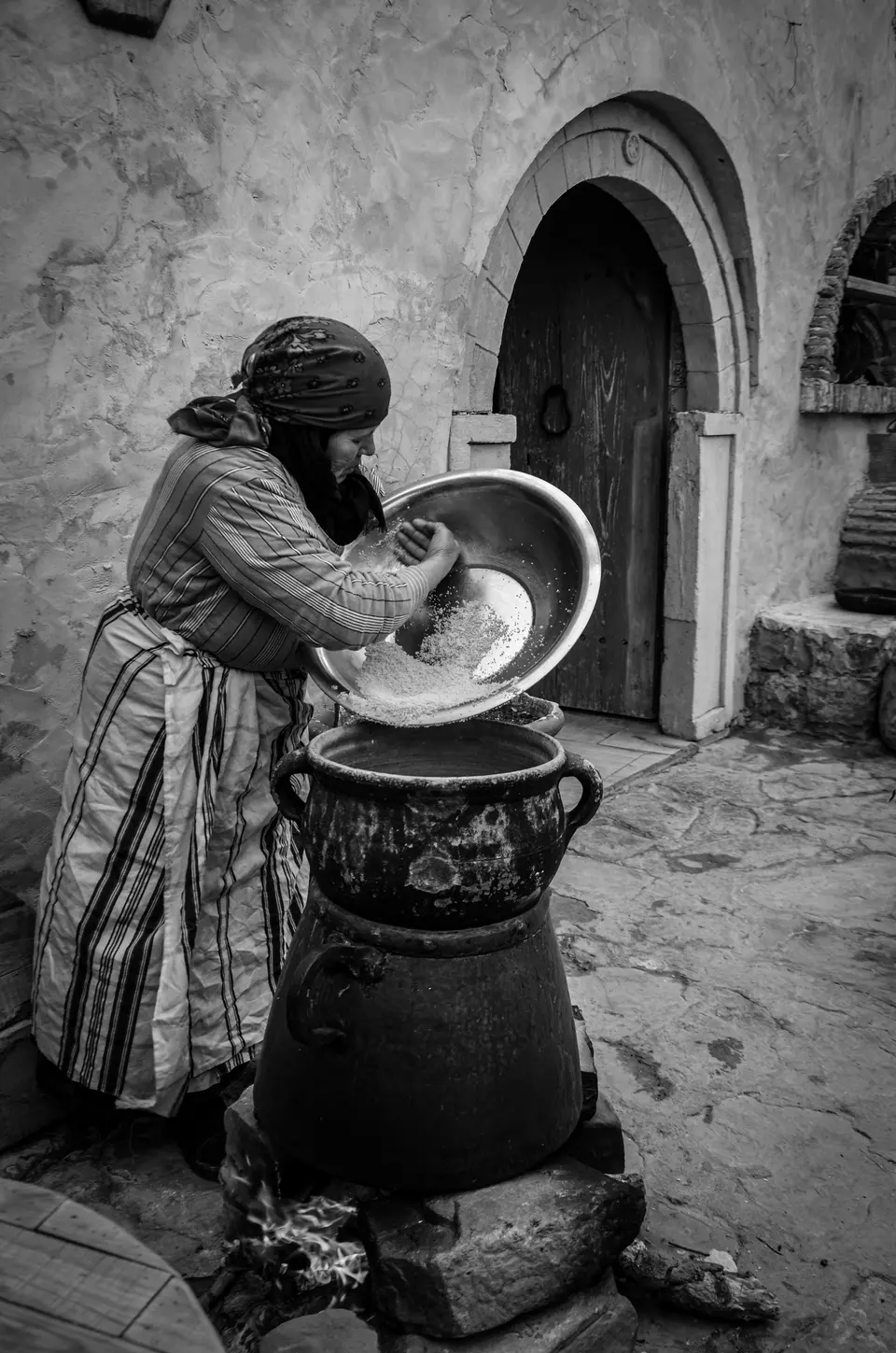
Couscous looks like a grain and is not one. UNESCO's file describes the whole chain: growing the cereal, grinding the seeds to semolina, rolling that semolina by hand, steaming it, and cooking it. The semolina comes from durum wheat — the hardest part of the hardest wheat, the part that resists the millstone. It is sprinkled with water and rolled between the palms into small pellets, dusted with dry flour so they stay separate, then sieved; whatever falls through is rolled again, and again, until there is nothing left that is too small.
That is slow work, and traditionally it was not done alone or for one meal. Groups of women would come together and make large batches over several days, dry them in the sun, and use them for months.
The pot with two floors
The tool is a steamer: taseksut in Berber, kiskas in Arabic, couscoussier in French. The bottom is a tall pot where the meat and vegetables cook as a stew. The top sits on it, pierced, and holds the grain, which cooks in the steam that comes up through the stew and takes its flavour on the way. The lid has holes around the edge so the steam keeps moving. UNESCO's file counts the tools as part of the heritage — the clay ones from potters, the wooden ones from small family workshops — which is to say the dish and the objects that make it were inscribed together.
Friday
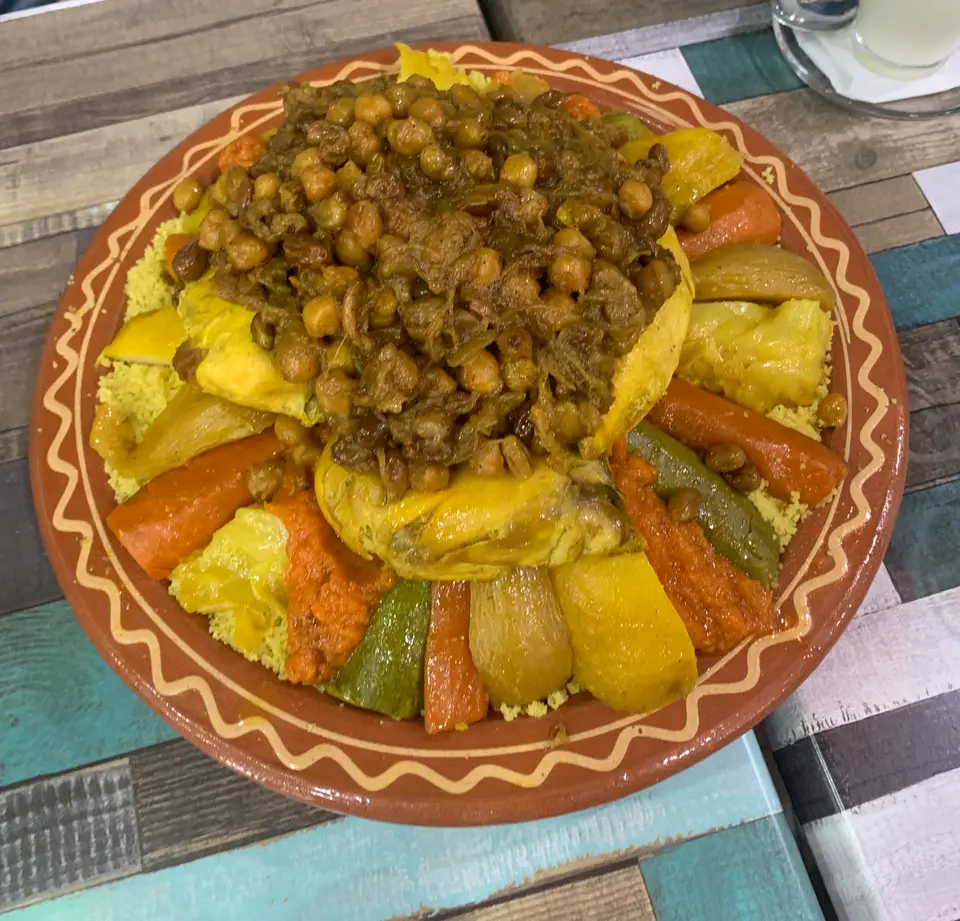
In Morocco couscous is the Friday dish, eaten after the midday prayer, and it is served in a wide communal platter called a gsaa. The best-known version is couscous with seven vegetables, a broth of beef, lamb or chicken heaped with slow-cooked carrots, turnips, pumpkin, courgette and cabbage, with chickpeas. The other one people name is couscous tfaya, where the grain and meat are topped with onions caramelised with raisins, cinnamon and toasted almonds.
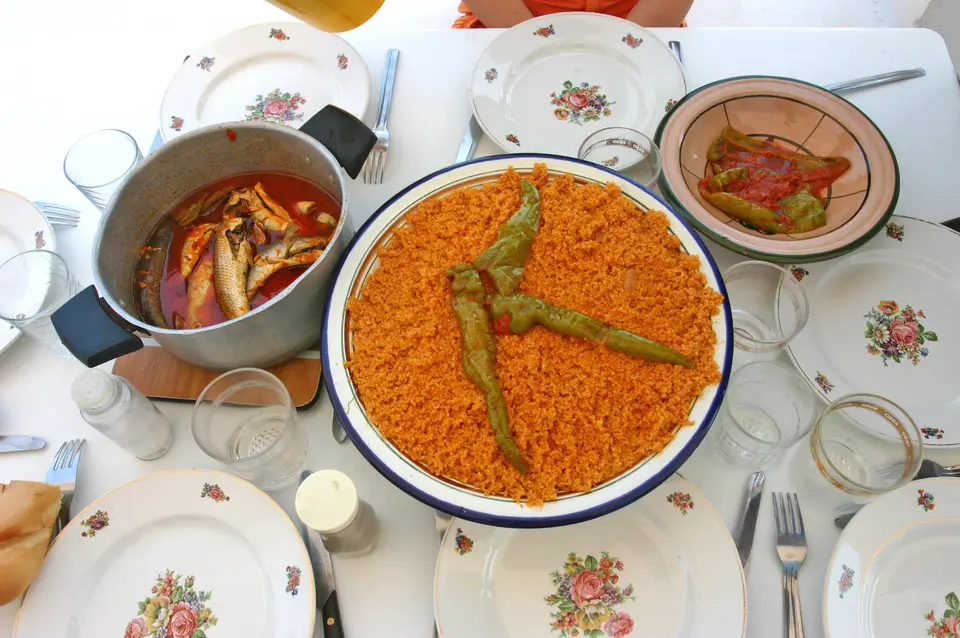
Tunisia's is a different dish under the same name. It is spicy, made with harissa, and it goes with fish as readily as with lamb — fish couscous is a Tunisian speciality, and in the south it is sometimes camel. Sweetened, with raisins, grapes or pomegranate seeds, it becomes masfuf, which is a dessert.
Four countries, one file
In December 2020 Algeria, Mauritania, Morocco and Tunisia had the knowledge and practices around couscous inscribed on UNESCO's Representative List — together, in a single joint submission that was described at the time as an example of international cooperation. Countries argue about the origins of this dish, and the four of them chose not to. What the file protects is not a recipe but a way of doing something: the rolling, the steaming, the tools, and the habit of eating it out of one dish with other people.
When it is eaten
In Morocco it belongs to Friday, served after the midday prayer. Beyond that it has no date — it is the dish of weddings, funerals and family gatherings, in every season, and in Tunisia it is everyday food as well.
Where you will meet it
- A house, on a Friday afternoon in Morocco. This is the dish's own day, and the reason streets empty around one o'clock.
- A wedding or a funeral, anywhere in the Maghreb. Couscous is what is cooked when a lot of people have to be fed at once.
- The market, for the tools rather than the food — the potters' and turners' stalls where the steamer and the platter are sold.
- In Tunisia, the coast. Fish couscous is a speciality there, and the photograph on this page comes from the Kerkennah Islands.
The atlas names occasions and kinds of place, never a particular restaurant. We cannot read a kitchen from here, and a recommendation we could not check would be worth less than none.
What goes into it
- Semolina from durum wheat, the hard part of the grain that resists the millstone.
- Water, sprinkled by hand, and dry flour to keep the pellets apart while they are rolled.
- A broth with meat — chicken, lamb or mutton — and vegetables. Carrots, turnips, pumpkin, courgette, cabbage, chickpeas.
- In Morocco, sometimes tfaya on top — onions cooked down with raisins, cinnamon and almonds.
- In Tunisia, harissa, which is why the grain there is red rather than pale.
At the table
Good to know
- It arrives on one platter for the table. Eat from the wedge in front of you and leave the rest of the dish alone.
- If you are eating by hand, it is the right hand only, and the grain is rolled into a ball with the fingers before it goes in the mouth.
- The meat sits in the middle and is shared out by the host. Wait to be served rather than digging for it.
- Take the offer of a second helping seriously. Refusing outright is read as a verdict on the cooking.
Avoid
- Do not call it pasta. It is rolled from semolina, not cut or extruded from dough, and people are touchy about the difference for good reason.
- Do not treat the boxed five-minute kind as the same thing. That is pre-steamed and dried; what is described here takes a morning.
- Do not ask which country it comes from and expect a simple answer. The 2020 file was submitted by four states jointly, and that was the point of it.
Sources
This entry was written from the following sources.
- Knowledge, know-how and practices pertaining to the production and consumption of couscousUNESCO · read September 25, 2026
- CouscousWikipedia · read September 25, 2026
- Couscous joins UNESCO Intangible Cultural Heritage listDeutsche Welle · read September 25, 2026