Kimchi
김치
On UNESCO’s list of the Intangible Cultural Heritage of Humanity
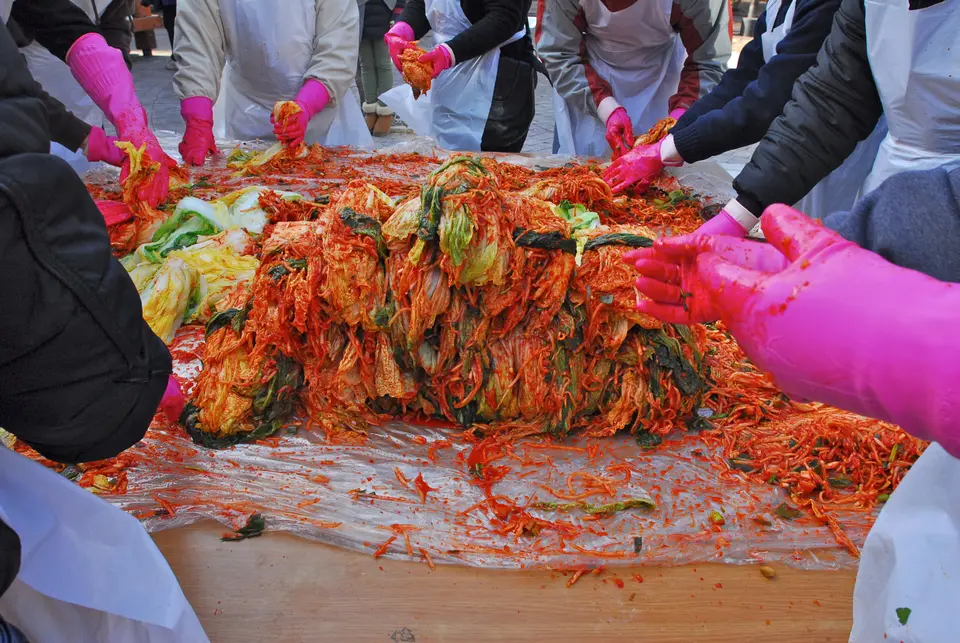
Photo: USAG- Humphreys, CC BY 2.0, via Wikimedia Commons
Salted and fermented vegetables, over a hundred and eighty recognised kinds of them. What UNESCO listed in 2013 is not the food but kimjang — the late-autumn week when a neighbourhood makes a winter's worth in one go, at one table, together.
Salt first, then everything else
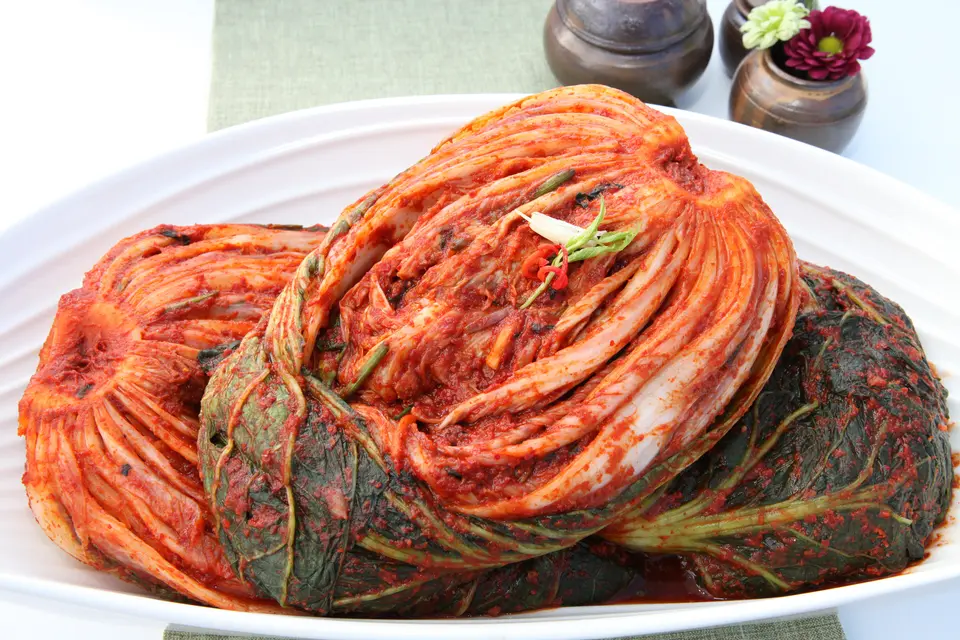
Kimchi is a Korean side dish — banchan — of salted and fermented vegetables, most often napa cabbage or Korean radish. Over a hundred and eighty kinds are recognised.
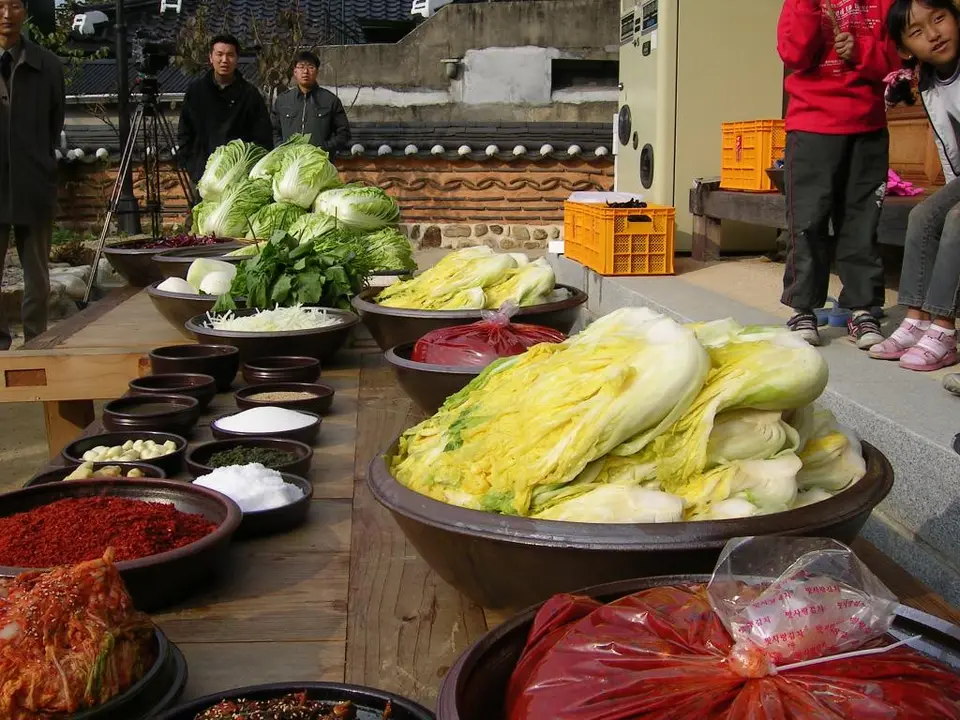
The making starts with salt. The cut vegetables are coated in it, which draws the water out of them and raises their salt content, and that is what preserves them. Then comes the seasoning: gochugaru, the Korean chilli powder that gives kimchi its colour, with garlic, ginger, spring onions and jeotgal — salted, fermented seafood. In the south of the country the jeotgal is generous, and often myeolchi-jeot, salted anchovies.
After that the vegetables are left to themselves. Lactic acid bacteria go to work, producing lactic acid, hydrogen peroxide and carbon dioxide; the lactic acid drops the pH fast, and the sharply acidic result is a place almost nothing else can live in. The preservation is not the salt alone — it is the salt setting up conditions for one organism to crowd out the rest.
It was white for most of its life
Chilli peppers were unknown in Korea until the early seventeenth century, and even after they arrived it was not until the nineteenth that putting them in kimchi became general practice. For most of the history of this food, then, it was not red.
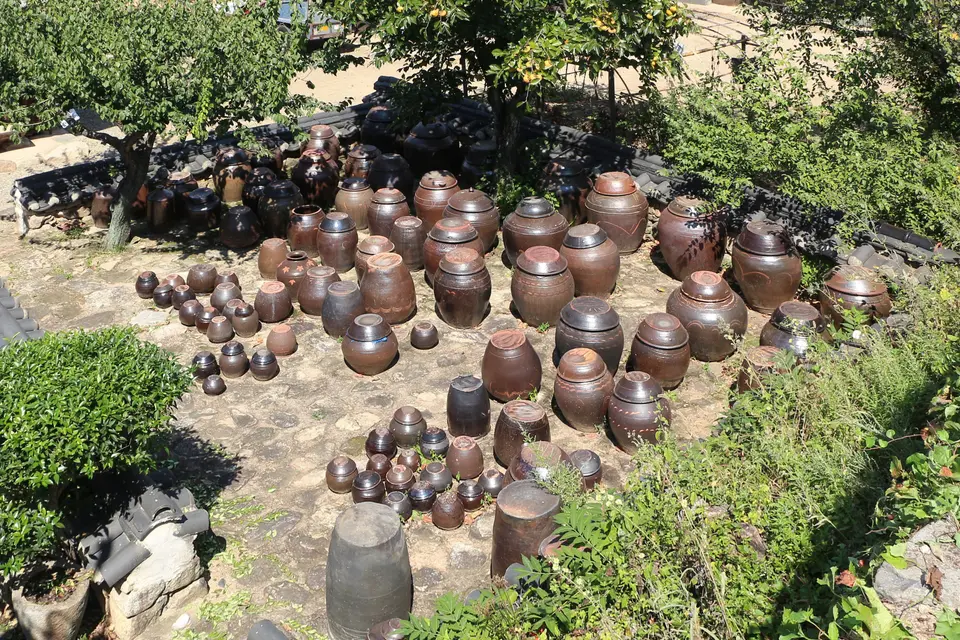
The jars are onggi, large earthenware fermentation vessels. Traditionally they were set into the ground, which kept the kimchi from freezing through the winter and held it at a steady temperature. Above ground they stand together on the jangdokdae, the raised terrace a Korean house keeps for its jars.
Kimjang
What UNESCO inscribed on its Representative List in 2013, at the Republic of Korea's request, is not kimchi. It is kimjang — the making and sharing of it.
Kimjang runs on the agricultural year. Through spring, summer and late summer the ingredients are got ready; then, in late autumn, whole communities make and share large quantities at once, so that every household has enough to get through a long and hard winter. Choosing the day is a judgement about the weather, and it has traditionally been the women of the house who make it.
The file is plain about what the practice is for. It calls kimjang an opportunity for strengthening family cooperation, notes that skills and ideas are shared and accumulated through the custom of exchanging kimchi between households, and says that the particular methods and ingredients a family uses are treated as an inheritance, passed from a mother-in-law to a newly married daughter-in-law. It is also, in the file's words, a reminder to many Koreans that human communities need to live in harmony with nature.
When it is eaten
All year on every table, but made at kimjang in late autumn, when the weather turns and a household lays down enough to last the winter.
Where you will meet it
- A courtyard or a hall in late November, at a long table with several households working on it at once.
- The jangdokdae, the raised terrace where the onggi jars stand — or, in the old way, buried in the ground so they would not freeze.
- Every Korean meal, as banchan. It is not a dish you go out for; it is on the table already.
- A mother-in-law's kitchen, where the household's own method is handed to a new daughter-in-law.
The atlas names occasions and kinds of place, never a particular restaurant. We cannot read a kitchen from here, and a recommendation we could not check would be worth less than none.
What goes into it
- Napa cabbage, most often, or Korean radish. Salted first to draw the water out.
- Gochugaru, Korean chilli powder, which is what makes it red.
- Garlic, ginger and spring onions.
- Jeotgal, salted fermented seafood. In the south a generous amount of myeolchi-jeot, salted anchovies.
At the table
Good to know
- Kimjang is done with other people. The point of it is that several households make more than any one of them could.
- Kimchi is exchanged between houses, and the exchange is how methods travel.
- If you are shown a family's way of doing it, you are being shown an inheritance, not a recipe.
Avoid
- Do not treat it as one thing. There are over a hundred and eighty recognised kinds, and they change by region and by season.
- Do not assume red means traditional. Chilli did not reach Korea until the seventeenth century.
- Do not open the jar and leave it warm. What is happening in there is fermentation, and it does not stop.
Sources
This entry was written from the following sources.
- Kimjang, making and sharing kimchi in the Republic of KoreaUNESCO · read September 29, 2026
- KimchiWikipedia · read September 29, 2026