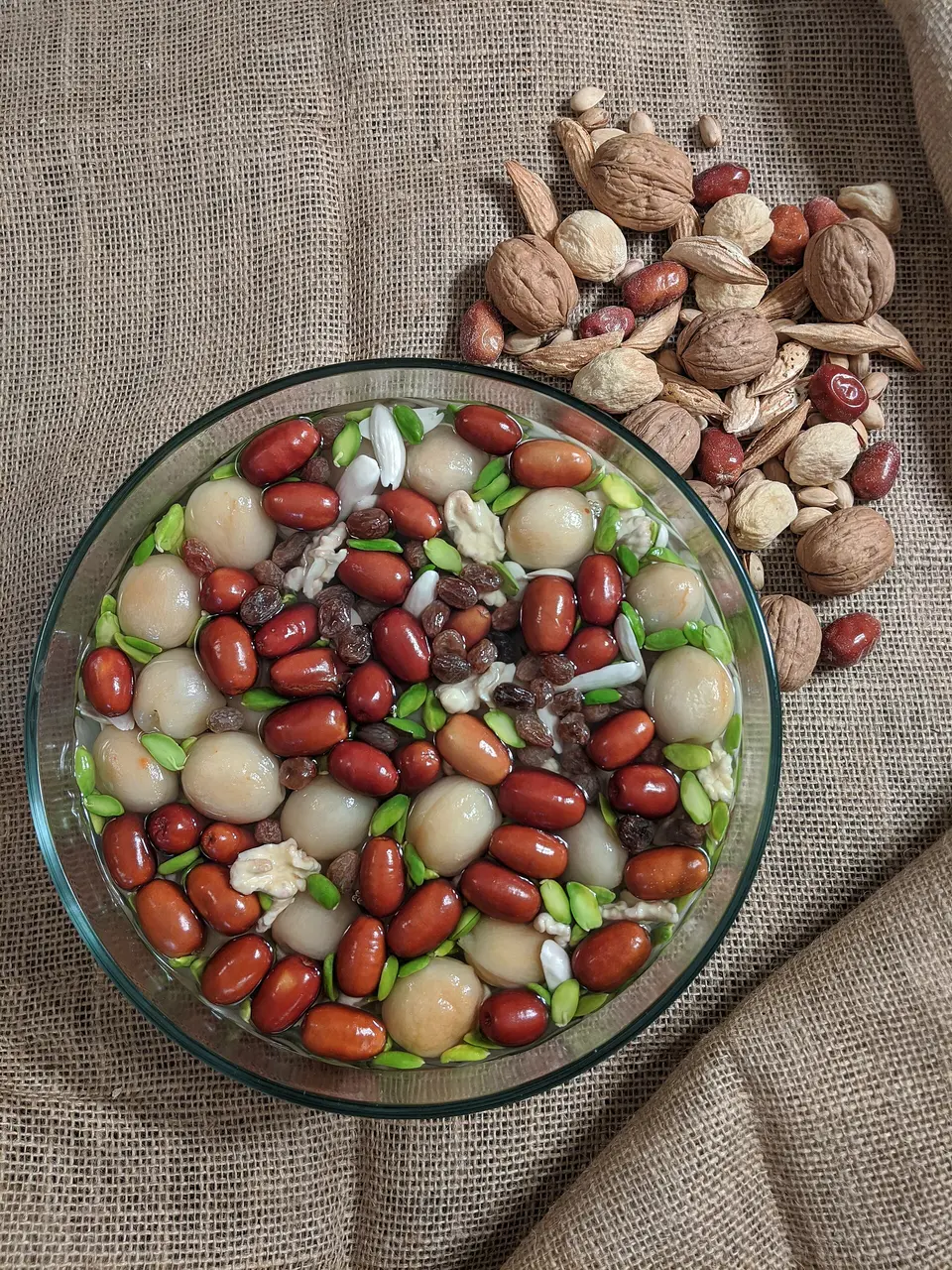
Seven dried fruits, soaked until they swell and give up their sugar, served in the syrup they made themselves. It is the Afghan answer to the seven things on the Nowruz table — not seven objects to look at, but seven fruits in one bowl to eat.
Seven fruits, one bowl
Haft mewa means seven fruits. It is described as a fruit salad made from seven different dried fruits, served in their own syrup — and the syrup is not added, it is what the fruit gives up to the water it soaks in.
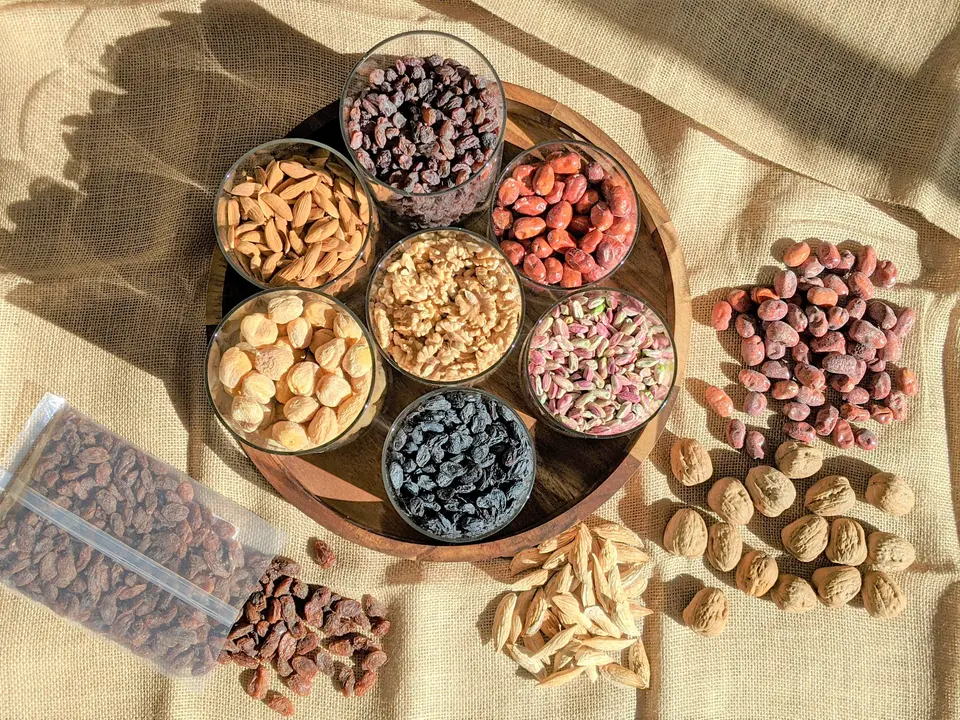
The seven are raisins, senjed — the dried fruit of the oleaster — pistachios, hazelnuts, prunes, walnuts, and almonds; some households use plum for the last instead. They are washed and left in water for days, and what comes out is swollen, soft and sweet, sitting in a pale amber liquid that tastes of all seven at once.
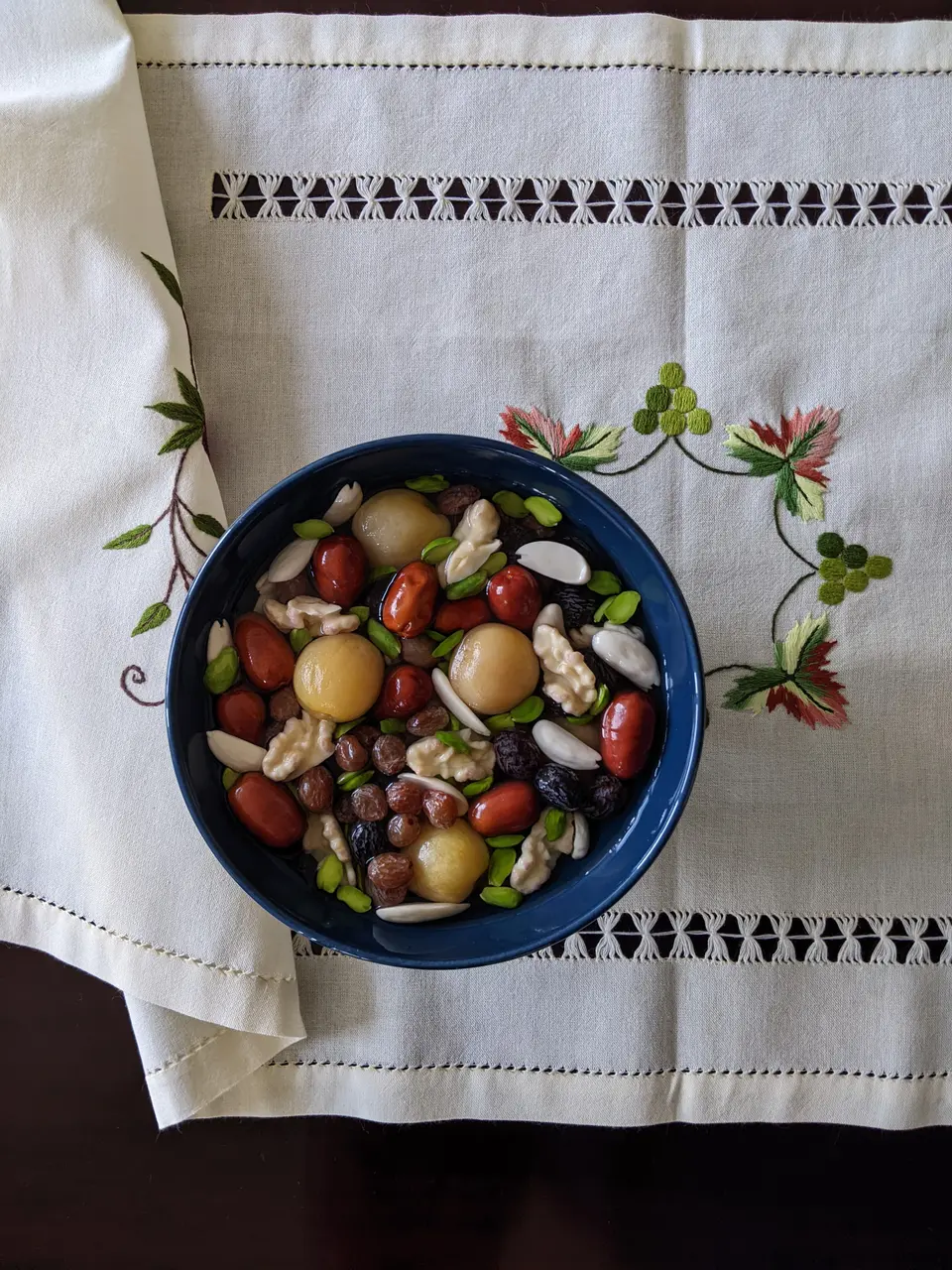
It is set on the table for Nowruz and eaten with a spoon. Where an Iranian household lays out the haft-sin, seven things whose Persian names begin with the letter sin, an Afghan one makes haft mewa: not seven objects arranged to be looked at, but seven fruits in one bowl to be eaten.
Beside the other pot
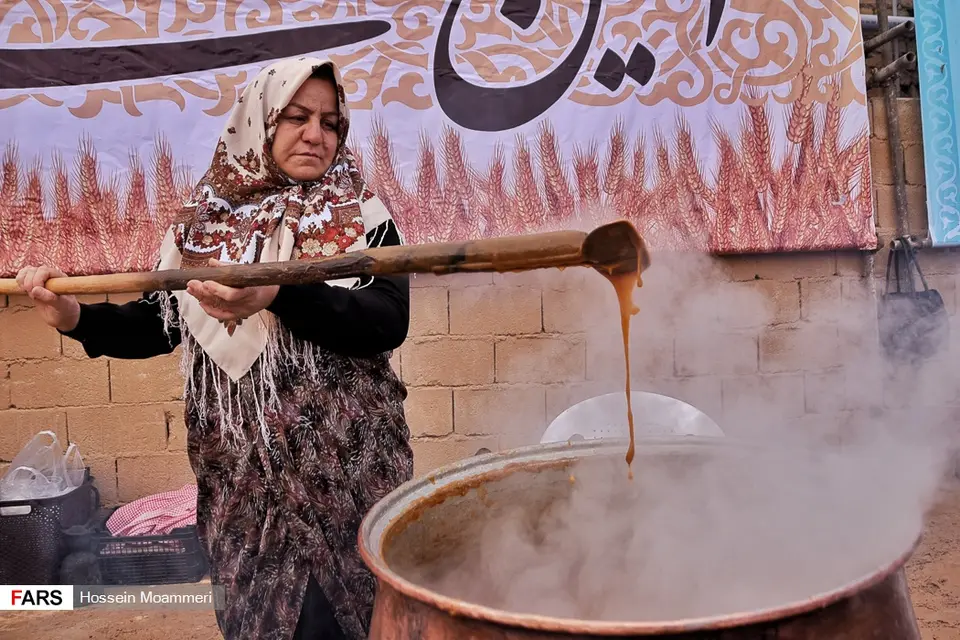
The other dish of the Afghan new year is samanak, the sweet paste of germinated wheat that is cooked on the eve of Nowruz or a few days before. It is made through the night: the women of a household gather, cook from evening until daylight, and sing a song that belongs to the making of it. Haft mewa needs no fire and no watching — it needs only to be started early enough.
What it costs now
Nowruz was taken off the list of official holidays after 2021, and the observance that remains is largely private. Residents of Kabul told reporters in 2025 that the traditional Nowruz foods had become unaffordable for families already in difficulty. A bowl of seven dried fruits is a modest thing, and it is also seven separate purchases at a bazaar.
When it is eaten
Nowruz and the days around it, made a few days ahead so the fruit has time to soften and sweeten the water it sits in.
Where you will meet it
- A house at Nowruz, in a bowl in the middle of the table, eaten with a spoon and offered to whoever comes.
- Mazar-i-Sharif during Gul-e Surkh, the forty days when the country's biggest new-year gathering used to fill the city.
- The bazaar in the weeks before the new year, where the seven are bought dried and by weight.
The atlas names occasions and kinds of place, never a particular restaurant. We cannot read a kitchen from here, and a recommendation we could not check would be worth less than none.
What goes into it
- Raisins.
- Senjed, the dried fruit of the oleaster.
- Pistachios.
- Hazelnuts.
- Prunes.
- Walnuts.
- Almonds — or, in some households, plum instead.
At the table
Good to know
- It is made for guests. The bowl sits out and anyone who comes is given some.
- Make it early. It is not a dish you assemble on the day; the fruit needs days in the water.
- Do not drain it. The syrup is the point and is drunk with the fruit.
Avoid
- Do not confuse it with the Iranian haft-sin. That is seven things on a table whose names begin with one letter; this is seven fruits in a bowl, and it is food.
- Do not add sugar. The sweetness comes out of the fruit into the water, which is the whole trick.
Sources
This entry was written from the following sources.
- Nowruz in AfghanistanWikipedia · read September 29, 2026
- Afghans No Longer Celebrate Nowruz Amid Poverty, Taliban RestrictionsRadio Free Europe / Radio Liberty · read September 29, 2026
Eaten at
Gul-e Surkh
میلهٔ گل سرخ
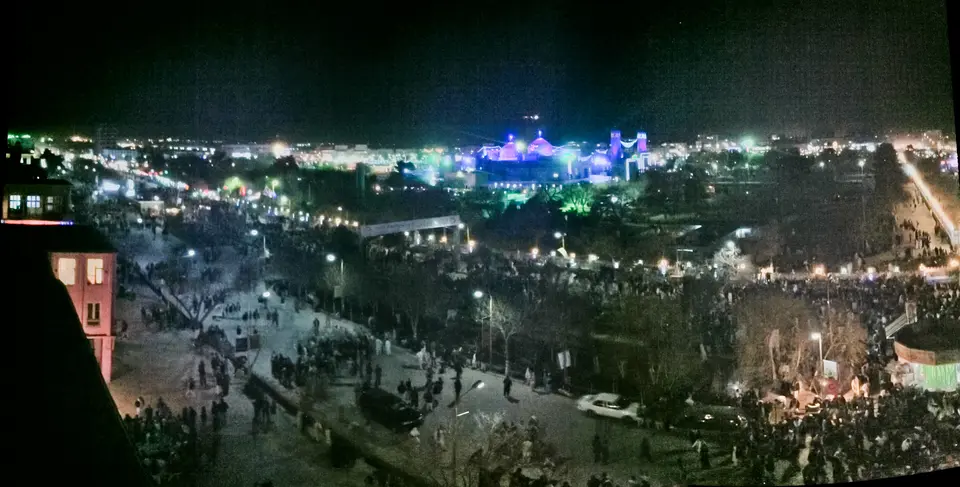
The Red Flower festival at Mazar-i-Sharif ran through the first forty days of the year, while the tulips were out on the plains around the city. The banner-raising at the shrine drew up to two hundred thousand people — the largest Nowruz gathering recorded anywhere.
March 21 – April 29, 2027Calculated
Related dishes
Samanu
سمنو
Wheat is soaked, left to sprout for days, ground and boiled overnight. Nothing sweet goes in and something very sweet comes out. It is one of the seven things on the Nowruz table, and the only one that has to be made rather than bought or picked.