Samanu
سمنو
On UNESCO’s list of the Intangible Cultural Heritage of Humanity
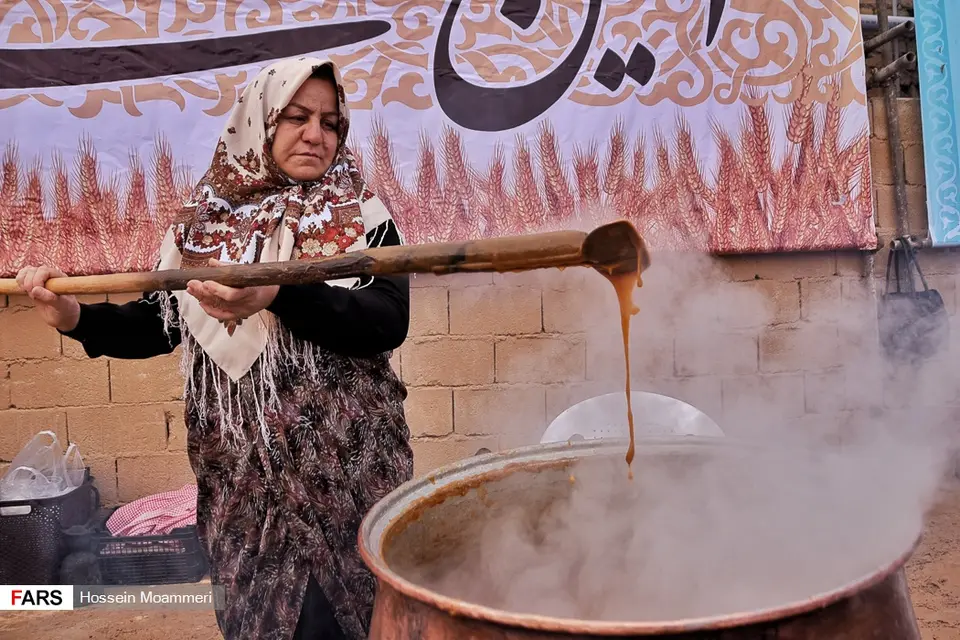
Photo: Hossein Moammeri, CC BY 4.0, via Wikimedia Commons
Wheat is soaked, left to sprout for days, ground and boiled overnight. Nothing sweet goes in and something very sweet comes out. It is one of the seven things on the Nowruz table, and the only one that has to be made rather than bought or picked.
Wheat that turns sweet on its own
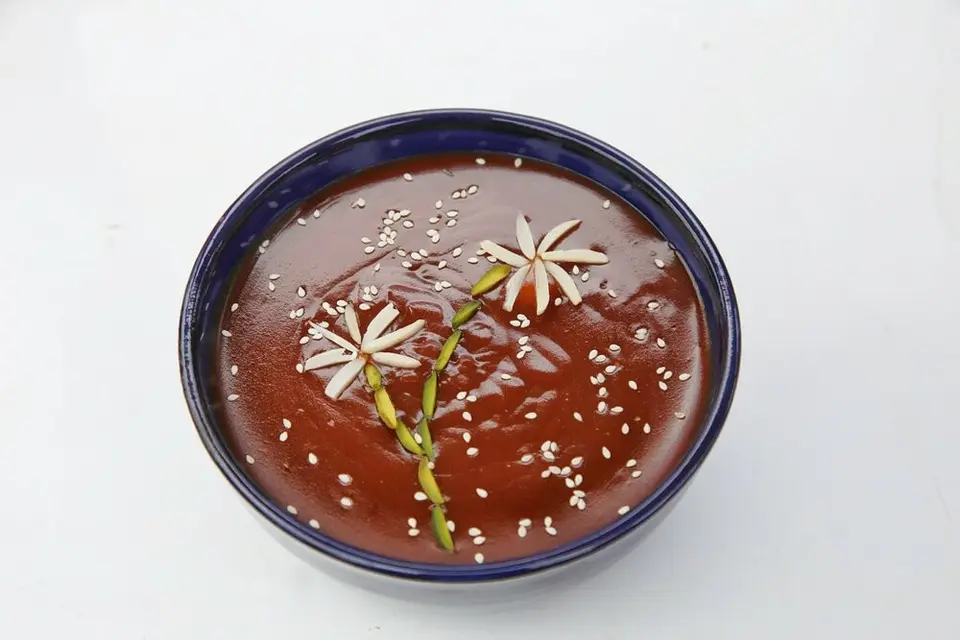
Samanu is a sweet, dark paste made from germinated wheat. The wheat is soaked, spread out and left to sprout — a day in water, then two or three days to send out shoots — and the sprouts, sabzeh in Persian, are then washed, crushed and pressed for their liquid. That liquid is boiled, for a very long time, until it thickens to something the colour of dark caramel.
What makes it remarkable is that nothing sweet goes into it. UNESCO's file and the Persian accounts agree on the ingredients: sprouted wheat, water, and in most kitchens flour. There is no sugar, no honey and no dates in the strict version, which the English account describes as made "entirely of germinated wheat and water, with no other ingredients", and it comes out sweeter than most things that have sugar in them.
The whole business takes the better part of a week. Soaking and sprouting run for days; the boiling itself is ten to fifteen hours, which is why it is started in the evening.
The night at the pot
Because it cannot be left, it is not cooked alone. The traditional form is a gathering of women who sit around the cauldron through the night and take turns at the paddle, singing while they wait for their turn. UNESCO's description has the men doing the parts that are not the cooking — lighting the fire, carrying what is heavy — and the women stirring, singing and dancing. There is a verse for it, in which the samanu boils and we stir it and everyone else is asleep while we play the drum.
Near the end, whole walnuts are dropped into the pot by someone making a wish. In the morning, while it is still warm, it is carried round to neighbours, relatives and friends.
In December 2025 UNESCO inscribed the culture of sumanak and sumalak cooking on its Representative List. The file was submitted by Tajikistan, and the practice it describes runs across Greater Iran and Central Asia under a row of related names — samanak and samanu in Persian, sumanak in Tajik, sumalak in Uzbek, sümölök in Kyrgyz, sümelek in Kazakh and Turkmen. The English account traces the dish to the Sasanian period and the Persian one says the same.
The disagreement about flour
The two accounts do not match, and the difference is worth knowing before you taste two of them side by side. The strict recipe is sprouted wheat and water alone. The common one adds wholemeal flour with the bran still in it — a Persian source gives one kilogram of wheat to four of flour — which thickens the paste much faster. The English article is blunt about the cost: the flour makes it "taste somewhat bitter and less sweet".
So a samanu that tastes thin and slightly bitter is not a failed one. It is the other recipe.
Among the seven
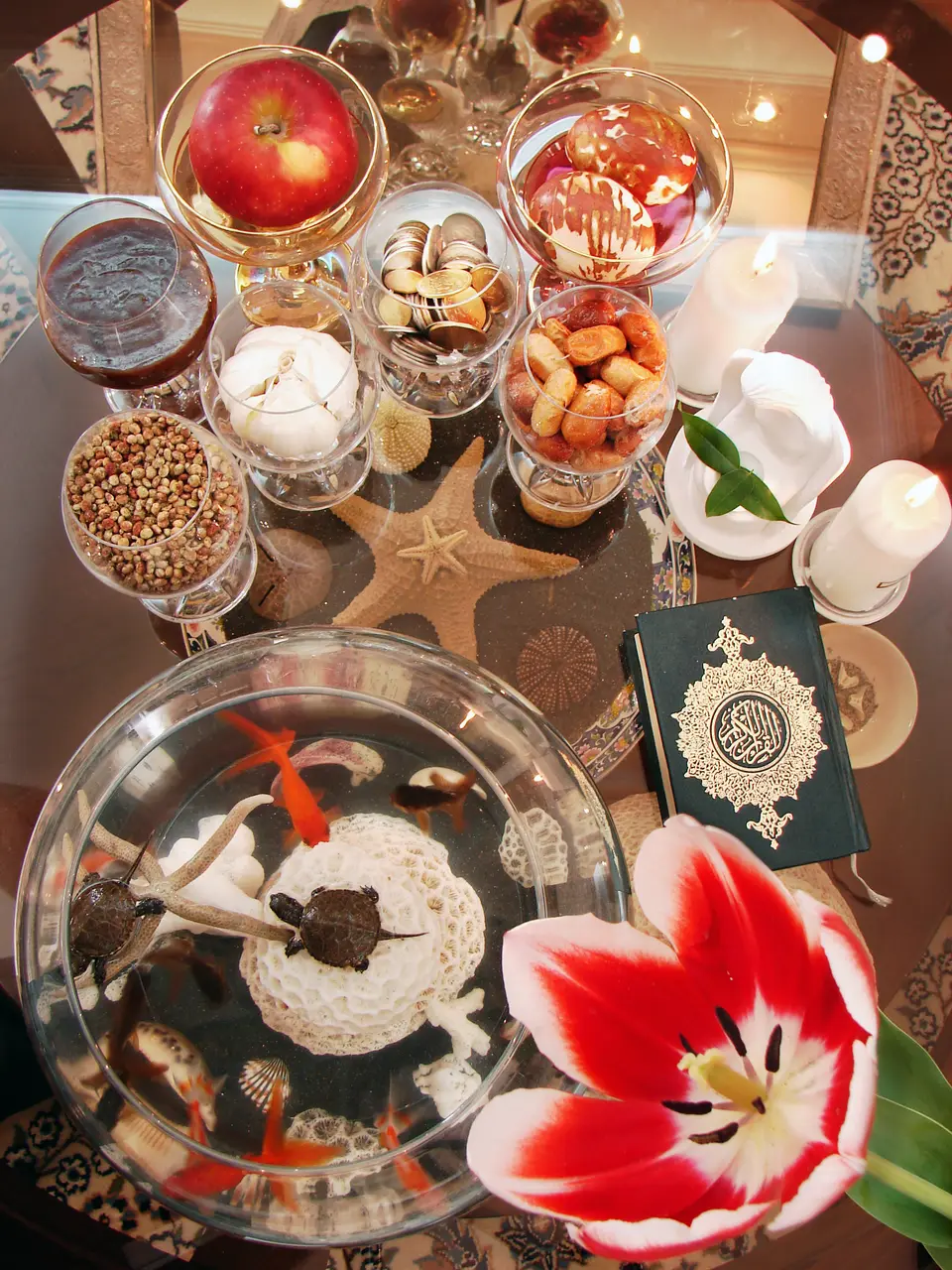
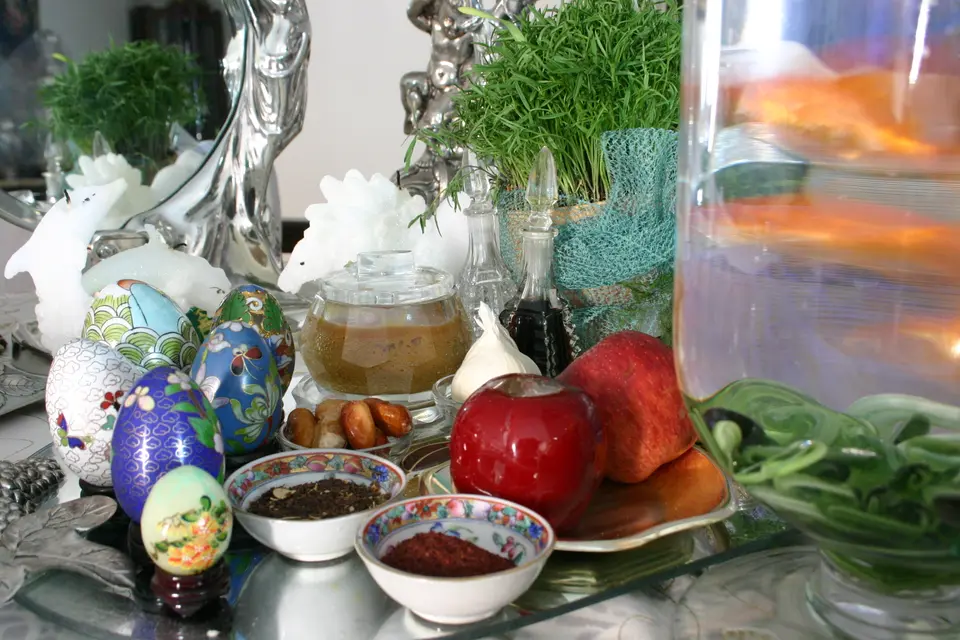
On the Nowruz table are seven things whose names begin with the Persian letter sin: sabzeh, the sprouted greens; samanu; senjed, the dried oleaster; serkeh, vinegar; seeb, apple; seer, garlic; and somagh, sumac. Six of those you grow, buy or pick. Samanu is the one that has to be cooked, and the only one on the table that takes a night and several people to produce.
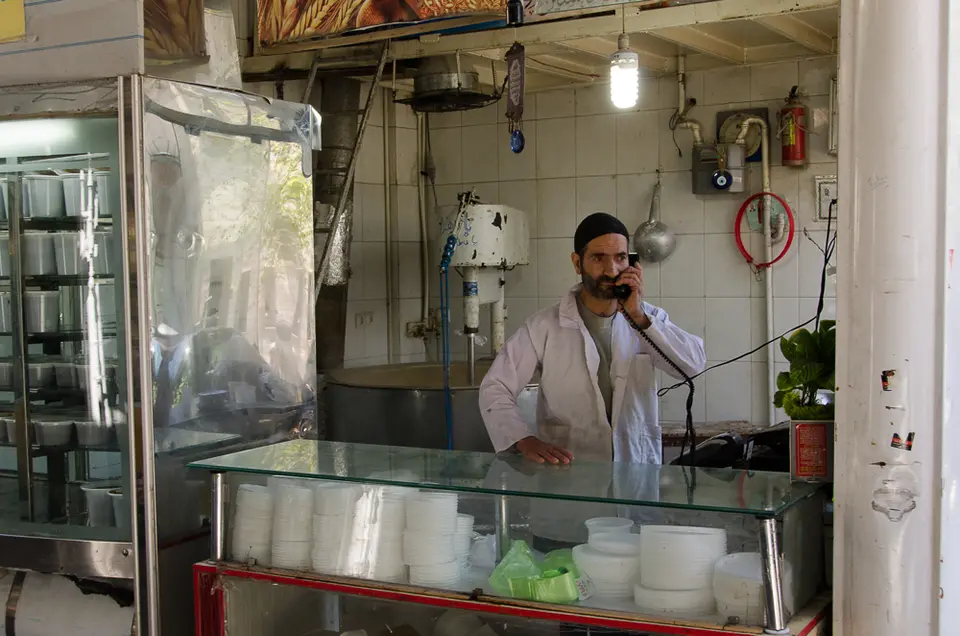
Iran has places that are known for it. Daraq, in North Khorasan, holds a samanu festival where it is cooked outdoors in copper cauldrons; Borujerd in Lorestan is called the country's samanu capital and turns out something like six hundred kilograms a day through Esfand, the last month of the Persian year. In the bazaars of those weeks it is sold by weight, ladled into tubs, and it will still be on the table when the thirteen days are over.
When it is eaten
Nowruz, and the weeks of Esfand leading up to it. The cooking is done in the days before the new year and the paste keeps, so a jar given in March is eaten well past it.
Where you will meet it
- A courtyard or a hall in the days before Nowruz, around a copper cauldron that several people take turns stirring.
- The samanu festival at Daraq in North Khorasan, where the cooking is done in the open and in quantity.
- Borujerd in Lorestan, which makes more of it than anywhere else in Iran — some six hundred kilograms a day through the month of Esfand.
- Any bazaar in the last weeks of winter, sold by weight into tubs. Tajrish in Tehran is one.
- The haft-sin table itself, in a small dish, where it will sit for the thirteen days of the new year.
The atlas names occasions and kinds of place, never a particular restaurant. We cannot read a kitchen from here, and a recommendation we could not check would be worth less than none.
What goes into it
- Wheat, sprouted. This is the whole dish in the strictest version — germinated wheat and water, and nothing else at all.
- Wholemeal flour with the bran left in, in the common version. One Iranian proportion is a kilogram of wheat to four of flour.
- Water, a great deal of it, boiled away over ten to fifteen hours.
- Walnuts, thrown in whole near the end by someone making a wish.
At the table
Good to know
- It is cooked in company and given away. If a neighbour brings you a bowl, the bowl goes back with something in it.
- Everyone at the pot takes a turn at the paddle. Standing and watching for hours without stirring is noticed.
- Taste it when you are offered it, even if you are not hungry. The point of the offer is the blessing, not the food.
Avoid
- Do not call it halva. Halva is made from flour and sugar and fat in an afternoon; this is made from wheat and time.
- Do not ask what the sugar is. There is none, and being told so is half the pleasure of explaining it.
- Do not go looking for it in July. It belongs to the end of winter, and out of season it is not made.
Sources
This entry was written from the following sources.
- Culture of Sumanak/Sumalak cookingUNESCO · read September 29, 2026
- SamanuWikipedia · read September 29, 2026
- سمنوویکیپدیای فارسی · read September 29, 2026
- Haft-sinWikipedia · read September 29, 2026
Eaten at
Nowruz
نوروز
Nowruz, “new day”, is the Iranian New Year. It begins at the March equinox, when families gather around the Haft-sin table to wait for the exact moment the year turns, and opens two weeks of visits, food and time outdoors.
March 21, 2027Calculated