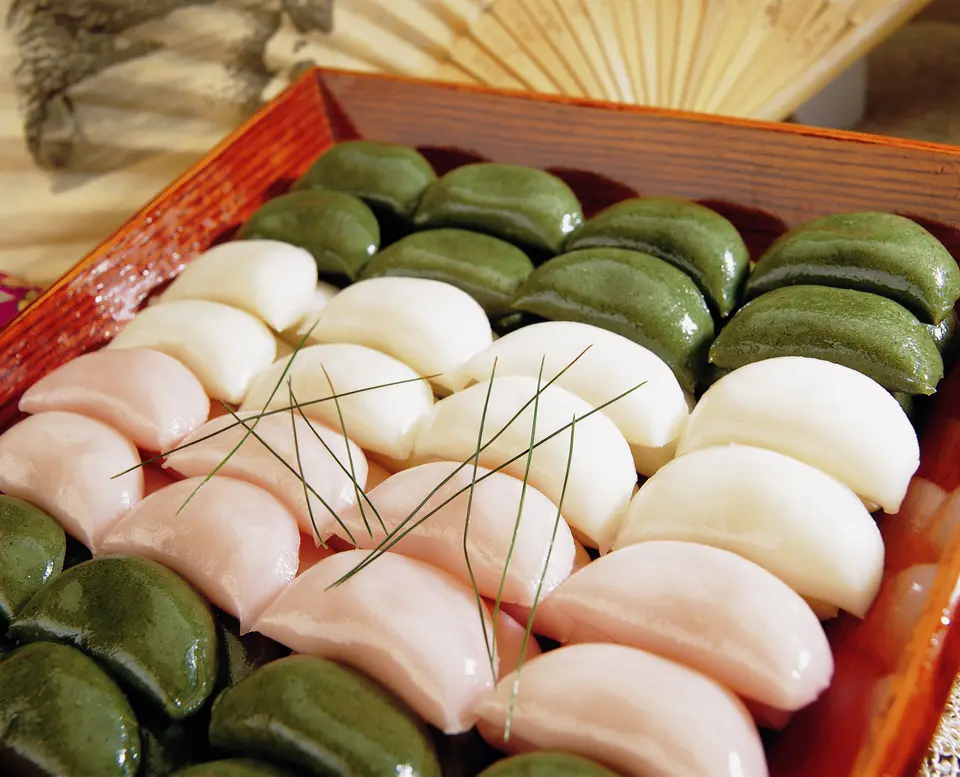
A small rice cake folded into a half-moon and steamed on a bed of pine needles, which keep it from sticking, scent it, and slow it going off. The shape is deliberate — a full moon can only wane, and a half one is still filling.
A half-moon, on purpose
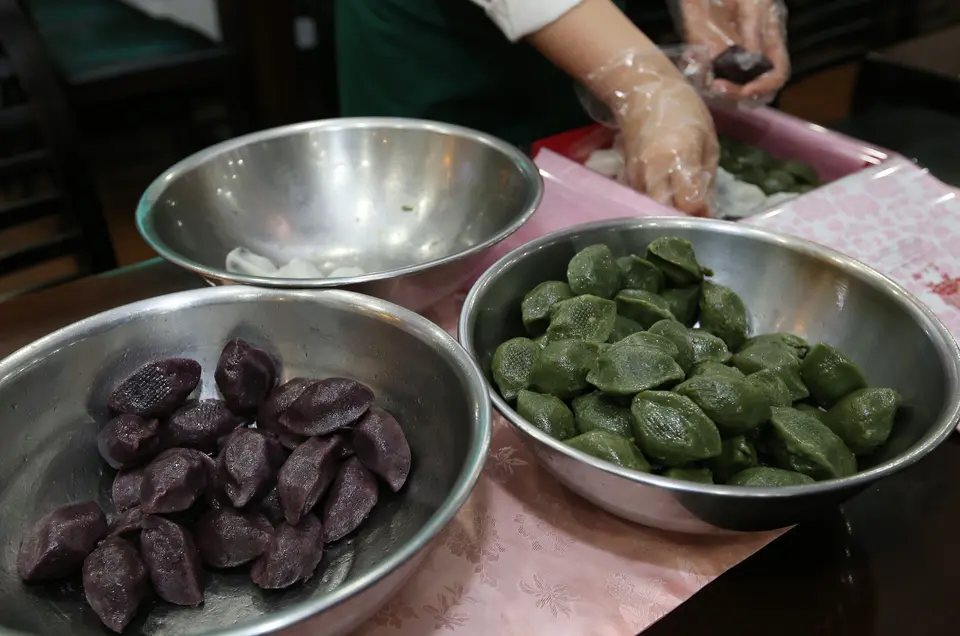
Songpyeon is a small Korean rice cake — a tteok — shaped like a half-moon. The dough is rice flour kneaded with salt and hot water until it is smooth; a piece is flattened in the palm, a spoonful of filling is set in the middle, and the edges are pressed together into a crescent.
The shape is an argument. Korean ancestors held that a full moon, being full, can only wane, while a half-moon is still on its way to filling — so the half-moon is the shape of abundance and prosperity to come. There is a second story, from the reign of King Uija of Baekje, in which a turtle appears carrying a carving that reads Silla is half moon, taken to mean that Silla's future was still ahead of it.
There is also a belief attached to the making: whoever shapes a beautiful songpyeon will meet a good spouse, or have a beautiful child. Since songpyeon is folded by hand in quantity on the night before Chuseok, by everyone in the house, this is said a great deal.
The pine needles
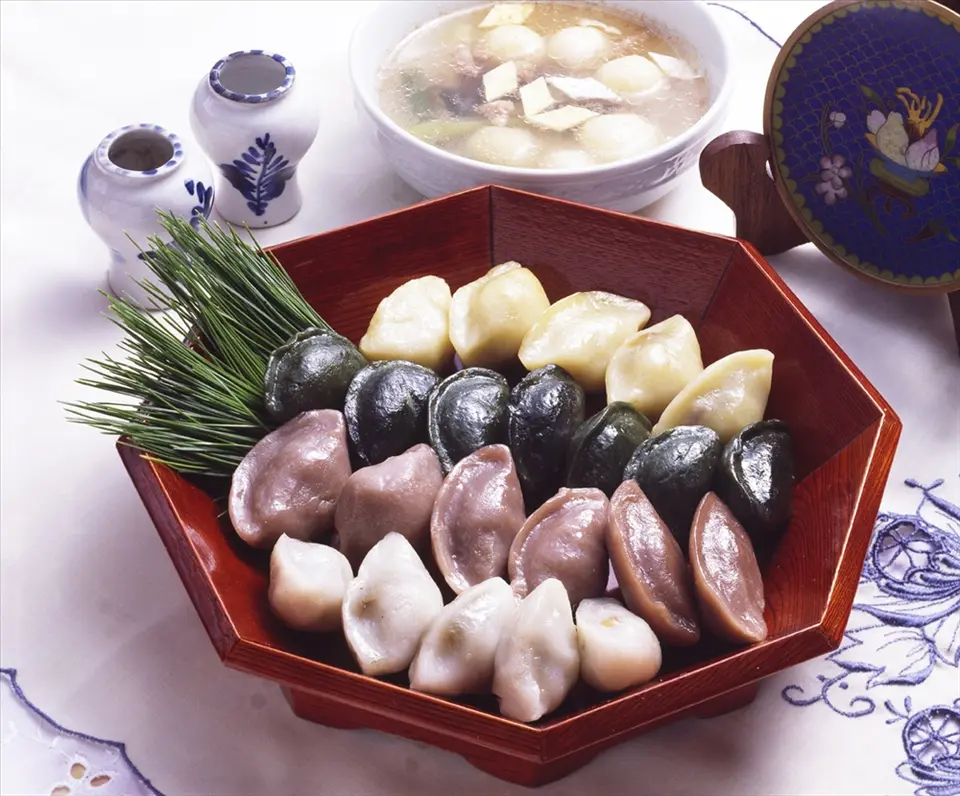
Song is the pine. The cakes are laid on pine needles in the steamer and cooked for twenty to thirty minutes, and the needles do three things at once: they stop the cakes sticking to the steamer and to each other, they give the rice a resinous scent it has no other way of getting, and — because pine gives off large amounts of phytoncide, which kills germs — they help keep the cakes from spoiling. They are taken off before eating.
New rice, and an older date
At Chuseok, the cakes made with the first rice of the harvest have their own name, oryeo songpyeon, and those are the ones offered to the ancestors on the morning of the festival and taken to the graves. The whole thing is a thanksgiving for a harvest, and the cake is said to stand for the moon and for wishes, which is why people speak their wishes while making it and eating it.
It was not always an autumn food. The Dongguk Sesigi records songpyeon being made in farming villages on the fifteenth day of the first lunar month — the other full moon of the year, in late winter. Its attachment to Chuseok is the arrangement that survived.
Every province differently
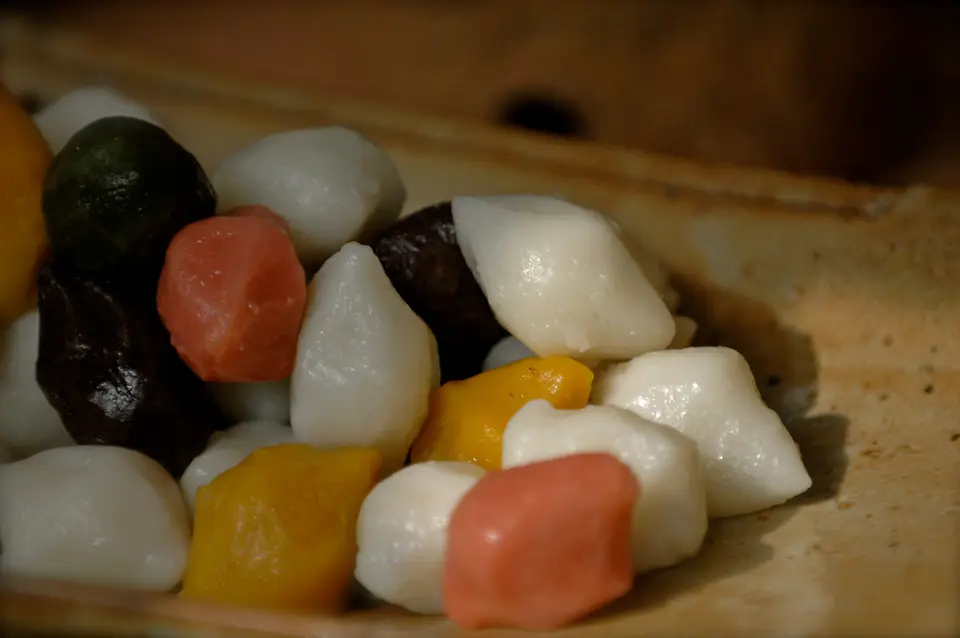
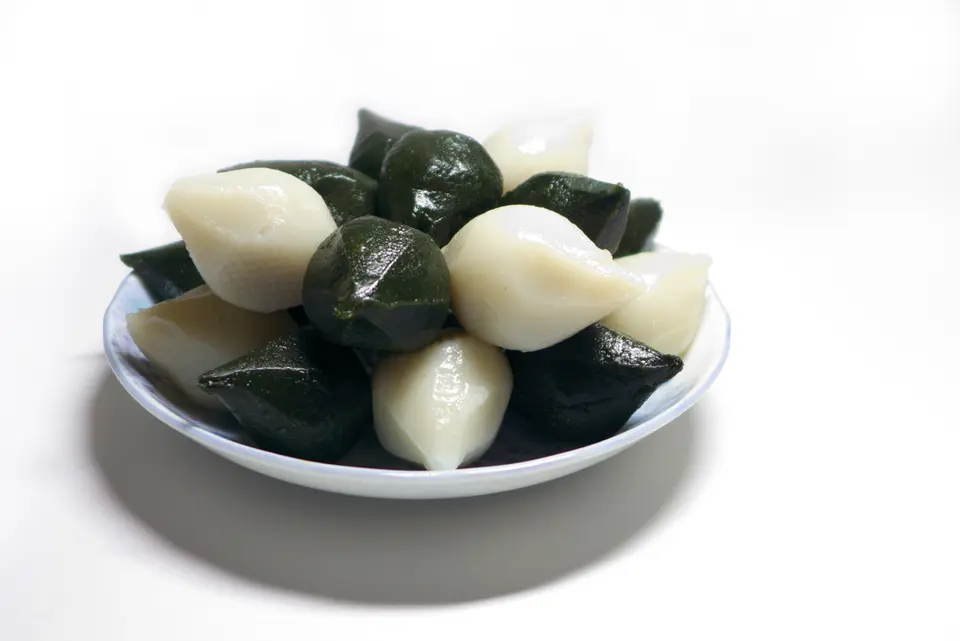
Seoul makes osaek songpyeon, small and in five colours, and the colours are food: cinnamon for brown, strawberry or omija syrup for pink, mugwort for green, gardenia seeds for yellow.
Chungcheong dries pumpkin, grinds it to powder and works it into the flour. Gangwon makes them from potato and from acorn, flat, with ridges left by the fingers that pressed them. Gyeongsang makes them bigger than anywhere else, and puts boiled ramie leaves in. Jeolla mixes arrowroot starch into the rice flour and makes flower songpyeon with natural dyes. Jeju fills them with sweetened peas and leaves the centre concave, like a volcanic crater. In North Korea there is a seashell-shaped one, filled with sesame, sugar and soy sauce.
When it is eaten
Chuseok, the harvest festival on the fifteenth day of the eighth lunar month. It is made in the days before and offered to the ancestors on the morning itself.
Where you will meet it
- A kitchen table on the eve of Chuseok, with the whole family shaping them, because one person cannot fold enough of them.
- The ancestral rite on Chuseok morning, and the graves, where the cakes made with the first of the new rice are set out.
- Seoul, for the small five-coloured osaek songpyeon.
- The provinces, each of which does it differently — pumpkin in Chungcheong, potato and acorn in Gangwon, sweetened peas on Jeju.
The atlas names occasions and kinds of place, never a particular restaurant. We cannot read a kitchen from here, and a recommendation we could not check would be worth less than none.
What goes into it
- Rice flour, kneaded with salt and hot water until smooth.
- A filling of toasted sesame, chestnuts, red bean paste, soybeans, cowpeas, jujubes or honey.
- Pine needles, which are not eaten. They go under and between the cakes in the steamer.
- For colour, nothing artificial — mugwort for green, gardenia seeds for yellow, strawberry or omija for pink, cinnamon for brown.
At the table
Good to know
- Make them with other people. The shaping is the occasion, and it is done the night before rather than on the day.
- Say your wish while you fold one. The cake stands for the moon, and this is what the moon is for.
- Take the pine needles off before eating. They have done their work in the steamer.
Avoid
- Do not shape it as a full circle. The half-moon is the whole point of it and a round one says the opposite thing.
- Do not eat the pine needles. They are there for the scent, the non-sticking and the keeping.
- Do not treat it as one recipe. What is inside it and what colour it is changes by province and by household.
Sources
This entry was written from the following sources.
Eaten at
Chuseok
추석
Korea’s harvest festival under the full moon of the eighth lunar month — three days when cities empty as families go home to honour their ancestors, tidy the family graves and make half-moon rice cakes steamed over pine needles.
September 14 – 16, 2027Calculated