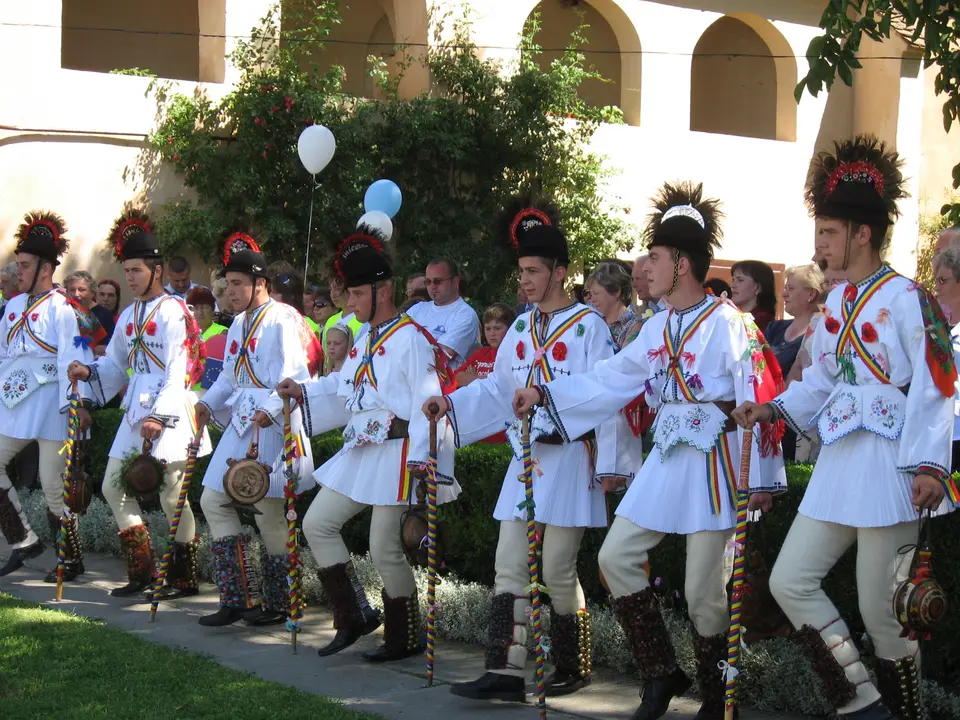
Căluș ritual
Ritualul Călușului
On UNESCO’s list of the Intangible Cultural Heritage of Humanity
Photo: El bes, CC BY 3.0, via Wikimedia Commons
A band of men in white shirts, bells at the ankle and a stick in the hand, dance in a village yard in southern Romania at Orthodox Whitsun. They have sworn an oath and follow a leader, they go from house to house, and for the days of Rusalii they are held to carry healing rather than to give a performance.
A horse that is not a horse
UNESCO inscribed the Căluș ritual in 2008, and its text is careful about what is known. The name comes from căluș, the small wooden piece of a horse's bridle, and the ritual is older than the seventeenth-century tunes that are the first written record of its music. It is read as a purification and fertility rite in which the horse stands for the sun.
The band is male. A vataf, a master, leads it; he holds the charms, the descântece, and teaches the steps, and young men enter the band by initiation. The dancing is fast and low — stamping, heels clicked together, leaps, legs swung — and it is accompanied by two violins and an accordion. The Căluşari go from house to house, dance, play comic scenes, and were held to be able to heal, in particular the people said to have been struck by the iele, the spirits of Rusalii. Women may be invited in for the part that asks for fertility and luck.
Where it is kept
The heart of the ritual is in Oltenia, in the Olt region of southern Romania, and it was also practised among Vlach communities in Bulgaria and Serbia. Today it is danced both in the villages and at folklore festivals — the one at Caracal is the best known — and it has become a national emblem, which is a different thing from a village rite and is treated in the UNESCO file as part of its present life rather than as a loss.
When it falls
The living season is Rusalii, Orthodox Pentecost, fifty days after Orthodox Easter, and the days around it. The date moves with the Orthodox computus and so drifts against the Western calendar; in 2027 Orthodox Easter is on 2 May and Rusalii on 20 June. Village itineraries are local and are not published centrally, so if you are travelling for it, ask in the commune.
When it happens
The Căluș belongs to Rusalii, Orthodox Pentecost, fifty days after Orthodox Easter, and the days around it. Stage festivals repeat the dance through the summer; those are not the same thing as the yard-to-yard rite.
- June 20 – 22, 2027Calculated
- June 4 – 6, 2028Calculated
- May 27 – 29, 2029Calculated
- June 16 – 18, 2030Calculated
Visiting with respect
Good to know
- If you meet a band on a village road, you are watching a rite. Ask before filming faces, and stay out of the circle.
- A gift of money or of drink is the old payment for the dance. Give it; do not bargain over it.
- The band is led by a vataf and is under an oath for the season. Direct your questions to him rather than to the dancers.
Avoid
- Do not treat the stick, the flag or the costume as props to be handled or posed with.
- Do not join the dance uninvited. Women may be asked in for the part of the rite that concerns fertility and luck; that is an invitation, not an opening.
Stay safe
- Rural roads, summer heat and long afternoons with wine in them. Plan how you are getting back.
- Watch for horse-drawn carts, livestock and stray dogs on country roads.
- Petty theft happens in the towns, above all in Bucharest; keep valuables out of outer pockets.
Sources
This entry was written from the following sources.
- Căluş ritualUNESCO · read September 25, 2026
- Romania — intangible cultural heritage elementsUNESCO · read September 25, 2026
- Romania travel advice: safety and securityUK Foreign, Commonwealth & Development Office · read September 25, 2026
Related festivals
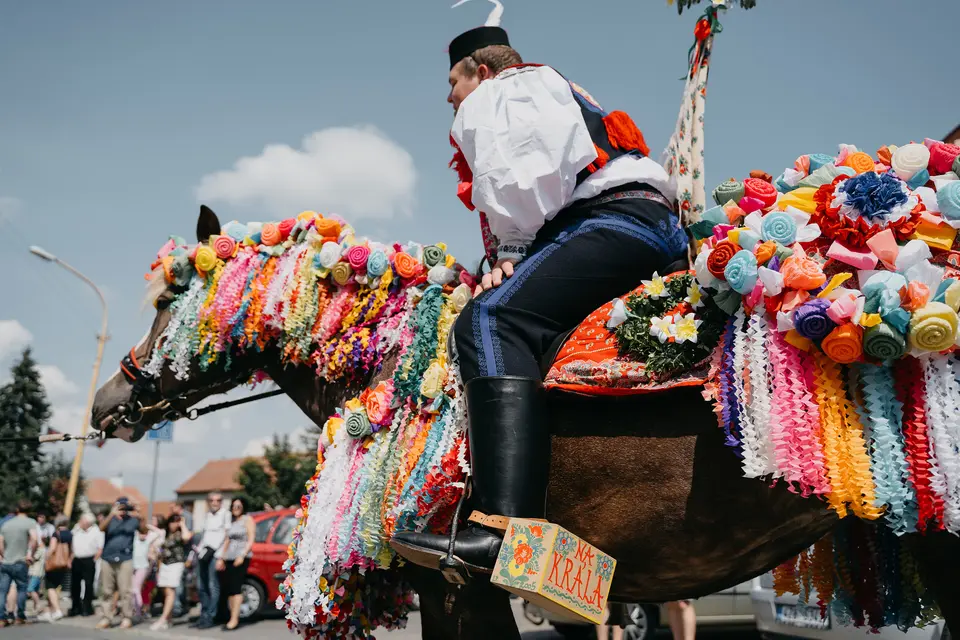
Ride of the Kings
Jízda králů
A boy of ten or twelve rides through a Moravian village dressed in a woman's ceremonial costume, his face half covered, a rose held in his teeth so that he cannot speak. Riders with drawn sabres guard him, chanters stop at each house and rhyme about the people standing there, and the horses are buried in paper flowers.
May 29 – 30, 2027Calculated
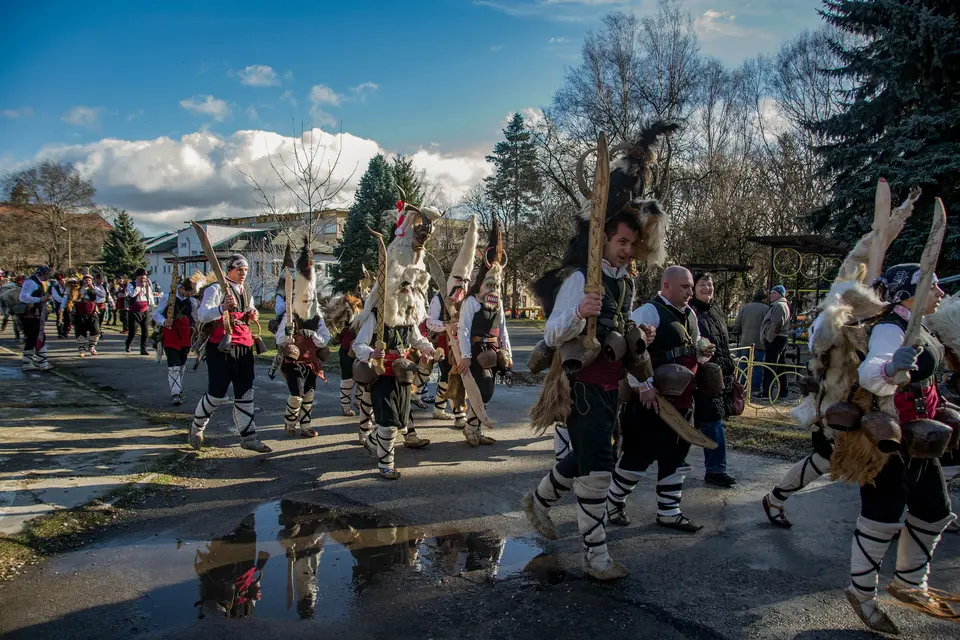
Surova
Сурова
On the nights of 13 and 14 January, masked survakari in fur, horns and heavy bells gather around fires in the villages of the Pernik region, then go from house to house marrying young couples in jest and wishing health for the new year — a masquerade listed by UNESCO.
January 13 – 14, 2027Calculated
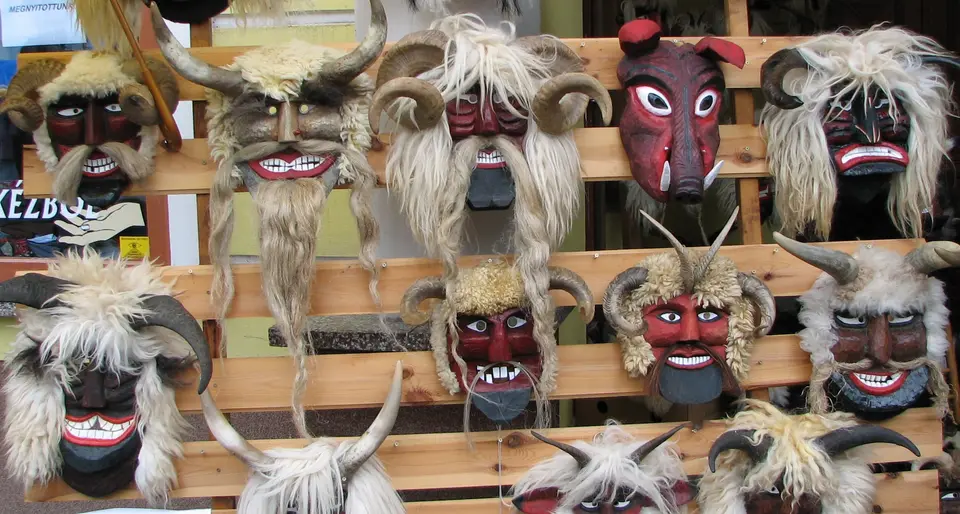
Busójárás
At the end of carnival, the Danube town of Mohács is overrun by busós — men in carved wooden masks and shaggy sheepskins who arrive by rowing boat, parade through the streets with noise and fire, and burn a coffin that stands for winter.
February 4 – 9, 2027Calculated
Comments
Have you been there? Tell other readers what to expect.
No comments yet.
Comments are read by the site’s owner before they appear.