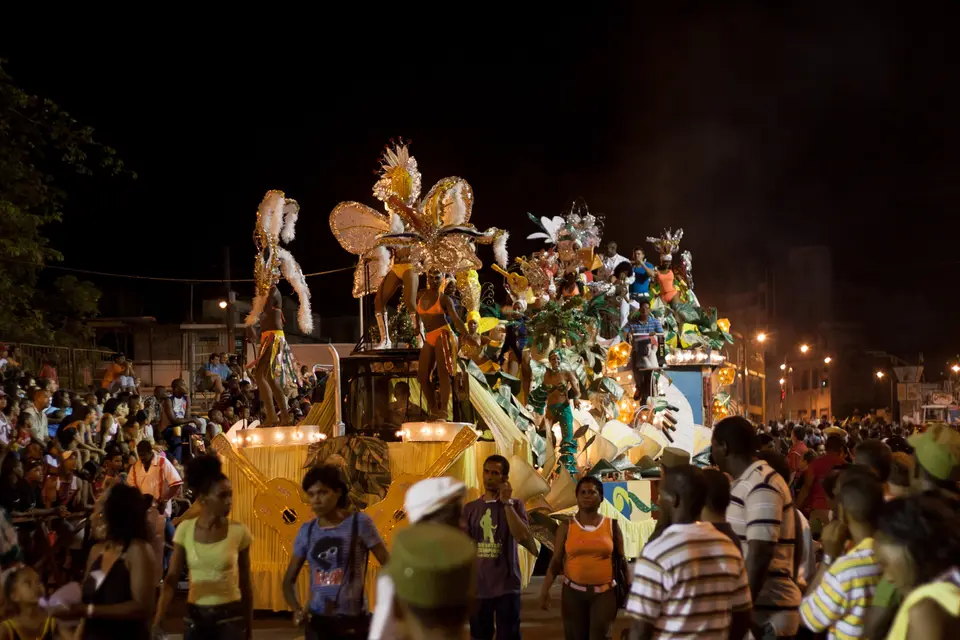
Carnaval de Santiago de Cuba
Photo: Christian Pirkl, CC BY-SA 4.0, via Wikimedia Commons
A week in July when the second city of Cuba hands its streets to the conga — drums, hoes, frying pans and one Chinese horn that cuts through all of it — and the neighbourhoods walk behind their own bands in a moving crush called arrollar.
Saints, and then the state
Santiago's carnival grew out of the feast days that cluster at this point in the year — San Juan on 24 June, San Pedro on 29 June, Santa Cristina on 24 July, Santiago Apóstol on the 25th, Santa Ana on the 26th. It was the patronal feast of Santiago Apóstol, the patron of the town, that set the thing going in the seventeenth century, and by the end of the nineteenth the city was calling it indifferently the summer carnival or the feasts of Santiago.
The African side of it comes through the cabildos — the associations of enslaved and freed Africans, the congos, the carabalíes and the so-called franceses — who were permitted to process in the street on the Día de Reyes, 6 January, and at the patronal feasts, and whose processions turned into the street comparsas.
The 26th carries a second meaning now. The attack on the Moncada barracks in 1953 was timed for the carnival, when the city was full and the garrison was not at its sharpest. The date became the name of a movement and then a national holiday, and it sits inside the carnival week.
The conga, and the horn
The conga santiaguera is both a rhythm and the group that plays it. It runs on drums — the piloneras, the galletas, the requinto, the bocúes — and on metal: iron bars, hoe blades, frying pans, bells chosen for the way they sound against each other. Over the top of all of it goes the corneta china, a double-reed horn out of Havana's Chinatown and the only wind instrument in the band. EcuRed dates its arrival in the carnival to 1916; Rafael Brea López places it between 1913 and 1915, and calls it the most important contribution Chinese culture has made to Cuban folk music. It is a small, piercing sound that carries over several hundred people playing percussion, which is exactly why it was taken up.
Each band belongs to a neighbourhood. Los Hoyos, where the rhythm is held to have taken its classic shape, appeared in 1902; Paso Franco in 1911; El Guayabito around 1915; San Agustín in 1922; Alto Pino in the 1940s. They came out of El Tivolí, Plaza de Marte and Los Hoyos — the old popular quarters of the colonial city — and the format they play settled in the first years of the Republic after 1902.
Arrollar
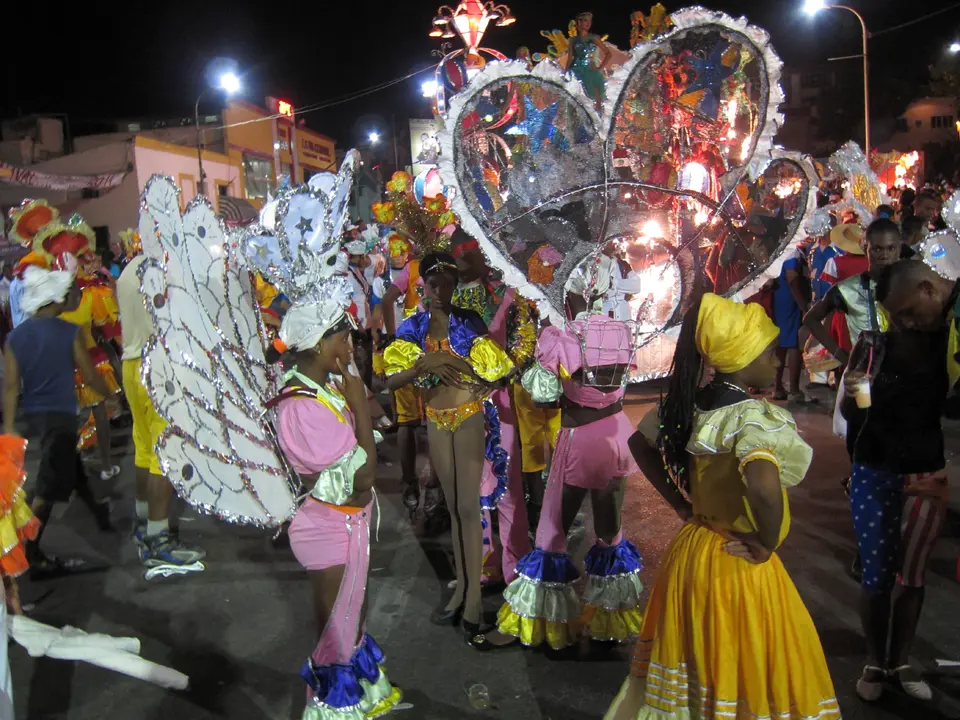
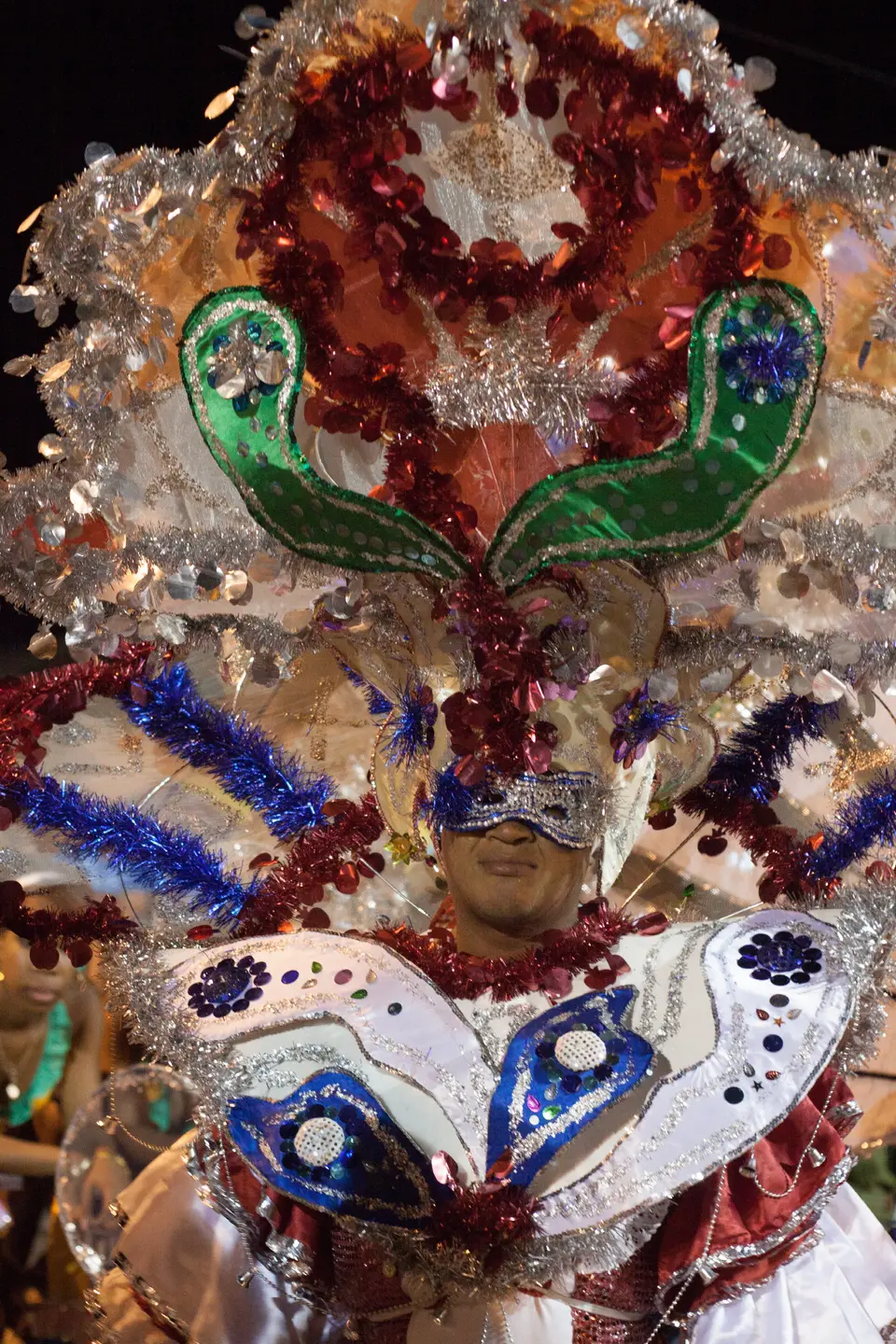
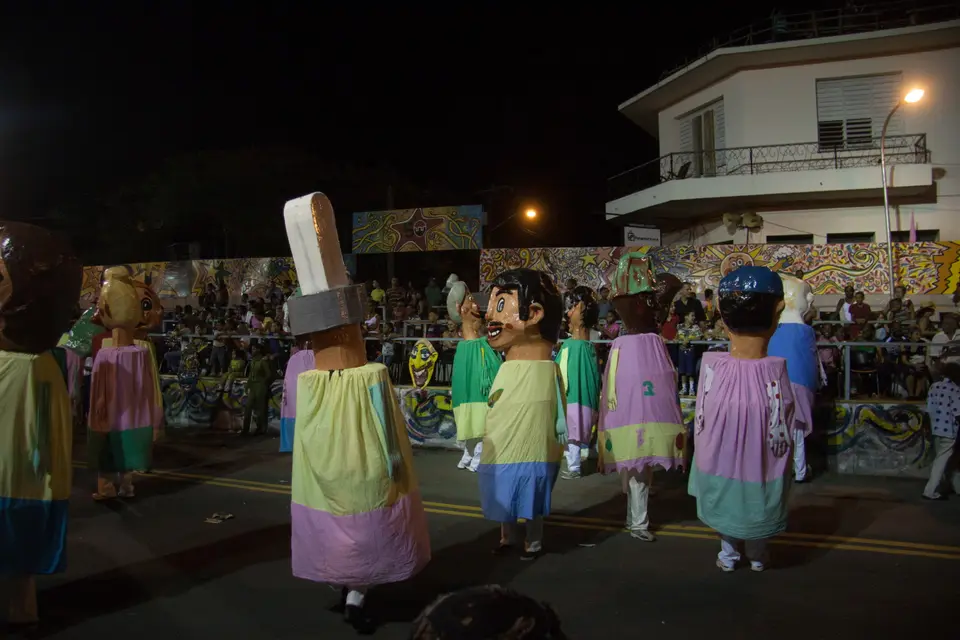
What the crowd does is arrollar. There is no good translation. The conga moves through the street playing, and the people fall in behind it and go with it, packed close, for as long as it lasts — a collective thing with a great deal of feeling in it, and it happens as much in the days before the carnival proper as during it. The floats and the lit comparsas come out at night on the Avenida Garzón, but the conga in the street is the part that belongs to the city rather than to the programme.
When it happens
21 to 27 July. The heart of it is 25 July, the feast of Santiago Apóstol, the city's patron; 26 July is also the anniversary of the 1953 attack on the Moncada barracks, which happened during carnival.
- July 21 – 27, 2027Estimated
- July 21 – 27, 2028Estimated
- July 21 – 27, 2029Estimated
- July 21 – 27, 2030Estimated
Sources
This entry was written from the following sources.
- Carnaval de Santiago de CubaEcuRed · read September 26, 2026
- Conga santiagueraEcuRed · read September 26, 2026
- Carnaval de Santiago de Cuba: congas y tamboras (Rafael R. Brea López, Memorias, vol. 40, 2020)Universidad del Norte · read September 26, 2026
Related festivals
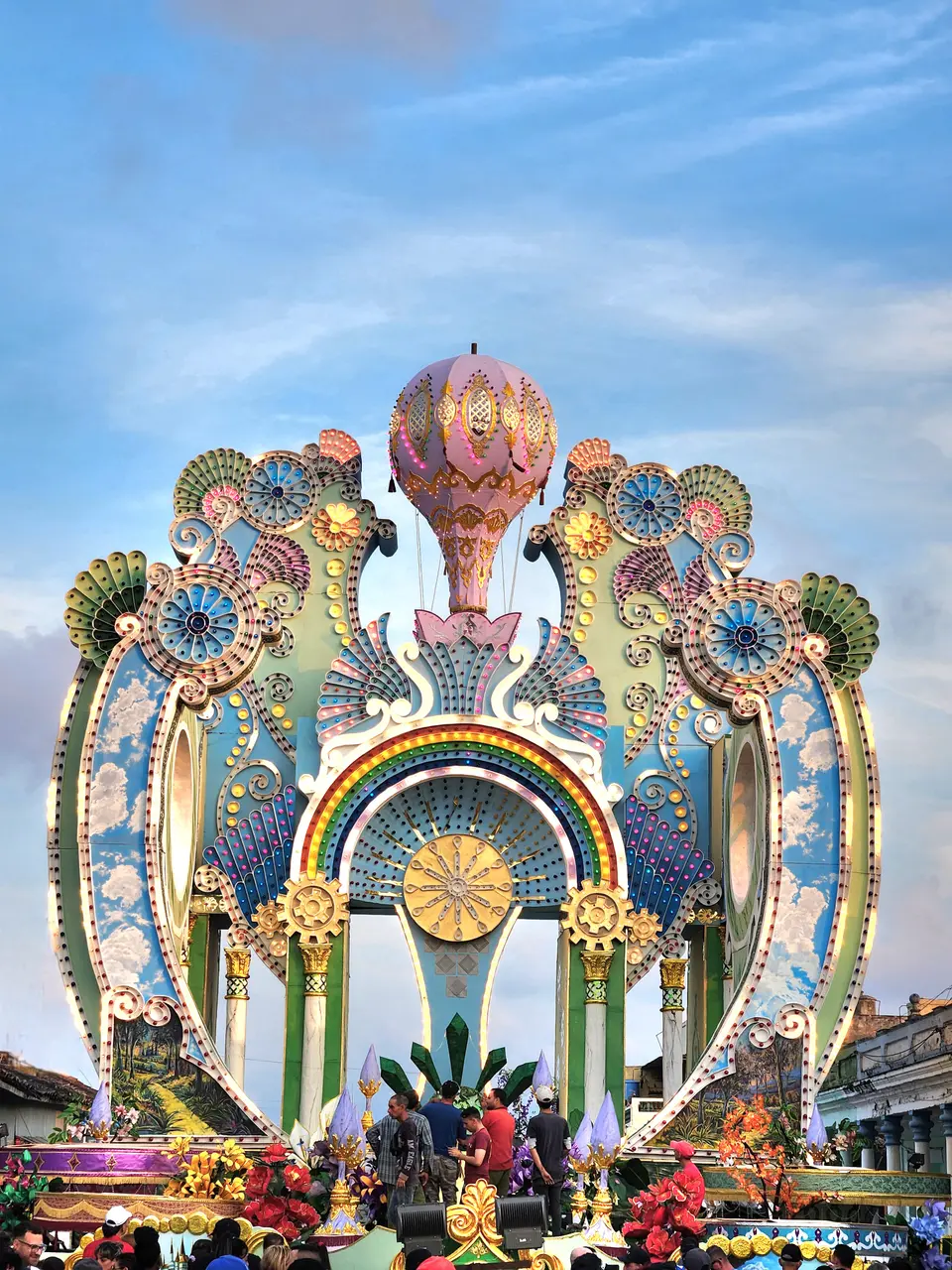
Las Parrandas
On one night of the year, the two rival neighbourhoods of a central Cuban town unveil what they have built in secret for months — towering light displays, floats with living statues and thousands of rockets — in the Parrandas that began in Remedios in 1820.
December 24 – 25, 2026Calculated
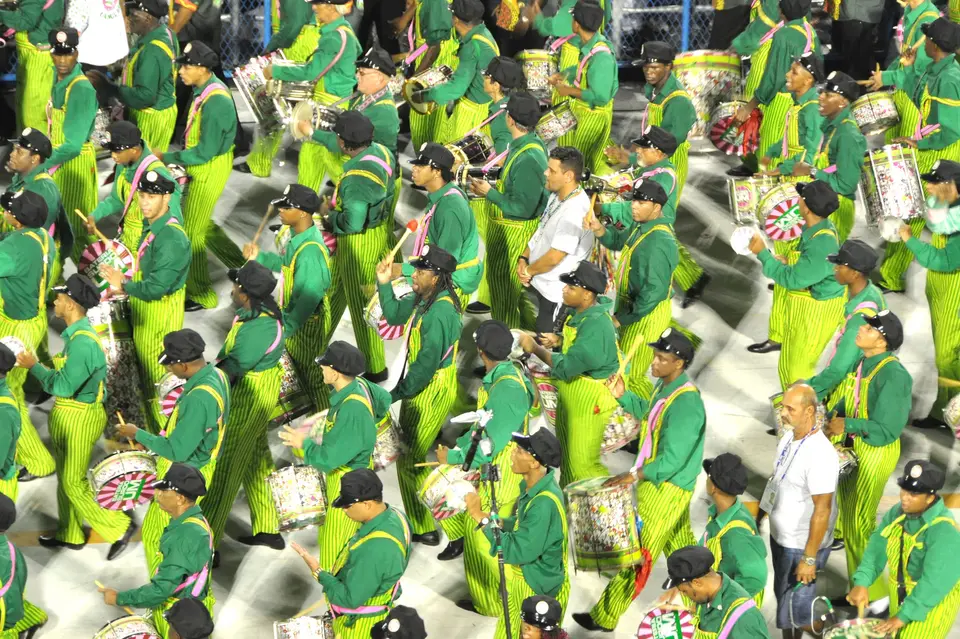
Rio Carnival
Carnaval do Rio de Janeiro
In the days before Lent, Rio de Janeiro holds what is considered the world’s largest carnival — two million people a day on the streets, and a contest of samba schools that parade through the Sambadrome with floats, drummers and thousands of dancers.
February 5 – 9, 2027Calculated
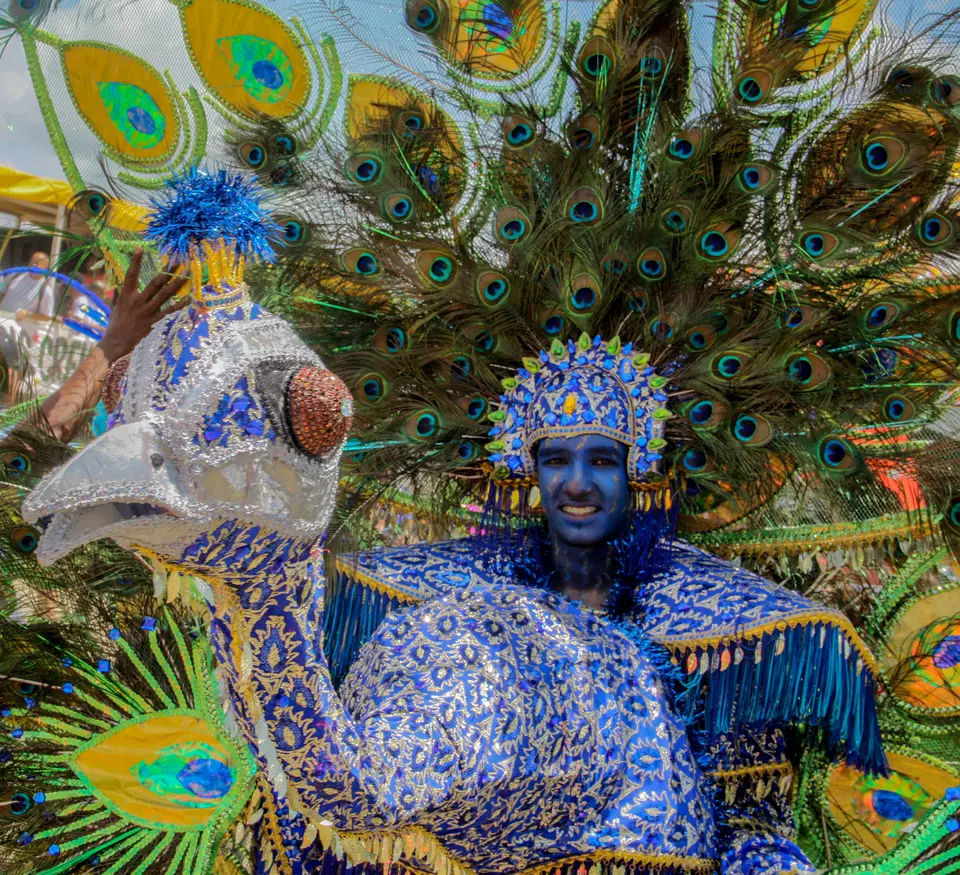
Trinidad and Tobago Carnival
On the Monday and Tuesday before Ash Wednesday, Trinidad and Tobago takes to the streets — J’ouvert at daybreak in mud, oil and paint, then bands of masqueraders in colourful costumes, steelpan and soca — in a carnival born of French balls and the Canboulay of freed Africans.
February 8 – 9, 2027Calculated
Comments
Have you been there? Tell other readers what to expect.
No comments yet.
Comments are read by the site’s owner before they appear.