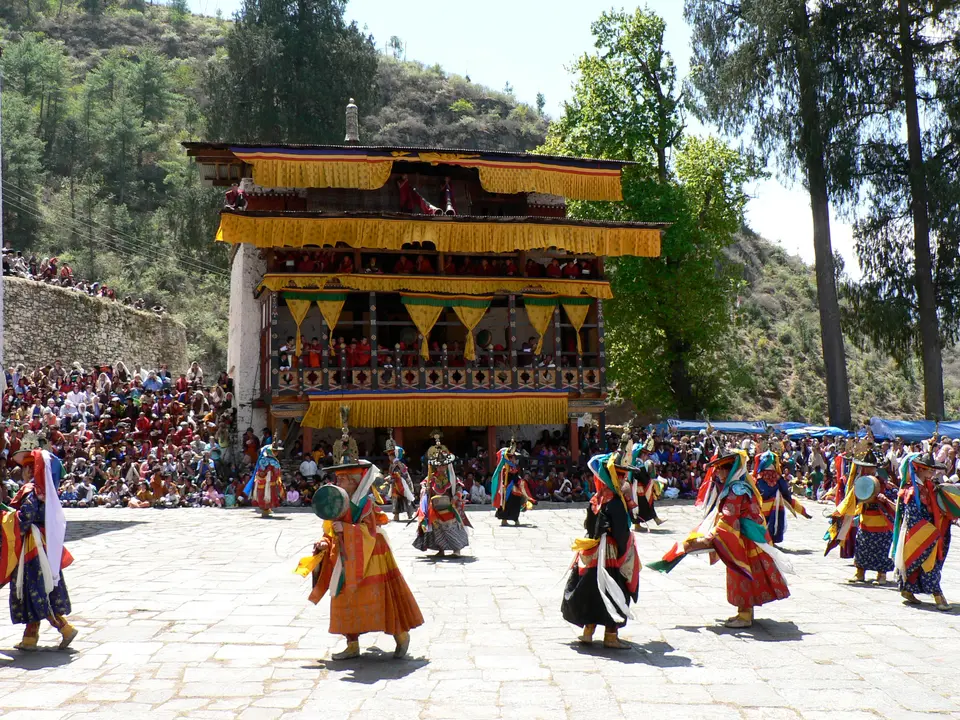
Paro Tshechu
Photo: Stephen Shephard, CC BY-SA 3.0, via Wikimedia Commons
Five days of masked dance in the courtyard below Rinpung Dzong, and then, on the last morning before dawn, a scroll the size of a three-storey building is raised in the dark, looked at by thousands of people, and rolled away again before the sun reaches it.
Five days below the dzong
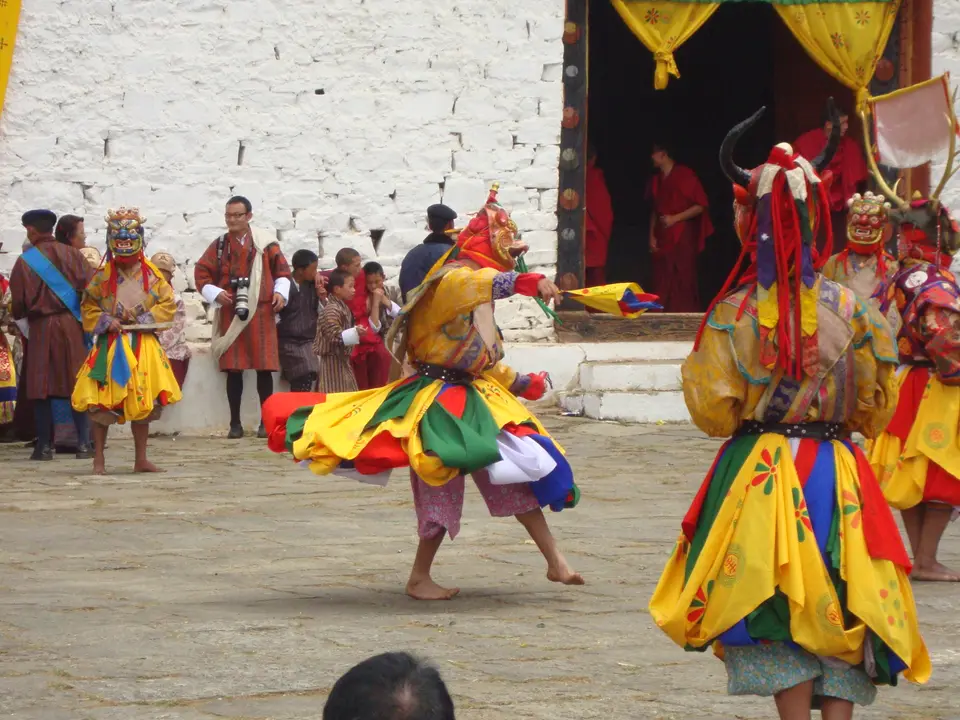
Rinpung Dzong stands on a spur above the Paro river, and the tshechu is held on the ground beside it. The dzongkhag administration puts the festival on the eleventh to the fifteenth day of the second month of the Bhutanese calendar, with the ceremonies beginning on the tenth and ending on the sixteenth. Mask dances and folk dances are performed, it says, both by the monks and by laymen from the community. In the numbers of people who dance in it and who come to watch, this and the Thimphu tshechu are the two largest in the country.
The scroll
What everyone describes is the last morning. The thongdrel is a huge appliqué scroll — Wikipedia's article on tshechus gives it as thirty by forty-five metres — with Guru Rinpoche at the centre, his two consorts beside him and his eight manifestations around them. Paro's is embroidered in silver. It is carried down from the dzong in procession to the ground at Deyangkha and hung at about three in the morning, covering the front of a three-storey building. People come in the dark to stand in front of it, because the belief attached to a thongdrel is exactly what its name says: liberation by the sight of it. Before sunrise the rituals end and it is rolled up and taken back inside, not to be seen again for a year.
Between the dances
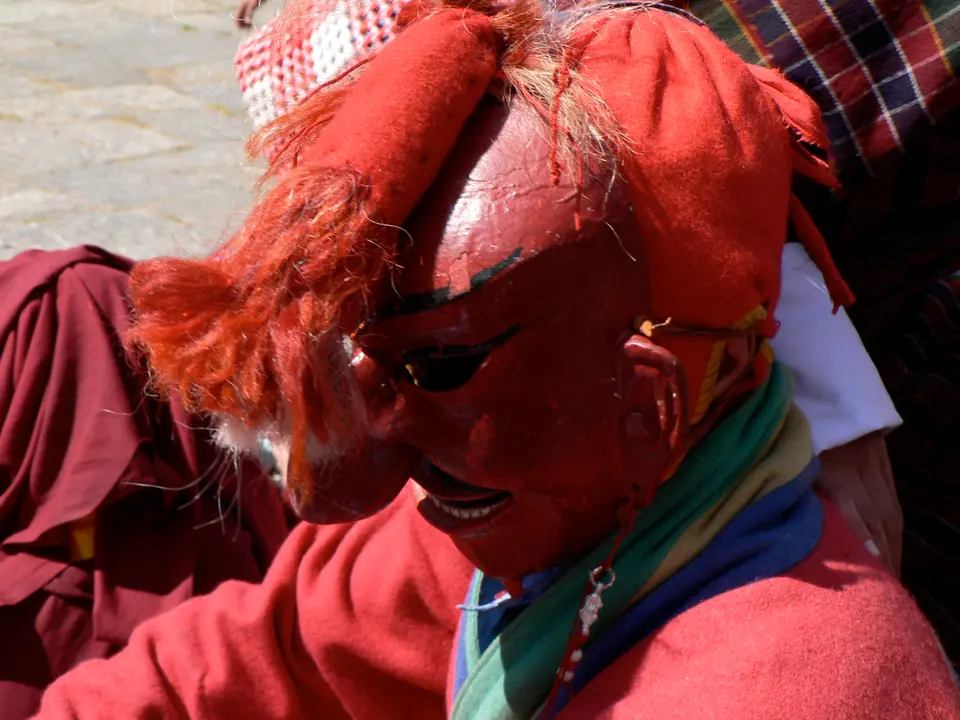
Among the dancers there is always at least one atsara, in a red mask with a long nose, who mocks the audience, interrupts the solemn dances and keeps the ground clear. He is not comic relief added later; the role belongs to the liturgy.
When it falls
Bhutan sets its festivals by its own lunar calendar, and no arithmetic on this site can produce the answer. The Association of Bhutanese Tour Operators publishes a schedule for the year ahead under the heading tentative festival dates, with the caution that they are tentative until confirmed by the respective dzong. Its 2027 list gives Paro as 18 to 22 March, thongdrel on the last day. Treat that as the week to ask about, not as a booking.
When it happens
The eleventh to the fifteenth day of the second month of the Bhutanese calendar, which falls in March or April. The tour operators' association lists 18 to 22 March 2027, with the thongdrel on the last day, and marks the whole schedule tentative.
- March 18 – 22, 2027Estimated
Visiting with respect
Good to know
- Bhutanese come dressed for it, in gho and kira. Cover shoulders and knees, and take off a hat inside the dzong.
- Sit where the stewards put you. The dance ground is a consecrated space and the edge of it is not a viewing gallery.
- The dances are liturgy, not a show. Applause is not the response; watching quietly is.
- You will be with a guide, and the guide is the person to ask before photographing monks, dancers or the thongdrel.
Avoid
- Do not stand up or move about while the thongdrel is unfurled. People are prostrating, and the whole point of it is to be seen.
- Do not touch the scroll or press towards it for a photograph.
- Do not smoke anywhere near the dzong.
Stay safe
- The thongdrel goes up at about three in the morning and the crowd builds long before that. It is cold, it is dark, and the ground is uneven.
- Paro is at about 2,200 metres. If you have flown in that day, take the first days slowly.
- Road accidents are one of the biggest causes of injury and death in Bhutan. Avoid travelling at night.
Sources
This entry was written from the following sources.
- Annual Paro TsechuParo Dzongkhag Administration · read September 25, 2026
- Tentative festival dates for the year 2027Association of Bhutanese Tour Operators · read September 25, 2026
- TshechuWikipedia · read September 25, 2026
- Bhutan travel advice: safety and securityUK Foreign, Commonwealth & Development Office · read September 25, 2026
Related festivals
Thimphu Tshechu
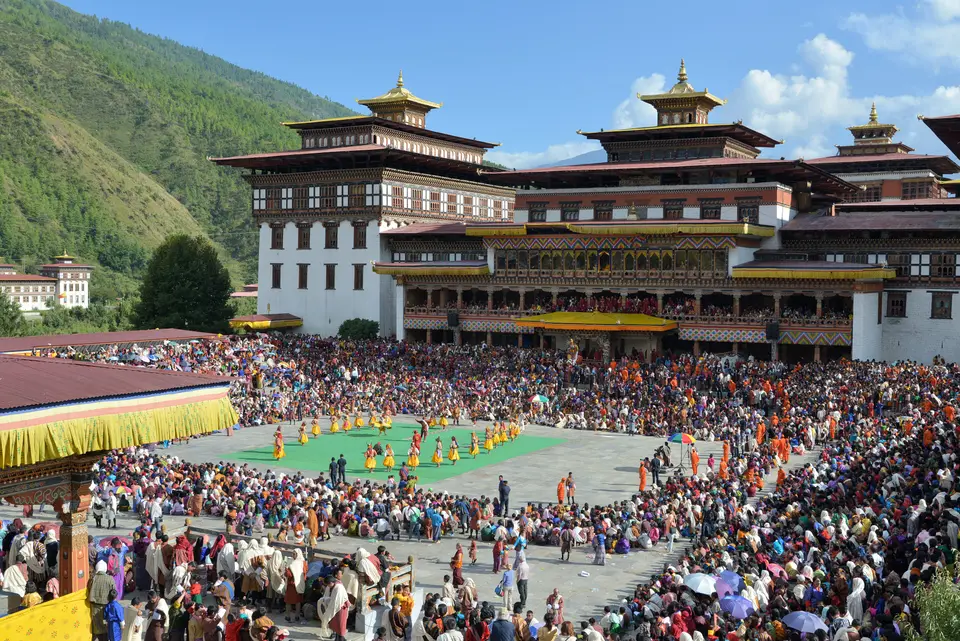
The capital's tshechu fills the courtyard of Tashichho Dzong for three days in autumn. It is the one Bhutanese festival that most people in the country have been to, and the seat of government becomes, for those days, a dance ground with several thousand people sitting around it.
October 10 – 12, 2027Estimated
Punakha Dromchoe
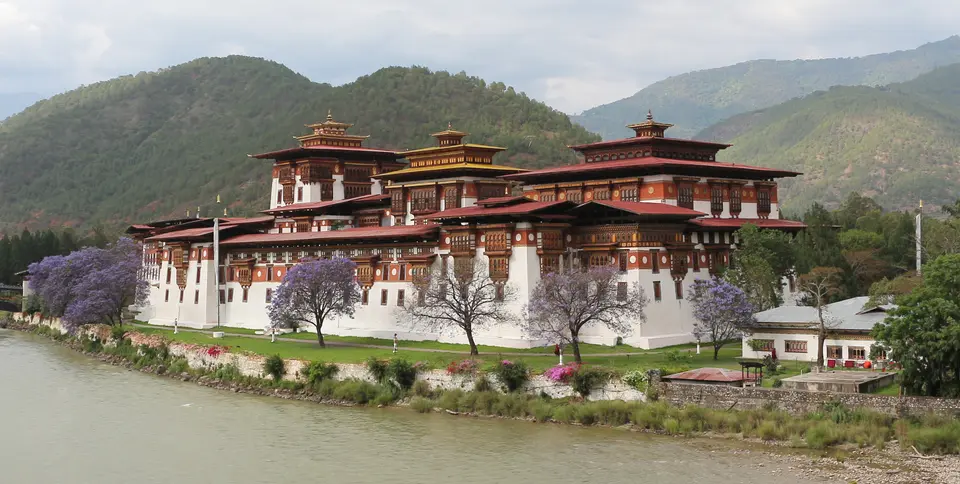
Men from nine village blocks dress as warriors and fight the battle of 1639 again in the courtyard of Punakha Dzong, between two rivers. Three days of that, then three days of mask dances, and at the end the Je Khenpo throws oranges into the Mo Chhu.
February 13 – 15, 2027Estimated
Drametse Ngacham
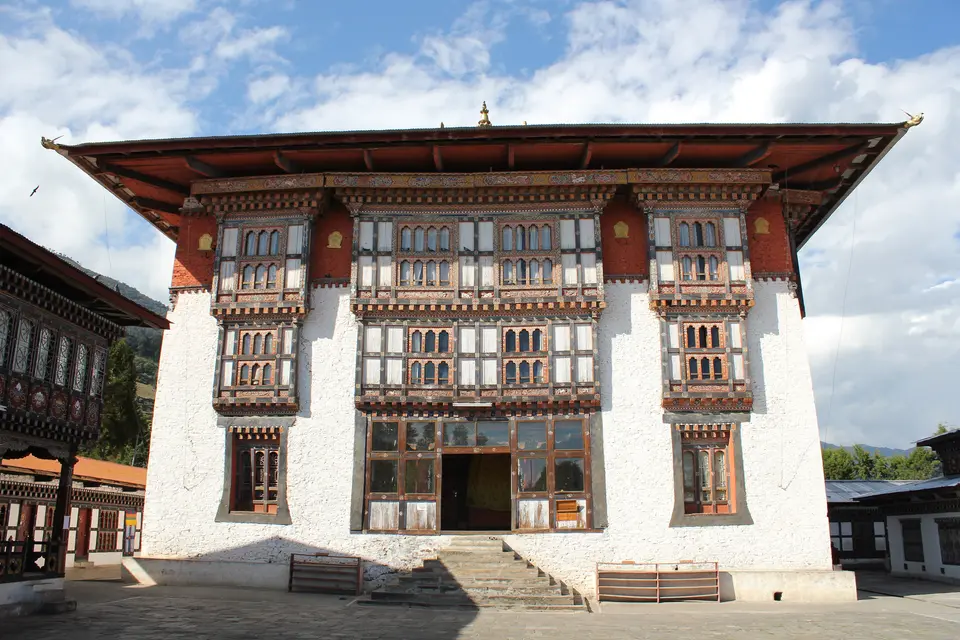
Sixteen men in animal masks and monastic robes, each with a drum, dance at one monastery on a ridge in eastern Bhutan. UNESCO inscribed it in 2008. It is offered twice a year at Drametse itself, and by now it is danced at tshechus all over the country.
Comments
Have you been there? Tell other readers what to expect.
No comments yet.
Comments are read by the site’s owner before they appear.