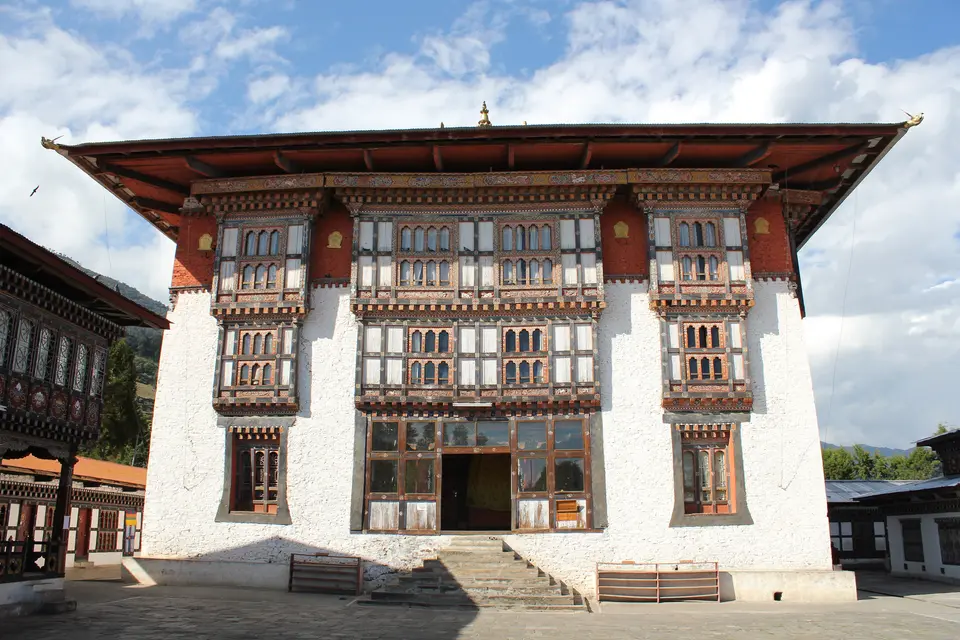
Drametse Ngacham
On UNESCO’s list of the Intangible Cultural Heritage of Humanity
Photo: Arian Zwegers from Brussels, Belgium, CC BY 2.0, via Wikimedia Commons
Sixteen men in animal masks and monastic robes, each with a drum, dance at one monastery on a ridge in eastern Bhutan. UNESCO inscribed it in 2008. It is offered twice a year at Drametse itself, and by now it is danced at tshechus all over the country.
Sixteen drums
UNESCO's file describes it exactly. The dance features sixteen masked male dancers in bright costume and ten more men making the orchestra: cymbals, trumpets and drums — the bang nga, a large cylindrical drum, the lag nga, a small hand-held flat drum, and the nga chen, beaten with a bent stick. The dancers wear monastic robes and wooden masks with the features of animals, real and mythical. They pray first in the main shrine, then come out into the courtyard.
The dance is in two halves. One is calm and contemplative and represents the peaceful deities; the other is fast and athletic, and in it the dancers are the wrathful ones. Between them they are held to be the heroes and heroines of the celestial world, and that is the origin the tradition gives the dance: not composed, but seen.
One monastery
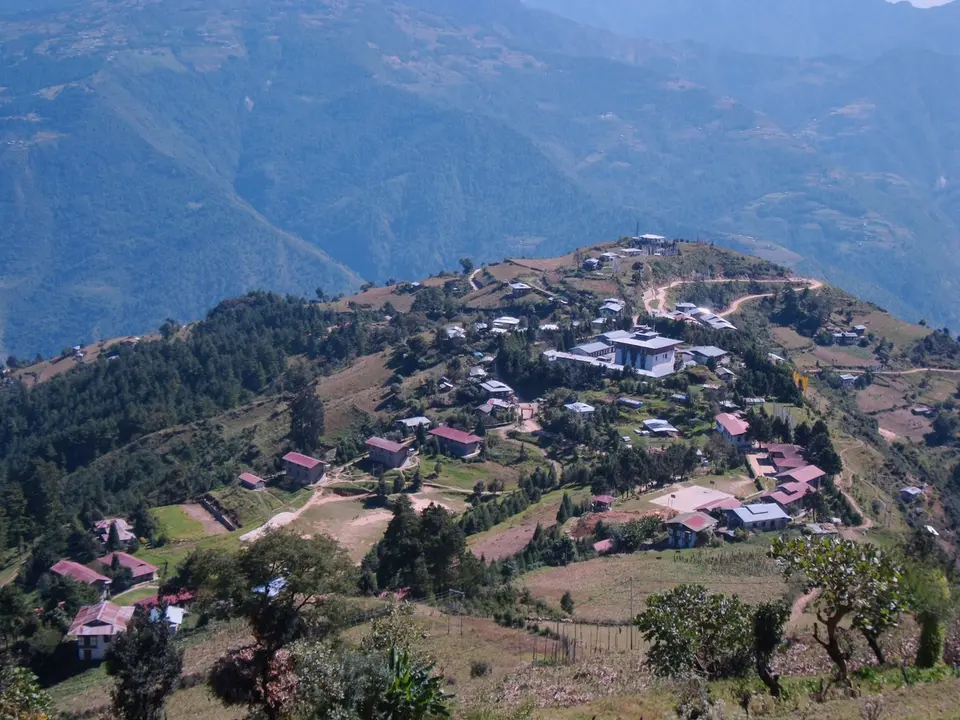
Drametse is a village in Drametse gewog, in the eastern part of Mongar district, on a ridge high above the road from Mongar to Trashigang. Its monastery is Ogyen Tegchok Namdroel Choeling, it is the seat in Bhutan of the Peling Sungtrul lineage, and the dance has been performed there for centuries. The festival that carries it is held twice a year, in the fifth and the tenth months of the Bhutanese calendar, in honour of Guru Rinpoche.
Why it is on this page without a date
The national tentative schedule that gives dates for forty-odd Bhutanese festivals does not include Drametse. It is a village monastery's own festival, announced locally, and no Gregorian date is published for it anywhere this site could check. Rather than invent one, we have left the date field empty and said so.
The dance itself is easier to find than the festival is. From one monastery in the east it has spread to most of the monastic and community tshechus in the country, and if you are at Paro or Thimphu it may well be on the programme.
When it happens
Twice a year at the Drametse festival, in the fifth and the tenth months of the Bhutanese calendar. No Gregorian dates are published for it. At the large district tshechus, where the dance is also performed, ask the programme on the day.
No dates are listed for this festival yet.
Visiting with respect
Good to know
- Drametse is a working monastery on a ridge, not a venue. Whoever takes you there should have arranged it beforehand.
- The dance is an offering to Guru Rinpoche. Watch it as you would a service.
- Ask before photographing, and accept no for an answer — masks and instruments are consecrated objects.
- Walk clockwise around a temple, a chorten or a wall of prayer wheels.
Avoid
- Do not try to handle a mask or a drum, and do not ask a dancer to pose in costume.
- Do not smoke on monastery ground.
- Do not take anything old out of the country. Exporting antiques from Bhutan is illegal.
Stay safe
- The monastery is reached by a long unpaved climb off the Mongar to Trashigang road, and rain makes it worse. Go with a driver who knows it.
- Eastern Bhutan is far from any hospital of size. Carry what you need with you.
- Road accidents are one of the biggest causes of injury and death in Bhutan. Avoid travelling at night.
Sources
This entry was written from the following sources.
- Mask dance of the drums from DrametseUNESCO · read September 25, 2026
- Bhutan — intangible cultural heritage elementsUNESCO · read September 25, 2026
- Drametse NgachamWikipedia · read September 25, 2026
- DramitseWikipedia · read September 25, 2026
- Bhutan travel advice: safety and securityUK Foreign, Commonwealth & Development Office · read September 25, 2026
Related festivals
Paro Tshechu
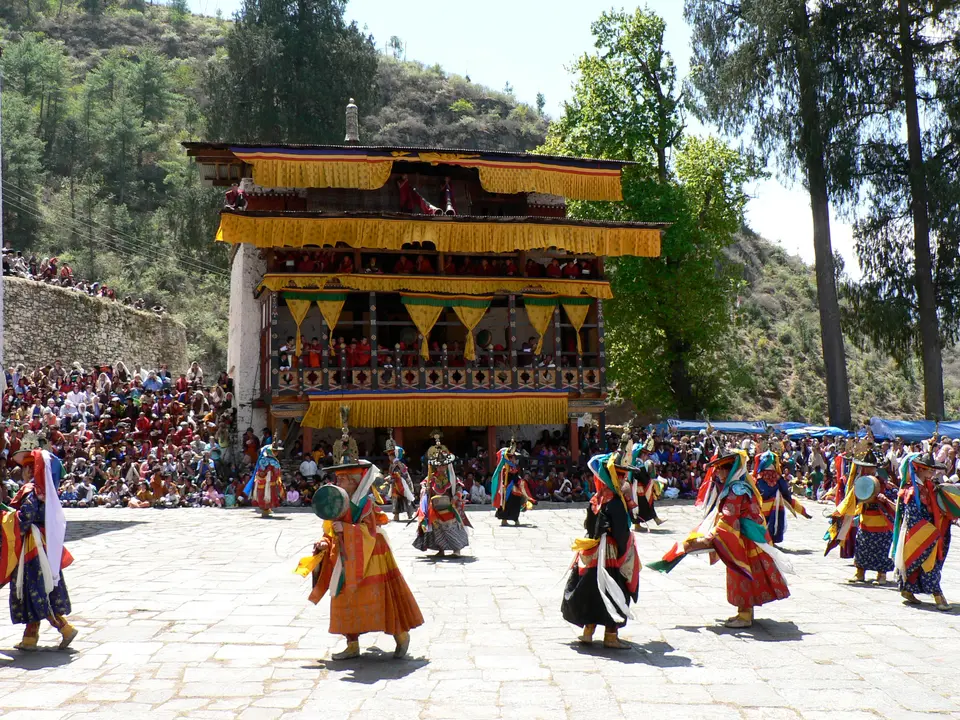
Five days of masked dance in the courtyard below Rinpung Dzong, and then, on the last morning before dawn, a scroll the size of a three-storey building is raised in the dark, looked at by thousands of people, and rolled away again before the sun reaches it.
March 18 – 22, 2027Estimated
Thimphu Tshechu
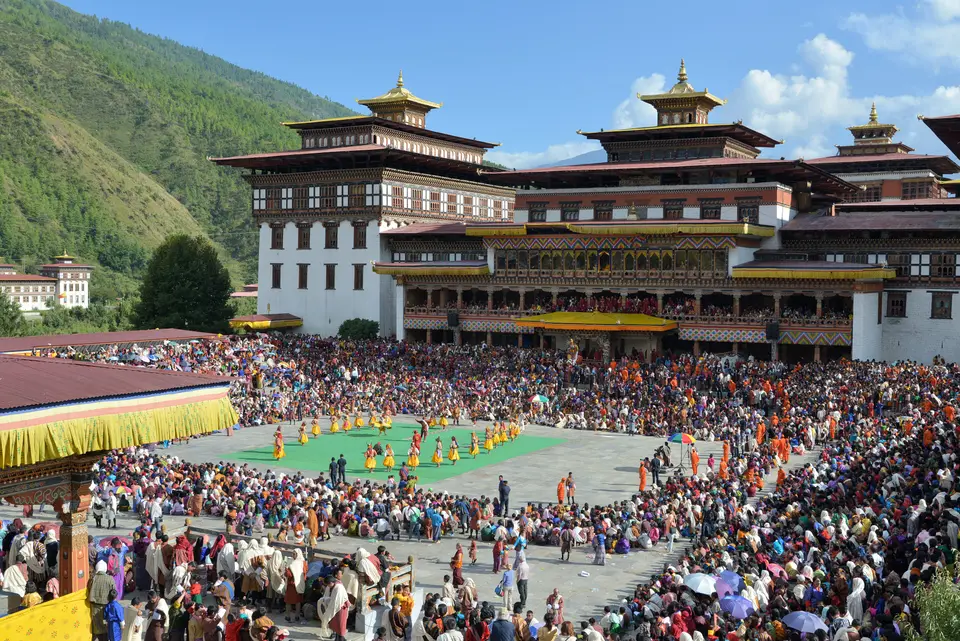
The capital's tshechu fills the courtyard of Tashichho Dzong for three days in autumn. It is the one Bhutanese festival that most people in the country have been to, and the seat of government becomes, for those days, a dance ground with several thousand people sitting around it.
October 10 – 12, 2027Estimated
Punakha Dromchoe
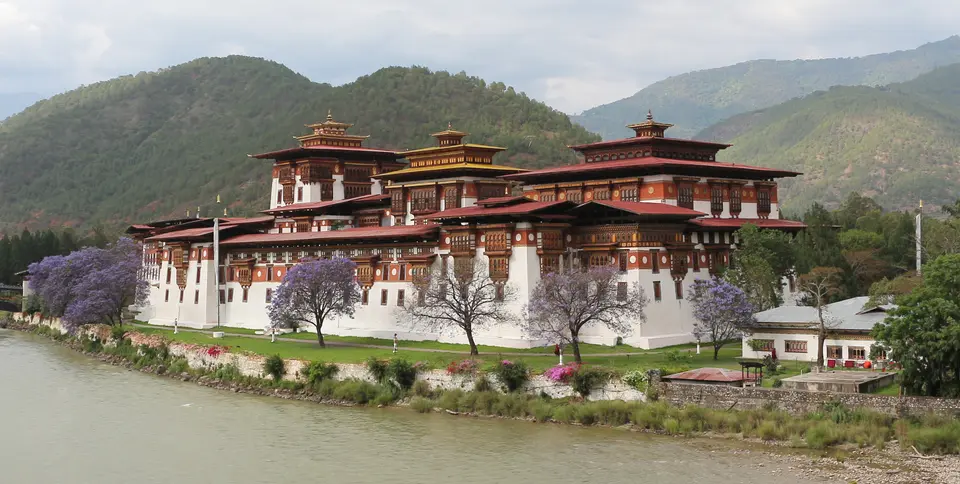
Men from nine village blocks dress as warriors and fight the battle of 1639 again in the courtyard of Punakha Dzong, between two rivers. Three days of that, then three days of mask dances, and at the end the Je Khenpo throws oranges into the Mo Chhu.
February 13 – 15, 2027Estimated
Comments
Have you been there? Tell other readers what to expect.
No comments yet.
Comments are read by the site’s owner before they appear.