Summer solstice fires of the Pyrenees
Fêtes du feu du solstice d'été
On UNESCO’s list of the Intangible Cultural Heritage of Humanity
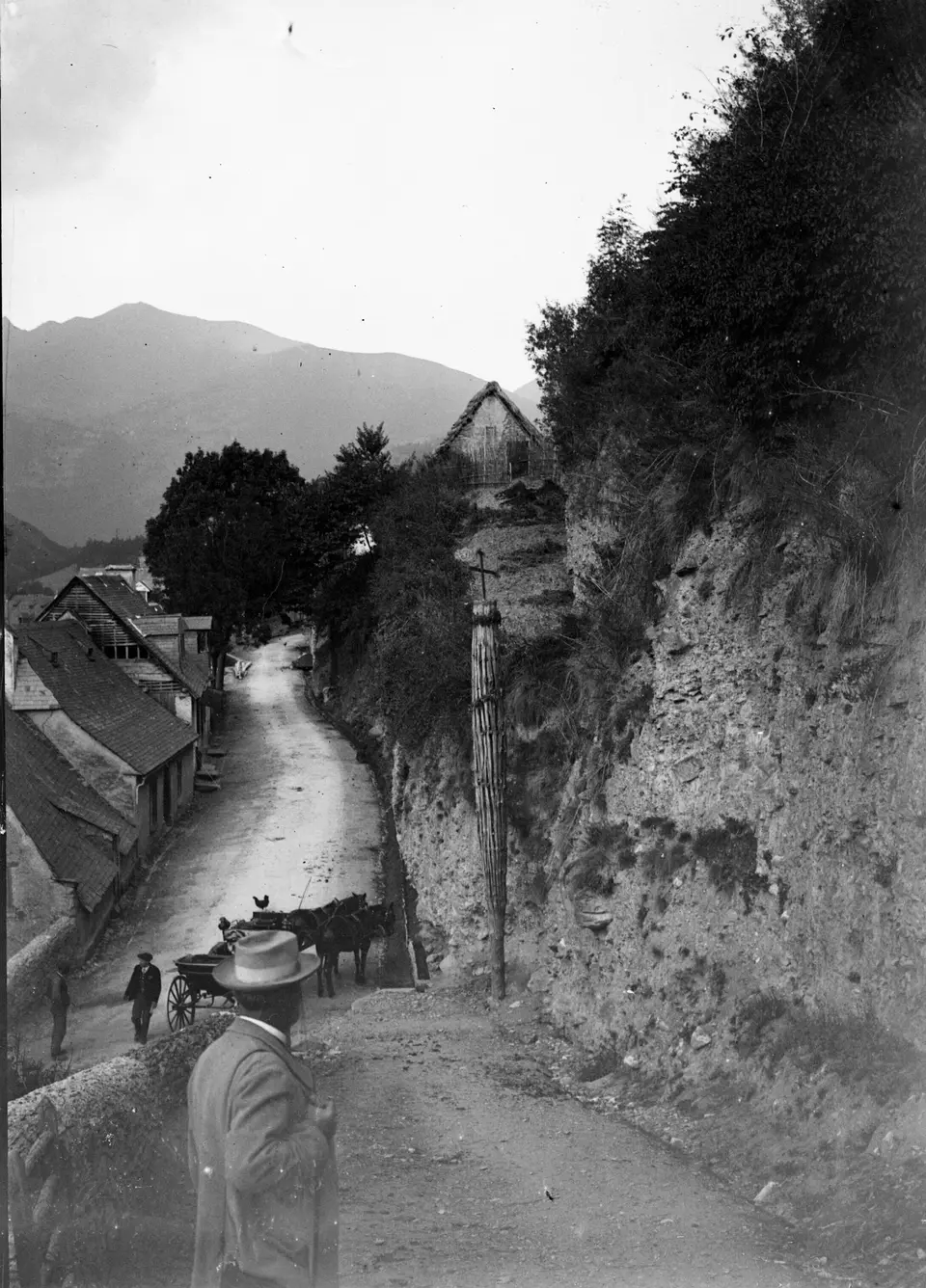
Photo: Original by Eugène Trutat (Born in 1840 - Dead in 1910) - Scan on Flickr by Bibliothèque de Toulouse, Public domain, via Wikimedia Commons
On the shortest night of the year, villages along the Pyrenees carry burning torches down from the mountains and set light to a beacon in the square. At Luchon the beacon is a fir trunk ten or twelve metres long, split open with iron wedges and lit by the mayor and the priest together.
Fire brought down from the mountain
On the night when the sun stands highest, communities on both sides of the Pyrenees climb up, light torches, and carry them down to set light to a beacon built in the traditional way of the place. UNESCO inscribed the practice on the Representative List of the Intangible Cultural Heritage of Humanity in 2015, in a single file shared by France, Spain — Aragon, Catalonia and the Val d'Aran — and Andorra.
The descent is led by the young. UNESCO's text is explicit that the night marks the passage from adolescence to adulthood: the torch-bearers are the young people of the village, and in many places unmarried young women wait for them with wine and sweet pastries. Who lights the first beacon depends on the local custom — the mayor, the priest, or the men married most recently that year. Families pass the practice on, supported by a network of local associations.
The brandon of Luchon
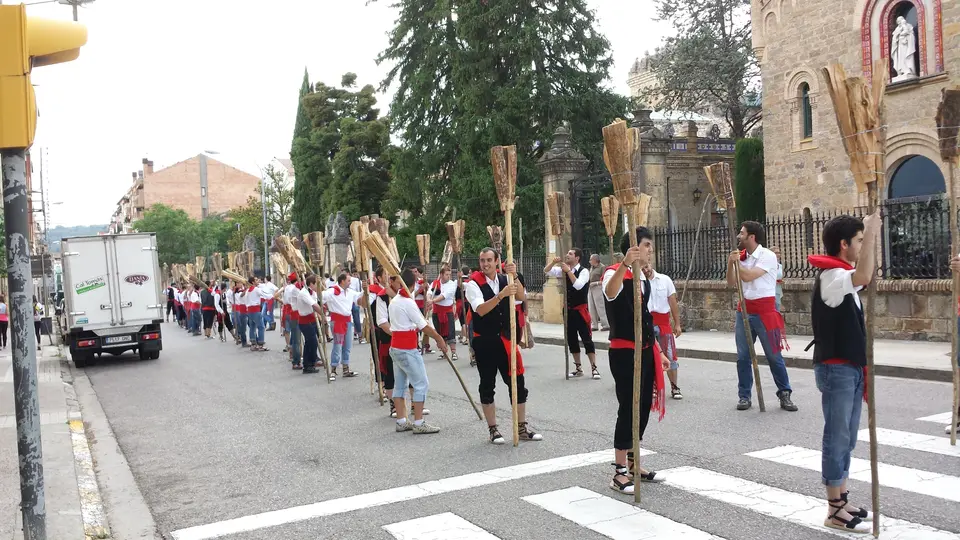
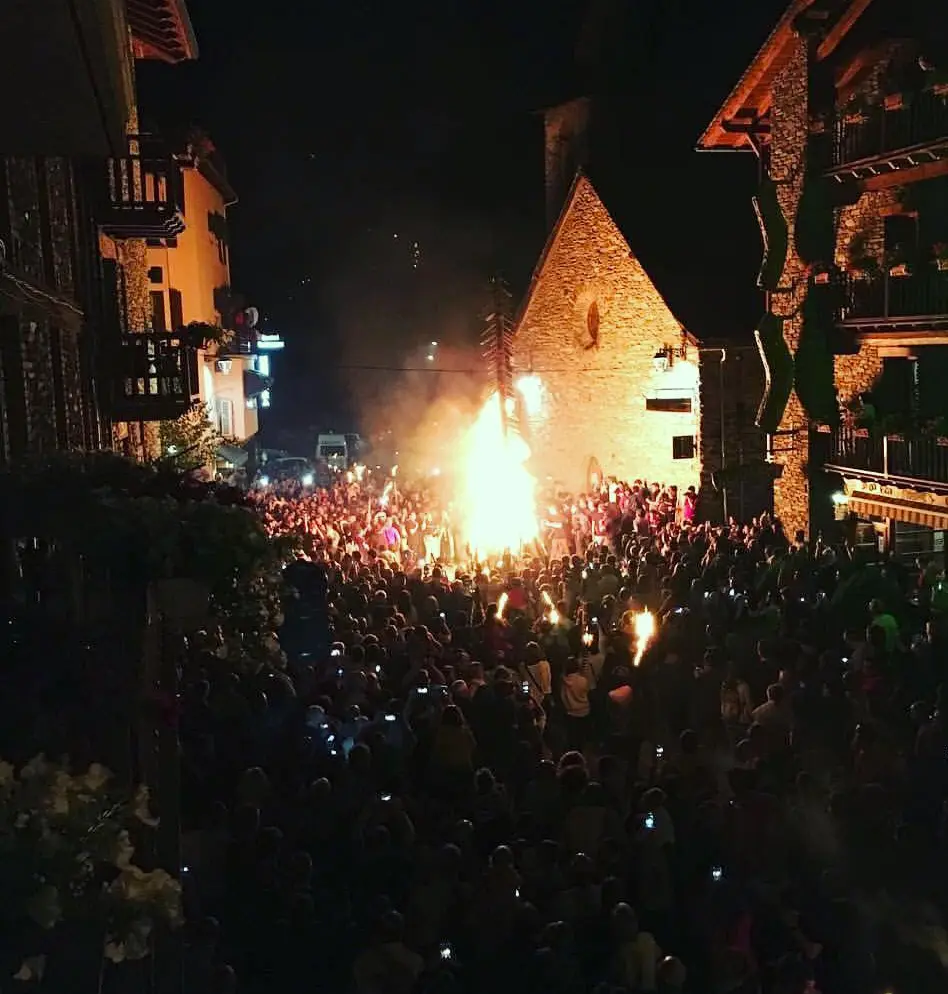
In France the best-kept of these fires is the brandon of Bagnères-de-Luchon, in the Haute-Garonne, and of the villages of its canton. Brandon means a green branch; in Occitan it is pronounced brandou. The beacon is a fir ten to twelve metres long, split along its length and around its circumference with iron wedges; wooden wedges hold the splits open, iron rings keep the trunk from breaking apart, and the gaps are packed with shavings and straw. It is raised upright, and the mayor and the priest light it together.
The procession that brings the fire is led by the associations of the town: the municipal band, founded in 1875, the folklore group Les Fils de Luchon, founded in 1934, and the company of mounted guides, with dancers in old costume carrying flowers and small torches. The trunk burns for close to an hour before it falls. Then the young men run in to snatch brands from the embers and whirl them, chasing the young women with the smoke and the soot, while the older people collect pieces of the cooled wood: a charred piece carried home is said to bring the household luck for the year.
Not one night but several
The old date is the eve of Saint John, 23 June, with a second fire in some places at Saint Peter's day on 29 June. In practice the calendar is local. Luchon holds its brandon on a Saturday close to the solstice — in 2026 that was 20 June — on the esplanade of the thermal park, and eight neighbouring villages light their own on later evenings, so that the fires run on through the end of June and into July. There is no central programme. The valley's tourist office publishes the dates each spring, village by village.
When it happens
The fires belong to the night of Saint John, around 23 and 24 June, but each commune sets its own evening. Luchon burns its brandon on a Saturday near the solstice, and villages in the valley follow on later nights into early July. Ask locally, or at the tourist office of the valley, before you travel for one.
- June 23 – 24, 2027Estimated
- June 23 – 24, 2028Estimated
- June 23 – 24, 2029Estimated
- June 23 – 24, 2030Estimated
Visiting with respect
Good to know
- This is a village rite that outsiders may watch, not a show that is put on for them. Stand where the stewards put you and let the procession pass.
- The associations that carry the fire — the band, the folklore groups, the riders — lead the evening. Applaud them; do not walk in among them.
- If a piece of charred wood is handed to you, take it. Carrying one home is the point of the custom, not a souvenir taken from the fire.
Avoid
- Do not take burning wood from the beacon yourself. Who may do that, and when, is settled by the village.
- Do not park on the route of the procession, and do not block the square with a car — the streets are narrow and the fire is large.
Stay safe
- A ten-metre trunk burns for about an hour and then collapses in a shower of sparks. Keep well back, especially with children, and wear clothes that do not melt.
- Mountain roads at night, often with no lighting and no barrier. Drive slowly and park where you are told.
- Standard travel advice for France applies; check your own foreign ministry's pages before you go.
Sources
This entry was written from the following sources.
- Summer solstice fire festivals in the PyreneesUNESCO · read September 24, 2026
- Le brandon de Bagnères-de-Luchon — fiche d'inventaire du patrimoine culturel immatérielPCI Lab, inventaire national du patrimoine culturel immatériel · read September 24, 2026
- Brandon de la Saint-Jean : la fête du feu pyrénéen à LuchonHaute-Garonne Tourisme (Pyrénées 31) · read September 24, 2026
- France travel advice: safety and securityUK Foreign, Commonwealth & Development Office · read September 24, 2026
Related festivals
Midsummer
Midsommar
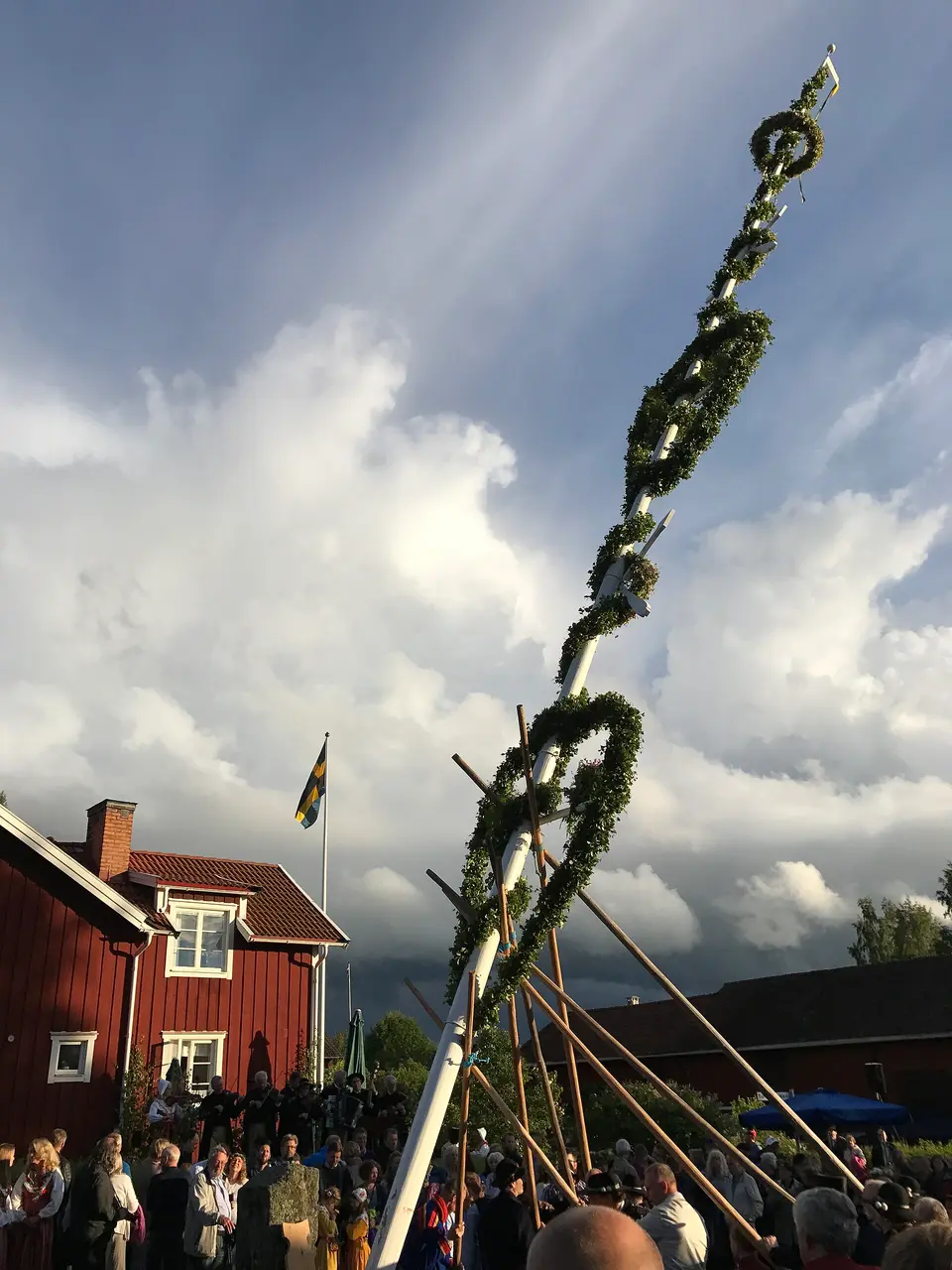
On a Friday in late June, Swedes leave the cities for the countryside, pick flowers for wreaths, raise a pole clad in leaves and dance around it — then sit down to herring, new potatoes and strawberry cake as the light lingers late into the night.
June 25 – 26, 2027Calculated
Las Fallas
Falles
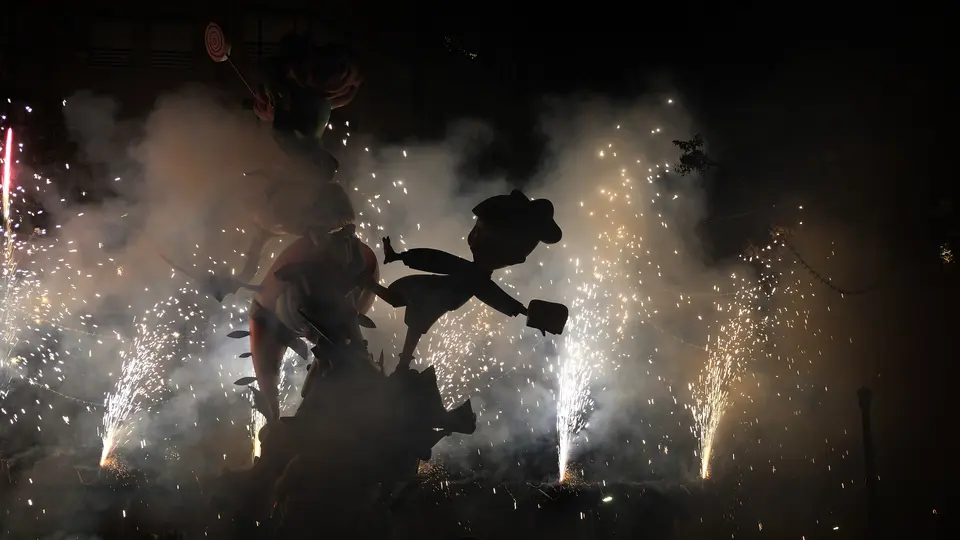
In March, Valencia fills its streets with giant satirical sculptures of cardboard and papier-mâché, shakes to the midday thunder of firecrackers, and then, on the night of 19 March, sets every one of the monuments on fire to welcome the spring.
March 15 – 19, 2027Calculated
Chaharshanbe Suri
چهارشنبهسوری
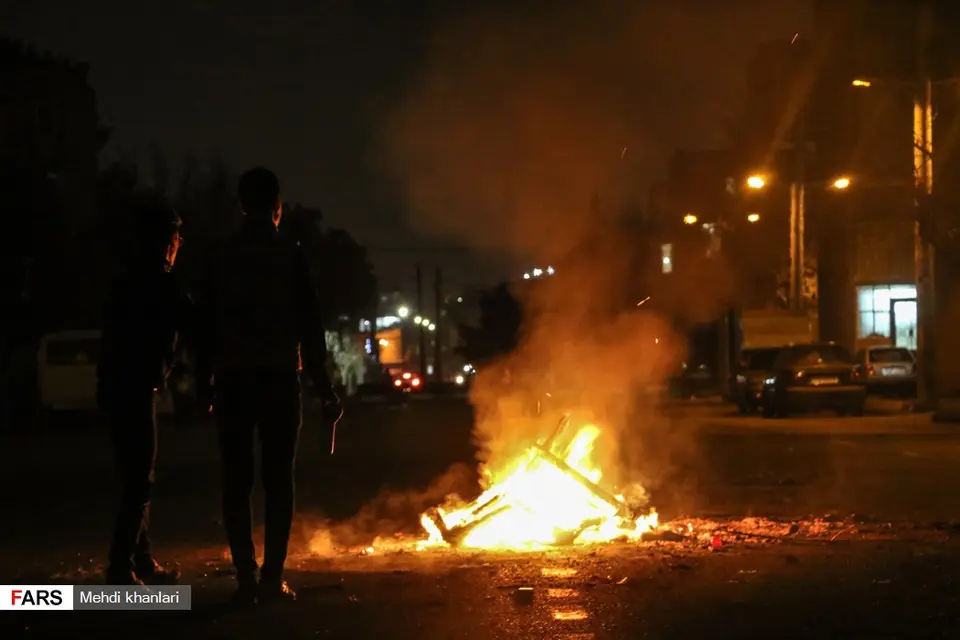
On the eve of the last Wednesday of the Iranian year, bonfires are lit in yards, streets and on rooftops, and people leap over the flames, asking the fire to take away their pallor and give them its red glow for the year ahead.
March 16, 2027Calculated
Comments
Have you been there? Tell other readers what to expect.
No comments yet.
Comments are read by the site’s owner before they appear.